Study Notes
1:1 Solomon’s. See Introduction: Title; Author and Date. Song of Songs. Greatest of songs (see Introduction: Title). 1Ki 4:32 says that Solomon wrote 1,005 songs.
1:2–3 kisses . . . your love . . . your perfumes. Cf. 4:10–11, “your love . . . your perfume . . . Your lips.”
1:2 See NIV text note on the heading She. him . . . his . . . your. These pronouns all refer to the same person, the beloved. love. Expressions of love—caresses, embraces and consummation (see v. 4; 4:10; 7:12; see also Pr 7:18; Eze 16:8; 23:17). more delightful than wine. See v. 4. In 4:10 the beloved speaks similarly of his darling’s love.
1:3 perfumes. Aromatic spices and gums blended in cosmetic oil. your name. The very mention of the beloved’s name fills the air as with a pleasant aroma. The Hebrew words for “name” and “perfume” sound alike. young women. Probably young women of the court or of the royal city (6:8–9).
1:4 king. Solomon. his chambers. The king’s private quarters. We. Probably the young women of v. 3. praise your love more than wine. For the reason given in v. 2.
1:5 Dark. Deeply browned by the sun (v. 6); not considered desirable because of its association with common laborers (v. 8). daughters of Jerusalem. Probably the young women of v. 3 and usually the “Friends” in the sectional headings. tents . . . tent curtains. Handwoven from black goat hair. Kedar. See note on Isa 21:16.
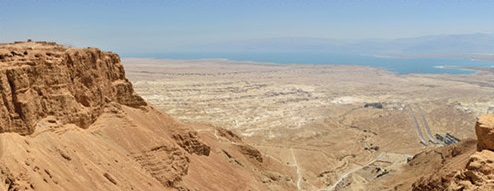
1:6 my own vineyard. Her body, as in 8:12 (see 2:15). Vineyard is an apt metaphor since it yields wine, and the excitements of love are compared with those produced by wine (see note on v. 2; see also photo). His darling is also compared to a garden, yielding precious fruits for her beloved (see note on 4:12).
1:7 whom I love. See 3:1. where you graze your flock. The beloved is portrayed as a shepherd. In v. 8 the woman is also depicted as a shepherd. midday. A time of rest in warm climates. veiled woman. Prostitute (Ge 38:14–15). The woman does not wish to look for her beloved among the shepherds, appearing as though she were a prostitute.
1:8 beautiful. The woman; also in v. 15; 2:10,13; 4:1,7; 5:9; 6:1,4,10 (“fair”). The beloved is called “handsome” in v. 16 (in Hebrew the same word as that for “beautiful”). your young goats. The woman is pictured as a shepherd (v. 7). by the tents of the shepherds. The woman is instructed to learn where her beloved is by joining the shepherds in the fields.
1:9 my darling. Used only of She (see v. 15; 2:2,10,13; 4:1,7; 5:2; 6:4; see also note on v. 13). mare. A flattering comparison, similar to Theocritus’s praise of the beautiful Helen of Troy (Idyl, 18.30–31). among Pharaoh’s chariot horses. Her beauty attracts attention the way a mare would among the Egyptian chariot stallions. According to 1Ki 10:28, Solomon imported horses from Egypt.
1:11 We. Perhaps the “daughters of Jerusalem” (v. 5).
1:12 king. Solomon. at his table. Reclining on his couch at the table. my perfume. Nard, an aromatic oil extracted from the roots of a perennial herb that grows in India (4:13–14; Mk 14:3; Jn 12:3).
1:13 My beloved. Used only of He (see v. 14,16; 2:3,8,9,10,16,17; 4:16; 5:2,4,5,6,8,9,10,16; 6:1,2,3; 7:9,10,11,13; 8:5,14; see also note on v. 9). myrrh. An aromatic gum exuding from the bark of a balsam tree that grows in Arabia, Ethiopia and India. It was commonly used as an alluring feminine perfume (Est 2:12; Pr 7:17). It was also used to perfume royal nuptial robes (Ps 45:8) and as an ingredient in the holy anointing oil (Ex 30:23). The Magi brought myrrh to the young Jesus as a gift fit for a king (Mt 2:2,11).
1:14 henna. A shrub (perhaps the cypress) with tightly clustered, aromatic blossoms. En Gedi. An oasis watered by a spring, located on the west side of the Dead Sea (see map). David sought refuge there from King Saul (1Sa 24:1).
1:15 How beautiful . . . darling! See 4:1; 6:4; cf. v. 16. my darling. See note on v. 9. doves. Probably refers to the shape and cosmetic highlighting of her eyes (4:1).
1:16 handsome. See note on v. 8 (“beautiful”). verdant. The lovers lie together in the field under the trees.
2:1 rose. See NIV text note and Isa 35:1–2. Sharon. The fertile coastal plain south of Mount Carmel (see map). lily. Probably either lotus or anemone.
2:2 my darling. See note on 1:9. young women. See note on 1:3.
2:3 apple tree. The precise nature of this fruit tree is uncertain (see NIV text note). his fruit. Probably a metaphor for the beloved’s intimacies (see v. 5 and note).
2:4 banner. See 6:4; Nu 2:2; Ps 20:5. The king’s love for her is displayed for all to see, like a large military banner.
2:5 raisins . . . apples. Probably metaphors for love’s caresses and embraces.
2:7 Daughters of Jerusalem. See note on 1:5. charge. Place under oath. gazelles . . . does. Perhaps in the imaginative language of love the gazelles and does are portrayed as witnesses to the oath. This would be in harmony with the author’s frequent reference to nature. Do not arouse . . . desires. A recurring refrain in the Song (see 3:5; 8:4; cf. 5:8). It is always spoken by the woman and always in a context of physical intimacy with her beloved. until it so desires. See article.

There are a number of passages in Song of Songs that seem to allude to the two lovers making love (see 1:1–4; 2:3–6,16; 6:2–3; 8:2–3). Yet not until 3:6–10 do we have the picture of the actual wedding day. And what are we to make of the requests made three times not to “awaken love until it so desires” (2:7; 3:5; 8:4)? In our sex-crazed world, this could be misunderstood to mean that love should be fulfilled whenever one has desires. These passages thus raise the difficult question of whether the book condones sexual relations before marriage.
In the context of ancient Judaism, however, we must almost certainly take the request to reflect the godly desire that lovemaking not occur until the proper time—after the wedding takes place.
Furthermore, the key to understanding the Song’s numerous “meetings” (see Introduction: Outline) is that they are not necessarily in any chronological sequence. In fact, a different kind of outline can see the entire Song as a detailed chiastic structure. Verses 1:4 and 8:14 have the lovers going or coming away. Verses 1:6 and 8:11–12 refer to the vineyard. Verses 2:8–13 and 7:9–13 speak of fragrance and blossoming, and use the expression, “come my darling.” Verses 2:16–17 and 6:2–3 both say, “my lover is mine.” Verses 3:3 and 5:7 both say “the watchmen found me as they made their rounds in the city.” Verses 4:10–14 and 5:1b both refer to myrrh, spice, honey, a honeycomb, wine and milk, and there are definite parallels between 2:3–5 and 8:2. And these are just the clearest of a larger number of pairs that all line up in inverse parallelism spanning the Song.
The central emphasis then would become 4:16b and 5:1a, in which the woman invited her beloved to “come into his garden and taste its choice fruits,” followed by his affirmation that he has done precisely that with his “bride.” This clear reference to sexual consummation is equally clearly referring to the lovers as husband and wife. Whichever other passages, then, that also have this intimacy in view must likewise refer to the context of marriage.
Go to the Articles Index.
2:9 gazelle. Celebrated for its form and beauty. young stag. An apt simile for youthful vigor (cf. Isa 35:6). gazing . . . lattice. The eager beloved tries to catch sight of his darling while she is still preparing herself for their meeting.
2:10 Arise . . . with me. See v. 13; cf. 7:11–13. my beautiful one. See note on 1:8.
2:11–13 The first signs of spring appear (6:11; 7:12)—the time for love.
2:14 dove . . . on the mountainside. Cf. Ps 55:6–8; Jer 48:28.
2:15 Could also have been spoken by the woman. vineyards. As in 1:6 (“my own vineyard”), probably a metaphor for the lovers’ physical beauty. Thus the desire is expressed that the lovers be kept safe from whatever (“foxes”) might mar their mutual attractiveness. in bloom. Their attractiveness is in its prime.
 2:16 My beloved is mine and I am his. See 6:3; 7:10. They belong to each other exclusively in a relationship that allows no intrusion. browses among the lilies. The beloved is compared to a gazelle (v. 17). The browsing is a metaphor for the beloved’s intimate enjoyment of her charms (6:2–3).
3:1–5 3:1 begins a new moment in love’s experience. Some suggest that the woman’s nighttime search is a dream or fantasy.
3:1 All night long. Night, with its freedom from the distractions of the day, allows the heart to be filled with its own preoccupations.
3:3 watchmen. Were stationed at the city gates (Ne 3:29; 11:19; 13:22) and on the walls (5:7; 2Sa 13:34; 18:24–27; 2Ki 9:17–20; Ps 127:1; Isa 52:8; 62:6). Apparently they also patrolled the streets at night (5:7).
3:4 mother’s. See note on 1:6.
3:5 See note on 2:7. Once again the charge occurs at the moment of intimacy.
3:6–11 Perhaps spoken by the friends (8:5). If so, this section probably portrays the wedding procession of Solomon and his bride approaching the city.
3:6 This verse begins a new moment in the relationship. Who . . . wilderness . . . ? See 8:5, where the reference is to his darling. wilderness. Uncultivated seasonal grasslands. smoke. Incense (see note on Ex 30:34). of the merchant. Imported.
3:7 carriage. A richly adorned royal conveyance (vv. 9–10).
3:8 terrors of the night. See Ps 91:5.
3:9 wood from Lebanon. See 5:15 and note.
3:10 posts. Supporting the canopy. silver . . . gold. Probably metals that overlay the wood from Lebanon. purple. See notes on 7:5; Ex 25:4.
3:11 daughters of Zion. Elsewhere “daughters of Jerusalem” (see note on 1:5). crown. A wedding wreath (Isa 61:10). mother. Bathsheba.
4:1–7 For other exuberant descriptions of the woman’s beauty, see 6:4–9; 7:1–7.
4:1 How beautiful . . . darling! See 1:15 and note. eyes behind your veil. With the rest of her face concealed, the beloved’s attention is focused on his darling’s eyes. doves. See 1:15 and note. flock of goats. The goats of Canaan were usually black (see note on 1:5). The beloved’s hair was also black (5:11). descending from the hills of Gilead. His darling’s black tresses flowing from her head remind her beloved of a flock of sleek black goats streaming down one of the hills of Gilead (noted for its good pasturage).
4:2 just shorn . . . up from the washing. Clean and white.
4:3 Your lips . . . scarlet. Perhaps the woman painted her lips, like Egyptian women. temples behind . . . veil. See note on v. 1. halves of a pomegranate. Round and blushed with red.
4:4 The woman’s straight, bespangled neck is like a tower on the city wall adorned with warriors’ shields (cf. 7:4).
4:5 See 7:3. fawns. Representing tender, delicate beauty, and promise rather than full growth (cf. 8:8). gazelle. See note on 2:9. Elsewhere the simile is used of the beloved. browse among the lilies. For a different use of this phrase, see 2:16 and note.
4:6 Until . . . shadows flee. See 2:17. mountain of myrrh . . . hill of incense. Metaphors for lovers’ intimacy.
 4:8 To the beloved, his darling seems to have withdrawn as if to a remote mountain. Lebanon . . . Amana . . . Hermon. Mountain peaks on the northern horizon. Senir. Name for Mount Hermon found in Assyrian sources (Dt 3:9).
4:9 my sister. For lovers to address each other as “brother” and “sister” was common in the love poetry of the ancient Near East (vv. 10,12; 5:1). one glance of your eyes. See 6:5 and note.
4:10 more pleasing . . . than wine. See note on 1:2. fragrance of your perfume. See 1:3. spice. See v. 14; 5:1,13; 6:2; 8:14. Spice was an imported luxury item (1Ki 10:2,10,25; Eze 27:22). Spices were used for fragrance in the holy anointing oil (Ex 25:6; 30:23–25; 35:8) and for fragrant incense (Ex 25:6; 35:8), as well as for perfume.
4:11 Your lips drop sweetness. Her kisses are delightful. milk and honey. Perhaps reminiscent of the description of the promised land (see note on Ex 3:8). under your tongue. See Job 20:12; Ps 10:7.
4:12 garden. A place of sensual delights (see v. 16; 5:1; 6:2; see also note on 1:6). locked up . . . enclosed . . . sealed. Metaphors for the woman’s virginity—or perhaps for the fact that she keeps herself exclusively for her husband. spring . . . fountain. Sources of refreshment; metaphors for his darling as a sexual partner, as in Pr 5:15–20 (see notes on Pr 5:15–16).
4:13–15 Verses 13–14 elaborate on the garden metaphor of v. 12a, and v. 15 elaborates on the fountain metaphor of v. 12b. The trees and spices in vv. 13–14 are mostly exotic, referring to his darling’s charms.
4:13 Your plants. All the woman’s features that delight the beloved. orchard. Hebrew pardes (from which the English word paradise comes), a loanword from Old Persian meaning “enclosure” or “park.” In Ne 2:8 and Ecc 2:5 it refers to royal parks and forests. henna. See note on 1:14. nard. See note on 1:12.
4:14 saffron. A plant of the crocus family bearing purple or white flowers, parts of which, when dried, were used as a cooking spice. calamus. An imported (see Jer 6:20 and note), aromatic spice cane, used also in the holy anointing oil (Ex 30:23,25) and in incense (Isa 43:23–24). cinnamon. Used in the holy anointing oil (Ex 30:23,25). myrrh. See note on 1:13. aloes. Aromatic aloes, used to perfume royal nuptial robes (Ps 45:8). Pr 7:17 says the adulterous woman perfumed her bed “with myrrh, aloes and cinnamon.”
4:15 flowing. Fresh, not stagnant. streaming . . . from Lebanon. Fresh, cool, sparkling water from the snowfields on the Lebanon mountains.
4:16 May the fragrance of my charms be wafted about to draw my beloved to me so that we may enjoy love’s intimacies. his garden. She belongs to him and yields herself to her beloved (6:2).
5:1 The beloved claims his darling as his garden and enjoys all her delights. my sister. See note on 4:9. Eat . . . love. The friends of the lovers applaud their enjoyment of love.
5:2–8 See 3:1–5 and note on 3:1.
5:2 I slept . . . was awake. Love holds sway even in sleep—just as a new mother sleeps with an ear open to her baby’s slightest whimper.
5:3 Instinctive reaction raises a foolish complaint before the language of love takes over.
5:5 my hands . . . flowing myrrh. Love’s eager imagination extravagantly lotioned the woman’s hands with perfume.
5:7 Perhaps the watchmen’s violent response was due to their misguided assumption that she was pursuing some illicit activity.
5:9 The friends’ question provides an opportunity for the woman to describe the beauty of her beloved—which she does only here.
5:11 his hair is . . . black. His darling’s hair was also black (see note on 4:1).
5:12 doves. See note on 1:15. by the water streams. The beloved’s eyes sparkle. washed in milk. Describing the white of the eye.
5:13 spice . . . lilies. These similes probably compare sensuous effects rather than appearances, as do the following similes and metaphors, at least in part. lilies. See note on 2:1. dripping with myrrh. See v. 5 and note. Love’s pleasant excitements are aroused by the beloved’s lips.
5:14 topaz. See note on Eze 1:16. lapis lazuli. A blue gemstone.
5:15 appearance is like Lebanon. Awesome and majestic. choice as its cedars. The cedars of Lebanon were renowned throughout the ancient Near East, and their wood was desired for adorning temples and palaces (see 3:9; 1Ki 5:6 and note).
5:16 mouth. The beloved’s kisses and loving speech. daughters of Jerusalem. See note on 1:5.
6:1 The question asked by the friends forms a transition from the woman’s description of her beloved to her delighted acknowledgment of his intimacy with her and the exclusiveness of their relationship.
6:2 his garden. His darling. beds of spices. Her sensuous attractions (cf. 5:13). browse. Enjoy (see note on 2:16). gather lilies. See note on 2:1. The beloved, enjoying intimacies with his darling, is compared to a graceful gazelle (see notes on 2:7,9) nibbling from lily to lily in undisturbed enjoyment of exotic delicacies.
6:3 I . . . mine. See note on 2:16. Notice the reversal; here her yielding to her beloved is emphasized.
6:4 Tirzah. An old Canaanite city in the middle of the land (Jos 12:24). It was chosen by Jeroboam I (930–909 bc) as the first royal city of the northern kingdom (see 1Ki 14:17; see also 1Ki 15:21; 16:23–24). Comparison of his darling’s beauty to that of cities was perhaps not so unusual in the ancient Near East, since cities were regularly depicted as women (see note on 2Ki 19:21). majestic. See v. 10. as troops with banners. The woman’s noble beauty evoked in her beloved emotions like those aroused by a troop marching under its banners.
6:5 your eyes . . . overwhelm me. The woman’s eyes awaken in her beloved such intensity of love that he is held captive (4:9).
6:8 queens . . . concubines . . . virgins. The reference is either to Solomon’s harem or to all the beautiful women of the realm.
6:9 perfect one. Cf. “flawless one” in 5:2. only daughter. Not literally, but the one uniquely loved (cf. Ge 22:2 and note; Jdg 11:34; Pr 4:3). young women . . . praised her. All the other women praised her beauty (1:8; 5:9; 6:1).
6:11 nut. Perhaps walnut. look . . . in the valley. For the first signs of spring (see note on 2:11–13).
6:12 The most obscure verse in the Song. See NIV text note for other possible translations. chariots. Solomon was famous for his chariots (1Ki 10:26).
6:13 Shulammite. The woman. The meaning of the name is uncertain. It may be (1) a feminine form of the word “Solomon,” (2) from a Hebrew root meaning “perfect one,” or (3) a variant of “Shunammite” (1Ki 1:3), i.e., a young woman from Shunem (Jos 19:18; in Hebrew the letters l and n were sometimes interchanged). Mahanaim. Perhaps the town in Gilead (see note on 2Sa 2:8).
7:1–7 Here the description moves up from the feet rather than down from the head (cf. 5:11–15).
7:1 Cf. v. 6. prince’s daughter. Alludes to the nobility of her beauty (Ps 45:13). graceful. The Hebrew for this word suggests “curvaceous.”
7:2 goblet. A large, two-handled, ring-based bowl (see Ex 24:6; Isa 22:24; see also Am 6:6). encircled by lilies. The woman perhaps wore a loose garland of flowers around her waist.
7:4 ivory tower. Mixed imagery, referring to shape as well as to color and texture. pools. The woman’s eyes reflect like the surface of a pool; or the imagery may depict serenity and gentleness. Heshbon. Once the royal city of King Sihon (Nu 21:26), it was blessed with an abundant supply of spring water. Bath Rabbim. Means “daughter of many”; perhaps a popular name for Heshbon. tower of Lebanon. Perhaps a military tower on the northern frontier of Solomon’s kingdom, but more likely the beautiful, towering Lebanon mountain range.
7:5 Mount Carmel. A promontory midway along the western coast of the kingdom, with a wooded top and known for its beauty. royal tapestry. A reference to purple, royal cloth, as in 3:10 (see note on Ex 25:4). king. Solomon. tresses. The Hebrew for this word suggests a similarity to flowing water (cf. 4:1; 6:5).
7:7 palm. The stately date palm. See photo.
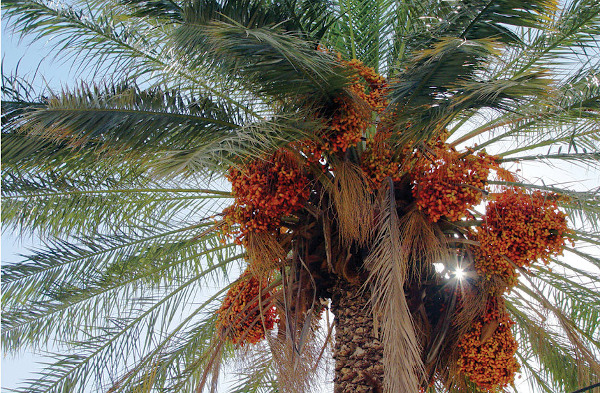
The date palm was a treasured tree in the ancient Near East. It was sometimes associated with fertility goddesses and is compared with the stature of a woman in SS 7:7.
www.HolyLandPhotos.org
Return to the main text.
7:8 I said. To myself. I will climb. His darling’s beauty draws him irresistibly. apples. Perhaps the fragrance of apple blossoms (but see note on 2:3).
7:9 May the wine . . . to my beloved. The woman offers the wine (see 5:1) of her love to her beloved.
7:10 I belong. See notes on 2:16; 6:3. desire. Cf. Ge 3:16.
7:11–12 In 2:10–13 the woman reports a similar invitation from her beloved.
7:12 I will give you my love. She offers herself completely to her beloved.
7:13 mandrakes. Short-stemmed herbs associated with fertility (see note on Ge 30:14). The odor of its blossom is pungent. at our door. Where the lovers meet. every delicacy. Metaphor for the delights the woman has for her beloved from her “garden” (cf. 4:13–14). both new and old. Those already shared and those still to be enjoyed.
8:1 no one would despise me. She could openly show affection without any public disgrace.
8:2 I would give you. She would offer her beloved the delights of her love. nectar. The Hebrew for this word refers to intoxicating juices.
8:5 Who . . . wilderness . . . ? See 3:6 and note. Under the apple tree. In the ancient world, sexual union and birth were often associated with fruit trees.
8:6–7 love is . . . grave. It burns . . . flame. Many waters . . . away. These three wisdom statements (see article) characterize marital love as the strongest, most unyielding and invincible force in human experience. With these statements the Song reaches its literary culmination and discloses its purpose.
8:6 seal. Likely a signet ring (see photo) or cylinder pressed into wax or clay which identified the owner. Seals were precious to their owners, as personal as their names (see note on Ge 38:18). arm. Perhaps a poetic synonym for “hand.” unyielding as the grave. As the grave will not give up the dead, so love will not surrender the loved one. mighty flame. The Hebrew expression conveys the idea of a most intense flame, hinting that it has been kindled by the Lord (see NIV text note).
8:7 Many waters. Words that suggest not only the ocean depths (Ps 107:23) but also the primeval waters that the people of the ancient Near East regarded as a permanent threat to the world (see note on Ps 32:6). The waters were also associated with the realm of the dead (see note on Ps 30:1). If one . . . scorned. A fourth wisdom statement (see note on vv. 6–7), declaring love’s unsurpassed worth.
8:8–14 In the closing lines of the Song, the words of the brothers (vv. 8–9), the woman’s reference to her own vineyard (v. 12) and her final reference to Solomon (vv. 11–12) suggest a return to the beginning of the Song (see 1:2–7; see also Introduction: Literary Features). The lines may recall the woman’s development into the age for love and marriage and the blossoming of her relationship with her beloved.
8:8 In the ancient Near East, brothers were often guardians of their sisters, especially in matters pertaining to marriage (Ge 24:50–60; 34:13–27). the day she is spoken for. Marriage was often contracted at an early age.
8:9 This imaginative verse probably expresses the brothers’ determination to defend their young sister until her proper time for love and marriage has come, whether she is a wall (protecting her virginity) or a door (potentially allowing in a lover). It may also mean that the brothers are concerned to see that she is properly adorned for marriage before she is spoken for.
8:10 I . . . like towers. In contrast to the time when she was watched over by her brothers, the woman rejoices in her maturity (cf. Eze 16:7–8). his. The beloved’s.
8:11–12 thousand shekels . . . two hundred. Whether these figures are to be taken literally (Isa 7:23) is uncertain.
8:11 Baal Hamon. The Hebrew hamon sometimes means “wealth” or “abundance”; hence Baal (i.e., “lord”) Hamon could mean “lord of abundance,” bringing to mind Solomon’s great wealth.
8:12 my own vineyard. Her body (see note on 1:6). mine to give. As Solomon had authority over his vineyard (v. 11), so she has authority over her body and freely gives it to her beloved.
8:13 in the gardens. In 7:11–12 the woman invites her beloved to accompany her to the countryside and the vineyards. Here the imagery places her appropriately in a garden. friends. Male; perhaps the companions of the beloved (see 1:7). let me hear your voice. See 2:14.
8:14 be like a gazelle or . . . stag. Display your virile strength and agility for my delight (see note on 2:9). on the spice-laden mountains. Cf. 2:17.