Study Notes
1:1—9:44 The genealogies succinctly show the restored community’s continuity with the past. The great deeds of God on Israel’s behalf prior to the rise of David are passed over in silence, but the genealogies serve as a skeleton of history to show that the Israel of the restoration stands at the center of the divine purpose from the beginning (from Adam, v. 1). And the genealogies also serve the very practical purpose of legitimizing the present. They provide the framework by which the ethnic and religious purity of the people can be maintained. They also establish the continuing line of royal succession and the legitimacy of the priests for the postexilic temple service. See Introduction: Genealogies.
 1:1—2:1 The Chronicler here covers the period from Adam to Jacob, and the materials are drawn almost entirely from Genesis. The Chronicler’s genealogy builds up to the most important element, the Davidic line. So the subsidiary lines of descent are presented first: Japheth and Ham (vv. 5–16) are given before Shem (vv. 17–27), the sons of Shem other than those in Abraham’s ancestry (vv. 17–23) before that line (vv. 24–27), the sons of Abraham’s concubines (vv. 28–33) before Isaac’s line (v. 34), the descendants of Esau and the Edomite ruling houses (vv. 35–54) before the sons of Israel/Jacob (2:1). In each case the elect lineage is given last.
Several features of this genealogy are strikingly similar to non-biblical ones. The genealogy begins without an introduction. Two sections of the genealogy have no kinship terms and are only lists of names: the first 13 names (vv. 1–4; see note on v. 4) and vv. 24–27. In vv. 5–16 (and following v. 27) kinship terms are used. Both segmented (those tracing several lines of descent) and linear (those tracing a single line) genealogies are included. This identical structure is found in a copy of the Assyrian King List: There is no introduction, and the scribe has drawn lines across the tablet, dividing it into four sections, two of which are lists of names without kinship terms, alternating with two lists in which relations are specified; both segmented and linear genealogies are used. This suggests that the Chronicler was following a known literary pattern for his composition (see photo).
1:1–4 From creation to the flood. This list is taken from Ge 5:1–32 (see notes there). The omission of Cain and Abel demonstrates the Chronicler’s interest in the chosen line (Ge 4:17–25).

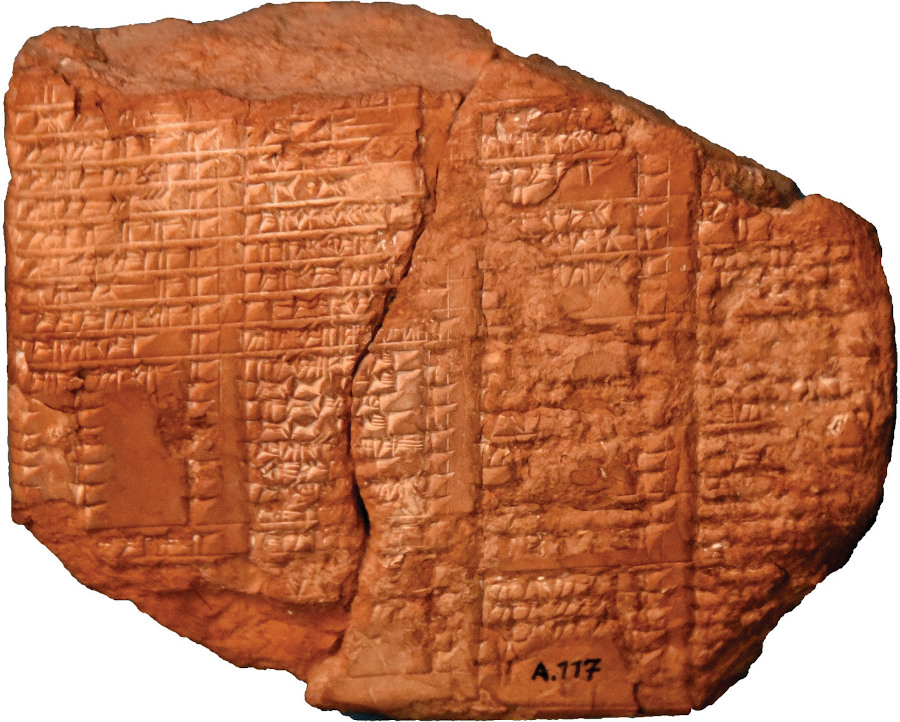
This Assyrian King list and first chapter of Chronicles share a common structure, which suggests that the Chronicler followed a known literary pattern (see note on 1Ch 1:1—2:1).
© Osama Shukir Muhammed Amin FRCP (Glasg)
Return to the main text.
1:4 The sons of Noah. Though not found in the Hebrew text (see NIV text note), the Septuagint (the pre-Christian Greek translation of the OT) and many modern translations insert this phrase to clarify the relationship. This omission parallels the Assyrian King List, in which kinship terms were often omitted (see note on 1:1—2:1).
1:5–23 This genealogy is drawn from the table of nations in Ge 10:2–29 (see notes there). The arrangement is primarily geographical and cultural rather than biological. Omitting the Philistines (v. 12) as a parenthesis, a total of 70 nations is achieved: Japheth, 14; Ham, 30; Shem, 26 (see note on Ge 10:2)—an example of a genealogy telescoped to attain multiples of 7 (see Introduction: Genealogies).
1:24–27 See notes on 1:1—2:1; Ge 11:10–26.
1:28–34 See notes on Ge 25:1–18.
1:35–42 See Ge 36:10–28 and notes.
1:36 sons of Eliphaz . . . by Timna. These correspond to Ge 36:11–12, but with one difficulty: The Hebrew text of Chronicles (see second NIV text note on this verse) lists Timna as a son of Eliphaz, while Ge 36:12 designates Timna as the concubine of Eliphaz and mother of Amalek. The NIV (“by Timna”) follows the Septuagint (the pre-Christian Greek translation of the OT), which regarded Timna as the mother of Amalek, not as the son of Eliphaz. According to this solution, the Hebrew text is here in error, or perhaps the Chronicler has once again omitted kinship terminology (see notes on v. 4 and 1:1—2:1). Alternatively, some regard this as an example of genealogical fluidity (see Introduction: Genealogies). They think that the name Timna also became the name of a chiefdom in Edom (v. 51; Ge 36:40); during the course of time Timna was moved in the Edomite genealogies to the position of a son of Eliphaz and brother of Amalek.
1:43–54 See Ge 36:31–43. The Chronicler continues with extensive coverage of Edom. This is striking in contrast to his omission of the line of Cain and the brief treatment of the line of Ishmael. It probably reflects the fact that the Edomites were important in the Chronicler’s own day (18:11–13; 2Ch 8:17; 21:8; 25:20; 28:17).
2:1–2 Although there are numerous lists of the 12 tribes in the OT, only four are given in genealogical form: (1) Ge 29:31—30:24; 35:16–20; (2) Ge 35:22–26; (3) Ge 46:8–27; (4) here. In other lists the tribe of Levi is omitted, and the number 12 is achieved by dividing Joseph into the tribes of Ephraim and Manasseh (Nu 1:5–15; 1:20–43; 2:3–31; 7:12–83; 10:14–28; 13:4–15; 26:5–51). In this passage the Chronicler appears to follow Ge 35:22–26 except for the position of the tribe of Dan, which is found in seventh instead of ninth place. The list here does not set the order in which the Chronicler will take up the tribes; rather, he moves immediately to his major concern with the house of David and the tribe of Judah (2:3—4:23), even though Judah is fourth in the genealogy. In the lists of these chapters, the Chronicler maintains the number 12, but with the following tribes: Judah, Simeon, Reuben, Gad, half-tribe of Manasseh, Levi, Issachar, Benjamin, Naphtali, Ephraim, Manasseh and Asher. Zebulun and Dan are omitted.
2:3–9 The lineage of Judah is traced to Hezron’s sons (v. 9), whose descendants are given in 2:10—3:24. Of Judah’s five sons, the first two (Er and Onan) died as the result of sin recorded in Ge 38. The lineage of the third son, Shelah, is taken up in 4:21; this section focuses on the remaining two (Ge 46:12; Nu 26:19–22).
2:6 Ethan, Heman, Kalkol and Darda. Not immediate descendants of Zerah; rather, they are from the later period of the reign of Solomon (1Ki 4:31). A Heman and an Ethan were David’s musicians (see 15:19; Ps 88–89 titles), but whether these are the same individuals is uncertain. If they are the same, the fact that in 6:33–42 and 15:19 Heman and Ethan are assigned to the tribe of Levi may be another example of genealogical fluidity, where these men’s musical skills brought them into the Levitical lineage. Or the reverse may have occurred: As Levites associated with Judah, they were brought into that lineage.
2:7 Achar. The change from Achan to Achar (meaning “trouble”; see NIV text note) is probably a play on words reflecting the trouble he brought to Israel (see Jos 7; see also note on Hos 2:15).
2:10–17 Verses 10–12 are a linear genealogy from Ram to Jesse; then Jesse’s lineage is segmented, reminiscent of 1Sa 16:1–13. The source for most of the material is Ru 4:19–22. In 1Sa 16:10–13 David was the eighth of Jesse’s sons to appear before Samuel; in this passage only seven are named, enabling David to occupy the favored place of the seventh son (v. 15; see Introduction: Genealogies). David was the half-uncle of his famous warriors Abishai, Joab, Asahel and Amasa (11:6,20,26; 2Sa 2:13, 18; 17:25; 19:13).
2:18–24 For the Chronicler the important name in this genealogy of the Calebites is Bezalel (v. 20), the wise master craftsman who supervised the building of the tabernacle (Ex 31:1–5). He is mentioned in the Bible only in Exodus and Chronicles. The Chronicler may be using Bezalel and Oholiab (Ex 31:6) as a model for his portrait of Solomon and Huram-Abi in the building of the temple (see note on 2Ch 1:5). By inserting a reference to the builder of the tabernacle next to the genealogy of David in vv. 10–17, the Chronicler characteristically juxtaposes the themes of king and temple—so important to his historical narrative.
2:25 sons of Jerahmeel. Foreigners in or near the south of Judah, amalgamated into Israel, thus fitting the Judahite emphasis of Chronicles. 1Ch 2:25–33 is identified as a separate entity from the supplementary material by its opening and closing formulas (vv. 25,33). Verses 25–41 are the only genealogical materials on the Jerahmeelites in the Bible. 1Sa 27:10 and 30:27–29 place their settlements in the Negev.
2:34–41 Supplementary material on the line of Sheshan (v. 31); it is a linear genealogy to a depth of 13 generations.
2:42–55 The same opening and closing formulas noted in vv. 25,33 occur in vv. 42,50a: “The sons of Caleb . . . These were the descendants of Caleb.” The list in this section is a mixture of personal names and place-names; the phrase “father of” must often be understood as “founder of” or “leader of” a city (see NIV text notes on 1:10; 4:4).
2:48–49 daughter was Aksah. Given the patrilineal nature of ancient geneaologies, this reference to Caleb’s daughter stands out (see Introduction: Genealogies).
2:50b–55 Resumes the genealogy of Hur (v. 20). The same formulas for identifying the genealogical sections in vv. 25,33 and in vv. 42,50a are used in v. 50b and 4:4: “The sons of Hur . . . These were the descendants of Hur.” The presence of these formulas suggests that this section and 4:1–4 were once a unit; the Chronicler has inserted his record of the Davidic descent (ch. 3) into the middle of this other genealogy, apparently to balance the sections of his material (see notes on 2:10—3:24; 4:1–23). Alternatively, the disruption of the genealogy of Hur may have already occurred in the Chronicler’s sources.
2:55 Tirathites, Shimeathites and Sucathites. May refer to three families, as translated here, or possibly to three different classes of religious functionaries. Kenites. Originally a foreign people, many of the Kenites were incorporated into Judah (Nu 10:29–32; Jdg 1:16; 4:11).
3:1–9 This list of David’s children is largely drawn from 2Sa 3:2–5; 5:13–16; 13:1 (see notes there). The sons born in Jerusalem are repeated in 1Ch 14:3–7. The name Eliphelet occurs twice (vv. 6,8); in 14:5,7 two spellings of the name are given in Hebrew (only one son having this name is mentioned in 2Sa 5:14–16). The reference to David’s seven-year rule in Hebron (v. 4) is repeated in 29:27, though the Chronicler does not deal with this period in his narrative. The references to Absalom, Tamar, Adonijah, Amnon and Bathsheba all recall unhappy incidents in the life of David, incidents the Chronicler has omitted from his later narrative (2Sa 11–15; 17–18; 1Ki 1).
3:10 Rehoboam. See 2Ch 10–12 and note on 11:1–23. Abijah. See note on 2Ch 13:1—14:1. Asa. See note on 2Ch 14:2—16:14. Jehoshaphat. See note on 2Ch 17:1—21:3.
3:11 Jehoram. See 2Ch 21. Ahaziah. See note on 2Ch 22:1–9. Joash. See note on 2Ch 23:1—24:27.
3:12 Amaziah. See note on 2Ch 25:1–28. Azariah. Also called Uzziah (see note on 2Ch 26:1–23). Jotham. See 2Ch 27; see also 2Ki 15:32–38 and notes.
3:13 Ahaz. See 2Ch 28:1–27 and notes. Hezekiah. See note on 2Ch 29:1—32:13. Manasseh. See note on 2Ch 33:1–20.
3:14 Amon. See note on 2Ch 33:21–25. Josiah. See note on 2Ch 34:1—36:1.
3:15 Johanan the firstborn. Not mentioned elsewhere and may have died before Josiah. The genealogy is segmented at this point, instead of linear as in vv. 10–14. Since Josiah’s other three sons would all occupy the throne, the succession was not uniformly father to son. Shallum/Jehoahaz (2Ch 36:2–4; 2Ki 23:30–35) was replaced by Jehoiakim (2Ch 36:5–8; 2Ki 23:34—24:6); Jehoiakim was succeeded by his son Jehoiachin (2Ch 36:9–10; 2Ki 24:8–16). After Jehoiachin was taken captive to Babylon by Nebuchadnezzar, Josiah’s son Zedekiah became the last king of Judah (2Ch 36:11–14; 2Ki 24:17—25:7).
3:17–20 Seven sons are attributed to Jehoiachin, but not one succeeded him (see notes on v. 15; Jer 22:30). Tablets found in Babylon (see photo) dating from the 10th to the 35th year of Nebuchadnezzar (595–570 bc) and listing deliveries of rations mention Jehoiachin and five sons, as well as other Judahites held in Babylon. Jehoiachin received similar largess from Nebuchadnezzar’s successor, Awel-Marduk (562–560 bc; see 2Ki 25:27–30; Jer 52:31–34).
3:18 Shenazzar. May be another spelling of the name Sheshbazzar. If so, the treasures of the temple were consigned to his care for return to Judah (Ezr 1:11). He also served for a short time as the first governor of the returnees and made an initial attempt at rebuilding the temple (Ezr 5:14–16). Little is known of him; he soon disappeared from the scene and was overshadowed by his nephew Zerubbabel, who assumes importance in Ezra, Haggai and Zechariah as a governor descended from David (cf. note on Ezr 1:8).
3:19 Pedaiah. Other texts name Shealtiel (v. 17) as Zerubbabel’s father (Ezr 3:2, 8; Ne 12:1; Hag 1:1, 12,14; 2:2,23). It is possible that: (1) Shealtiel may have died early, and Pedaiah became the head of the family; or (2) Pedaiah may have married the childless widow of Shealtiel; Zerubbabel would then be regarded as the son of Shealtiel according to the law of levirate marriage (Dt 25:5–6). In Lk 3:27 Neri instead of Jehoiachin (v. 17) is identified as the father of Shealtiel. Suggestions similar to those above could be made in this instance as well. The genealogies of Jesus in Mt 1 and Lk 3 both trace his descent to Zerubbabel, but none of the names subsequent to Zerubbabel (v. 19–24) is found in the NT genealogies.
3:20 five others. May have been sons of Zerubbabel, but no kinship terms are provided. Since the sons of Hananiah (v. 19) are specified in v. 21, they could also be the sons of Meshullam (v. 19).
3:21 sons of Rephaiah . . . Shekaniah. Probably other Davidic families at the time of Zerubbabel (v. 19) or Pelatiah and Jeshaiah. If they are understood as contemporary with Zerubbabel, his genealogy was carried only two generations (his sons and grandsons) and a date for Chronicles as early as 450 bc is possible (see Introduction: Author, Date and Sources).
4:1–23 None of the genealogies of Judah in this section appears elsewhere in Scripture. Although the section may have the appearance of miscellaneous notes, the careful shaping of the Chronicler is evident in light of the overall inverted structure of the genealogies of Judah:
This balancing of the material in inverse order shows the centrality of the section of the lineage of Hezron and the house of David; the same balancing in inverse order is observed within the Hezron section. The record of Judah’s oldest surviving son, Shelah, frames the entire genealogy of Judah. There are 15 fragmentary genealogies in this section, with two to six generations in each.
4:1–2 The descendants of Judah here are not brothers; rather, the genealogy is linear.
4:1 Karmi. Either a scribal confusion or an alternative name for Caleb (2:9); the confusion may have been induced by 2:7.
4:2 Reaiah. A variant of Haroeh (2:52).
4:9–10 The practice of inserting short historical notes into genealogical records is amply attested in non-biblical genealogical texts from the ancient Near East, as well as in other biblical genealogies (Ge 4:19–24; 10:8–12).
4:10 Jabez cried out. One cannot generalize from this one prayer that God will always, or even often, grant similar requests. He is sovereign and will do so when it serves his purposes.
4:13 Othniel. The first of Israel’s judges (Jos 15:17; Jdg 1:13; 3:9–11).
4:14 Ge Harashim . . . skilled workers. See NIV text note; see also note on Ne 11:35.
4:16–20 This portion of the genealogy is from preexilic times; several of the places named were not included in the province of Judah in the restoration period (e.g., Ziph and Eshtemoa).
4:17 One of Mered’s wives. The pharaoh’s daughter (v. 18). Mered is otherwise unknown; the fact that he married a daughter of a pharaoh suggests his prominence.
4:21,23 This section accurately reflects a feature of ancient Near Eastern society. Clans were often associated not only with particular localities but also with special trades or guilds, such as linen workers (v. 21), potters (v. 23), royal patronage (v. 23) and scribes (2:55).
4:24–43 The genealogy of Simeon is also found in Ge 46:10; Ex 6:15; Nu 26:12–13. Simeon settled in part of the territory of Judah; cf. the list of occupied towns with Jos 15:26–32, 42; 19:2–7. Since Simeon occupied areas allotted to Judah, this tribe was politically incorporated into Judah and appears to have lost much of its own identity in history (see Ge 34:24–31; 49:5–7; see also notes on Ge 34:25; 49:7). Geographical and historical notes are inserted in the genealogy (see note on vv. 9–10). Apparently two genealogies are included here: vv. 24–33—ending with the formula, “they kept a genealogical record”—and vv. 34–43. Overpopulation (v. 38) caused them to expand toward Gedor and east toward Edom at the time of Hezekiah (vv. 39–43). The long hostility between Israel and Amalek surfaced once again (v. 43; cf. Ex 17:8–16; Dt 25:17–19; 1Sa 15; see Introduction to Esther: Purpose, Themes and Literary Features).
5:1–26 The genealogical records of the tribes east of the Jordan: Reuben, Gad and half of Manasseh (Nu 32:33–42). The Chronicler’s concern with “all Israel” includes incorporating the genealogical records of these tribes that were no longer significant entities in Israel’s life in the restoration period, having been swept away in the Assyrian conquests.
5:1–10 The necessity of explaining why the birthright of the firstborn did not remain with Reuben (see Ge 35:22; 49:4 for Reuben’s sin) interrupts the initial statement (v. 1), which is then repeated after the explanation (v. 3). The parenthetical material (vv. 1–2) shows the writer’s partiality for Judah, even though Joseph received the double portion (Ephraim and Manasseh) of the firstborn. The Hebrew term translated “ruler” (v. 2) is used of David in 11:2; 17:7; 2Sa 5:2; 6:21; 7:8. The use of military titles (vv. 6–7) and a battle account (v. 10) suggest that this genealogy may have functioned in military organization (see Introduction: Genealogies). The source for some of this material on Reuben is Nu 26:5–11.
5:6 Tiglath-Pileser. This Assyrian king (745–727 bc; see chart) attacked Israel (v. 26; 2Ki 15:29) and also imposed tribute on Ahaz of Judah (2Ch 28:19–20; 2Ki 16:7–10).
5:10 Hagrites. See vv. 19–22. Named among the enemies of Israel (Ps 83:6), this tribe is apparently associated with Hagar, the mother of Ishmael (Ge 16), but see note on Ps 83:6.
5:11–22 The materials in this list for the tribe of Gad have no parallels in the Bible. The other genealogies of Gad are organized around his seven sons (Ge 46:16; Nu 26:15–18); here four names are given, none found in the other lists. The Chronicler states (v. 17) that these records came from the period of Jotham of Judah (750–732 bc) and Jeroboam of Israel (793–753). The presence of military titles and narratives (vv. 12,18–22) suggests that this genealogy originated as part of a military census. The territory of Gad is delineated in Dt 3:12.
 5:18–22 Success in warfare is attributed to their crying out to God (v. 20; cf. 2Ch 6:24–25, 34–39; 12:7–12; 13:13–16; 14:9–15; 18:31; 20:1–30; 32:1–23).
5:23–26 Manasseh is treated further in 7:14–19; the half-tribe that settled east of the Jordan River is dealt with here since it shared the same fate as Reuben and Gad, and possibly also so that the Chronicler could keep the total of 12 for his tribal genealogies (see note on 2:1–2). Just as trust in God can bring victory (vv. 18–22), so also defeat comes to the unfaithful (vv. 25–26).
The list of names given here is not properly a genealogy but a list of clans. Since they are described as brave warriors in connection with a battle report (vv. 24–26), this section too is likely derived from records of military conscription (see note on vv. 1–10; see also 2Ki 15:19, 29; 17:6; 18:11).
5:25 were unfaithful . . . prostituted themselves. See Ex 34:15 and note.
5:26 Pul. Tiglath-Pileser’s throne name in Babylon (see photo below).
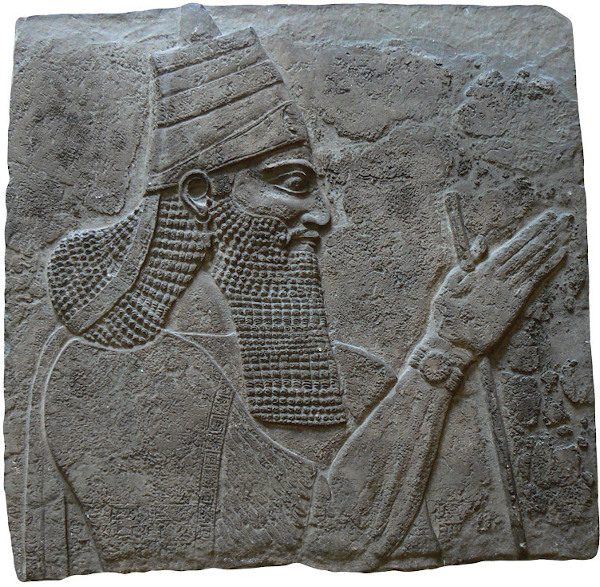
King of Assyria Tiglath-Pileser III, who “took the Reubenites, the Gadites and the half-tribe of Manasseh into exile” (1Ch 5:26).
Kim Walton, courtesy of the British Museum
Return to the main text.
6:1–81 This chapter is devoted to a series of lists, all pertaining to the tribe of Levi. The first section (vv. 1–15) records the line of the high priests down to the exile; the clans of Levi follow (vv. 16–30). David’s appointees as temple musicians came from the three clans of Levi: Gershon, Kohath and Merari (vv. 31–47). The generations between Aaron and Ahimaaz are given a separate listing (vv. 49–53), reinforcing the separate duties of priests and Levites (see note on Ex 32:26). The listing of the Levitical allotments among the tribes concludes the chapter (vv. 54–81).
6:1–3 A short segmented genealogy narrows the descendants of Levi to the lineage of Eleazar, in whose line the high priests are presented in linear form (vv. 4–15). The sons of Levi (v. 1) always appear in this order, based on age (v. 16; Ge 46:11; Ex 6:16; Nu 3:17; 26:57). Of Aaron’s four sons (v. 3), the first two died as a result of sacrilege (Lev 10:1–2; Nu 26:61); succeeding generations of priests would trace their lineage to either Eleazar or Ithamar.
6:4–15 This list of high priests from the time of Eleazar to the exile has been sharply telescoped. The following high priests known from the OT are not mentioned: Jehoiada (2Ki 12:2), Uriah (2Ki 16:10–16), possibly two other Azariahs (2Ch 26:17, 20; 31:10–13), Eli (1Sa 1:9; 14:3) and Abiathar (see 2Sa 8:17 and note). The list is repeated with some variation in Ezr 7:1–5 (see notes there).
6:8 Ahitub the father of Zadok. This Zadok was one of David’s two priests (18:16; 2Sa 8:17). When David’s other priest, Abiathar (see note on vv. 4–15), supported the rebellion of Adonijah, Zadok supported Solomon (1Ki 1). After the expulsion of Abiathar (1Ki 2:26–27), Zadok alone held the office (1Ch 29:22), which continued in his line (1Ki 4:2). The Ahitub mentioned here should not be confused with the priest who was the grandson of Eli (1Sa 14:3) and grandfather of Abiathar (1Sa 22:20); the line of Zadok replaced the line of Eli (1Sa 2:27–36; 1Ki 2:26–27). For the importance of the line of Zadok, see Eze 40:46; 43:19; 44:15; 48:11. Ezra was concerned to trace his own priestly lineage to this house (Ezr 7:1–5).
6:13 Hilkiah. Discovered the Book of the Law in the temple during the reign of Josiah (2Ki 22; 2Ch 34).
6:14 Seraiah. Executed by the Babylonians after the conquest of Jerusalem in 586 bc (2Ki 25:18–21). Jozadak. See NIV text note; father of Joshua (see note on Ezr 2:2), the high priest in the first generation of the restoration period (see Hag 1:1; 2:2; Zec 3:1 and note; 6:11; see also Ezr 3:2; 5:2; 10:18).
6:16–19a Repeated from Ex 6:16–19; Nu 3:17–20; 26:57–61.
6:22–23 Assir . . . Elkanah . . . Ebiasaph. Ex 6:24 names these men as sons of Korah, but here they are presented in the form ordinarily used for a linear genealogy of successive generations (vv. 20–21, 25–26, 29–30). Either this is another example of genealogical fluidity or one must understand “his son” as referring to Kohath and not to the immediately preceding name.
6:22 Amminadab. The almost parallel genealogy later in this chapter lists Izhar in the place of Amminadab—who is nowhere else listed as a son of Kohath, while every other list includes Izhar (vv. 2,37–38; Ex 6:18,21). Either Amminadab is an otherwise unattested alternative name of Izhar, or he is an otherwise unknown son. Or this may be another example of genealogical fluidity in which the Levites are linked with the tribe of Judah and the lineage of David (see Ru 4:18–22; see also Mt 1:4; Lk 3:33) in view of Aaron’s marriage to the daughter of Amminadab of Judah (Ex 6:23; see 1Ch 2:10).
6:24 Uriel. Possibly the one who led the Kohathites in David’s day (15:5).
6:26–27 Zophai . . . Nahath . . . Eliab. Apparently variant names for Zuph, Toah and Eliel (vv. 34–35).
6:27 Samuel. His lineage is also given in 1Sa 1:1, where his family is identified as Ephraimite (see note there). Either this is an example of genealogical fluidity, in which Samuel’s involvement in the tabernacle (1Sa 3) and performance of priestly duties (9:22; 1Sa 2:18; 3:1) resulted in his incorporation into the Levites, or the term “Ephraimite” is to be understood as a place of residence, not as a statement of lineage.
 6:31–48 Each of the three Levitical clans contributed musicians for the temple: Heman from the family of Kohath, Asaph from Gershon, and Ethan (also called Jeduthun) from Merari. The Chronicler makes frequent reference to the appointment of the musical guilds by David (see 15:16,27; 25:1–31 and note on 25:1; 2Ch 29:25–26; Ne 12:45–47). The frequent mention of the role of the Levites has led many to assume that the author was a member of the musicians. Non-biblical literature also attests to guilds of singers and musicians in Canaanite temples. This genealogy appears to function as a means of legitimizing the Levites of the restoration period (Ezr 2:40–41; Ne 7:43–44; 10:9–13, 28–29; 11:15–18; 12:24–47).
6:50–53 Repeats vv. 4–8 but presumably serves a different function: to legitimize the line of Zadok, which is traced down to Solomon’s time, as the only Levitical division authorized to offer sacrifices.
6:54–81 This list of Levitical allotments is taken from Jos 21 with only minor differences (see notes there). The Levites, who were given no block of territory of their own, were distributed throughout Israel.
7:1–5 Parts of the genealogy of Issachar are taken from Ge 46:13; Nu 1:28; 26:23–25, though many of the names are otherwise unattested. This list of the clans appears to come from a military register (vv. 2,4–5) from the time of David (v. 2), perhaps reflecting the census of ch. 21 and 2Sa 24.
7:6–12 There is considerable fluidity among the biblical sources listing the sons of Benjamin. This list gives three sons; Ge 46:21 records ten; Nu 26:38–39 and 1Ch 8:1–2 both list five (the only name appearing in all these sources is Bela, the firstborn). The variations reflect different origins and functions for these genealogies. The list here appears to function in the military sphere (vv. 7,9,11).
7:13 Repeats Ge 46:24; Nu 26:48–50. descendants of Bilhah. Dan and Naphtali were the actual sons of Jacob’s concubine Bilhah (Ge 30:3–8), so Naphtali’s sons are Bilhah’s descendants.
7:14–19 See note on 5:23–26. The sources for this genealogy are Nu 26:29–34; Jos 17:1–18. The daughters of Zelophehad (v. 15) prompted the rulings on the inheritance rights of women (Nu 26:29–34; 27:1–11; 36:1–12; Jos 17:3–4). Of the 13 different clans of the tribe of Manasseh known from these genealogies, seven are mentioned in the Samaria ostraca (about 65 inscribed potsherds containing records of deliveries of wine, oil, barley and other commodities in the eighth century bc; see photo). The prominence of women in this genealogy is unusual; this suggests that it may have functioned in the civil sphere, perhaps as a statement of the social status of the various clans of Manasseh (see Introduction: Genealogies).
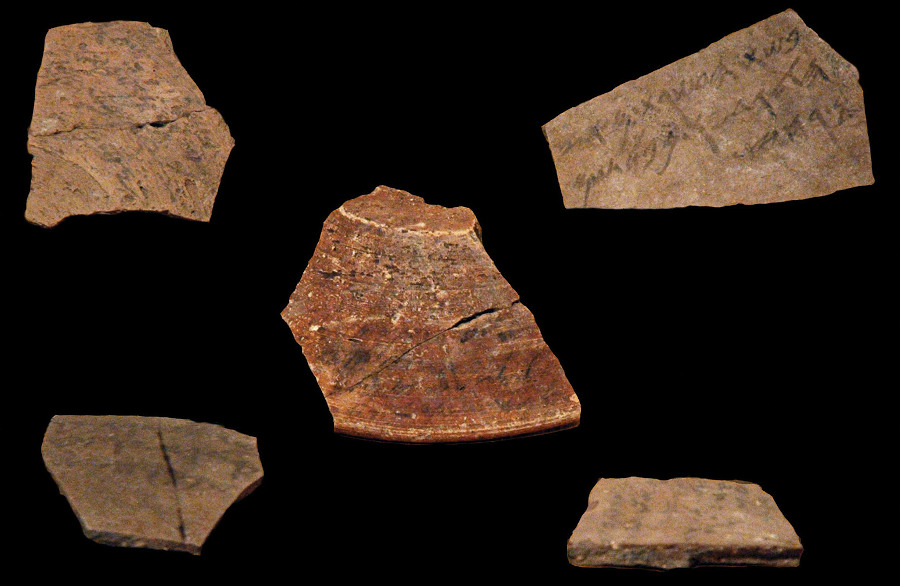
Of the 13 different clans of the tribe of Manasseh known from the genealogies in 1Ch 7:14–19, seven are mentioned in the these clay pieces called the Samaria ostraca, dated to the 8th century bc.
Todd Bolen/BiblePlaces.com
Return to the main text.
7:20–29 The source for part of the genealogy of Ephraim is Nu 26:35. If Rephah (v. 25) is the grandson of Ephraim, ten generations are recorded from Ephraim to Joshua, a number that fits very well the 400-year interval when Israel was in Egypt. Joshua’s Ephraimite ancestry is also mentioned in Nu 13:8 (where he is called “Hoshea”; see Nu 13:16). The raid against Gath (vv. 21–22) must have taken place well before the conquest of Canaan and must have originated in Egypt. The list of settlements (vv. 28–29) summarizes Jos 16–17.
7:24 Sheerah. In a patrilineal genealogy, this reference to the accomplishment of Beriah’s daughter stands out. It reflects the Chronicler’s interest elsewhere in the genealogies (see 2:3–4, 34–35, 48–49; 3:19; 4:3,27; 7:14).
7:30–40 The genealogy of Asher follows Ge 46:17 for the first three generations; it is also parallel to Nu 26:44–46, except that the name Ishvah (v. 30) is missing there. This genealogy too reflects a military function (v. 40).
8:1–40 The inclusion of a second and even more extensive genealogy of Benjamin (see note on 7:6–12) reflects both the importance of this tribe and the Chronicler’s interest in Saul. Judah, Simeon and part of Benjamin had composed the southern kingdom (1Ki 12:1–21), and their territory largely comprised the restoration province of Judah in the Chronicler’s own time. The genealogy of Benjamin is more extensive than that of all the other tribes except Judah and Levi. The Chronicler is also concerned with the genealogy of Saul (vv. 29–38; repeated in 9:35–44) in order to set the stage for the historical narrative that begins with the end of his reign (ch. 10). Several references suggest that this genealogy also originated in the military sphere (vv. 6,10,13,28,40).
8:1–5 Cf. the lists in 7:6–12; Ge 46:21–22; Nu 26:38–41.
8:29–38 Essentially the same as the list in 9:35–44.
8:33 For the sons of Saul, see 1Sa 14:49; 31:2. Jonathan. The firstborn and the best known of the sons of Saul, both for his military prowess and for his friendship with David (1Sa 13–14; 18:1–4; 19:1–7; 20:1–42; 23:16–18; 2Sa 21:13–14). Esh-Baal. See NIV text note; see also note on 2Sa 2:8.
8:34 Merib-Baal. See NIV text note; see also note on 2Sa 4:4.
9:1 All Israel. The Chronicler’s concern with “all Israel” is one key to why he included the genealogies (see Introduction: Purpose and Themes). book of the kings of Israel. See Introduction: Author, Date and Sources.
9:2–34 This list of the members of the restored community reflects the Chronicler’s concern with the institutions of his own day, especially the legitimacy of officeholders. He lists laity (“Israelites,” v. 2) in vv. 3–9, priests in vv. 10–13 and Levites in vv. 14–34. He mentions a fourth class of returnees—the temple servants (v. 2)—but does not give them separate listing in the material that follows. They may originally have been foreigners who were incorporated into the Levites (Jos 9:23; Ezr 8:20) and so are not listed apart from that tribe. A similar office is known in the temple at ancient Ugarit.
9:3 Ephraim and Manasseh. Reflecting his concern with “all Israel,” the Chronicler shows that the returnees were not only from Judah and Benjamin but also from the northern tribes.
9:4–6 See 2:3–6; 4:21. The returnees of Judah are traced to Judah’s sons Perez, Zerah and Shelah (Nu 26:20).
9:10–13 The list of priests is essentially the same as that in Ne 11:10–14. Since it is tied to the list of priests earlier in the genealogies (6:1–15,50–53), contemporary Israel’s continuity with their past is shown.
9:15–16 Asaph . . . Jeduthun. Leaders of musical groups (6:39; 16:41). Later the Chronicler also lists the musicians (ch. 25) before the gatekeepers (ch. 26).
9:16 Netophathites. See note on Ne 12:28.
9:17–21 The Chronicler gives the names of four gatekeepers, while Ne 11:19 mentions only two. The chief of the gatekeepers had the honor of responsibility for the gate used by the king (Eze 46:1–2). The gatekeepers are also listed in ch. 26; Ezr 2:42. These officers traced their origin to Phinehas (v. 20; 6:4; Nu 3:32; 25:6–13).
9:22–27 Twenty-four guard stations were manned in three shifts around the clock; 72 men would be needed for each week. With a total of 212 men, each would have a tour of duty approximately every three weeks (26:12–18).
9:28–34 The Levites not only were responsible for the temple precincts and for opening the gates in the morning but also had charge of the chambers and supply rooms (23:28; 26:20–29), as well as the implements, supplies and furnishings (28:13–18; Ezr 1:9–11). In addition, they were responsible for the preparation of baked goods (Ex 25:30; Lev 2:5–7; 7:9). The priests alone prepared the perfumed anointing oil and spices (Ex 30:23–33).
9:35–44 The genealogy of Saul is duplicated here (see 8:29–38) as a transition to the short account of the end of his reign that begins the narrative portion of Chronicles (ch. 10).
10:1–14 This brief account of Saul’s death introduces the reign of David, one of the Chronicler’s major interests (see Introduction: Purpose and Themes; Portrait of David and Solomon).
10:2 For the strategy of pursuing the king in battle, see note on 1Ki 22:31.
10:6 his three sons. See v. 2 (Ish-Bosheth survived; see note on 1Sa 31:2). all his house. His three sons and his chief officials (his official “house”), not all his descendants (see 8:33–34 and notes; 1Sa 31:6).
10:13–14 These verses were included here by the Chronicler in line with his concern with immediate consequences (see Introduction: Purpose and Themes). Seeking mediums was forbidden (Dt 18:9–14) and brought death to Saul. The Chronicler is writing to an audience already familiar with Samuel and Kings, and he frequently assumes that knowledge. Here the consultation with the medium at Endor is alluded to (1Sa 28), but the Chronicler does not recount the incident.
11:1-2Ch 9:31 The heart of Chronicler’s narrative (see Introduction: Portrait of David and Solomon).
11:1–3 The material here parallels that in 2Sa 5:1–3 but is recast by the Chronicler in accordance with his emphasis on the popular support given David by “all Israel” (v. 1). While the Chronicler twice mentions the seven-year reign at Hebron before the death of Ish-Bosheth and the covenant with the northern tribes (3:4; 29:27), these incidents are bypassed in the narrative portion of the book. Rather, the Chronicler paints a picture of immediate accession over “all Israel,” followed by the immediate conquest of Jerusalem (see Introduction: Portrait of David and Solomon). The author once again assumes the reader’s knowledge of the parallel account.
11:4–9 See 2Sa 5:6–10 and notes. The “all Israel” theme appears in v. 4 (“all the Israelites”) as a substitute for “the king and his men” (2Sa 5:6).
11:10–41a See 2Sa 23:8–39 and notes. In the Samuel account this list of David’s mighty warriors is given near the end of his reign. The Chronicler has moved the list to the beginning of his reign and has greatly expanded it (11:41b–12:40) as part of his emphasis on the broad support of “all Israel” for the kingship of David (v. 10).
11:15–19 David recognizes that he is not worthy of such devotion and makes the water a drink offering to the Lord (Ge 35:14; 2Ki 16:13; Jer 7:18; Hos 9:4).
11:22 Benaiah . . . killed a lion. See photo.
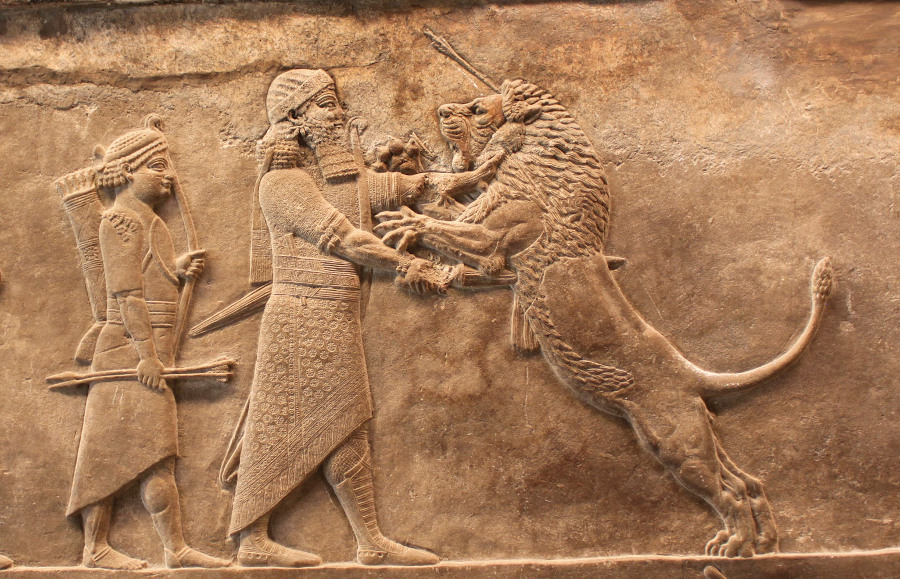
Killing a lion in the ancient Near East made a person a hero. Here Assyrian King Ashurbanipal is stabbing a lion with a sword. In 1Ch 11:22, Benaiah, one of David’s mighty men, is described as a “valiant fighter,” and “he also went down into a pit on a snowy day and killed a lion.”
© 2013 by Zondervan
Return to the main text.
11:41b–12:40 See note on vv. 10–41a. The list in 2Sa 23 ends with Uriah the Hittite (2Sa 11); the source for the additional names is not known. The emphasis continues to be on the support of “all Israel”—even Saul’s own relatives recognized the legitimacy of David’s kingship before Saul’s death (12:1–7,16–18, 23,29).
12:1 The Chronicler assumes the reader’s knowledge of the events at Ziklag (1Sa 27); see vv. 19–20.
12:8–15 The warriors of Gad were from Transjordan. Melting snows to the north would have brought the Jordan to flood stage in the first month (March-April) at the time of their crossing (v. 15). The most appropriate time for this incident would have been in the period of David’s wandering in the region of the Dead Sea (1Sa 23:14; 24:1; 25:1; 26:1).
12:23–37 The emphasis remains on “all Israel” (v. 38). Though 13 tribes are named, they are grouped in order to maintain the traditional number of 12 (see note on 2:1–2). The northernmost tribes and those east of the Jordan River send the largest number of men (vv. 33–37), reinforcing the degree of support that David enjoyed not only in Judah and Benjamin but throughout the other tribes as well. The numbers in this section seem quite high. Essentially two approaches are followed on this question: (1) It is possible to explain the numbers so that a lower figure is actually attained. The Hebrew word for “thousand” may represent a unit of a tribe, each having its own commander (13:1; see Nu 31:14, 48,52,54). In this case the numbers would be read not as a total figure, but as representative commanders. For example, the 6,800 from Judah (v. 24) would be read either as six commanders of 1,000 and eight commanders of 100 (see 13:1), or possibly as six commanders of thousands and 800 men (see article). Reducing the numbers in this fashion fits well with 13:1 and with the list of commanders alone found for Zadok’s family (v. 28) and the tribe of Issachar (v. 32). Taking the numbers as straight totals would require the presence of 340,800 persons in Hebron for a feast at the same time. (2) Another approach is to allow the numbers to stand and to view them as hyperbole on the part of the Chronicler to achieve a number “like the army of God” (v. 22). This approach would fit well with the Chronicler’s glorification of David and with the banquet scene that follows.
12:38–40 The Chronicler’s portrait of David is influenced by his Messianic expectations (see Introduction: Purpose and Themes). In the presence of a third of a million people (see note on vv. 23–37) David’s coronation banquet typifies the future Messianic feast (Isa 25:6–8). The imagery of the Messianic banquet became prominent in the intertestamental literature (2 Baruch 29:4–8; 1 Enoch 62:14) and in the NT (see Mt 8:11–12 and Lk 13:28–30; Mt 22:1–10 and Lk 14:16–24; see also Mt 25:1–13; Lk 22:28–30; Rev 19:7–9). The Lord’s Supper anticipates that coming banquet (Mt 26:29; Mk 14:25; Lk 22:15–18; 1Co 11:23–26).
13:1–14 See 2Sa 6:1–11 and notes. The author does not put the events in chronological order as presented in 2Sa 5–6 but puts the transfer of the ark first, delaying his account of the palace building and the Philistine campaign until later (ch. 14). This is in accordance with his portrayal of David; David’s concern with the ark was expressed immediately upon his accession—his consultation with the leaders appears to be set in the context of the coronation banquet (12:38–40).
13:1–4 These verses are not found in Samuel and reflect the Chronicler’s own concerns with “all Israel.” The semi-military expedition to retrieve the ark in 2Sa 6:1 is here broadened by consultation with and support from the whole assembly of Israel, “throughout the territories” (v. 2), including the priests and Levites—an important point for the Chronicler since only they are allowed to move the ark (15:2,13; 23:25–27; Dt 10:8).
13:5–6 The emphasis remains on the united action of “all Israel.” Israelites came to participate in this venture all the way from Lebo Hamath in the north and from the Shihor River in the south.
13:5 Shihor. An Egyptian term meaning “the pool of Horus.” It appears to be a part of the Nile or one of the major canals of the Nile (see Jos 13:3; Isa 23:3; Jer 2:18 and notes).
13:6 Baalah. The Canaanite name for Kiriath Jearim, also known as Kiriath Baal (Jos 18:14). The Chronicler assumes that his readers are familiar with the account of how the ark came to be at Kiriath Jearim (1Sa 6:1—7:1). the Name. See Ex 23:21 and note.
13:7 Uzzah and Ahio. Sons or descendants of Abinadab (2Sa 6:3).
13:10 because he had put his hand on the ark. The ark was to be moved only by Levites, who carried it with poles inserted through rings in the sides of the ark (Ex 25:12–15). None of the holy things was to be touched, on penalty of death (Nu 4:15). These strictures were observed in the second and successful attempt to move the ark to Jerusalem (15:1–15). It cannot be known whether Uzzah and Ahio were Levites—the Samuel account does not mention the presence of Levites, but the Chronicler’s careful inclusion of Levites in this expedition suggests that they were present (see note on vv. 1–4). In any case, the ark should not have been moved on a cart (as done by the Philistines, 1Sa 6) or touched.
13:13 Obed-Edom. Perhaps the same man mentioned in 15:18,21,24. In 26:4 God’s blessing on Obed-Edom included numerous sons. This reference also establishes that Obed-Edom was a Levite and that the ark was properly left in his care.
14:1–17 The three-month period that the ark remained with Obed-Edom (13:14) was filled with incidents showing God’s blessing on David: the building of his royal house (vv. 1–2), his large family (vv. 3–7) and his success in warfare (vv. 8–16)—all because of the Lord’s blessing (vv. 2,17).
14:1–2 See 2Sa 5:11–12 and notes.
14:1 Hiram. Later provided materials and labor for building the temple (2Ch 2). His mention here implies international recognition of David as king over Israel and a treaty between David and Hiram.
14:3–7 See 3:1–9 and note; 2Sa 5:13–16. David’s children born in Hebron are omitted (3:1–4; 2Sa 3:2–5; see note on 11:1–3).
14:7 Beeliada. Eliada (see NIV text note) in 3:8; 2Sa 5:16.
14:8–12 See 2Sa 5:17–21 and notes.
14:11 break out . . . Perazim. There is a Hebrew wordplay between the name of this place, where the Lord broke out against the Philistines, and the word used in 13:11 when the Lord broke out against Uzzah (see NIV text notes there and here).
14:12 gave orders to burn them. 2Sa 5:21 does not mention burning but says that David and his men carried the idols away. Many have seen here an intentional change on the part of the Chronicler in order to bring David’s actions into strict conformity with the law, which required that pagan idols be burned (Dt 7:5,25). However, some Septuagint (the pre-Christian Greek translation of the OT) manuscripts of Samuel agree with Chronicles that David burned the idols. This suggests that the Chronicler was not innovating for theological reasons but was carefully reproducing the Hebrew text he had before him, which differed from the Masoretic (later Hebrew) text of Samuel.
14:13–16 See 2Sa 5:22–25 and notes.
14:17 the LORD made all the nations fear him. Here and elsewhere the Chronicler uses an expression that refers to an incapacitating terror brought on by the sense that the awesome power of God is present in behalf of his people (Ex 15:16). Thus David is seen by the nations as the very representative of God (similarly Asa, 2Ch 14:14; Jehoshaphat, 2Ch 17:10; 20:29).
15:1–24 This portion of the account of the successful attempt to move the ark to Jerusalem is unique to the Chronicler and reflects his interests in the Levites and worship musicians (vv. 3–24; see Ps 132 and Introduction: Purposes).
15:1 constructed buildings for himself. See 14:1–2 and note on 13:1–14.
15:4–10 The three clans of Levi are represented (Kohath, Merari and Gershon), as well as three distinct subgroups within Kohath (Elizaphan, Hebron and Uzziel)—862 in all.
15:12 consecrate yourselves. Through ritual washings and avoidance of ceremonial defilement (Ex 29:1–37; 30:19–21; 40:31–32; Lev 8:5–35).
15:13–15 The Chronicler provides the explanation for the failure in the first attempt to move the ark, an explanation not found in the Samuel account (see note on 13:10).
15:18,21,24 Obed-Edom. See note on 13:13.
15:24 priests were to blow trumpets. See 16:6; Nu 10:1–10; see also photo.
15:27 Both 2Sa 6:14 and the Chronicler mention David’s wearing a linen ephod, a garment worn by priests (1Sa 2:18; 22:18). The Chronicler adds, however, that David (as well as the rest of the Levites in the procession) was wearing a robe of fine linen, further associating him with the dress of the priestly functionaries. Apparently the Chronicler viewed David as a priest-king, a kind of Messianic figure (see Ps 110; Zec 6:9–15).
15:28 See photo; see also photo below.
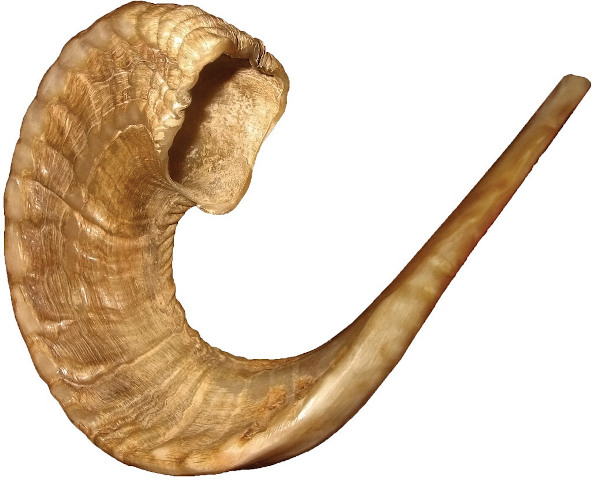
Shofar, or ram’s horn, used as a ceremonial trumpet. “So all Israel brought up the ark of the covenant of the LORD with shouts, with the sounding of rams’ horns and trumpets, and of cymbals, and the playing of lyres and harps” (1Ch 15:28).
A1design/Shutterstock
Return to the main text.
15:29 Parallel to 2Sa 6:16, but the Chronicler does not include the remainder of this incident recorded there (2Sa 6:20–23). Some interpreters regard this omission as part of the Chronicler’s positive portrayal of David, so that a possibly unseemly account is bypassed. On the other hand, it is equally plausible that the Chronicler here simply assumes the reader’s knowledge of the other account (see notes on 10:13–14; 11:1–3; 12:1; 13:6).
16:1–3 David is further associated with the priests in his supervision of the sacrifices and his exercising the priestly prerogative of blessing the people (Nu 6:22–27; see note on 15:27 above). The baked goods provided by David were for the sacrificial meal following the fellowship offerings (Lev 3:1–17; 7:11–21,28–36).
16:8–36 Similar to various parts of the book of Psalms (for vv. 8–22, see Ps 105:1–15; for vv. 23–33, Ps 96; for vv. 34–36, Ps 106:1,47–48). This psalm is not found in the Samuel account. The use of the lengthy historical portion from Ps 105 emphasizing the promises to Abraham would be particularly relevant to the Chronicler’s postexilic audience, for whom the faithfulness of God was a fresh reality in their return to the land. The citation from Ps 106 would also be of immediate relevance to the Chronicler’s audience as those who had been gathered and delivered from the nations (v. 35).
16:29 splendor of his holiness. See 2Ch 20:21; see also Ps 29:2 and note; 96:9; 110:3.
16:34 See 2Ch 5:13; 7:3; Ps 100:5 and note; 106:1; 107:1; 118:1,29; 136:1; Jer 33:11.
16:39 tabernacle . . . in Gibeon. The tabernacle remained at Gibeon until Solomon’s construction of the temple in Jerusalem (2Ch 1:13; 5:5), when it was stored within the temple. The existence of these two shrines—the tabernacle and the temporary structure for the ark in Jerusalem (v. 1)—accounts for the two high priests: Zadok serving in Gibeon and Abiathar in Jerusalem (18:16; 27:34; see note on 6:8).
16:42 sounding of the trumpets. See Nu 10:1–10.
17:1,10 In these verses the Chronicler does not include the statement that David had rest from his enemies (2Sa 7:1,11). Several factors may be at work in this omission: (1) The account of David’s major wars is yet to come (chs. 18–20). Chronologically, this passage should follow the account of the wars (v. 8), but the author has placed it here to continue his emphasis on the ark and the building of the temple (vv. 4–6,12). (2) The Chronicler also views David as a man of war through most of his life (22:6–8), in contrast to Solomon, who is the man of “peace and rest” (22:9) and who will build the temple (22:10). For the Chronicler, David has rest from enemies only late in his life (22:18). (3) As part of his concern to parallel David and Solomon to Moses and Joshua (see article), Solomon (like Joshua) brings the people to rest from enemies (see Introduction: Portrait of David and Solomon).
17:12–14 Though in this context these words refer to Solomon, the NT applies them to Jesus. Solomon’s kingdom was not established forever, but his descendant the Messiah will reign eternally (Mk 1:11; Lk 1:32–33; Heb 1:5).
17:13 The Chronicler omits from his source (2Sa 7:14) any reference to “punish him with a rod” or “floggings” as discipline for Solomon. This omission reflects his idealization of Solomon as a Messianic figure, for whom such punishment would not be appropriate (see article).
17:14 The Chronicler highlights God’s rule—“my house and my kingdom” (cf. 2Sa 7:16). This same emphasis on theocracy is found in several other passages unique to Chronicles (28:5–6; 29:23; 2Ch 1:11; 9:8; 13:4–8).
17:16 sat. Aside from its parallel in 2Sa 7:18, the only other reference in the OT to sitting as a posture for prayer is 1Ki 19:4. Three other postures for prayer are mentioned in Scripture: (1) lying prostrate (Dt 9:25–26; Mt 26:39); (2) standing (1Sa 1:26; Mt 6:5; Mk 11:25; Lk 18:11); (3) kneeling (Da 6:10; Lk 22:41; Ac 9:40; 20:36; 21:5; Eph 3:14).
17:21–22 The references to the exodus from Egypt would remind the Chronicler’s audience of the second great exodus, the release of the restoration community from the period of Babylonian exile.
18:1—20:8 The accounts of David’s wars serve to show the blessing of God on his reign; God keeps his promise to subdue David’s enemies (17:10). These accounts are also particularly relevant to a theme developed in the postexilic prophets: that the silver and gold of the nations would flow to Jerusalem; the tribute of enemy peoples builds the temple of God (18:7–8,11; 22:2–5,14–15; cf. Hag 2:1–9, 20–23; Zec 2:7–13; 6:9–15; 14:12–14). While this passage of Chronicles portrays God’s blessing on David, it simultaneously explains the Chronicler’s report later (22:6–8; 28:3) that David could not build the temple because he was a man of war. The Chronicler omits material from 2Sa 11:2—12:25, accounts less compatible with his positive portrayal of David, and from 2Sa 9, possibly because he is less interested in Saul and his family.
18:1–13 See 2Sa 8:1–14 and notes.
18:2 The Chronicler omits the harsh treatment of the Moabites recorded in 2Sa 8:2, perhaps so that no unnecessary cruelty or brutality would tarnish his portrait of David.
18:5 Arameans. Mentioned also among the enemies of Saul (1Sa 14:47, “Zobah”). By the time of David they were united north (Zobah) and south (Beth Rehob, 2Sa 10:6) under Hadadezer. They persisted as a foe of Israel for two centuries until they fell to Assyria shortly before the northern kingdom likewise fell (2Ki 16:7–9). See note on Dt 26:5.
18:8 Tebah and Kun. Located in the valley between the Lebanon and Anti-Lebanon mountain ranges. which Solomon used to make . . . various bronze articles. See 2Ch 4:2–5,18.
18:12 Abishai. 2Sa 8:13 speaks only of David (see 1Ki 11:15–16; Ps 60 title).
18:15–17 The titles and duties of these officers at David’s court appear to be modeled on the organization of Egyptian functionaries serving the pharaoh.
18:15 For the account of how Joab attained his position over the army, see 11:4–6; 2Sa 5:6–8.
18:16 Zadok . . . Ahimelek son of Abiathar. See notes on 6:8; 16:39; 2Sa 8:17.
18:17 Kerethites and Pelethites. A group of foreign mercenaries who constituted part of the royal bodyguard (2Sa 8:18; 20:23; see note on 1Sa 30:14). They remained loyal to David at the time of the rebellions of Absalom (2Sa 15:18) and Sheba (2Sa 20:7) and supported the succession of Solomon against his rival Adonijah (1Ki 1:38,44). chief officials. The earlier narrative at this point uses the Hebrew term ordinarily translated “priests” (see 2Sa 8:18 and note). The Chronicler has used a term for civil service instead of sacral service. Two approaches to this passage are usually followed: (1) Some interpreters see here an attempt by the Chronicler to keep the priesthood restricted to the Levitical line as part of his larger concern with legitimacy of religious institutions in his own day. (2) Others argue that the Hebrew term used in 2Sa 8:18 could earlier have had a broader meaning than “priest” and could be used of some other types of officials (cf. 2Sa 20:26; 1Ki 4:5). The Chronicler used an equivalent term, since by his day the Hebrew term for “priest” was restricted to priestly functionaries.
19:1—20:3 The Chronicler follows 2Sa 10–12 closely (see notes there), apart from his omission of the account of David’s sin with Bathsheba (11:2—12:25). The Ammonites were a traditional enemy of Israel (2Ch 20:1–2, 23; 27:5; Jdg 3:13; 10:7–9; 10:17—11:33; 1Sa 11:1–13; 14:47; 2Ki 10:32–33; Jer 49:1–6; Zep 2:8–11). Even during the postexilic period Tobiah the Ammonite troubled Jerusalem (Ne 2:19; 4:3,7; 6:1,12,14; 13:4–9).
19:1 Nahash. Possibly the same as Saul’s foe (1Sa 11:1), or perhaps his descendant.
19:6 Aram Naharaim, Aram Maakah and Zobah. These states were north and northeast of Israel and formed a solid block from the region of Lake Huleh through the Anti-Lebanon mountains to beyond the Euphrates.
19:7 Medeba. A town in Moab apparently in the hands of the Ammonites.
19:9 their city. The capital city, Rabbah, to which Joab would lay siege the following year (20:1–3).
19:18 seven thousand. See 2Sa 10:18 and note.
20:1 when kings go off to war. Immediately following the spring harvest when there was some relaxation of agricultural labors and when armies on the move could live off the land. Rabbah. See note on 19:9. Rabbah is the site of modern Amman, Jordan.
20:4 Sibbekai. See 11:29; 27:11. Rephaites. Ancient people known for their large size (see Ge 14:5; Dt 2:10–11; see also note on 2Sa 21:16).
20:5 See note on 2Sa 21:19. weaver’s rod. See 11:23; 1Sa 17:7.
20:6 Rapha. See note on 2Sa 21:16.
21:1—22:1 See 2Sa 24 and notes. Although the story of David’s census is quite similar in both narratives, the two accounts function differently. In Samuel the account belongs to the appendix (2Sa 21–24), which begins and ends with accounts of the Lord’s anger against Israel during the reign of David because of actions by their kings (in ch. 21, an act of Saul; in ch. 24, an act of David). See note on 2Sa 21:1—24:25. The Chronicler appears to include it in order to account for the purchase of the ground on which the temple would be built. The additional material in Chronicles that is not found in Samuel (21:28—22:1) makes this interest clear. The census is the preface to David’s preparations for the temple (chs. 22–29).
21:1 See note on 2Sa 24:1. Satan. See NIV text notes on Job 1:6; Zec 3:1; see also notes on Mt 16:23; 2Co 4:4; 1Th 3:5; 1Jn 3:8; Rev 12:10.
21:5 In all Israel . . . one million one hundred thousand men . . . including four hundred and seventy thousand in Judah. 2Sa 24:9 has 800,000 in Israel and 500,000 (which could be a round number for 470,000) in Judah. The reason for the difference is unclear. Perhaps it is to be related to the unofficial and incomplete nature of the census (see 27:23–24), with the differing figures representing the inclusion or exclusion of certain unspecified groupings among the people (see v. 6). The larger number might include the smaller one. See note on 12:23–37; see also article.
21:6 The Chronicler notes that Joab exempted Levi and Benjamin from the counting, reflecting the Chronicler’s emphasis on the Levites and the worship of Israel. The tabernacle in Gibeon and the ark in Jerusalem both fell within the borders of Benjamin.
21:9 Gad. A longtime friend of David, having been with him when he was a fugitive from Saul (1Sa 22:3–5; cf. 1Ch 29:29; 2Ch 29:25).
21:12 three years of famine. See NIV text note on 2Sa 24:13.
21:13 his mercy is very great. See Ps 30:5; Ps 30 title and note.
21:20–21 The Chronicler reports that Araunah was threshing wheat as the king approached—information not found in 2Sa 24:20. However, Josephus and a fragmentary text of Samuel from Qumran both mention this information.
21:25 six hundred shekels of gold. 2Sa 24:24 says 50 shekels of silver were paid for the threshing floor and oxen. The difference has been explained by some as the Chronicler’s attempt to glorify David and the temple by inflating the price. However, the difference is more likely explained by the Chronicler’s statement that this was the price for the “site,” i.e., for a much larger area than the threshing floor alone.
21:26 fire from heaven. Underscores the divine approval and the sanctity of the site (2Ch 7:1; Lev 9:24; 1Ki 18:37–38).
21:28—22:1 This material is not found in 2Sa 24. It reflects the Chronicler’s emphasis on the temple (see note on 21:1—22:1).
21:30 it. The tabernacle.
22:1—29:30 This material is unique to Chronicles and displays some of the Chronicler’s most characteristic emphases: the preparations for the building of the temple, the legitimacy of the priests and Levites, and the royal succession. The chapters portray a theocratic Messianic kingdom as it existed under David and Solomon.
22:1 David dedicates this property (21:18–30) as the site for the temple (see vv. 2–6; see also note on Ps 30 title).
22:2–19 Solomon’s appointment to succeed David was twofold: (1) a private audience, with David and some leaders in attendance (vv. 17–19), and (2) a public announcement to the people (ch. 28), similar to when Joshua succeeded Moses (see Introduction: Portrait of David and Solomon).
22:2 foreigners . . . stonecutters. 2Sa 20:24 confirms the use of forced labor by David but does not specify that these laborers were foreigners, not Israelites. Solomon used Israelites in conscripted labor (1Ki 5:13–18; 9:15–23; 11:28), but the Chronicler mentions only his use of foreigners (2Ch 8:7–10). Though they were personally free, foreigners were without political rights and could be easily exploited. The OT frequently warns that they were not to be oppressed (Ex 22:21; 23:9; Lev 19:33; Dt 24:14; Jer 7:6; Zec 7:10). Isaiah predicts the participation of foreigners in the building of Jerusalem’s walls in the future (Isa 60:10–12).
22:3 bronze. See note on 18:8.
22:5 young. Solomon’s age at the time of his accession is not known with certainty. He came to the throne in 970 bc and was likely born c. 990.
22:7 house for the Name. See 1Ki 3:2 and note.
22:8–9 See note on 17:1. The Chronicler implies that David was is in some sense defiled by the many wars he fought (see 1Ki 5:3). A pun on Solomon’s name is woven into the divine prophetic message (see NIV text note on v. 9).
22:19 bring the ark . . . into the temple. See 2Ch 5:2–7.
23:1—27:34 David’s preparations for the temple were not restricted to amassing materials for the building; he also arranged for its administration and its worship. Unique to Chronicles (see note on 22:1—29:30), these details of the organization of the theocracy (God’s kingdom) were of vital concern in the Chronicler’s own day. Characteristically for the Chronicler, details about religious and sacred matters (chs. 23–26) take precedence over those that are civil and secular (ch. 27). David’s arrangements provided the basis and authority for the practices of the restored community.
23:1 made his son Solomon king. The account of Solomon’s succession is resumed in chs. 28–29. The Chronicler omits the accounts of disputed succession and bloody consolidation recorded in 1Ki 1–2 (see note on 28:1—29:30) since these would not be in accord with his overall portrait of David and Solomon (see Introduction: Portrait of David and Solomon).
23:2–5 The Levites were not counted in the census that had provoked the wrath of God (21:6–7).
23:3 Levites thirty years old or more. The census of Levites was made first in accordance with the Mosaic prescription (Nu 4:1–3). Apparently soon after this count, David instructed that the age be lowered to 20 years (vv. 24,27); a similar adjustment to age 25 had been made under Moses (Nu 8:23–24, but see note on 8:24).
23:6 Gershon, Kohath and Merari. The Levites were organized by their three clans (ch. 6; Ex 6:16–19; Nu 3). This list parallels those in 6:16–30; 24:20–30.
23:24,27 twenty years old or more. See note on v. 3.
23:28–32 See note on 9:28–34. The function of the Levites was to assist the priests. In addition to the care of the precincts and implements, baked goods and music (mentioned as Levitical duties in 9:22–34), the Chronicler adds details on the role of the Levites assisting in sacrifices.
23:30 morning . . . evening. See Ex 29:38–41; Nu 28:3–8.
24:1–19 There are several lists of priests from the postexilic period (6:3–15; 9:10–13; Ezr 2:36–39; Ne 10:1–8; 11:10–12; 12:1–7,12–21).
24:2 Nadab and Abihu died. The Chronicler alludes to the events recorded in Lev 10:1–3 (see note on 1Ch 6:1–3).
24:3 Zadok . . . Ahimelek. Zadok and Abiathar had served as David’s high priests. Here, late in David’s life, Abiathar’s son Ahimelek appears to have taken over some of his father’s duties (see note on 6:8), but see note on 2Sa 8:17.
24:4 sixteen . . . eight. A total of 24 divisions were selected by lot. This would allow either for service in monthly shifts, as was done by priests in Egyptian mortuary temples, or for two-week shifts once each year as found in NT times. For the names of these divisions, see vv. 7–18. The names of the first, second, fourth, ninth and twenty-fourth divisions also occur in a Dead Sea scroll, and the name of the eighth appears in Lk 1:5. See article; see also note on Ne 12:7.
24:5 casting lots. See notes on Ex 28:30; Jos 7:14; Ne 11:1; Pr 16:33; Jnh 1:7; Ac 1:26.
24:7 Jehoiarib. Mattathias, father of the Maccabees, was a member of the Jehoiarib division (in the Apocrypha, see 1 Maccabees 2:1).
24:10 Abijah. Zechariah, the father of John the Baptist, “belonged to the priestly division of Abijah” (Lk 1:5).
24:15 Hezir. The division from the family of Hezir was prominent in intertestamental times; the name appears on one of the large tombs in the Kidron Valley, east of Jerusalem.
24:20–31 This list supplements 23:7–23 by extending some of the family lines mentioned there.
25:1 commanders of the army. David often sought the counsel of military leaders (11:10; 12:32; 28:1), even in religious matters (13:1; 15:25). set apart some. David’s organizing of the temple musicians may reflect his overall interest in music (1Sa 16:23; 18:10; 19:9; 2Sa 1:17–27; 6:5,14). Asaph, Heman and Jeduthun. See notes on 6:31–48; Ps 39 title. ministry of prophesying. While there are several passages in Chronicles, largely in portions unique to these books, where temple personnel are said to have issued prophetic messages (Jahaziel, a Levite descended from Asaph, 2Ch 20:14–17; Zechariah, a priest, 2Ch 24:19–20), and while three of the leading Levites are referred to as David’s seers (Heman, 1Ch 25:5; Asaph, 2Ch 29:30; Jeduthun/Ethan, 35:15), reference to “prophesying” here refers to the musical contribution of the Levites, with instruments and song, to the liturgy of temple worship (as initially appointed by David; see 1Ch 6:31–46; 15:16–22; 16:7–38; cf. 2Ch 29:30; 35:15). The Chronicler associates this ministry on the part of the Levites with the “prophesying” stirred up by the Spirit of God in the elders appointed by Moses in the wilderness (see Nu 11:25–27 and note on 11:25) and in the band of prophets with which Samuel was associated (see 1Sa 10:5–11 and note on 10:5; 19:20–24). For a similar use of the term “prophesying,” but now by “the prophets of Baal,” see 1Ki 18:29 and note. The Chronicler’s association of priests and Levites with prophesying may reflect postexilic interest in the prophet-priest-king figure of Messianic expectation: In Chronicles, not only do priests and Levites prophesy, but kings also function as priests (see notes on 15:27; 16:1–3). harps . . . cymbals. See photos here, here, and here.
25:5 seer. Another term for prophet (1Sa 9:9). Heman, as well as Asaph and Jeduthun/Ethan (see note on v. 1), may be called seers because David consulted them for guidance when he organized the temple liturgy (15:16–22; 2Ch 35:15; cf. 1Sa 9:9 and note). fourteen sons and three daughters. Numerous progeny are a sign of divine blessing (see Job 1:2; 42:13). This is specifically stated for Heman as the result of the promises of God to exalt him. See 3:1–9; 14:2–7; 26:4–5; 2Ch 11:18–21; 13:21; 21:2; 24:3.
26:1–19 The most extensive of the Chronicler’s lists of gatekeepers (9:17–27; 16:37–38). A list of gatekeepers in the postexilic period is found in Ezr 2:42; Ne 7:45.
26:1 Asaph. This name appears to be an abbreviation of Ebiasaph (6:23; 9:19); he should not be confused with the temple musician (25:1–2,6).
26:4–5 Numerous sons are a sign of divine blessing (see note on 25:5).
26:4 Obed-Edom. Had cared for the ark when it was left at his house (see note on 13:13).
26:12 duties. Elaborated in 9:22–29.
26:14 East Gate. The main entrance; it had six guard posts, as opposed to four at the other gates (v. 17).
26:15 South Gate. Apparently the southern gate would be the main one used by the king, and this assignment probably reflects a particular honor for Obed-Edom (see notes on 26:4–5; see also Eze 46:1–10).
26:16 Shalleketh Gate. The only reference to a gate by this name; presumably it was on the western side. The Chronicler writes to an audience familiar with these topographical details.
26:20 treasuries of the house of God. The Levites in charge of these treasuries received the offerings of the people and cared for the valuable temple equipment (9:28–29). treasuries for the dedicated things. Contained the plunder from warfare (vv. 27–28). Texts from Mesopotamian temples confirm the presence of temple officers who served to assess, handle and refine the precious metals received as revenue and offerings. The procedure with reference to the offerings of the people may be seen in the reign of Joash (2Ch 24:4–14; 2Ki 12:4–16). Numerous passages reflect on the wealth collected in the temple (see, e.g., 29:1–9; 2Ch 4:1–22; 34:9–11; 36:7,10,18–19; 1Ki 14:25–28; 15:15,18; 2Ki 12:4–18; 14:14; 16:8; 25:13–17).
26:26 things dedicated by King David. See note on 18:1—20:8; see also 2Ch 5:1.
26:27 plunder taken in battle they dedicated. Cf. Ge 14:17–20.
26:29–32 These verses designate the 6,000 officials and judges (23:4) who would work outside Jerusalem; they are drawn from two subclans of Kohath (6:18). Dt 17:8–13 envisages a judicial function for the priests and Levites (see 2Ch 19:4–11).
26:31 fortieth year. The last year of David’s reign.
27:1–15 The names of the commanders of David’s army are the same as those found in the list of his mighty warriors (see 11:11–47; see also 2Sa 23:8–39 and notes). Those who had served David while he fled from Saul became commanders in the regular army.
27:1 24,000. See note on 12:23–37. Although a national militia consisting of 12 units of 24,000 each (a total of 288,000) is not unreasonable, the stress in this passage on unit commanders and divisions suggests that here too the Hebrew word for “1,000” should perhaps be taken as the designation of a military unit. To designate a division as “1,000” would be to give the upper limit of the number of men in such a unit, though such units would ordinarily not have a full complement of men. If this approach is followed, the figures in the following verses would be read as “24 units” instead of 24,000.
27:5 Benaiah. See 11:22–25; 18:17.
27:7 Asahel. See 11:26; 2Sa 2:18–23.
27:9–15 The remainder of the commanders were selected from among the Thirty (see 11:25 and the names listed in 11:27–31).
27:16–22 The Chronicler’s interest in “all Israel” appears in this list of officers who were over the 12 tribes (see Introduction: Purpose and Themes). The number is kept at 12 by omitting Gad and Asher (see note on 2:1–2).
27:17 Zadok. See note on 6:8; see also 12:28; 16:39.
27:18 Elihu. Not named elsewhere among the brothers of David. Perhaps he is the son who is omitted from the list in 2:13–15 (see note on 2:10–17). Elihu could also be a variant of the name of Jesse’s oldest son, Eliab, or the term “brother” could be taken in the sense of “relative,” in which case Elihu would be a more distant relative.
27:21 Abner. A relative of King Saul (26:28; 1Sa 14:50–51; 17:55–58; 26:5–16; 2Sa 2:8—4:1).
27:23–24 number. Refers to the census narrative in ch. 21 (2Sa 24).
27:23 twenty years old or less. The figures reported in ch. 21 and 2Sa 24 were the numbers of those older than 20 years. promised to make Israel as numerous as the stars. The patriarchal promises of numerous descendants (Ge 12:2; 13:16; 15:5; 22:17) appear to have been the basis for the objections of Joab (v. 24) to the taking of a census (21:3; 2Sa 24:3).
27:24 did not finish. Joab did not count those under age 20, nor did he include the tribes of Levi and Benjamin (21:6). book of the annals of King David. See Introduction: Author, Date and Sources.
27:25–31 A list of the administrators of David’s property (v. 31). The large cities of the ancient Near East had three basic economic sectors: (1) royal, (2) temple and (3) private. There is no evidence of direct taxation during the reign of David; his court appears to have been financed by extensive landholdings, commerce, plunder from his many wars, and tribute from subjugated kingdoms.
27:27 wine vats. See note on Hag 2:16.
27:32–34 A list of David’s cabinet members, supplementary to that in 18:14–17.
27:33 Ahithophel. Was replaced after he committed suicide, following his support of Absalom’s rebellion (2Sa 15:12, 31–37; 16:20—17:23).
28:1—29:30 The account of the transition from the reign of David to that of Solomon is one of the clearest demonstrations of the Chronicler’s idealization of their reigns (cf. 1Ki 1–2). The Chronicler makes no mention of the infirmities of the aged David (1Ki 1:1–4), the rebellion of Adonijah and the king’s sons (1Ki 1:5–10), the court intrigue to secure Solomon’s succession (1Ki 1:11–31) or David’s charge to Solomon to punish his enemies after his death (1Ki 2:1–9). The Chronicler’s selection of material presents a transition of power that is smooth and peaceful and receives the support of “all Israel” (29:25), the officials and the people (28:1–2; 29:6–9, 21–25). In 1Ki 1:32–35, a bedridden David sends others to anoint Solomon, while the Chronicler presents David at a later event making the official public proclamation regarding Solomon’s succession to the throne (see 23:1 and note).
28:1 The assembly is composed largely of the groups named in ch. 27. This public announcement (v. 5) follows the private announcement of Solomon’s succession in ch. 22 (see note on 22:2–19).
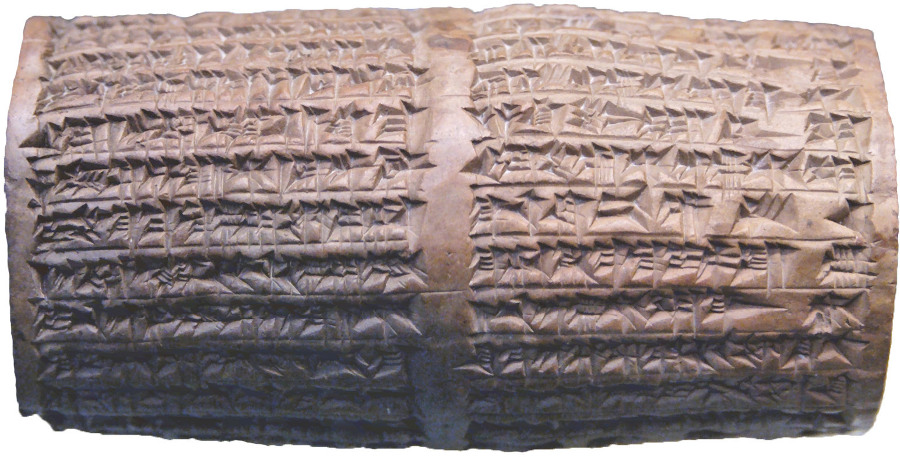
Terracotta cylinder at the British Museum preserves an account of repairs on the temple of the moon-god Sin by King Nabonidus of Ur. This inscription includes a prayer for his eldest son Belshazzar, dated 555–539 bc.
Marie-Lan Nguyen/Wikimedia Commons, CC BY 2.5
Return to the main text.
28:3 you are a warrior and have shed blood. See note on 22:8–9.
28:5 chosen my son Solomon. See vv. 6,10; 29:1. These are the only uses in the OT of the Hebrew verb for “chosen” with reference to any king after David (see Introduction: Purpose and Themes). The Chronicler’s application of this term to Solomon is consistent with his depiction of that king. kingdom of the LORD. See note on 17:14.
28:6 my son. See 17:12–14 and note; see also 22:10.
28:12 David provides Solomon with the plans for the temple. This reflects the Chronicler’s modeling David after Moses: Just as Moses received the plans for the tabernacle from God (Ex 25–30), so also David received the plans for the temple from God.
28:18 chariot . . . cherubim . . . ark. A physical representation of God’s heavenly throne (see note on Ps 18:10) borne through the skies by the cherubim.
28:19 I have in writing as a result of the LORD’s hand on me. The Chronicler may intend no more than the standard process of inspiration whereby David wrote under divine influence. On the other hand, he may imply a parallel with Moses, who also received documents from the hand of the Lord (Ex 25:40; 27:8; 31:18; 32:16).
28:20 See Introduction: Portrait of David and Solomon.
29:1 chosen. See note on 28:5. young. See note on 22:5.
29:2–9 After donating his personal fortune to the construction of the temple, David appeals to the people for their voluntary gifts. The Chronicler again appears to be modeling his account of David on events from the life of Moses (Ex 25:1–8; 35:4–9,20–29). The willing response of the people aided the building of both tabernacle and temple.
29:7 darics. See NIV text note. The daric was a Persian gold coin, apparently named for Darius I (522–486 bc), in whose reign it first appears (Ezr 8:27). Since the Chronicler’s readers were familiar with it, he could use it as an up-to-date standard of value for an earlier treasure of gold.
29:10–19 The Chronicler highlights the theme of prayer and includes numerous prayers unique to his writing, like David’s here (see also 4:10; 5:20; 2Ch 14:11; 20:6–12; 33:13,19).
29:10–11 See second NIV text note on Mt 6:13.
29:22 ate and drank. See 12:38–40 and note. The anointing of both Solomon and Zadok portrays the harmony between them (see Zec 4:14; 6:13 and notes). second time. Perhaps the first time was Solomon’s anointing, recorded in 1Ki 1:32–36 but omitted by the Chronicler (see note on 28:1—29:30). However, the phrase “second time” is missing in the Septuagint (the pre-Christian Greek translation of the OT), suggesting that it may have been an addition to the Hebrew text of this passage by an ancient scribe after the Septuagint had already been translated, in order to harmonize the Chronicles account with Kings. Multiple anointings are found in the cases of both Saul (1Sa 10:1, 24; 11:14–15) and David (1Sa 16:13; 2Sa 2:4; 5:3).
29:24 all . . . pledged their submission. The Chronicler has bypassed a negative event (Adonijah’s rebellion; see 1Ki 1:9, 19,25) that would tarnish his portrayal of David and Solomon.
29:25 all Israel. See 11:1,10; 12:38–40; see also Introduction: Purpose and Themes.
29:28 long life, wealth and honor. As a feature of the Chronicler’s theme of immediate retribution (see Introduction: Purpose and Themes), the righteous enjoy these blessings (cf. Ps 128; Pr 3:2, 4, 9–10,16,22,33–35).
29:29 See Introduction: Author, Date and Sources.
29:30 kingdoms of all the other lands. Those immediately surrounding David’s kingdom (see map and accompanying text).