48:18 peace . . . like a river, your well-being like the waves. Abundant and overflowing “peace” and “well-being”; see also 45:8; Am 5:24 and notes. Peace and “well-being” (or “righteousness”) are also linked in 9:7; 32:17; 54:13–14; 60:17; Ps 85:10 (see note there); Heb 7:2; Jas 3:18.
48:19 descendants . . . like the sand. See 10:22; see also Ge 13:16 and note; Ge 22:17; Jer 33:22 and note. name . . . never be blotted out. Israel’s name would not be completely obliterated (v. 9; 54:3; Jer 31:36).
48:20 Leave Babylon, flee. Although the Jews did not have to flee (52:12), they were encouraged to depart quickly because of the judgment coming on Babylon (cf. Rev 18:4). shouts of joy. See 44:23; 49:13; 52:9 and notes. ends of the earth. See 11:12; 42:10 and notes. redeemed. See 43:1 and note. his servant. See 41:8–9 and note.
48:21 did not thirst . . . water . . . from the rock. A reference to God’s provision after the exodus (see Ex 17:6 and note; Nu 20:11; see also Isa 32:2; 35:6; 43:19; 49:10 and notes). God’s people would have water on the way home from Babylonian exile also.
48:22 Repeated almost verbatim in 57:21. peace. See 39:8 and note. wicked. Those who rebel against the Lord (see note on 1:2).
49:1–6 (or 1–7 or 1–13) The second of the four servant songs (see note on 42:1–4).
49:1 islands. Or “coastlands.” In 42:4 the islands “put their hope” in the servant’s teaching. Before I was born . . . called me. Cf. v. 5. The language is similar to that of the call of the prophet Jeremiah (see Jer 1:5 and note) and of the apostle Paul (Gal 1:15). Cf. 41:9. spoken my name. See 43:1 and note. Cf. Mt 1:21, 23; Lk 1:31–33.
49:2 my mouth . . . sharpened sword. See Rev 1:16; 2:12,16; 19:15,21; cf. Isa 11:4; Eph 6:17; Heb 4:12. shadow of his hand. Descriptive of protection (30:2–3; 51:16). polished arrow. Arrows are used of God’s judgment in Dt 32:23,42, of the deadly words of the wicked in Ps 64:3–4 and of Satan’s schemes and temptations in Eph 6:11,16.
 49:3 my servant, Israel. See notes on 41:8–9; 42:1–4; 42:1. “Servant” here cannot refer to Israel as a nation, since in v. 5 this servant has a mission to the nation of Israel. Rather, the Messianic servant is the ideal Israel, through whom the Lord will be glorified. He will succeed where national Israel failed. display my splendor. Through the redemption he will accomplish (see notes on 35:2; 40:5).
49:4 labored in vain . . . for nothing at all. Just as the nation Israel had toiled in vain (65:23), so Christ would encounter strong opposition during his ministry and would temporarily suffer apparent failure. The “suffering servant” theme is developed in the third and fourth of the four servant songs (50:4–9 or 50:4–11; 52:13—53:12). what is due me . . . my reward. Perhaps referring to the spiritual offspring of the servant (53:10)—Jews and Gentiles alike who believe in him (vv. 5–6); see 40:10 and note. In any case, he will be vindicated and rewarded (50:8; 53:10–12; 1Ti 3:16).
49:5 formed me in the womb. See v. 1; 44:2 and notes. bring Jacob back . . . gather Israel. A prophecy of release from captivity in Babylon (see vv. 9–12,22; 41:2 and note) and from the greater captivity of sin (see 42:7 and note). my strength. See 12:2.
49:6 Together with Ge 12:1–3; Ex 19:5–6, this verse is sometimes called the “great commission of the OT” and is quoted in part by Paul and Barnabas in Ac 13:47. those . . . I have kept. Probably referring to the remnant (see 1:9 and note). light for the Gentiles. See 9:2; 42:6 and notes; Lk 2:30–32; Ac 26:23 and notes. Christ is the light of the world (Jn 8:12; 9:5), and Christians are to reflect his light (Mt 5:14). ends of the earth. See 11:12 and note; see also 41:5; 42:10; 48:20. Cf. Ac 1:8.
49:7 Redeemer and Holy One of Israel. See 41:14 and note. despised. Applied twice to the suffering servant in 53:3. In 60:14 Zion is despised by its enemies. nation. Refers to either Israel (1:4) or Gentiles. Kings will see . . . bow down. See v. 23. This reaction to the servant is similar to that of 52:15. Cf. Php 2:11. Former oppressors bow before a restored Jerusalem in 60:14 (cf. 45:14; 60:11–12; 66:23). chosen you. See 41:8–9; 42:1 and notes.
49:8 Quoted in part in 2Co 6:2. time of my favor . . . day of salvation. The background of this verse is probably the Year of Jubilee (61:1–2; Lev 25:10). The return from exile will bring the same restoration of land for the people as that year of liberty did. keep you . . . to be a covenant. See 42:6 and note. reassign its desolate inheritances. See 44:26. It was under Joshua that the land had been divided among individual tribes and families (Jos 14:1–5). The Messianic servant will be a new Joshua—as well as a new Moses (see vv. 9–10, which echo Israel’s deliverance from Egypt and their wilderness experiences under Moses during the period of the exodus).
49:9 captives. The exiles. See 42:7 and note. barren hill. See 41:18 and note.
49:10 neither hunger nor thirst. See 48:21 and note. has compassion. See 14:1 and note. will guide them. As a shepherd (see 40:11 and note). This whole verse is also a picture of heaven according to Rev 7:16–17.
49:11 mountains into roads. See 26:7 and note. highways . . . raised up. See 11:16; 35:8; 40:3; 62:10 and notes.
49:12 come from afar. See 11:11 and note; 60:4. north . . . west. See 43:5–6 and notes. Aswan. See Eze 29:10 and note; 30:6; located in the most southern part of Egypt.
49:13 Shout for joy . . . mountains. Nature is personified often in Isaiah. See 44:23 and note. comforts his people. As he redeems and saves them. Cf. 2Co 1:3–4. will have compassion. See v. 10 and note; 54:7–10.
49:14 forsaken . . . forgotten. See 40:27; 54:7; La 5:20–22.
49:15 Can a mother forget . . . ? Cf. Ps 27:10.
49:16 engraved you on . . . my hands. As the names of the tribes of Israel were engraved on stones and fastened to the ephod of the high priest as a memorial before the Lord (Ex 28:9–12; cf. SS 8:6). ever before me. Cf. Ps 137:5–6.
 49:17 children. Or “builders,” following the reading of the Dead Sea Scrolls and some ancient versions (cf. note on 62:5). See photo.
49:18 children gather. See vv. 5,12 and notes. ornaments. Beautiful clothes and jewels symbolize strength and joy.
49:19–20 too small. The restoration of Israel will be astonishing and complete. The prophecy was partially fulfilled in the return from Babylonia (see note on 11:11) and may include spiritual offspring among both Jews and Gentiles (see 54:17 and note).
49:19 ruined . . . desolate. Cf. v. 8; see 44:26 and note.
49:20 more space to live in. See Zec 2:4 and note.
49:21 bereaved and barren. The concept of Israel as a barren woman is stressed in 54:1 (cf. Ps 113:9 and note).
49:22 lift up my banner. See 5:26 and note; 13:2. bring your sons . . . daughters. See 11:12 and note. The nations bring Israel back also in 14:2; 43:6; 60:9. in their arms. Cf. 60:4; see 40:11 and note.
49:23 Kings . . . will bow down. See v. 7; 11:14 and notes. know that I am the LORD. See v. 26; 60:16; Eze 12:20; 13:9; 36:38. hope in me. See 40:31 and note. not be disappointed. See 29:22 and note.
49:24 warriors . . . fierce. The Babylonians (51:13).
49:25 captives will be taken. See Ezr 2:1, 64–65; Jer 50:33–34; 52:27–30. I will contend. God takes up the case of his people. He will “defend their cause” (Jer 50:34). I will save. See 35:4 and note.
49:26 oppressors. See 14:4; 16:4; 51:13. eat their own flesh. During the siege of Jerusalem its people were reduced to cannibalism (La 4:10; cf. Zec 11:9 and note). drunk on their own blood. Cf. 51:22–23. mankind will know. See v. 23 and note. Savior. See 43:3 and note; 60:16. Redeemer. See 41:14 and note. Mighty One of Jacob. See 1:24 and note; 60:16.
50:1 certificate of divorce. A husband was required to give this to a wife he wished to divorce (see Dt 24:1–4; Mt 19:3; Mk 10:2,5–6 and notes). According to Jer 3:8 God gave the northern kingdom of Israel a certificate of divorce, and Isa 54:6–7 indicates that God had left Judah (62:4). God asks that the certificate of divorce be produced so all can see the written charges of unfaithfulness it records. my creditors. If a man’s debts were not paid, his children could be sold into slavery (see 2Ki 4:1 and note). But God has no creditors. you were sold. Cf. 45:13; 52:3.
50:2 I came . . . called. Through his servants the prophets (see Jer 7:25 and note). no one to answer. Israel was deaf toward God (see 6:10 and note; 66:4). arm too short. The arm represented power (cf. 59:1). dry up the sea. A reference to crossing the Red Sea (see 43:16–17 and notes; Ps 106:9). rivers into a desert. See 42:15 and note. fish rot. Perhaps a reference to one of the plagues in Egypt (19:5–6,8; Ex 7:18).
50:3 the heavens with darkness. Perhaps an allusion to the plague of darkness (Ex 10:21); but see 13:10 and note.
50:4–9 (or 4–11) The third of the four servant songs (see note on 42:1–4).
50:4–5,7,9 Sovereign LORD. The only uses of this title in the servant songs.
50:4 word that sustains the weary. In 42:3 the servant assisted the weak (contrast 49:2). Cf. Jer 31:25. wakens my ear. Unlike Israel (v. 2), the servant was responsive to God.
50:5 opened my ears. A sign of obedience (see 1:19; Ps 40:6 and note). not been rebellious. Unlike Israel (see 1:2 and note; 1:20).
50:6 my back to those who beat me. Beatings were for criminals or fools (Pr 10:13; 19:29; 26:3; Mt 27:26; Mk 15:15; Jn 19:1). pulled out my beard. A sign of disrespect and contempt (2Sa 10:4–5; Ne 13:25). mocking and spitting. To show hatred (Job 30:10) or to insult or disgrace (Dt 25:9; Job 17:6; Mt 27:30). This treatment of the servant anticipates his ultimate suffering in 52:13—53:12.
50:7 helps me. See v. 9; 49:8. not be disgraced . . . put to shame. See 29:22 and note. Ultimately the servant will be honored (49:7; 52:13; 53:10–12). my face like flint. Like the prophets, the servant will endure with great determination. Cf. Lk 9:51, where Jesus “resolutely set out for Jerusalem.”
50:8 vindicates me. The Lord will find him righteous (see 45:25; 53:4–6,11; for its ultimate fulfillment, see 1Ti 3:16). bring charges. See 49:25 and note. Because Christ was sinless, he also nullifies the charges brought against any who believe in him (see Ro 8:31–34 and notes). my accuser. Cf. 54:17.
50:9 Who will condemn me? Cf. the similar language Paul uses in Ro 8:34. wear out like a garment; the moths. Those who falsely accuse the righteous succumb to moths in 51:8 (i.e., they will be destroyed).
50:10 fears the LORD. See Ge 20:11; Pr 1:7 and notes. Cf. 25:3; 59:19. in the dark. Perhaps trouble or distress, similar to the experience of the servant (cf. 8:22). trust . . . rely. The Lord encouraged such trust in 12:2; 31:1.
50:11 light fires . . . flaming torches. Perhaps a reference to wicked practices that will ultimately destroy those who engage in them. Fire is a frequent figure of punishment (see 1:31 and note; cf. 9:18; 47:14; Ps 7:13). torment. Cf. 66:24.
51:1 Listen to me. See vv. 4,7. who pursue righteousness. Cf. v. 7; Dt 16:20; Pr 15:9. rock. Abraham (v. 2). Elsewhere God is called “the Rock” (see 17:10 and note).
51:2 was only one man. See Ge 12:1; Eze 33:24. blessed him and made him many. See Ge 12:2–3; 13:16; 15:5; 17:5 and note; 22:17.
51:3 comfort . . . compassion. See 49:13 and note. make her deserts like Eden. See 35:1–2. The contrast between the lush splendor of Eden and the barrenness of the desert is found also in Joel 2:3 (see note there). Cf. Ge 2:8,10. Joy and gladness. See v. 11; 25:9 and note.
51:4 Instruction . . . my justice. The rule of the servant would bring justice also (see 2:2–4; 42:4 and notes). light to the nations. The servant is the light in 42:6; 49:6.
51:5 righteousness draws near. In the deliverance from exile. Ultimately, salvation through Christ will come to all nations. See 46:13 and note. arm. Symbolizes power. islands. See 11:11 and note. look to me . . . hope. See 40:31; 42:4 and notes.
51:6 Lift . . . to the heavens. See 40:26. heavens will vanish. See 34:4 and note. earth will wear out like a garment. See 24:4; Heb 1:10–11; cf. Isa 50:9. last forever. See v. 8; 45:17. The word of God will also endure forever (see 40:8; Ps 119:89 and notes; Mt 24:35; Lk 21:33).
51:7 who know what is right. See v. 1 and note. who have taken my instruction to heart. See Ps 37:31; Jer 31:33 and note. reproach . . . insults. Such as those borne by the servant in 50:6–7.
51:8 moth . . . like a garment. See 50:9 and note; cf. 51:6.
51:9,17; 52:1 Awake, awake . . . ! See 40:1 and note.
51:9 arm of the LORD. Symbol of God’s power (cf. v. 5). See 30:30; 50:2 and notes; 52:10; 53:1; 63:12. clothe . . . with strength. Cf. 50:2; see note on 40:31. Rahab . . . monster. Egypt. See 27:1; 30:7 and notes.
51:10 sea. The Red Sea (see 50:2 and note). the redeemed. See 35:9 and note.
51:11 Identical to 35:10 (see note there).
51:12 who comforts. See v. 3; 49:13 and note. grass. See 37:27; 40:6 and notes.
51:13 stretches out the heavens and . . . earth. See v. 16; 48:13 and note. wrath of the oppressor. See 49:26 and note. Babylon’s wrath was insignificant beside the mighty wrath of God (cf. 13:3,5; 30:27).
51:14 prisoners . . . set free. The exiles in Babylonia (see 42:7 and note; 49:9). in their dungeon. Cf. 42:7; Jer 37:16.
51:15 stirs up the sea. Cf. Job 26:12; Ps 107:25; Jer 31:35. LORD Almighty. See 13:4 and note.
51:16 my words. See “my instruction” (v. 7). Like the servant of 49:2, the people are responding to God’s word (cf. 59:21; Jos 1:8). shadow of my hand. See 49:2 and note. set the heavens . . . earth. See v. 13 and note.
51:17 cup of his wrath. See vv. 20–22; 13:3 and note. Experiencing God’s judgment is often compared to becoming drunk on strong wine. It is the fate of wicked nations in particular. See 29:9; 63:6; Ps 60:3 and note; 75:8; Jer 25:15–16 and notes; La 4:21; Eze 23:31 and note; Hab 2:16 and note; Zec 12:2; cf. Jn 18:11.
51:18 Children were expected to take care of parents who were sick or unsteady (cf. 1Ti 5:8 and note).
51:19 who can comfort you? A question also asked in Jer 15:5. Contrast v. 3.
51:20 caught in a net. Cf. Pr 7:22. rebuke. See 17:13; 54:9; 66:15.
51:21 afflicted one. Jerusalem (54:11). made drunk. On God’s wrath (see v. 17 and note).
51:22 defends his people. See 49:25 and note. cup . . . of my wrath. See v. 17 and note.
51:23 your tormentors. The Babylonians. See vv. 13–14; 14:4. your back like the ground. Perhaps figurative, but cf. Jos 10:24 and note.
52:1 Awake, awake. See 51:9,17. garments of splendor. Perhaps the robes of the priests, which belong to Jerusalem as “the holy city.” See 49:18 and note. holy city. See 48:2 and note. uncircumcised and defiled. Foreign invaders. See 35:8; Jdg 14:3 and notes.
52:2 Shake off your dust. Contrast the fate of Babylon in 47:1 (see note there). Free yourself. See 42:7 and note; 49:9; 51:14. Daughter Zion. A personification of Jerusalem (see note on 2Ki 19:21).
52:3 sold for nothing. The enemy paid the Lord nothing for acquiring Jerusalem. See 45:13; 50:1 and notes. without money . . . redeemed. See 41:14 and note; 43:1; 45:13.
52:4 Assyria . . . oppressed them. See 9:4 and note.
52:5 Quoted in part in Ro 2:24. for nothing. See v. 3 and note. my name is . . . blasphemed. The captivity brought disrespect to the God of helpless Jerusalem (see Eze 36:20–23 and notes). Cf. Assyria’s blasphemy in 37:23–24.
52:6 know my name. See 49:26 and note. in that day. The day of deliverance from Babylonia. See 10:20,27 and note. foretold it. The return from exile.
52:7 feet of those who bring good news. A reference to messengers who ran from the scene of a battle to bring news of the outcome to a waiting king and people (see 2Sa 18:26; Na 1:15 and note). Here the news refers to the return from exile (vv. 11–12; see 40:9 and note; 41:27), a deliverance that prefigures the deliverance from sin that Christ would bring about. See Ro 10:15; Eph 6:15 and notes. salvation. See 49:8 and note. Your God reigns! See Ps 93:1 and note. The return of God’s people to Jerusalem emphasizes his sovereign rule over the world (see 40:9 and note). The kingdom of God that was inaugurated through Jesus’ first coming (Mk 1:15; Mt 12:28) will come fully at his second coming (Rev 19:6).
52:8 watchmen. Stationed on Jerusalem’s walls (see 62:6–7; Ps 127:1 and note).
52:9 Burst into songs. See 44:23 and note. comforted. See 49:13 and note. redeemed. See v. 3 and note.
52:10 holy arm. See 51:9 and note. God’s arm is often associated with redemption and salvation (Ex 6:6). all the ends of the earth. Equivalent to all humankind (see note on 40:5). Cf. 45:22.
52:11 Quoted in part in 2Co 6:17. Depart, depart . . . ! Many returned to the Holy Land from Babylonia in 538–537 bc (see note on 40:1—66:24; see also map). unclean thing. Perhaps referring to pagan religious objects (cf. Ge 31:19; 35:2). you who carry the articles. Cyrus allowed the people to take back the articles of the temple seized by Nebuchadnezzar (Ezr 1:7–11). The priests and Levites were responsible for them (Nu 3:6–8; 2Ch 5:4–7).
52:12 not leave in haste. See 48:20 and note. go before you . . . be your rear guard. As he did for the Israelites when they were freed from Egypt (see Ex 13:21; 14:19–20 and notes; cf. Isa 42:16; 49:10; 58:8).
52:13—53:12 The fourth and longest of the four servant songs (see note on 42:1–4). It constitutes the central and most important unit in chs. 40–66, as well as in chs. 49–57 (see note on 39:8). The song contains five stanzas of three numbered verses apiece, each stanza longer than the previous one. It is frequently quoted in the NT and is often referred to as the “gospel in the OT” or the “gospel of Isaiah” (see chart).
52:13 my servant. See note on 42:1. The Aramaic Targum identifies the Lord’s servant here as “the Messiah.” act wisely. A mark of God’s blessing (1Sa 18:14) and of obedience to God’s word (Jos 1:8). The Messianic King will “reign wisely” (Jer 23:5; cf. Isa 11:2; 53:11). raised and lifted up. Words that describe the Lord in Isaiah’s vision (see 6:1 and note; 57:15). Christ’s exaltation is referred to in Ac 2:33; 3:13; Eph 1:20–23; Php 2:9–11 (see also 1Pe 1:10–11).
52:14 appalled at him. When they saw Christ’s suffering on the cross. Cf. the reaction to the ruined city of Tyre (Eze 27:35). disfigured. A term used of a “blemished animal,” which should not be offered to the Lord (Mal 1:14). Cf. the disgraceful treatment of the servant (see 50:6 and note). beyond that of any human being. Cf. Ps 22:6. His treatment was inhumane.
52:15 sprinkle many nations. With the sprinkling of cleansing (Lev 14:7; Nu 8:7; 19:18–19) and/or of consecration (Ex 29:21; Lev 8:11,30). But see NIV text note. kings will shut their mouths. In astonishment at the suffering and exaltation of the servant (see 49:6–7 and notes). Cf. Job 21:5. For what . . . understand. Quoted in Ro 15:21. Even though they have not heard the prophetic word, kings will understand the mission of the servant when they see his humiliation and exaltation (contrast 6:9–10). Cf. Php 2:5–11.
53:1 Quoted in whole in Jn 12:38 and in part in Ro 10:16. our message. The good news about salvation, given by the prophets to Israel and the nations (52:7,10). arm of the LORD. See 51:9 and note.

Quotations From and References to Isaiah 53 in the New Testament
New Testament | |
Mt 26:63; 27:12,14; Mk 14:60–61; 15:4–5; 1Co 5:7; 1Pe 2:23; Rev 5:6, 12; 13:8 | |
53:7–8 LXX | |
Mt 20:28; 26:28; 27:38; Mk 10:45; Lk 22:37; 23:33–34; Heb 9:28; 1Pe 2:24 |
Taken from The Zondervan Encyclopedia of the Bible: Vol. 5 by Moisés Silva. Copyright © 2009 by Zondervan, p. 15.
Go to the Charts Index.
53:2 tender shoot. The Messiah would grow from the “stump of Jesse” (11:1; see note there; cf. 4:2; Zec 3:8 and notes). His beginnings would be humble. root. See 11:10 and note. no beauty or majesty. Christ had nothing of the bearing or trappings of royalty. He was not the kind of Messiah the Jewish leaders were looking for.
53:3 despised. See 49:7 and note; Ps 22:6. rejected . . . held . . . in low esteem. The Hebrew words used here occur together also in 2:22 (see note there). Cf. Jn 1:10–11. suffering. The Hebrew for this word is used of both physical and mental pain (see v. 4; Ex 3:7). hide their faces. See 1:15 and note; 8:17.
53:4 Quoted in part in Mt 8:17 with reference to Jesus’ healing ministry. pain. Diseases often result from sinful living and are ultimately the consequences of original (Adamic) sin. See 1:5–6 and note. punished by God. People (Israel in particular) thought the servant was suffering for his own sins. Whatever the affliction, it was what humans deserved to endure. afflicted. Or “humbled” or “oppressed” (v. 7; 58:10).
53:5 The centering verse of 52:13—53:12, the last, longest and arguably the loveliest of the suffering servant songs in the book of Isaiah (see note on 42:1–4). This final song, in turn, is the middle chapter of the middle section (chs. 49–57) of Part 2 (chs. 40–66) of the book (see Introduction: Outline). “Peace” (Hebrew shalom; see article) in this verse is the key word in the final verse of Part 1 (chs. 1–39) and recurs in a refrain in 48:22 and 57:21, the final verses of chs. 40–48 and 49–57 respectively (see 39:8 and note). “Peace,” therefore, is a central theme in chs. 40–66 generally and 52:13—53:12 specifically. Such overarching and overwhelming shalom could be “brought” to God’s people only by the atoning sacrifice of the One who was “pierced for our transgressions” and “crushed for our iniquities” (see v. 12 and note; cf. also Ro 4:25). pierced. See Ps 22:16; Zec 12:10; Jn 19:34 and notes. crushed. In spirit (see Ps 34:18; cf. Isa 57:15). The sins of the world weighed heavily upon him. wounds. The fatal injuries of the crucifixion. healed. Here probably equivalent to “forgiven” (see 6:10; Jer 30:17; see also note on 1Pe 2:24).
53:6 have gone astray. Cf. Ps 119:176 and note; Jer 50:6; Eze 34:4–6, 16; 1Pe 2:25 and note. laid on him the iniquity of us all. Just as the priest laid his hands on the scapegoat and symbolically put Israel’s sins on it (see Lev 16:20–22 and note). See also 1Pe 2:24 and note.
53:7–8 Verses read by the Ethiopian eunuch in the presence of Philip (see Ac 8:34 and note).
53:7 oppressed. Like Israel. See 49:26 and note. lamb to the slaughter. Cf. Ps 44:22; 1Pe 1:18–19; Rev 5:6 and notes. John the Baptist called Jesus “the Lamb of God” (Jn 1:29,36; see note on 1:29). did not open his mouth. Jesus remained silent before the chief priests and Pilate (Mt 27:12–14; Mk 14:60–61; 15:4–5; Jn 19:8–9) and before Herod (Lk 23:8–9).
53:8 By oppression and judgment. Jesus was given an unfair trial. See NIV text notes.
53:9 the wicked. The manner of his death would indicate that, as far as those who condemned him were concerned, he was to be buried with executed criminals. the rich. The parallelism (with its effective wordplay in Hebrew) makes clear that Isaiah here associates the rich with the wicked, as do many OT writers—because they acquired their wealth by wicked means and/or trusted in their wealth rather than in God (see, e.g., Ps 37:16, 35; Pr 18:23; 28:6,20; Jer 5:26–27; Mic 6:10,12). According to the Gospels (Mt 27:57–60 and parallels), the wealthy Joseph of Arimathea gave Jesus an honorable burial by placing his body in his own tomb. Thus the fulfillment fitted but also transcended the prophecy. he had done no violence, nor . . . deceit in his mouth. Peter quotes these lines as he encourages believers to endure unjust suffering (see 1Pe 2:22 and note).
53:10 the LORD’s will. See Ac 2:23 and note. crush him. See v. 5 and note. an offering for sin. Or “a guilt offering,” an offering where restitution was usually required and the offender sacrificed a ram (but see note on Lev 5:15). his offspring. Spiritual progeny. prolong his days. Christ would live forever (see 9:7 and note). prosper. See 52:13 and NIV text note there.
53:11 light of life. A reference to the resurrection of Christ; see 1Co 15:4 (but see also the first two NIV text notes here). For “of life,” see Job 33:30 and note; Ps 49:19; 56:13 and note. be satisfied. In 1:11, where the same Hebrew word appears, God had “more than enough” of innumerable sacrifices that accomplished nothing. Here the one sacrifice of Christ brings perfect satisfaction. his knowledge. His true knowledge of the true God (1:3; 6:9; 43:10; 45:4–5; 52:6; 56:10). The Spirit of knowledge (11:2) rested on the Messiah (but see the third NIV text note here). Cf. 52:13. my . . . servant. See 41:8–9; 42:1 and notes. justify. Cause many to be declared righteous. See 5:23 (“acquit”); Ro 5:19 and note. many. See NIV text notes on v. 12; see also 52:15; Da 12:3.
53:12 among the great . . . with the strong. God will reward his servant as if he were a king sharing in the spoils of a great victory (52:15). divide the spoils. God’s gift to his suffering servant (cf. 9:3). poured out his life. As a sacrifice (v. 10). unto death. See Php 2:8 and note. and was numbered with the transgressors. Quoted in Lk 22:37 with reference to Jesus (see note there). bore. The Hebrew for this verb is translated “took up” in v. 4. many. A reference to the people as a whole (cf. Mk 10:45; Jn 11:50–52). made intercession. See Jer 7:16 (“pray”); 27:18 (“plead”). Cf. 59:16; Lk 23:34; Heb 7:25 and note.
54:1 This verse is applied by Paul to Sarah and the covenant of promise, representing “the Jerusalem that is above” (Gal 4:26–27; see notes there). Sing . . . burst into song. See 12:6; 44:23; 52:9 and notes. barren woman. Jerusalem (representing Israel), especially during the exile (49:21). In the Near East, barrenness was considered a disgrace (see 4:1 and note). more are the children of the desolate woman. See 49:19–20 and note. Israel will be restored, both physically and spiritually (cf. 62:4). husband. See 50:1 and note.
54:2 See 26:15; 33:20 and notes. your tent. Jerusalem is viewed as a woman living in her own tent.
54:3 spread out. See 49:19–20 and note; cf. Ge 28:14. dispossess nations. See 11:14; 49:7 and notes.
54:4 not be put to shame . . . disgrace. See 29:22 and note; 45:17. shame of your youth. Probably the period of slavery in Egypt. Cf. Jer 31:19; Eze 16:60. reproach of your widowhood. Probably referring to the exile, when Israel was alone, like a widow (vv. 6–7).
54:5 husband. See 62:4–5. Holy One of Israel . . . Redeemer. See 1:4, 41:14 and notes.
54:6–7 wife deserted . . . abandoned. Israel’s experience in exile (see 49:14; 50:1 and note; 62:4).
54:7–8,10 compassion. See 14:1; 49:10,13; 51:3.
54:7 brief moment. The Babylonian exile was relatively brief (see 26:20; 50:1 and notes).
54:8 surge of anger. See 9:12,17,21 and note; 60:10. hid my face. See 1:15 and note. everlasting kindness. See v. 10; 55:3 and note. Cf. 45:17. Redeemer. See v. 5.
54:9 never again cover the earth. See Ge 9:11 and note. not to be angry. Cf. 12:1 and note. never to rebuke you again. As I did when I sent you into exile.
54:10 mountains . . . be removed. Cf. 51:6; Ps 46:2; 102:26–27. unfailing love . . . covenant of peace. A reference to God’s covenantal commitments to Israel, embodied in the Abrahamic, Sinaitic, Davidic and new covenants (see chart). Cf. Jer 33:20–21; for the language, see Nu 25:11–13.
54:11–12 A figurative description of restored Jerusalem, echoed in the description of the new Jerusalem in Rev 21:10,18–21.
54:11 Afflicted city. Jerusalem. See 51:21. lashed by storms. See 28:2 and note. turquoise. A bluish-green stone. It was used in Solomon’s temple (1Ch 29:2). lapis lazuli. Cf. the “pavement made of lapis lazuli” (a blue stone) in Ex 24:10 (see also Eze 1:26; 10:1).
54:12 battlements. Parapets on the tops of walls. walls. Cf. 26:1.
54:13–14 peace . . . righteousness. See 48:18 and note.
54:13 Quoted in part in Jn 6:45. taught by the LORD. Like the servant of the Lord in 50:4. Cf. Jer 31:34 and note.
54:14 Tyranny . . . Terror . . . far removed. Cf. 14:4; 33:18–19.
54:15 surrender to you. See v. 3.
54:16 created the destroyer. God raised up nations such as Assyria and Babylonia to punish Israel (see 10:5; 33:1 and notes).
54:17 refute every tongue. Just as no legitimate charges could be brought against the servant of 50:8–9. servants of the LORD. After ch. 53 the singular “servant” no longer occurs in Isaiah. The “servants” (63:17; 65:8–9,13–15; 66:14) are true believers—both Jews and Gentiles (56:6–8)—who are faithful to the Lord. They are in a sense the “offspring” of the servant (53:10). See 49:19–20 and note.
55:1 The exiles are summoned to return and be restored. thirsty. Spiritual thirst is primarily in view (see 41:17; 44:3; Ps 42:1–2 and notes; 63:1). waters. Figurative for spiritual refreshment. Cf. Lady Wisdom’s invitation in Pr 9:5 (see note there). Christ similarly invited people to drink the water of life (see Jn 4:14 and note; 7:37; cf. Rev 22:17). no money. In hard times even water had to be purchased (La 5:4). wine and milk. Symbols of abundance, enjoyment and nourishment. without money. The death of the servant (53:5–9) paid for the free gift of life (see Ro 6:23 and note).
55:2 what is not bread. Perhaps the vestiges of pagan religious practices. Cf. Dt 8:3 and note. richest of fare. Great spiritual blessings are compared to a banquet (see 25:6 and note; Ps 22:26; 34:8; Jer 31:14).
55:3 everlasting covenant. David had been promised an unending dynasty, one that would culminate in the Messiah (see 9:7; 54:10; 61:8; 2Sa 7:14–16 and notes). faithful love. Assuring the continuation of the nation. See 54:8; Ps 6:4 and notes. Christ’s resurrection was further proof of God’s faithfulness to David (see Ac 13:34, which quotes from this verse).
55:4 witness to the peoples. A reference either to David, who exalted the Lord among the nations (see Ps 18:43,49–50 and notes), or to David’s Son, the Messiah, who was (and is) a light to the nations (see 42:6; 49:6 and notes). ruler . . . of the peoples. Similar titles are used of David (1Sa 13:14; 25:30) and the Messiah (Da 9:25).
55:5 you will summon nations. The attraction of nations to Zion and to the God of Israel is a major prophetic theme (see, e.g., 2:2–4; 45:14; Zec 8:22 and notes). Holy One of Israel. See 1:4; 41:14 and notes. endowed . . . with splendor. See 4:2; 60:9. The nation will be restored physically and spiritually.
55:6 Seek the LORD. See Jer 29:13–14; Hos 3:5; Am 5:4, 6,14 (contrast the hypocritical seeking of 58:2).
55:7 wicked forsake. See 1:16. turn to the LORD . . . freely pardon. See 43:25; 44:22 and notes.
55:9 my ways higher. See Ps 145:3.
55:11 my word. Especially the promises of vv. 3,5,12. The word is viewed as a messenger also in 9:8; Ps 107:20 (see note there). Cf. Jn 1:1 and note. achieve the purpose. See 46:10–11 and note; cf. 40:8; Heb 4:12 and note.
55:12 go out in joy. The departure from Babylon provides the background (see 35:10; 52:9–12 and notes). mountains . . . will burst into song. Isaiah uses personification for dramatic effect (see Introduction: Literary Features; see also 44:23 and note). hands. Branches. The verse is a summarizing statement indicating that all of creation will celebrate (cf. 1Ch 16:33; Ps 98:8 and note; 114:3–6).
55:13 thornbush . . . juniper . . . briers . . . myrtle. The reverse of the desolation Isaiah had prophesied about earlier (5:6; 32:13). For the significance of trees, see 35:2; see also 41:19 and note. LORD’s renown. Similar to God’s fame in the exodus (63:12,14). everlasting sign. God’s deliverance would never be forgotten. Cf. 19:20; 56:5.
56:1 justice . . . what is right. See note on Ps 119:121. salvation . . . righteousness. See 45:8; 46:13; 51:5 and notes.
56:2 keeps the Sabbath. See vv. 4,6. Just as the Sabbath had been instituted after the exodus from Egypt (see notes on Ex 20:8–10) as a sign of the Sinaitic covenant (see Ex 31:13–17 and notes), so God’s new deliverance (55:12) afforded an opportunity to obey him fully, an obedience summed up in keeping the Sabbath (see 58:13; 66:23; Jer 17:21–27 and notes; Eze 20:20–21).
56:3 foreigner. See vv. 6–7. Members of certain nations who came to live among the Israelites had been excluded from worship, at least for several generations (Ex 12:43; Dt 23:3,7–8). But the work of the servant of the Lord would change this (see 49:19–20; 54:17; 60:10 and notes). Cf. 14:1. eunuch. See v. 4; Mt 19:12 and note. Eunuchs were also excluded from the assembly of the Lord (see Dt 23:1 and note), but they could still be part of God’s people. The previous exclusion of eunuchs would be reversed in the day of God’s salvation. This would be good news for the Ethiopian eunuch (Ac 8:27, 38–40).
56:4,6 hold fast to my covenant. Keeping the Sabbath was a sign of the Sinaitic covenant (see note on v. 2; see also Eze 20:12,20 and note on 20:12; cf. notes on Ge 9:12–13; 17:11).
56:5 memorial. Absalom built a “monument” (same Hebrew word) as a memorial since he had no surviving sons (2Sa 18:18). name. The Hebrew for this word is translated “renown” in 55:13. The Hebrew for “a memorial and a name” (yad vashem) was chosen from v. 5 as the name of the main Holocaust monument in Jerusalem in modern Israel. that will endure forever. An idiom sometimes referring to the preserving of a name through one’s descendants.
56:7 my holy mountain. See 2:2–4 and note. offerings . . . accepted on my altar. Cf. 60:7; contrast 1:11–13. my house . . . for all nations. Quoted by Jesus in Mk 11:17 and parallels. house of prayer for all nations. Solomon may have anticipated this in his prayer of dedication for the temple (see 1Ki 8:41–42 and notes).
56:8 gathers the exiles. See 11:11–12 and notes. gather still others. Including Gentiles (see v. 3 and note; cf. Jn 10:16 and note).
56:9—59:15 Many verses in these sections could apply to conditions before or during the Babylonian exile.
56:9 beasts. Foreign invaders (see 18:6 and note).
56:10 watchmen. The prophets (see note on Eze 3:17; cf. note on Isa 52:8). blind . . . love to sleep. Cf. 29:9–10. mute dogs. Watchdogs who guarded the sheep (cf. Job 30:1).
56:11 mighty appetites. They devour the sheep. See Eze 34:3. shepherds. Rulers may be included. See Eze 34:2–5 and notes. all turn to their own way. See 53:6.
56:12 wine . . . beer. Cf. the behavior of priests and prophets in 28:7. tomorrow will be . . . far better. Cf. the words of the rich fool in Lk 12:19.
57:1 devout are taken away. Cf. 2Ki 21:16 and note. spared from evil. Huldah explained that righteous King Josiah would die before disaster struck (2Ki 22:19–20).
57:2 peace. Contrast v. 21. find rest. Cf. Paul’s words in Php 1:21,23.
57:3 sorceress. A woman who practices magic or consults evil spirits (see 3:2–3 and note; 47:12; Dt 18:10). adulterers and prostitutes. Spiritual adultery (idolatry) is in view (see vv. 5–8; see also Ex 34:15 and note), though in ancient idol worship, ritual prostitution also frequently occurred (cf. the sexual imagery in 57:5–8).
57:4 mocking . . . sneer. The people mocked Isaiah in 28:9,14. brood of rebels. See 1:4; 46:8 and note.
57:5 oaks. Sacred trees (see 1:29 and note). spreading tree. Associated with high places of pagan worship in 1Ki 14:23. Cf. Jer 2:20 and note; 3:13. sacrifice your children. Often associated with the worship of Molek (cf. v. 9; see note on 30:33) or Baal (Jer 19:5; see notes on Jer 7:31–32). Ps 106:37–38 says that children were sacrificed to idols and demons.
57:6 ravines. Possibly the Hinnom Valley (see Jer 7:31 and note). drink offerings. These pagan libations were especially popular.
57:7 high and lofty hill. There were many such “high places” (see Eze 6:3 and note; 16:16) or “mountain shrines” (Eze 22:9) in Canaan.
57:8 those . . . you love. Pagan deities or idols.
57:9 Molek. The main god of the Ammonites (see v. 5; 1Ki 11:5 and notes). olive oil. Used as an ointment for perfume. See SS 4:10, where the Hebrew word for “oil” is translated “perfume.” to the . . . realm of the dead. Cf. 8:19.
57:10 It is hopeless. Ironically, the people said that turning away from their own plans or from foreign gods was hopeless. renewal of your strength. Cf. 40:31 and note.
57:11 so dreaded and feared. They feared mere mortals (51:12). neither remembered me. See 51:13. long been silent. God had not acted in judgment (see 42:14 and note).
57:12 righteousness. See 58:2–3; 64:6.
57:13 collection of idols save you. See 44:17 and note. wind will carry . . . breath will blow. Idols are no stronger than their worshipers. takes refuge in me. See 25:4. inherit the land. See 49:8 and note. my holy mountain. See 2:2–4 and note.
57:14 Build up, build up. See note on 40:1. prepare the road. See 40:3 and note.
57:15 high and exalted One. See 6:1; 52:13 and notes; cf. 33:5. contrite. Or “crushed” (53:5).
57:16 not accuse them forever. He had taken Israel to court repeatedly (3:13–14). nor . . . be angry. See 54:9 and note; Jer 3:12.
57:17 hid my face in anger. See 54:8; see also 1:15 and note.
57:18 heal them. See v. 19; 6:10; 30:26; Jer 3:22. God will forgive and restore his people. guide. Cf. 40:11; 42:16; 49:10. restore comfort. See 49:13 and note. mourners. Those mourning the judgment on Jerusalem (66:10).
57:19 Peace, peace. Contrast Jer 6:13–14 (see note on 6:14; cf. 26:3). those far. Either Gentiles or exiled Jews. Paul probably had this verse in mind in Eph 2:17.
57:20 like the tossing sea. See Jer 49:23. cannot rest. Contrast v. 2.
57:21 Almost identical to 48:22 (see note there; see also 39:8 and note).
58:1 voice like a trumpet. God’s powerful voice is compared to a trumpet blast at Mount Sinai (Ex 19:19; 20:18–19; cf. Rev 1:10; 4:1). rebellion. See 1:2 and note. sins. See 1:4; 59:12–13.
58:2 seek me out. See 55:6 and note. Cf. the frequent sacrifices of 1:11. eager for God to come near. The same hypocrisy is mentioned in 29:13 (see note there).
58:3 fasted . . . fasting. See v. 6; a time of self-denial, self-humbling and repentance for sin. After the fall of Jerusalem, the number of days for fasting increased (see Lev 16:29 and NIV text note; see also Zec 8:19 and note). humbled ourselves. Cf. 2Ch 7:14; 1Ki 21:29. you have not noticed. The same attitude is seen in Mal 3:14 (see note there; cf. Lk 18:12). exploit all your workers. See 3:14–15; 10:2.
58:4 to be heard on high. Such hypocritical religious activity is actually a hindrance to prayer (see 1:11–15; 59:2 and notes).
58:5 fast . . . humble themselves. See Mt 6:16–18. like a reed. A sign of weakness and humility (see 42:3 and note). sackcloth and ashes . . . fast. See notes on Ge 37:34; Ezr 8:23; 10:6; Joel 1:13–14; Jnh 3:5–6; Rev 11:3. acceptable. A term often applied to sacrifices (see 56:7; 60:7; Lev 1:3; cf. Ro 12:1).
58:6 chains of injustice. Both metaphorical and literal. During the siege of Jerusalem, Hebrew slaves were rightly released—only to be reclaimed by their masters (see Jer 34:8–11 and notes). yoke. See v. 9; 9:4; 10:27, where the yoke imposed by Assyria is mentioned. oppressed. See 1:17.
58:7 share your food . . . provide . . . shelter . . . clothe. The outward evidence of genuine righteousness. See Job 31:17–20; Eze 18:7,16 and Jesus’ identification with the hungry and naked in Mt 25:34–40 (see notes there). flesh and blood. Probably refers to close relatives (Ge 37:27), but see 2Sa 5:1 and note.
58:8 light. The joy, prosperity and salvation brought by the Lord (see 9:2; 60:1–3; Ps 27:1 and note), which would also be a light to the Gentiles to show them an alternative way of life (cf. 49:5–6). healing. See 57:18 and note. go before you . . . be your rear guard. See 52:12 and note. The Lord will protect them and guide them. glory of the LORD. Probably a reference to the pillar of cloud and fire in the wilderness (see 4:5–6; Ex 13:21; 14:20 and notes).
58:9 LORD will answer. See 30:19 and note. Here am I. See 65:1. pointing finger. A gesture of either contempt or accusation (see note on Pr 6:12–14). malicious talk. See Pr 2:12; 6:12,17,19 and notes.
58:10 hungry . . . oppressed. See vv. 6–7 and notes. light. See v. 8 and note.
58:11 guide you. See 57:18 and note. needs. Both material and spiritual (see note on 32:2). sun-scorched land. See 35:7; 49:10. well-watered garden. In 1:30 Jerusalem was a garden without water. spring . . . never fail. Contrast Jer 15:18 (see note there). Cf. the “living water” Jesus gives in Jn 4:10,14 (see notes there).
58:12 ancient ruins . . . age-old foundations. See 44:26,28 and notes; 61:4; Eze 36:10; see also Am 9:11,13–15 and notes. Repairer of Broken Walls. Cf. note on Ezr 4:12; cf. also the work of Nehemiah in Ne 2:17 (see note there).
58:13 Sabbath. See 56:2 and note. my holy day. A day set apart to God (see Ex 3:5 and note). delight. They were also to delight themselves in the Lord (Ps 37:4) and in his law (see Ps 1:2 and note). going your own way. Perhaps to engage in business (Am 8:5).
58:14 joy in the LORD. See 61:10; Ps 32:11; 33:1; cf. Php 4:4 and note. ride in triumph on the heights. Thus controlling the land. See 33:16 and note; see also Hab 3:19. feast on the inheritance. More than physical food, it means to fully enjoy the blessings that come from a covenant relationship with God (see Isa 25:6–8). mouth . . . has spoken. See 40:5 and note.
59:1 arm . . . too short. See 51:9 and note. too dull to hear. See 30:19 and note.
59:2 hidden his face . . . he will not hear. See 1:15 and note.
59:3–4 spoken falsely . . . utter lies. See v. 13; 28:15; Hos 4:2 and note.
59:3 stained with blood. See v. 7; 1:15,21; Eze 7:23; see also notes on Eze 18:4,21.
59:4 calls for justice . . . pleads a case. The poor and helpless could not receive fair trials (v. 14; 1:17–23; 5:7,23). they conceive . . . evil. Identical to Job 15:35 (see note there). Cf. Isa 33:11; Ps 7:14.
59:5 spider’s web. Verse 6 and Job 8:14–15 stress how fragile it is.
59:6 acts of violence. See v. 3; Jer 6:7; Eze 7:11.
59:7–8 Quoted in part in Ro 3:15–17 by Paul to show the universality of sin.
59:7 Their feet rush . . . to shed innocent blood. This sentence appears in Pr 1:16 (see note there). evil schemes. God’s thoughts are different (55:7–9). acts of violence. Contrast 60:18.
59:8 way of peace. Cf. 26:3,12; 57:20–21; Lk 1:79. crooked roads. Unsafe (see Jdg 5:6 and note).
59:9 justice . . . righteousness. Personified here and in v. 14. See v. 4 and note; 1:21. us . . . We. The prophet includes himself with the people. We look for . . . but. See v. 11; cf. note on 5:2. darkness . . . deep shadows. Similar language describes conditions when Assyria invaded Israel (5:30; 8:21–22; 9:1–2). Contrast 58:8.
59:10 Like the blind we grope . . . At midday. The fulfillment of the curse for disobedience in Dt 28:29. Cf. Job 5:14. strong. Perhaps enemies or oppressors.
59:11 growl like bears. Impatient and frustrated.
59:12 offenses . . . sins . . . iniquities. In Hebrew the three most common OT words for evil thoughts and deeds (see Ps 32:5 and note). offenses are many. See 58:1. we acknowledge our iniquities. Like Ezra (9:6–7), Isaiah confesses the sins of the nation.
59:13 rebellion and treachery. See 46:8; 48:8 and notes. turning our backs. See 1:4. oppression. See 30:12. lies. See vv. 3–4.
59:14 justice . . . truth. Cf. the personification of wisdom in Pr 8:1—9:12 (see note on 8:1–36). righteousness stands at a distance. Cf. v. 9; contrast 46:13 (see note there).
59:15 becomes a prey. See 32:7.
59:16 there was no one. To help (see 63:5, a parallel to the whole verse). Cf. Eze 22:30 and note. appalled. Cf. the reaction to the servant in 52:14. intervene. Cf. the intercession of the servant in 53:12 (see note there). his own arm achieved salvation. See 51:9; 52:10. For the meaning of salvation, see 43:3; 49:8; 52:7 and notes. righteousness. For the relationship between righteousness and salvation, see 45:8; 46:13 and notes.
59:17 put on . . . wrapped himself in. See note on Ps 109:29. righteousness as his breastplate. The Lord’s armor is compared to the believer’s armor in the battle against Satan in Eph 6:14 (see note there; see also photo). helmet of salvation. See Eph 6:17 and note. garments of vengeance. Cf. the blood-spattered garments of 63:1–3. God’s vengeance is described also in 34:8 (see note there); 63:4. It is part of the day of the Lord (see 34:2 and note). zeal. God’s jealous love (see 9:7 and note; 37:32; 42:13). Although one may correlate parts of the body protected and the various spiritual qualities they represent, the fact that Ephesians (ch. 6) associates some of them with different body parts means that they should be understood as spiritual armor more generally.
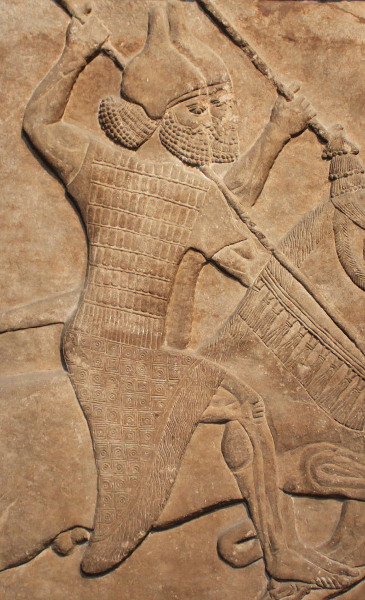
Assyrian soldier with scaled breastplate and helmet. “He put on righteousness as his breastplate, and the helmet of salvation on his head” (Isa 59:17).
© 2013 by Zondervan
Return to the main text.
59:18 enemies . . . foes. God will judge the nations, but he must also punish wicked Israelites (65:6–7; 66:6; Jer 25:29). Only the remnant will be blessed (see v. 20; see also 1:9 and note). islands. See note on 11:11.
59:19 From the west . . . rising of the sun. All nations will see God’s saving work in behalf of his people (see 40:5; 45:6; 52:10 and notes). name. See 30:27 and note. pent-up flood. The coming of the Lord will be irresistible, like a “rushing torrent” (30:28) that overwhelms the enemy.
59:20 Redeemer. See 41:14 and note. come to Zion. In the return from exile, but more fully in the person of Christ (see Ro 11:26–27 and notes). See 35:4; 40:9; 52:7 and notes. Cf. Zec 8:3. those . . . who repent. See 1:27–28 and note; 30:15; 31:6; see also Eze 18:30–32 and notes.
59:21 covenant. The description best fits the “new covenant” (see 42:6; Jer 31:31–34 and notes). My Spirit. See 11:2; 32:15; Eze 36:27; Jn 16:13 and notes. you . . . your . . . your . . . your. In Hebrew the pronouns are singular but are probably intended in a collective sense—the citizens of Zion. my words . . . in your mouth. Then Israel will truly be God’s people (see 51:16; Jer 31:33 and notes). always be on your lips. See Jos 1:8.
60:1–2 glory. Probably an allusion to the pillar of cloud, but announcing a new manifestation of God’s redeeming glory (see 58:8 and note). See also 35:2 and note.
60:1 light. See 58:8 and note. Here the Lord himself is viewed as the light (vv. 19–20).
60:2 darkness. A symbol of gloom, oppression, sin and judgment (8:22; 9:2; 59:9).
60:3 Nations will come. Because Israel will be full of God’s glory and majesty, the nations will come to Israel to honor God and bring tribute to them. See vv. 5,10–12 and notes. This theme was first mentioned in 2:2–4 (see note there). light. See 42:6; 49:6 and notes.
60:4 The first two lines are almost identical to the beginning of 49:18, the last two to the end of 49:22 (see note there). The setting there was the return from exile, but here much broader implications are involved. afar. See v. 9; 49:12 and note.
60:5 wealth on the seas. Jerusalem will be enriched by the nations (see v. 11; 61:6; 66:12; see also 18:7; 23:18; 45:14 and notes). The contribution of King Darius to Zerubbabel’s temple may be a partial fulfillment (see Ezr 6:8–9 and notes). Some interpret this verse as referring to conditions during the future phase of the Messianic kingdom, while others apply it to the influx of Gentiles into the church (see note on 2:2–4). Still others believe that all three of these may be in view (progressive fulfillment). See Rev 21:26 (the new Jerusalem); see also Hag 2:7; Zec 14:14 and notes.
60:6 camels will cover your land. As caravans bringing goods. Ironically it was on camels that the Midianites once devastated Israel (see 9:4; Jdg 6:1–6 and notes). Midian. Abraham’s son through Keturah (Ge 25:2). The Midianites roamed the deserts of Transjordan. Ephah. A son of Midian (Ge 25:4). Sheba. A wealthy land in southern Arabia, perhaps roughly equal to modern Yemen (see Ge 25:3; 1Ki 10:1 and note). gold and incense. The queen of Sheba brought gold and spices to Solomon (1Ki 10:2). Jer 6:20 mentions the incense of Sheba. Cf. Ps 72:10; Mt 2:11. proclaiming the praise. Cf. the queen’s words in 1Ki 10:9 (but see note there).
60:7 Kedar’s flocks. See note on 21:16. Nebaioth. The firstborn son of Ishmael (Ge 25:13). The name is probably preserved in that of the later Nabatean kingdom. serve. See v. 10; 56:6. accepted as offerings. See 56:7; 58:5 and notes.
60:8 Who are these . . . ? The ships bringing the exiles home with tribute from the nations, looking like birds on the horizon.
60:9 islands look to me. See 11:11 and note. ships of Tarshish. See note on 2:16. bringing your children. See 49:22 and note. silver and gold. Ships of Tarshish had brought these to Solomon every three years (1Ki 10:22). Holy One of Israel. See v. 14; 1:4 and note. endowed . . . with splendor. See 55:5 and note.
60:10 Foreigners . . . kings. See vv. 12,14; 49:7,23; 61:5. will rebuild your walls. In 444 bc King Artaxerxes issued the decree allowing Nehemiah to rebuild the walls of Jerusalem (Ne 2:8). Some interpreters also apply the rebuilt walls to the building up of the church through Gentile believers (Ac 15:14–16). Though in anger . . . compassion. See 54:7–8 and notes.
60:11 gates . . . always . . . open. As are also the gates of the new Jerusalem (Rev 21:25). There is no longer any need for protection from enemies. wealth. See v. 5 and note.
60:12 nation . . . will perish. Israel’s future political domination is referred to also in 11:14; 14:2; 49:23 (cf. vv. 10,14).
60:13 glory of Lebanon. Its magnificent cedar trees, which were used in the construction of Solomon’s temple, along with juniper trees (1Ki 5:10,18). See also 35:2. The glory of Solomon’s era would return. juniper . . . fir . . . cypress. See 41:19 and note. Perhaps the trees would be ornamental rather than building material. adorn . . . sanctuary. See v. 7. place for my feet. The temple, and especially the ark of the covenant, God’s “footstool” (1Ch 28:2).
60:14 oppressors . . . bow down. See 49:7,23 and notes. Cf. vv. 10,12. City of the LORD. Cf. the names for the future Jerusalem in 1:26; 62:4; Eze 48:35; Zec 8:3; Heb 12:22 (see notes there).
60:15 forsaken and hated. See 6:11–12; 62:4; Jer 30:17. pride . . . joy. See 4:2 and note.
60:16 nursed at royal breasts. Jerusalem will receive the very best nourishment, the “riches of the nations” (v. 5). Then . . . Jacob. For this sentence, see 49:26 and note.
60:17 gold . . . silver. As in Solomon’s day gold and silver were plentiful (1Ki 10:21,27), so the future Jerusalem will have the most valuable metals, as well as the strongest (“iron”). Cf. 9:10. peace . . . well-being. Both are also present in the rule of the Messianic king in 9:7 (where the Hebrew for “well-being” is rendered “righteousness”). See note on 48:18.
60:18 No longer . . . violence. Cf. 54:14. ruin or destruction. See 51:19 and note. walls Salvation. See 26:1.
60:19 sun . . . moon. According to Rev 21:23; 22:5 their light will no longer be needed in the new Jerusalem, since God and the Lamb will be the “everlasting light.” glory. See vv. 1–2 and note; Zec 2:5; cf. notes on Ex 40:34; Ps 26:8.
60:20 sun will never set. There will be no night there (cf. Rev 22:5) but only the light of joy and salvation (see 58:8 and note). sorrow will end. See 25:8; 35:10; 51:11; 65:19; Rev 21:4; 22:3–5.
60:21 people will be righteous. Only the redeemed will be there (4:3; 35:8; Rev 21:27). possess the land forever. Enter into full blessing (see 49:8 and note; see also 57:13; 61:7; Ps 37:11,22). shoot I have planted. Cf. the vineyard of 5:2,7 (see also 11:1). work of my hands. God made them as a potter forms clay (see 64:8; see also 29:23; 45:11). display of my splendor. They are the evidence of God’s redemptive work. See 49:3; 61:3; see also notes on 35:2; 40:5.
60:22 least . . . will become a thousand. See 51:2; 54:3 and notes. The blessing of Lev 26:8 is similar. do this swiftly. Cf. 5:19, where the same Hebrew verb is translated “hasten.”
61:1–2 Jesus applied these verses to himself in the synagogue at Nazareth (see Lk 4:16–20 and notes; cf. Mt 11:5).
61:1 Spirit . . . is on me. The statement may refer to Isaiah in a limited sense, but the Messianic servant is the main figure intended (cf. what is said of him in 42:1; see 11:2; 48:16 and notes). Sovereign LORD. See 50:4–5,7,9 and note. anointed me. Anointing indicates appointment for God’s service (see 45:1 and note). good news. See 40:9 and note. poor. Cf. 11:4; 29:19. bind up the brokenhearted. See 30:26 and note. freedom for the captives. Freedom is proclaimed in the Year of Jubilee in Lev 25:10 (see 49:8 and note; see also note on Lk 4:19).
61:2 year of the LORD’s favor. Isaiah here uses imagery related to the Year of Jubilee (Lev 25:10) as a metaphor for God’s end-time salvation. Cf. the “day of salvation” in 49:8 (see note there) and the “year for me to redeem” in 63:4. Jesus announced the fulfillment of this Jubilee in his sermon in Nazareth. Christ ended his quotation at this point (Lk 4:19–20), probably because the “day of vengeance” will not occur until his second coming. day of vengeance. See 34:2,8 and notes. comfort all who mourn. See 49:13; 57:19 and notes; 66:10; Jer 31:13; Mt 5:4.
61:3 bestow on them . . . a garment of praise. See note on Ps 109:29. crown of beauty. A “turban” (as the Hebrew for this phrase is translated in Eze 24:17) or headdress. In 3:20 the women of Jerusalem were to lose their beautiful headdresses. oil of joy. Anointing with olive oil was common on joyous occasions (see Ps 23:5; 45:7 and notes; 104:15; 133:1–2; cf. 2Sa 14:2). See also 1:6 and note. garment of praise. Contrast the “garments of vengeance” in 59:17. oaks of righteousness. The oak tree was a symbol of stability and permanence. Now God’s people will flourish abundantly. Contrast the oak of 1:30. planting . . . for the display. See 60:21 and note.
61:4 rebuild the ancient ruins . . . ruined cities. See 58:12 and note.
61:5 Strangers . . . foreigners. See 14:1–2; 56:3; 60:10 and notes.
61:6 priests of the LORD. See 66:21. True Israel will be a “kingdom of priests” among the Gentiles (see Ex 19:6; Zec 3:1–10; 1Pe 2:9 and notes). ministers. Priests. See 1Ki 8:11, where the Hebrew word for “minister” is translated “perform their service.” wealth of nations. See 60:5 and note.
61:7 shame . . . disgrace. See 45:17; 54:4. double portion. The firstborn son received a double share of the inheritance (see Dt 21:17; 2Ki 2:9; Zec 9:12 and notes). Contrast the “double” punishment Israel received (40:2). everlasting joy. See 35:10; 51:11; cf. Ps 16:11.
61:8 love justice. Cf. 30:18; 59:15. robbery and wrongdoing. Israel had been mistreated by their conquerors. Cf. 42:24; 59:18. everlasting covenant. Probably the new covenant (see 55:3; 59:21 and notes; cf. Jer 31:35–37; 32:40 and notes).
61:9 people the LORD has blessed. See 44:3; 65:23 and the promises to Abraham in Ge 12:1–3 (see also notes there).
61:10 Zion is probably the speaker. clothed me with . . . arrayed me in. See note on Ps 109:29. garments of salvation. See v. 3; 52:1 and note. head like a priest. Putting on a turban or headband (see note on v. 3). bride . . . with her jewels. See 49:18 and note.
61:11 sprout . . . grow. Cf. 55:10. righteousness and praise spring up. See 45:8 and note.
62:1 not keep silent . . . quiet. See v. 6; 42:14; 57:11 and note; 64:12; 65:6; see also Ps 28:1. vindication . . . salvation. See 46:13 and note (there the Hebrew for “vindication” is translated “righteousness”). dawn. Cf. 58:8.
62:2 nations will see . . . glory. See 52:10; see also 40:5; 60:3 and notes. your. Jerusalem’s (vv. 1,6). new name. To reflect a new status (see vv. 4,12; see also 1:26; 60:14; Ge 32:28 and notes).
62:3 crown of splendor. In 28:5 the Lord is a “glorious crown” for his people (cf. Zec 9:16).
62:4 Deserted . . . Desolate. See 54:6–7; 60:15 and note. Hephzibah. See NIV text note; also the name of Hezekiah’s wife (2Ki 21:1). Beulah. See NIV text note. married. Israel’s relationship with the Lord will be restored. See 50:1 and note.
62:5 Builder marry you. See note on 49:17.
62:6 watchmen. Probably those (the prophets especially; see note on 56:10) waiting for the messenger with good news (see 52:8 and note). never be silent. They will be praying that God will not be silent (v. 1) but will restore Jerusalem. give yourselves no rest. Cf. David’s intense prayer as he searched for a home for the ark (Ps 132:1–5).
62:7 praise of the earth. Cf. Jer 33:9; Zep 3:19–20; see 60:3 and note.
62:8 has sworn. Cf. 45:23; 54:9. mighty arm. See 51:9 and note. grain . . . for your enemies . . . foreigners drink the new wine. Punishment Moses warned about in Lev 26:16; Dt 28:33. See also 52:1 and note; Jer 5:17.
62:9 eat it . . . drink it. See 65:13,21–23. in the courts of my sanctuary. During a festival, or when they brought the tithe to the Lord (Lev 23:39–40; Dt 14:22–26).
62:10 Pass through, pass through. See note on 40:1. gates. Probably of Babylon (cf. 48:20; Mic 2:12–13). Prepare the way . . . build up the highway. See 40:3; 49:11 and notes. Remove the stones. See 57:14. banner. See 5:26 and note.
62:11 ends of the earth. See 11:12; 49:6 and notes. Daughter Zion. A personification of Jerusalem (see note on 2Ki 19:21). your Savior comes! See 40:9; 43:3; Zec 9:9 and notes; Mt 21:5. reward . . . recompense. See 40:10 and note; cf. Rev 22:12.
62:12 Holy People. See 4:3; Ex 19:6 and notes. Redeemed. See 35:9 and note. Sought After . . . No Longer Deserted. See v. 4.
63:1 Edom. See 21:11; 34:5 and notes. Edom here symbolizes a world that hates God’s people. Bozrah. See 34:6 and note. stained crimson. A similar image appears with Christ’s robe “dipped in blood” (Rev 19:13; see note there) as he wages war at his second coming. proclaiming victory, mighty to save. See 45:8; 59:16 and notes.
63:2 Why . . . ? Isaiah responds with a question. treading the winepress. See 16:10 and note.
63:3 trodden the winepress. A figure of judgment (see notes on La 1:15; Joel 3:13; Rev 14:19; 19:15). in my anger . . . wrath. On the day of the Lord. See v. 6; 13:3; 34:2 and notes.
63:4 day of vengeance . . . year for me to redeem. See 61:2 and note. The day of judging the enemy meant at the same time redemption for God’s people. See 35:9; 41:14 and notes.
63:5 See 59:16 (a parallel to the whole verse) and note. wrath. In 59:16 “righteousness” is used. God’s righteousness and holiness resulted in his wrath.
63:6 made them drunk. They drank the “cup of his wrath” (see 51:17 and note). poured their blood. Here the battle is compared to a sacrifice, as in 34:6.
63:7—64:12 A prayer of Isaiah, asking the Lord to bring about the redemption he has promised—as one of the “watchmen” the Lord has posted on the walls of Jerusalem (see 62:6 and note). It is similar to a national lament (see, e.g., Ps 44).
63:7 kindnesses. Demonstrations of God’s unfailing love as he stood true to his covenant with Israel (see note on Ps 6:4). many good things. Cf. Jos 21:45; 1Ki 8:66. compassion. See 54:7–8,10 and note.
63:8 my people, children who will be true to me. But see 1:2–4. Savior. See 43:3 and note.
63:9 In all their distress . . . distressed. The suffering in Egypt and during the period of the judges is probably in view (Jdg 10:16). angel of his presence. See Ex 23:20–23; 33:14–15. redeemed. See 41:14; 43:1 and notes. lifted . . . carried. Like a father (Dt 1:31; 32:10–12).
63:10 rebelled. In the wilderness (see 1:2 and note; 30:1; Nu 20:10; Ps 78:40–55 and note). grieved his Holy Spirit. See Ps 51:11; 106:33 and note; cf. Isa 11:1–2; 42:1; Eph 4:30 and note. became their enemy. See 43:28 and note.
63:11 sea. The Red Sea (see 50:2 and note; 51:10). shepherd. Moses. Holy Spirit. See note on Ps 51:11. The Spirit rested on Moses and 70 elders (Nu 11:17,25). See also v. 14.
63:12 arm of power. See 51:9 and note; Ex 15:16. divided the waters. See Ex 14:21; cf. Isa 11:15; 51:10. everlasting renown. See 55:13 and note.
63:13 depths. Of the Red Sea (Ex 15:5, 8; Ps 106:9). But the crossing of the Jordan (Jos 3) may be intended as well (see v. 14 and note).
63:14 to the plain. To find pasture and water. given rest. They found a home in Canaan, the promised land (see Dt 12:9; Jos 1:13 and note; 21:44).
63:15 lofty throne. See 6:1; cf. 64:1. zeal. See 9:7; 42:13 and notes. tenderness and compassion. Cf. Hos 11:8. withheld. See 42:14 and note.
63:16 Father. See 1:2; 64:8; Dt 32:6. Abraham does not know. Even if their human fathers abandon them, God will not (see 49:14–15 and notes). Redeemer. See 41:14 and note.
63:17 make us wander. When Israel went astray (53:6), God let his people wander. harden our hearts. Their hearts were hard (6:10; Ps 95:8), and the Lord confirmed that condition (see 6:10; Ex 4:21 and notes). servants. True believers (see 54:17 and note).
63:18 enemies. The Babylonians. trampled down your sanctuary. Graphically described in Ps 74:3–8 (see notes there); cf. Isa 64:11. Since it was God’s sanctuary, his honor was at stake (cf. 48:11).
63:19 called by your name. See 43:7 and note.
64:1 rend the heavens. The sky is compared to a tent curtain. For this and the further description of the cosmic effects of God’s coming in judgment and redemption, see Jdg 5:4–5; Ps 18:7–15; 144:5; Na 1:5; Hab 3:3–7 and notes; cf. Isa 63:15; Mk 1:10.
64:2 make your name known. See 30:27 and note.
64:3 awesome things. See Ps 66:3,5–7 and notes.
64:4 no . . . God besides you. See 43:11 and note. wait for him. See 30:18; see also 40:31 and note.
64:5 do right. See 56:1. you were angry. See 9:12,17,21 and note. God’s anger culminated in the exile. saved. Or “delivered” (see 43:3 and note).
64:6 unclean. Ceremonially unclean, like a person with a terrible disease (see 6:5; see also notes on Lev 4:12; 11:2; 13:45–46; cf. Introduction to Leviticus: Theological Themes). righteous acts. See 57:12 and note. filthy rags. The cloths a woman uses during her menstrual period, a time when she is “unclean” (see Ge 31:35 and note; Lev 15:19–24; Eze 36:17). shrivel up like a leaf. A figure used also in 1:30. like the wind. Which blows away the chaff (see 17:13; 40:24; Ps 1:4 and notes).
64:7 No one calls on your name. The Lord urges earnest prayer in times of distress (see, e.g., 2Ch 7:14). hidden your face. See 1:15 and note.
64:8 Father. See 63:16 and note. clay . . . potter. See 29:16; Jer 18:6 and notes. work of your hand. See 60:21 and note.
64:9 Do not be angry. Cf. the promise to end that anger in 54:7–8 (see notes there). do not remember our sins. See 43:25 and note; Jer 31:34; Mic 7:18. your people. See 63:17–19; Ps 79:13.
64:10 sacred cities. Sacred because Israel was the “holy land” (Zec 2:12 [see note there]; cf. Ps 78:54). Jerusalem is often called the “holy city” (see 48:2 and note). Zion is a wasteland . . . desolation. See 1:7–9 and note; 6:11; Jer 12:11.
64:11 holy and glorious temple. See 60:7; 63:15. burned with fire. Isaiah here reaches the climax of his lament. See 63:18 and note.
64:12 hold yourself back . . . keep silent. See 42:14; 57:11; 62:1,6–7 and notes.
65:1—66:24 The grand conclusion to chs. 58–66, as well as to chs. 40–66 and to the whole book.
65:1–2 I revealed . . . people. Paul makes use of these prophetic words in Ro 10:20–21. a nation . . . an obstinate people. See v. 3; see also note on 6:9–10.
65:1 did not ask . . . did not seek. The Lord now proceeds to answer Isaiah’s prayer. Israel failed to stay close to the Lord, though the people sought him in a superficial way (see 55:6; 58:2 and notes). did not call on my name. See 64:7. Here am I. See 58:9; cf. also 40:1 and note.
65:2 obstinate people. See 1:2; 30:1,9 and notes. imaginations. See 59:7 and note.
65:3 provoke me. By worshiping idols (see Jdg 2:12–13 and notes). to my very face. Defiantly (cf. 3:8–9). gardens. See 1:29 and note. burning incense. As when worshiping the Queen of Heaven (see Jer 44:17–19 and notes).
65:4 sit among the graves. Perhaps to consult the dead (see 8:19 and note; 57:9; Dt 18:11). flesh of pigs. Considered ceremonially unclean (66:3,17; Lev 11:7–8).
65:5 I am too sacred for you. Those who engage in pagan rituals often believe they are superior to others (cf. the attitude of the Pharisees in Mt 9:11; Lk 7:39; 18:9–12).
65:6 not keep silent. The answer to 64:12. pay back. See 59:18 and note.
65:7 burned sacrifices on the mountains. Offered to false gods on the high places (see 57:7; Hos 2:13 and note). defied me. See Eze 20:27–28.
65:8 cluster of grapes. Israel was a vineyard that had produced bad grapes (5:2,4,7). my servants. See vv. 9,13–14; 54:17 and note. Here the Lord’s servants are equivalent to the remnant (see 1:9 and note).
65:9 descendants. See Jer 31:36 and note. Jacob . . . Judah. The northern and southern kingdoms, respectively. possess my mountains. See 49:8; 60:21 and notes. chosen people. See 41:8–9 and note. inherit. See 57:13 and note.
65:10 Sharon. See 33:9 and note. Valley of Achor. A valley near Jericho (see Jos 7:24, 26; Hos 2:15 and notes). Since Sharon and Achor are on the western and eastern edges of the land, respectively, they probably represent the whole country. seek me. See v. 1; 51:1 and notes.
65:11 forsake the LORD. See 1:4. holy mountain. See 2:2–4 and note. spread a table . . . mixed wine. A meal and drink offering presented to deities. See note on 5:22; cf. v. 3; Jer 7:18 and note. Fortune . . . Destiny. The pagan gods of good fortune and fate. See Jos 11:17, where “Gad” may mean “Fortune.”
65:12 sword. Designed for God’s enemies, such as Edom (34:5–6), but the wicked of Israel would also suffer (see 1:20; 59:18 and note; 66:16). called . . . not answer. See 50:2; 2Ch 24:19 and notes. chose what displeases me. Contrast the faithfulness of the eunuchs in 56:4. The last four lines of v. 12 are almost identical to those of 66:4.
65:13 eat . . . drink. See 41:17–18; 49:10. go hungry . . . thirsty. See 5:13; 8:21. rejoice. See 61:7 and note; 66:14. put to shame. See 42:17; 44:9,11.
65:14 sing out of . . . joy. See 35:10; 54:1 and notes. brokenness of spirit. They had refused God’s healing. See 61:1 and note.
65:15 chosen ones. See v. 9 and note. use in their curses. The rebellious Israelites will be used as an example when curses are uttered (Jer 29:22). another name. Perhaps the “new name” of 62:2 (see note there).
65:16 invokes a blessing. See 48:1; Dt 29:19. one true God. God is true to his promises. The Hebrew word for “true” here is amen (see Dt 27:15; Ro 1:25; 1Co 14:15–17; 2Co 1:20; Rev 3:14 and notes). swear by. See 45:23. Perhaps a contrast is intended with those who took oaths in the name of Baal (see Jer 12:16; cf. Dt 6:13 and note).
65:17 new heavens and a new earth. See 66:22; the climax of the “new things” Isaiah has been promising (see 42:9; 48:6; 2Pe 3:13 and notes). God’s salvation goes beyond Israel’s renewal. All creation will be restored. former things. The “old order of things” (Rev 21:4), including pain and sorrow.
65:18 be glad and rejoice. See 66:10; see also 51:3 and note. create Jerusalem. In the book of Revelation, John links the notion of a new heaven and a new earth with the “new Jerusalem” (Rev 21:1–2). A restored Jerusalem after the exile and in the Messianic kingdom points toward this greater Jerusalem. See note on 54:11–12. Some interpreters, however, believe that the phrase “new heavens and a new earth” (v. 17) here refers to conditions during the Messiah’s millennial reign on the earth (see Rev 20:1–6 and notes), because of the descriptions in vv. 18–25 (see note on v. 20; cf. 11:1–10 and note on 11:6–9; ch. 35).
65:19 rejoice . . . take delight. See 62:4–5 and notes. weeping . . . crying. See 25:8 and note; 35:10.
65:20 hundred . . . mere child. Comparable to the longevity of Adam and his early descendants. See the genealogy of Ge 5 (but see note on Ge 5:5). Some see this as a reference to the millennium, but it could also be a figurative way of describing the ideal life, without sorrow or pain, far beyond what we can now imagine.
65:21–22 Contrast Moses’ curse for disobedience in Dt 28:30; cf. the same contrast in Am 5:11; 9:14; cf. also Mic 6:15.
65:21 plant vineyards. See 62:8–9.
65:22 days of a tree. Compared to the righteous also in Ps 1:3 (see note there); 92:12–14. chosen ones. See 41:8–9 and note. long enjoy. Cf. Ps 91:16.
65:23 labor in vain. See 49:4 and note. misfortune. Such as death or captivity. people blessed by the LORD. See 61:9 and note.
65:24 Before they call I will answer. See 30:19; 58:9; Ps 118:5 and note; Da 9:20–23; Mt 6:8.
65:25 wolf . . . lamb . . . lion. See 11:6–9; 35 and notes. dust . . . serpent’s food. See Ge 3:14 and note. The serpent will be harmless (11:8). They . . . mountain. Identical to the first two lines of 11:9.
66:1 throne . . . footstool. See 40:22 and note. Where is the house . . . ? Solomon realized that God could not be localized in a temple built by humans, magnificent though it may be (see 1Ki 8:27 and note). Stephen quotes this verse in his speech before his martyrdom to show that God cannot be contained by a temple (Ac 7:49).
66:2 made all these things. See 40:26 and note. humble and contrite. See 57:15 and note.
66:3 Cf. Isaiah’s harsh words in 1:11–14 about ineffective sacrifices. breaks a dog’s neck. The dog was “unclean” and not used in offerings. Cf. the law in Ex 13:13 about breaking a donkey’s neck. pig’s blood. See 65:4 and note. The dog and pig are mentioned together also in Mt 7:6; 2Pe 2:22 (see note there). worships an idol. See 44:19 and note. abominations. Probably idols (Jer 4:1).
66:4 choose harsh treatment. Cf. 65:7. For when . . . displeases me. For these last four lines, see 65:12 and note.
66:5 tremble. See v. 2. Let . . . joy. Apparently spoken sarcastically, much like 5:19; Ps 22:8.
66:6 city. Probably Jerusalem. repaying his enemies. See 59:18 and note; 65:6–7.
66:7 Before . . . labor. See 54:1 (and note), where Zion was barren.
66:8 country . . . born in a day. See 49:19–20 and note.
66:9 moment of birth. See 37:3 and note.
66:10 Rejoice . . . be glad. See 65:18 and note. all . . . who love her. Cf. Ps 137:6. who mourn. See 57:19; 61:2 and notes.
66:11 nurse and be satisfied. In 60:16 (see note there) Jerusalem was drinking the milk of nations. Here the city is personified as a mother (cf. v. 12; 49:23).
66:12 peace . . . like a river. See 48:18 and note. wealth of nations. See 60:5 and note. flooding stream. Contrast the destructive flood of 8:7–8 (see note there). on her arm. See 40:11.
66:13 comforted over Jerusalem. See 49:13 and note. Cf. 2Co 1:3–4.
66:14 heart will rejoice. See 60:5. grass. Usually a symbol of weakness. See 37:27 and note; 51:12; but contrast 44:4. hand of the LORD. Cf. Ezr 7:9; 8:31. servants. See 54:17 and note. fury. See v. 15; 13:3 and note.
66:15–16 fire. A figure of judgment (see 1:31 and note; 30:27).
66:15 chariots . . . like a whirlwind. See 5:28; 2Ki 2:11 and note; 6:17; Ps 68:17 and note. anger. See 34:2; 42:25 and notes. rebuke. See 51:20 and note.
66:16 sword. See 27:1; 31:8; 35:5–6 and note on Ps 7:12–13. execute judgment. The day of the Lord (see note on 2:11,17,20; cf. Eze 38:21–22).
66:17 consecrate and purify themselves. By special rituals required by their pagan religion. Cf. 2Ch 30:17. gardens. See 1:29 and note. flesh of pigs. See 65:4 and note.
66:18 what they have planned and done. Wicked Israelites may be the antecedent. gather . . . all nations. Cf. Joel 3:2 and note; Zep 3:8; Zec 12:3 and note. see my glory. Usually linked with God’s deliverance of his people (see 35:2–4; 40:5 and notes).
66:19 sign. Possibly the banner of 11:10,12 (see note on 5:26; cf. Ps 74:4). Cf. the “sign of the Son of Man” (Mt 24:30) at his second coming. those who survive. After the judgment of v. 16. Cf. Zec 14:16. Tarshish. See 23:6 and note. Libyans. People who lived west of Egypt. See Na 3:9. Lydians. People probably from western Asia Minor (see Ge 10:13 and note). archers. See Jer 46:9. Tubal. Usually mentioned with Meshek (see Ge 10:2; Eze 27:13; 38:2–3; 39:1 and notes). It was probably a region southeast of the Black Sea. For the location of several of these nations, see map. islands. See 11:11 and note. proclaim my glory. See 42:12; 1Ch 16:24.
66:20 bring all your people. Gentiles will bring back the remnant (see 11:11–12; 49:22; 60:4 and notes). holy mountain. See 2:2–4 and note. as an offering . . . to the temple. As the Israelites were to bring their tithes and offerings (Dt 12:5–7).
66:21 some of them. A reference either to believing Jews (see 61:6 and note) or to Gentiles as part of the church or Messianic kingdom (see 1Pe 2:5,9 and notes).
66:22 new heavens . . . new earth. See 65:17 and note. name and descendants endure. See 48:19 and note.
66:23 New Moon. See 1:14 and note. all mankind . . . bow down. See 19:21; Zec 14:16 and notes.
66:24 Quoted in part in Mk 9:48 (see note there; see also Mk 9:47, where “hell” renders Greek gehenna). The Valley of Hinnom (Hebrew ge’ hinnom, from which the word Gehenna comes) was located southwest of Jerusalem and became a picture of hell (see note on Mt 5:22). See Ne 11:30; Jer 7:31 and note. dead bodies. See 5:25; 34:3. rebelled. See 1:2 and note; 24:20. worms that eat them will not die. There will be everlasting torment. See 14:11; 48:22; 50:11; 57:21. fire . . . not be quenched. See 1:31 and note; Mt 3:12.