26:16 distress. Perhaps the Assyrian oppression, described in 5:30; 8:21–22 (see notes there). The period of the judges is also possible (Jdg 6:2,6).
26:17–18 give birth writhes . . . in labor. See 13:8 and note (cf. 37:3). gave birth to wind. Israel’s pain produced nothing.
26:18 salvation to the earth. See 49:6 and note.
26:19–21 The prophet speaks a word of reassurance to God’s people.
 26:19 your dead will live . . . bodies will rise. A reference to the restoration of Israel (see Eze 37:11–12,14 and notes)—perhaps including the resurrection of the body (see Da 12:2 and note). Cf. 25:8; contrast 26:14. dew. A symbol of fruitfulness (see 2Sa 1:21; Hos 14:5 and note).
26:20–21 See 24:21–22 and note on 2:11,17,20.
26:20 a little while . . . wrath. See 10:25; 54:7–8 and notes; cf. Ps 30:5 and note. Assyrian tyranny and Babylonian exile, as well as all other oppressions, will end.
26:21 punish. See 66:14–16 and notes. will disclose . . . will conceal . . . no longer. The blood and bodies of the innocent/righteous who have been slaughtered by the oppressive powers will no longer be hidden in the ground but will be brought forth to testify against their murderers, so that God may in judgment avenge their deaths (see Ge 4:10 and note).
27:1–13 The climactic word of judgment in 24:1—27:13 (see note there). God will destroy evil and deliver his people.
27:1–2,12–13 In that day. See 10:20,27; 24:21 and notes; see also 12:1,4; 25:9; 26:1.
 27:1 his sword. See Ps 7:12–13 and note. Leviathan . . . monster. Beasts (drawn from Canaanite myths) symbolizing wicked nations, such as Egypt (see 30:7 [“Rahab”]; 51:9; Eze 29:3; 32:2 and notes; see also article). gliding . . . coiling serpent. Cf. Job 3:8; 41:1; Ps 74:13–14.
27:2–6 A second vineyard song (see 5:1–7 and notes).
27:2 vineyard. Israel.
27:4–5 The Lord is ready to defend his vineyard Israel against any attack.
27:4 briers and thorns. See 5:6, 7:23 and notes.
27:6 take root. The salvation of God’s people is often compared to new plant life (see 11:1,10 and notes). bud and blossom. See 4:2 and note. The Messianic age is in view. fill all the world. Contrast 26:18.
27:7–11 What the Lord is going to do with Israel in the judgments that are about to overtake them in Isaiah’s day.
27:7 struck her. Cf. 10:24–26.
27:8 exile. Probably the Babylonian captivity. east wind. A hot wind from the desert (see Jer 4:11 and note; Eze 19:12).
27:9 atoned for. Israel (Jacob) will have to atone for their guilt through the coming judgment. altar . . . Asherah poles . . . incense altars. See 17:8 and note. crushed to pieces. See Ex 34:13 and note.
27:10 fortified city. Jerusalem. desolate . . . forsaken. Cf. 6:11–12. calves graze. Cf. 5:5; 7:25.
27:12–13 The redemption that lies beyond the coming judgment.
27:12 will thresh. Judgment on the nations among which Israel has been dispersed (see note on 21:10). As threshing separates grain from chaff, so God will separate Israelites from Gentiles. Wadi of Egypt. Probably the Wadi el-Arish, the southern border of the promised land (see map); the Euphrates is the northern border. See Ge 15:18; 1Ki 4:21; 8:65 and notes.
27:13 great trumpet. Used to announce God’s arrival and to summon his worshipers (cf. Ex 19:16, 19; 20:18; Lev 23:24; 25:9; Nu 10:10). See also Mt 24:31. Assyria . . . Egypt. See 11:11–12 and notes. holy mountain. Mount Zion (see 2:2–4 and note; see also 11:6–9; 24:23; 25:6–7,10 and note; 65:25).
28:1—35:10 A series of six woes (28:1; 29:1; 29:15; 30:1; 31:1; 33:1), ending with an announcement of judgment on the nations (ch. 34) and a song celebrating the joy of the redeemed (ch. 35). Cf. the six woes in ch. 5 (see note on 5:8–23).
28:1 wreath. Samaria, the capital of the northern kingdom, was a beautiful city on a prominent hill (see note on 1Ki 16:24). pride. See v. 3 and note on 16:6. Ephraim’s. See note on 7:2. drunkards. In the eighth century bc Samaria was a city of luxury and indulgence. See 5:11–13; Am 3:12 and notes; 6:4–7. fertile valley. Cf. 5:1.
28:2 one who is powerful. The king of Assyria. hailstorm . . . flooding downpour. See v. 17; 8:7–8 and note; 17:12 and note. Cf. 30:30; 32:19.
28:5 In that day. See 4:1–2; 10:20,27 and note; 12:1,4; 24:21; 25:9; 26:1; 27:1–2,12–13. glorious . . . beautiful. See 4:2 and note. remnant. See note on 1:9.
28:6 spirit of justice. God will provide wisdom through his Spirit to those who judge (see 11:2–4 and notes). gate. The most vulnerable part of a city.
28:7 wine . . . beer. The religious leaders should have been filled with the Spirit, not with alcohol. See Lev 10:9; see also Nu 11:29; Eph 5:18 and notes.
28:9–10 The mocking response of Isaiah’s hearers (see NIV text note on v. 10). Cf. the mocking tones of 5:19.
28:11–12 Quoted in part in 1Co 14:21 (see note on 1Co 14:21–22).
28:11 foreign lips. The language of the Assyrians.
28:12 resting place. The land given to them by the Lord, in whom they were to trust (see 26:3; 30:15; 40:31; Jos 1:13 and notes). would not listen. Cf. Jer 6:16 and note.
28:13 will become. They say the prophet is speaking nonsense (vv. 9–10), so the word of the Lord that he speaks will remain nonsense to them (see 6:9–10 and notes).
28:15,18 covenant with death. By using a vivid figure of speech, Isaiah mocks their sense of assurance against national calamity, placing on their lips a claim to have a covenant with death that it will not harm them (cf. Hos 2:18 and note). overwhelming scourge. A mixed metaphor referring to the armies of Assyria and Babylonia. “Overwhelming” pictures an army as a flooding river (see 8:7–8 and note); a “scourge” is a whip (10:26).
28:16 stone. The Lord’s revelation that he is faithful and has a plan for his people that would culminate in the Messiah’s arrival (see 8:14; 17:10 and notes). cornerstone. Cf. Ps 118:22 (see note there). sure foundation. See 1Co 3:11; cf. 1Pe 2:4–8 and notes.
28:17 measuring line . . . plumb line. The standards and tests the Lord will apply are his “justice” and “righteousness” (cf. 34:11 and note). hail. See v. 2; 30:30; 32:19.
28:20 too short . . . too narrow. Israel was unprepared both militarily and spiritually.
28:21 Mount Perazim. Perazim means “break out.” Mount Perazim is where God “broke out” against the Philistines, giving David victory over them (see 2Sa 5:20 and note). Valley of Gibeon. Where God sent hail to overwhelm the Amorites (see Jos 10:10–13 and notes). strange work . . . alien task. This time God would fight against Israel.
28:22 destruction decreed. See 10:22–23 and note on 10:22.
28:23–29 A wisdom poem (a poetic parable) in two stanzas (vv. 23–26, 27–29), each ending in a verse that praises the wisdom of God. In the context, and since “threshing” is emphasized (vv. 27–28), the point may be that though God must punish Israel, his actions will be as measured and as well-timed as a farmer’s. See 27:12 and note.
28:25 cumin. An herb for seasoning (see Mt 23:23 and note). spelt. A kind of wheat (see note on Ex 9:32).
28:29 plan is wonderful. See 9:6 and note.
29:1–2,7 Ariel. Referring to Jerusalem (Ariel may mean “Lion of God” or “altar hearth”). Isaiah makes a play on words in v. 2 because fighting and bloodshed will turn the city into a virtual “altar hearth” (see NIV text note on v. 2; see also note on Eze 43:15).
29:1 Woe. See note on 28:1. city where David settled. See 2Sa 5:6–9 and notes; cf. Isa 22:9. cycle of festivals. See 1:13–14 and note on 1:14.
29:3 towers. Pushed up to the city wall by attackers so they could fight the defenders on the same level.
29:4 whisper. Used of mediums and spiritists in 8:19. Judah speaks as from the realm of the dead (“ground . . . dust . . . earth”)—so much for their covenant with death (see 28:15,18 and note).
29:5–8 In God’s time, those nations that devastate Jerusalem will be devastated (see 10:5–19; 27:1; cf. Ge 12:2–3 and note). The sudden destruction of the enemy resembles that of Assyria’s army in 701 bc (see 10:16 and note).
29:5 chaff. See 17:13; Ps 1:4 and notes.
29:6 thunder and earthquake . . . windstorm and tempest. As in Jdg 5:4–5; Ps 18:7–15; Hab 3:3–7; see also 28:2; Ps 83:13–15 and notes.
29:9–14 Isaiah speaks again of Israel’s spiritual state and warns of the Lord’s impending judgment.
29:9 blind yourselves . . . be drunk. Refers to spiritual stupor (see 6:10 and note; cf. 28:1,7 and note). The imperatives are sarcastic, as in 6:9 or Am 4:4.
29:10 Quoted in part in Ro 11:8 (see note there). seers. See 1Sa 9:9 and note; 2Ki 17:13.
29:11–12 God’s revelation to Isaiah here is a closed book (“sealed,” v. 11) to all the people.
29:13 Quoted in part by Jesus to show the hypocrisy of the Pharisees (see Mk 7:6 and note). These people. Not “my people” (cf. 6:9; 8:6,11–12; cf. also Ex 17:4; Jer 14:10–11; Hag 1:2 and notes).
29:14 Quoted in part in 1Co 1:19 (see note there). wonder upon wonder. He who showed them wonders in the exodus (see Ex 15:11; Ps 78:12–16 and note) will now show them wonders in judgment. wisdom . . . will perish. Cf. 44:25; Jer 8:9.
29:15 Woe. A new woe begins (see note on 28:1—35:10). their plans. Perhaps the alliance between Ahaz and Assyria or between Hezekiah and Egypt (see 30:1–2 and notes). Who sees us? See note on Ps 10:11.
29:16 Israel was ignoring God’s guidance, as though he were not their Creator (see 45:9; 64:8; see also notes on Jer 18:1–6). This verse is quoted in part in Ro 9:20 (see notes on Ro 9:20–21). Cf. the creation of Adam in Ge 2:7 (see note there); cf. also Isa 10:15; Ps 139.
29:17–24 Another sudden shift to the theme of redemption, as in 28:5–8.
29:17 Lebanon. Perhaps symbolic of Assyria (10:34) or of the mighty of Judah, cut down and turned into the ordinary and the ordinary turned into the mighty. The forests of Lebanon were unequaled (see 2:13 and note), so “fertile field” represents a lesser status (see 32:15 and note).
29:18 In that day. See notes on 10:20,27; 26:1. Beyond the day of Assyria’s destruction lies the day of Israel’s restoration. deaf will hear . . . blind will see. The opposite of 6:9; linked with the Messianic age in 35:5.
29:19 needy. See 11:4. Holy One of Israel. See Introduction: Author; see also note on 1:4.
29:20 ruthless. See v. 21. mockers. Cf. 28:14,22.
29:21 deprive . . . of justice. See 1:17; 9:17 and notes; see also 10:2; Am 5:10, 12,24 and note.
29:22 redeemed. Normally used of the deliverance of Israel from Egypt (see Ex 6:6 and note; 15:13). Cf. 43:1,3,14. But Abraham also had an “exodus” out of a pagan world (see Ge 12:1; Jos 24:2–3,14–15 and notes). be ashamed. Cf. 45:17; 50:7; 54:4. grow pale. From fear of the enemy.
29:23 see . . . their children. Cf. 49:20–21; 54:1–2 and notes. Restoration from exile may be in view. See also 53:10 and note. children, the work of my hands. See 45:11 (cf. Eph 2:10 and note). acknowledge the holiness . . . stand in awe. See 8:13. Isaiah’s contemporaries showed little respect for the Lord. Holy One of Jacob. Cf. v. 19; see note on 1:4.
29:24 wayward in spirit. See 19:14. gain understanding. Contrast 1:3 (see also note there).
30:1 Woe. See note on 28:1—35:10. obstinate children. See 1:2 and note. plans . . . not mine. See 29:15 and note. alliance. After Shabako became pharaoh in 716 bc, the smaller nations in Aram (Syria) and Canaan sought his help against Assyria. Judah apparently joined them (see 20:5 and note). my Spirit. Who spoke through his prophet.
30:2 Israel’s king was not to depend on Egypt for weapons or protection (Dt 17:16), but Hezekiah did this anyway with disastrous results (see 2Ki 18:21 and note). shade. A metaphor for a king as one who provides protection (see Jdg 9:15; La 4:20 and notes). The Lord should have been Israel’s “shade” (cf. 49:2; 51:16; see Ps 91:1; 121:5 and notes).
30:3 Egypt’s shade will bring you disgrace. For example, Assyria soundly defeated Egypt in 671 bc.
30:4 Zoan. Ironically, where the Israelites once served as slaves; see 19:11 and note. Hanes. Possibly Heracleopolis Magna, about 50 miles south of Cairo, or perhaps a city in the Nile delta, close to Zoan.
30:6 prophecy. See 13:1 and note. Negev. The dry region in the southern part of the Holy Land (see Ge 12:9 and note; cf. Jdg 1:9). hardship and distress. Perhaps it was necessary to use back roads because the Assyrians had control of the main coastal road (see Dt 8:15; Jdg 5:6 and note). darting snakes. See 14:29.
30:7 Rahab. A mythical sea monster, here symbolic of Egypt. The name itself means “storm,” and also “arrogance.” See 27:1 (“Leviathan”) and note.
30:8 write it. Probably the name “Rahab the Do-Nothing” (v. 7). See photo.

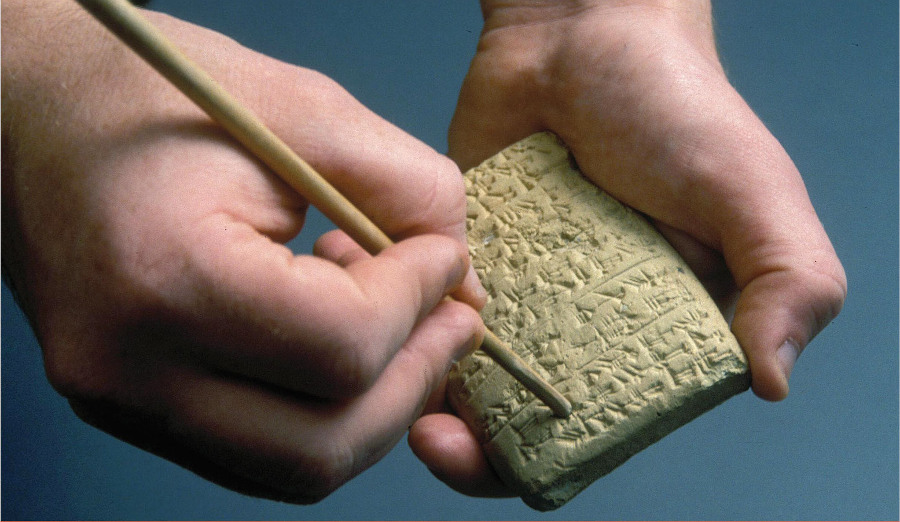
Clay tablets were used to record early writings: “Go now, write it on a tablet for them, inscribe it on a scroll” (Isa 30:8). See article.
Z. Radovan/www.BibleLandPictures.com
Return to the main text.
30:9 rebellious people. See v. 1; see also 1:2 and note.
30:10 seers. See 1Sa 9:9 and note; 2Ki 17:13. See no more visions. Cf. Am 2:12; 7:13,16; Mic 2:6. Tell us pleasant things. As false prophets do (see 1Ki 22:13; Jer 6:14; 8:11; 23:16–17,26; Mic 2:11; 3:5,11 and notes; cf. 2Ti 4:3–4 and note on 4:3).
30:11–12,15 Holy One of Israel. See 1:4 and note.
30:12 oppression. Especially in their domestic policy (1:15–17,23; 5:7; 29:21; 58:3–4; 59:3,6–8,13). deceit. Especially in their foreign policy (vv. 1–2; 29:15).
30:13 like a high wall. Oppression and deceit (v. 12) had been the “wall” they built to assure their safety and prosperity, but it will be shattered to pieces (v. 14).
30:15 See 26:3. repentance and rest. The true way to salvation and security.
30:16 horses. See Ps 20:7–8 and note; 33:17; Pr 21:31 and note.
30:17 A thousand will flee. A fulfillment of the curse of Dt 32:30. flagstaff . . . banner. The army will scatter and the few who are left will be isolated like a flagstaff or a banner on a hill (see 5:26 and note; see also 1:8 and note).
30:18 longs to be gracious. After punishing Israel, God will once again bless his people (cf. 40:2 and note).
30:19 weep no more. See 25:8 and note. God’s response is similar to his zeal for the vineyard (Israel) in 27:2–6 (see notes there).
30:20 bread of adversity . . . water of affliction. Prisoners’ food (1Ki 22:27). teachers. Prophets, like Isaiah. Or the Hebrew for “teachers” can be rendered “Teacher” and be a reference to the Lord, who will instruct them, and this time they will respond with obedience (vv. 21–22); cf. Jer 31:31–34; Eze 11:19–20; 36:25–27.
30:21 This is the way; walk in it. See Dt 5:32–33. Contrast the attitude shown in v. 9 (cf. 29:24; Jer 6:16 and note).
30:22 desecrate your idols. In repentance, not in despair, as in 2:20 (see note there).
30:23 rain . . . food . . . rich and plentiful. Part of the covenant blessings promised in Dt 28:11–12. See 5:6 and note. In that day. Cf. 29:18; see notes on 10:20,27; 26:1. cattle will graze. Cf. 32:20 and note.
30:24 mash. Seasoned, tasty fodder.
30:25 day of great slaughter. Cf. 24:1; 34:2,6 and note. Assyria’s fall (v. 31) is one illustration. streams . . . on every high mountain. Paradise-like conditions will return to the land (see 41:18; Ps 104:13–15 and notes).
30:26 moon . . . brighter. The darkness will be past: Night will be like the day, and day will be illumined with sevenfold light. binds up the bruises . . . heals the wounds. Israel had suffered because of the sins of the people (see 1:5–6; 61:1; Jer 33:6 and notes).
30:27 the Name. The revelation of God, especially his power and glory. anger . . . clouds of smoke. The language of theophany (a manifestation or appearance of God). God is portrayed as coming in a storm (see v. 30; see also 28:2; 29:6; Ps 18:7–15 and notes). consuming fire. Perhaps lightning.
30:28 rising up to the neck. The army of Assyria was similarly described in 8:8 (see note there). bit. Cf. 37:29.
30:29 sing . . . holy festival. Perhaps the Passover, alluded to in 31:5 (cf. Mt 26:30). mountain of the LORD. Zion, where the temple was (see 2:2–4 and note). Rock. God himself (see 17:10 and note).
30:30–31 voice. Associated with thunder in Ex 20:18–19; Ps 29:3–9 (see note there).
30:30 arm coming down. See 9:12,17,21; 51:9 and notes. cloudburst . . . hail. In 28:2, the forces of nature were used to describe God’s use of Assyria to judge Israel. Now those same images describe God’s judgment of Assyria.
30:31 voice of the LORD will shatter. Cf. 10:5; Ps 29:5–9.
30:32 his punishing club. See 11:4 and note. music of timbrels. After a great victory people rejoiced with singing and dancing (see Ex 15:20–21 and notes; 1Sa 18:6).
30:33 Topheth. A region outside Jerusalem where children were sacrificed to Molek (see 2Ki 23:10; Jer 7:31–32; 19:6,11–14 and notes), the god of the Ammonites (1Ki 11:7). Thus it was a place of burning. king. Either the king of Assyria who would be burned there, or God the true King who has prepared Topheth to receive the king of Assyria. burning sulfur. See 1:31; Ge 19:24 and notes.
31:1 See 30:1 and note. In shorter form, ch. 31 recapitulates the structure and content of ch. 30. go down to Egypt. See Ge 26:2. horses . . . chariots. Egypt had large numbers of horses and chariots (see 1Ki 10:28–29; Ps 20:7–8 and notes). Cf. Dt 17:16. Holy One of Israel. See 1:4 and note.
31:2 he too is wise. People had questioned God’s wisdom in 29:14–16 (see notes there).
31:3 Egyptians are mere mortals and not God. Cf. Hos 11:9. God . . . spirit. See Jn 4:24 and note. stretches out his hand. Cf. the refrain in 5:25 (see note there); 9:12,17,21; 10:4. those who help will stumble. Cf. 30:3,5.
31:4 lion. Although the Assyrian king is elsewhere compared to a lion (see notes on 15:9; Jer 2:15), here the Lord Almighty is compared to a lion that none can oppose. shepherds. Perhaps an allusion to the rulers of the nations (see NIV text note on Na 3:18).
31:5 birds . . . will shield. Cf. Dt 32:10–11. pass over. The technical word used of the destroying angel who “passed over” every house in Egypt that had blood on the doorposts (see Ex 12:13,23 and notes). Cf. Isa 37:35.
31:6 greatly revolted. See 1:2 and note.
31:7 reject the idols. See 2:20 and note.
31:8 sword, not of mortals. The angel of the Lord struck down 185,000 soldiers in 701 bc (see 37:36 and note; see also Ps 7:12–13 and note). put to forced labor. As prisoners of war.
31:9 stronghold. Nineveh was destroyed by the Medes and Babylonians in 612 bc (Na 3:7). commanders will panic. Cf. Na 2:10 and note. fire . . . furnace. The Lord’s glory resides in Zion, and from that center of his people his fire of judgment breaks out upon the wicked (see 10:17; 30:33 and note; cf. Lev 10:2; cf. also Joel 3:16; Am 1:2 and notes).
32:1 king . . . in righteousness. The Messianic age is again in view (see 9:7; 11:4; 16:5 and notes). Cf. vv. 16–17; 33:17 and note.
32:2 Each one will be like. The Lord’s redeemed, as sources of protection and blessing, will reflect him (see the rest of this note; see also vv. 3–8). shelter . . . refuge . . . shadow. Similar terms are applied to the Lord in 25:4 (see 4:5–6 and note). streams . . . in the desert. See 35:6–7; 41:18; 49:10 and notes.
32:3 eyes . . . no longer be closed . . . ears . . . listen. See 35:5 and note (contrast 6:9–10; see notes there).
32:5–8 God’s people will no longer be among the fools. The contrast between the fool and the wise or noble is characteristic of wisdom literature (compare Pr 9:1–6 with Pr 9:13–18).
 32:6 A full explication of what the OT calls a “fool” (see Pr 1:7 and note; see also NIV text note there). fools speak folly. Cf. 9:16–17; Ps 14:1 and note; 53:1.
32:7 plea of the needy. See 1:17 and note.
32:8 the noble . . . noble deeds. Conduct reveals character (cf. Mt 7:16–17; 12:33; Jas 3:11–12 and note). plans . . . stand. See 8:10 and note.
32:9 women. Cf. 3:16—4:1 and notes. complacent . . . feel secure. See v. 11; Am 6:1 and note. These words are used in a good sense in v. 18 (the Hebrew for “undisturbed” is the same as that for “complacent”).
32:10 a year. Perhaps the invasion of Sennacherib (701 bc) is in view. grape harvest will fail. Cf. 37:30. The armies of Assyria would bring widespread destruction, ruining the summer fruit.
32:11 complacent women. Particularly the wealthier women, who wear “fine clothes.” Strip. Cf. 47:2–3 and notes.
32:12 Beat your breasts. Like the female slaves of Nineveh (Na 2:7). for the fruitful vines. Cf. the Lord’s weeping in 16:9.
32:13 thorns and briers. See 5:6; 7:23 and notes. merriment . . . revelry. See 22:2 and note; cf. Jer 16:8–9.
32:14 fortress . . . noisy city. Assyria’s invasion is a warning that Jerusalem (see 24:10 and note) will one day be destroyed. donkeys . . . flocks. Cf. 7:25; 13:21–22; 34:13.
32:15 till the Spirit is poured on. The outpouring of the Spirit is linked with abundance also in 44:3 (see note there; see also 11:2; Joel 2:28–32; Zec 12:10 and notes). fertile field . . . forest. God’s salvation will mean the restoration of creation, turning deserts to fertile fields and fertile fields to forests (see 29:17 and note; cf. 35:1–2 and notes).
32:16 justice . . . righteousness. See v. 1 and note.
32:17 peace. Cf. 9:7; 11:6–9 and note. quietness and confidence. Contrast 30:15 (“you would have none of it”).
32:18 secure . . . undisturbed. See note on v. 9. places of rest. See 28:12 and note.
32:19 hail. Cf. 28:2. forest. Probably Assyria. See 10:33–34 and notes. city. See 24:10 and note.
32:20 The abundance of the day of the Lord is described (see 30:23–24 and notes).
33:1 Woe. See note on 28:1—35:10. destroyer . . . betrayer. Probably Assyria—depicted as treacherous (see 10:5–6; 16:4; 21:2; 24:16 and notes).
33:2–9 A prayer asking the Lord to bring about the promised destruction of Assyria.
33:2 be gracious. See 30:18 and note; cf. Nu 6:25. strength . . . salvation. See 12:2 and note; cf. 59:16 and note. every morning. See Ps 88:13; 143:8 and note; see also introduction to Ps 57. distress. See 37:3.
33:3 rise up . . . scatter. An allusion to Nu 10:35–36 (see notes there); cf. Ps 68:1 and note.
33:5 fill . . . righteousness. See 1:26; 32:1 and note.
33:6 wisdom . . . knowledge . . . fear of the LORD. Terms linked with the Messiah in 11:2 (see note there). See 9:6; Pr 1:7 and notes.
33:7 their brave men. The men of Judah, during Sennacherib’s invasion of 701 bc (see 10:28–34 and notes). envoys of peace. Perhaps the three officials who conferred with the Assyrian field commander (36:3,22).
33:8 highways are deserted. Travel and trade were impossible, creating economic hardship (see Jdg 5:6 and note). treaty. Perhaps the agreement made when Hezekiah paid large sums to Sennacherib (see 2Ki 18:14 and note).
33:9 land . . . wastes away. Farmland and pastures were ruined by the invaders. See 24:4 and note. Lebanon. Renowned for its cedars (2:13) and animals (40:16). Sharon. A plain along the Mediterranean coast north of Joppa, known for its beautiful foliage and superb grazing land (see 35:2 and note; 65:10; 1Ch 27:29). Arabah. Desert land associated with the Jordan River and the Dead Sea (see Dt 1:1; 2:8 and notes). Bashan. See 2:13 and note. Carmel. See note on 1Ki 18:19; means “fertile field” (as in 29:17; 32:15) or “orchards” (as in 16:10) and is also associated with lush pasturelands (see 35:2 and note; Mic 7:14 and NIV text note; Na 1:4 and note).
33:10 be exalted. Through the judgment he brings on his rebellious people (see v. 14 and note).
33:11 conceive . . . give birth. Cf. 26:18. chaff . . . straw . . . fire. They produce only what has no value (chaff, straw), ultimately resulting in their own destruction (fire).
33:12 to ashes. The burning will be complete (see Am 2:1). thornbushes. They burn very quickly (27:4; 2Sa 23:6–7).
33:13 hear . . . acknowledge. Cf. 34:1.
33:14 sinners in Zion. See 1:27–28 and note; 4:4. terrified. At God’s judgment. consuming fire. The presence of the God of judgment (29:6; 30:27,30; Ex 24:17; Dt 4:24; 9:3; 2Sa 22:9; Ps 18:8; Heb 12:29).
33:15 Similar requirements are found in Ps 15:2–5; 24:3–6 (see notes there). bribes. See 1:23.
33:16 heights . . . fortress. Symbolic of the security found in God (cf. Ps 18:2 and note). bread . . . water. Cf. 49:10.
33:17 king. See 32:1 and note; cf. 6:1,5 and notes. in his beauty. Reflecting on the splendor and majesty of a Davidic king; probably a foreshadowing of the Messianic kingdom (cf. 4:2; Ps 45:3–5 and notes; contrast Isa 53:2–3 [see notes there]). land . . . afar. See 26:15 and note.
33:18 former terror. The Assyrian invasion (see 17:12–14 and note). revenue. Forced tribute (see note on v. 8). towers. Judah’s fortifications were probably under strict Assyrian control (2:15).
33:19 arrogant. Cf. 10:12 and note. speech is obscure. The Assyrian language was related to Hebrew but was different enough to sound strange to Israelite ears. See 28:11; Dt 28:49.
33:20 Look on Zion. The redeemed city, in contrast to the city described in vv. 7–9. festivals. See 1:14 and note. peaceful abode. See 32:17–18 and notes. tent . . . not . . . moved. Israel’s exile will be over. stakes . . . ropes. Cf. the similar description of Jerusalem in 54:2.
33:21 Mighty One. See 10:34 (cf. Ps 93:3–4 and notes). broad rivers. To prevent easy access to its borders—thus like Tyre (23:1) or Thebes (see Na 3:8 and note). No galley with oars . . . no mighty ship. Either war is now absent, or Israel needs no commerce because the Lord provides (v. 22).
33:22 our judge. See 2:4; 11:4 and note. our lawgiver. See 2:3; 51:4 and note. our king. See v. 17; 32:1 and notes; see also Ps 46; 48. save. See Jdg 2:16–19 and note.
33:23 Either this verse contrasts Jerusalem’s current unpreparedness to sail into battle against Assyria with its future triumph over them, or both parts of the verse look to the future when preparedness for war is no longer necessary. plunder. See v. 4.
33:24 Looking beyond Isaiah’s own day to the physically and spiritually whole Jerusalem of vv. 17,20–22.
34:1—35:10 Chs. 34–35 conclude chs. 28–35 and comprise an eschatological section corresponding to chs. 24–27, which conclude chs. 13–27 (see note on 24:1—27:13).
34:2 angry . . . wrath. In the day of the Lord (see 2:11,17,20; 26:20–21 and notes). See also 13:3,13 and notes. totally destroy. The kind of destruction the Canaanites had deserved. See NIV text note; see also v. 5; Jos 6:17 and note. slaughter. See 30:25 and note.
34:3 thrown out. Not to have a proper burial was considered a disgrace (see 14:19; Jer 22:19 and notes).
34:4 stars . . . dissolved. Disturbances in the heavens characterize the day of the Lord (see article). Creation is being shaken in preparation for the new creation (see 13:10,13 and notes; cf. Eze 32:7–8). sky . . . scroll . . . starry host will fall. Referred to in Mk 13:24–25 (see note there); Rev 6:13–14 in connection with the “great distress” (Mt 24:21) and the second coming of Christ. withered leaves. Cf. 24:4; 40:7–8.
34:5–6 My sword . . . The sword of the LORD. See Ps 7:12–13 and note.
34:5 drunk its fill. Cf. Eze 39:18–20 and notes. Edom. Symbolic of all the enemies of God and his people, like Moab in 25:10–12 (see note on 25:10). See note on 21:11. The Edomites were driven from their homeland by the Nabatean Arabs, perhaps as early as 500 bc.
34:6 fat. Considered the best part of the meat, and therefore offered to the Lord in the sacrifices (see Lev 3:9–11,16 and note on 3:16). lambs and goats. Symbolizing the people. sacrifice. Battles are often compared to sacrifices (see Jer 46:10 and note; 50:27; Eze 39:17–19 and notes; cf. Rev 19:17–18). Bozrah. An important city of Edom and a sheepherding center, it was located about 25 miles southeast of the southern end of the Dead Sea.
34:7 wild oxen . . . great bulls. Symbolizing the troops and/or leaders of the nations. drenched with blood. See v. 3.
34:8 day of vengeance. See 35:4; 61:2. The Edomites opposed Israel at every opportunity (2Sa 8:13–14) and rejoiced when Jerusalem was destroyed (see La 4:21; see also Ps 137:7; Jer 49:8; Ob 12–14 and notes). But Edom’s day would come (see 63:1–4 and notes).
34:9 burning sulfur. Edom’s destruction is compared with the overthrow of Sodom and Gomorrah (see Jer 49:17–18 and notes). See also 1:31; Ge 19:24 and notes.
34:10 smoke . . . forever. Applied to “Babylon” in Rev 19:3 (see also Rev 14:10–11 and notes). lie desolate. See 13:20–22; Mal 1:3–4 and notes.
34:11 desert owl . . . screech owl . . . great owl . . . raven. “Unclean” birds (Dt 14:14–17). Such birds would also live in the ruins of Babylon (13:21) and Nineveh (Zep 2:14). measuring line . . . plumb line. Symbolizing God’s right and true judgment (cf. 28:17 and note). chaos . . . desolation. The Hebrew for these words is used in Ge 1:2 (see note there) to describe the earth in its “formless” and “empty” state (see also Jer 4:23 and note).
34:13 Thorns . . . nettles. Cf. 7:24–25.
34:14 Desert creatures . . . hyenas. See 13:20–22 and note.
34:15 owl . . . falcons. Ceremonially unclean (see v. 11 and note; Dt 14:13,15–17).
34:16 scroll. After the destruction of Edom, people will read this prophecy given by Isaiah. these. The creatures just listed.
34:17 allots their portions. God will give the creatures of vv. 11,13–15 clear title to the land of Edom.
35:1 desert . . . will be glad. The personification of nature is common in Isaiah (33:9; 44:23; 55:12). wilderness. The Arabah (see note on 33:9). crocus. See NIV text note on SS 2:1.
35:2 rejoice . . . shout for joy. See 54:1 and note. Lebanon . . . Carmel . . . Sharon. Fertile areas renowned for their beautiful trees and foliage (see note on 33:9). they. Israel. glory of the LORD. In the great transformation just announced. See 6:3 and note.
35:3 See Heb 12:12, where this imagery is used to encourage action in response to the Lord’s discipline.
35:4 Be strong, do not fear. Cf. God’s words of encouragement to Joshua in Jos 1:6–7,9 (see note on Jos 1:18). God will come. Cf. 40:9–10. Similar language is used of the coming of the Messiah (see 62:11 and note; cf. Rev 22:12,20 and notes). vengeance . . . retribution. See note on 34:8.
35:5 eyes . . . ears. See 29:18; 32:3; 42:7 and notes. Spiritual and physical healing are also linked together in Christ’s ministry (see Lk 7:22 and note).
35:6 lame leap . . . mute tongue shout. Signs of the Messianic age (see Mt 12:22; Ac 3:7–8). Water . . . streams. See 32:2 and note. Cf. God’s provision of water in Ex 17:6; 2Ki 3:15–20 (see note on 2Ki 3:17).
35:7 springs. Cf. 41:18. reeds and papyrus. Plants that grow in marshes and lakes (cf. 19:6–7).
35:8 highway. A road built up to make travel easier (see 11:16; 40:3 and notes). the Way of Holiness. The way set apart for those who are holy; only the redeemed (v. 9) could use it. In ancient times, certain roads between temples were open only to those who were ceremonially pure.
35:9 lion . . . beast. Sometimes wild animals made travel dangerous (see Dt 8:15; Jdg 14:5 and note). redeemed. Those the Lord has delivered from bondage (cf. 1:27; 51:10; 62:12; Ex 6:6–8 and notes; Lev 25:47–48; Dt 7:8).
35:10 Repeated in 51:11. enter Zion with singing. As the Israelites did when they returned from Babylonian exile (see introduction to Ps 126). overtake them. They will be pursued, not by wild animals (v. 9), but by gladness and joy (cf. Ps 23:6 and note). sorrow . . . will flee. Cf. 25:8; 65:19.
36:1—39:8 Much of chs. 36–39 is paralleled, sometimes verbatim, in 2Ki 18:13—20:19 (see notes there). The compiler of 2 Kings may have used Isa 36–39 as one of his sources, or both may have drawn on a common source. Chs. 36–37 describe the fulfillment of many predictions about Assyria’s collapse, while chs. 38–39 point toward the Babylonian context of chs. 40–66.
36:1 fourteenth year of . . . Hezekiah’s reign. 701 bc, the 14th year of his sole reign. Hezekiah ruled as sole king from 715 to 686 but was a coregent from c. 729 (see note on 2Ki 18:1). Sennacherib. Reigned over Assyria from 705 to 681 (see chart). all the . . . cities. In his annals Sennacherib lists 46 such cities (see note on 2Ki 18:13; see also photo).
36:2 large army. Cf. 37:36 and note. Lachish. An important city about 30 miles southwest of Jerusalem that guarded the main approach to Judah’s capital from that direction (see Jer 34:7 and note; see also photo). aqueduct . . . Field. See 7:3 and note; see also note on 2Ki 18:17.
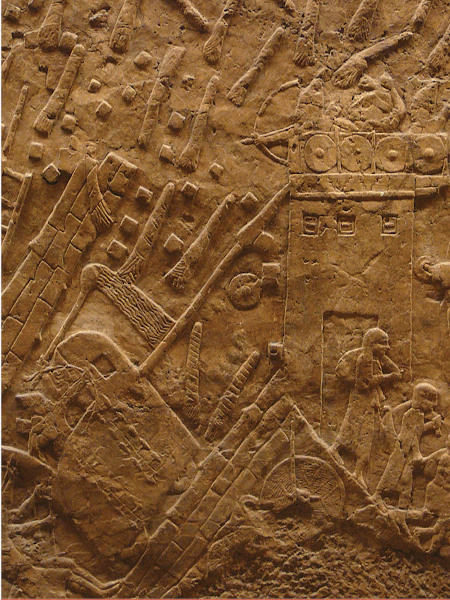
Sennacherib’s attack on Lachish. From Lachish, Sennacherib sent a messenger to King Hezekiah at Jerusalem to threaten him (Isa 36:2). However, Hezekiah is reassured by Isaiah: “He will not enter this city or shoot an arrow here. He will not come before it with shield or build a siege ramp against it” (Isa 37:33).
Caryn Reeder, courtesy of the British Museum
Return to the main text.
36:3 Eliakim. See 22:20–21 and notes. palace administrator. In charge of the palace (see 22:15 and note). Shebna. See 22:15 and note. secretary. Perhaps equivalent to secretary of state (see Jer 36:12; see also note on 2Sa 8:17). recorder. An official position also associated elsewhere with “secretary” (1Ki 4:3). See also note on 2Sa 8:16.
36:4–20 The Assyrian field commander uses fear tactics and psychological warfare (cf. note on Jos 6:5).
36:4,13 great king. See note on 2Ki 18:19.
36:5 rebel. By refusing to pay the expected tribute (see 2Ki 17:4; 18:7 and note).
36:6,9 depending on Egypt. Cf. 10:20.
36:6 Egypt. Hezekiah had been under pressure to make an alliance with Egypt since 715 bc or earlier (see 20:5; 30:1 and notes). splintered reed. Egypt is compared to a reed again in Eze 29:6–7 (see note on 29:6). Such is Pharaoh. Cf. 30:3,7.
36:7 high places and altars. Hezekiah had destroyed these popular shrines often dedicated to Baal worship (see note on 2Ki 18:4; see also 2Ch 31:1). Other high places were dedicated to the Lord but were contrary to God’s command to worship at a central sanctuary—the temple in Jerusalem (Dt 12:4). this altar. In Solomon’s temple.
36:8 two thousand horses. A sizable number for any army. Horses and chariots were highly prized (see note on 30:16). if you can put riders on them! See note on 2Ki 18:23. riders. Probably charioteers, since cavalry was not employed by these nations this early (see v. 9).
36:10 The LORD . . . told me. The Lord had used Assyria to punish Israel (10:5–6), but now it was Assyria’s turn to be judged. Pharaoh Necho claimed God’s approval on his mission according to 2Ch 35:21.
36:11 Eliakim . . . Joah. See v. 3 and note. Aramaic. The diplomatic language of that day (see note on 2Ki 18:26). Don’t speak . . . in Hebrew. The officials feared that the commander’s speech might damage the people’s morale.
36:12 eat . . . excrement . . . drink . . . urine. A crude way of describing the horrors of famine if Jerusalem were to be besieged (cf. 2Ki 6:25 and note). Contrast v. 16 (see note there).
36:14 deceive you. Cf. 37:10 and note.
36:16 own vine and fig tree. Symbols of security and prosperity in the best of times (see 1Ki 4:25; Mic 4:4 and note; Zec 3:10 and note).
36:17 come and take you. The Assyrians deported rebellious peoples to reduce their will to revolt (see 2Ki 15:29; 17:6 and notes). grain and new wine. Two of the staples of Israel (cf. Dt 28:51; Hag 1:11 and note).
36:18–20 The commander’s words echo the boasts of the proud Assyrians in 10:8–11. See note on 2Ki 18:33–35.
36:19 Hamath and Arpad. See 10:9 and note. Sepharvaim. Probably located in northern Aram (Syria) not far from Hamath. Residents of Sepharvaim were deported to Samaria, though they still worshiped the gods Adrammelek and Anammelek. See 2Ki 17:24,31 and note on 17:24. Samaria. The Assyrians assumed that each people had its own gods and so did not associate the God of Judah with that of Samaria.
36:21 people remained silent. The Assyrians had hoped that the masterful psychology of vv. 4–20 would produce panic.
36:22 See v. 3 and note. clothes torn. An act of sorrow or mourning (see note on 2Ki 18:37).
37:1 clothes . . . sackcloth. See Ge 37:34 and note; see also note on 2Ki 18:37. temple. Designated as a place of prayer by Solomon (1Ki 8:33). The Assyrian references to Hezekiah’s dependence on the Lord (36:7,15,18) were true (see note on 36:7).
37:2 Eliakim . . . Shebna. See note on 36:3. leading priests. See note on 2Ki 19:2. Isaiah son of Amoz. See note on 1:1. Prophet, priests and king join in supplication.
37:3 day of distress. See 5:30; 26:16; 33:2 and notes. moment of birth. An even more vivid description than that of the pains of childbirth (see 13:8 and note).
37:4 ridicule. See vv. 17,23–24. pray. See note on 2Ki 19:4. remnant. Jerusalem was left almost alone (see 36:1 and notes on 1:9; 2Ki 19:4; see also 10:20–22 and note).
37:6 Do not be afraid. Cf. 7:4; see 35:4 and note.
37:7 report. See note on 2Ki 19:7. return . . . cut down with the sword. See vv. 37–38 and note on v. 38.
37:8 Lachish. See note on 36:2. Libnah. See note on 2Ki 8:22; see also Jos 10:31.
37:9 Tirhakah, the king of Cush. In 701 bc he was actually a prince (the “lieutenant” of the new pharaoh Shebitku, who sent him with an army to help Hezekiah withstand the Assyrian invasion); he did not become king until 690. But this part of Isaiah was not written before 681 (see note on v. 38), so it was natural at that time to speak of Tirhakah as king. See 18:1 and note.
37:10 god . . . deceive. See 36:14–15,18. The message of vv. 10–13 is similar to that of 36:18–20 (see note there).
37:12 Gozan. A city in northern Mesopotamia to which some of the Israelites had been deported by the Assyrians (see 2Ki 17:6 and note). Harran. A city west of Gozan where Abraham lived for a number of years (see Ge 11:31 and note). Rezeph. A city between Harran and the Euphrates River. Eden. The state of Bit Adini, located between the Euphrates and Balikh Rivers (see note on 2Ki 19:12).
37:13 Hamath . . . Arpad. See 10:9 and note. Sepharvaim. See 36:19; 2Ki 17:24 and notes. Ivvah. See note on Avva in 2Ki 17:24.
37:14 temple. See v. 1 and note. spread it out. Contrast the hypocritical spreading out of hands to pray in 1:15 (see note on 1:11–15).
37:16 LORD Almighty. See 13:4 and note. enthroned . . . cherubim. See notes on 1Sa 4:4; 2Sa 6:2. all the kingdoms. Cf. 40:17 and note. made heaven and earth. The role of God as Creator is emphasized also in 40:26,28; 42:5; 45:12 (see note on 40:21).
37:17 Give ear . . . open your eyes. Cf. Solomon’s prayer in 1Ki 8:52; 2Ch 6:40. ridicule the living God. See v. 4 and note.
37:19 not gods. See 36:19 and note. wood and stone. Cf. 2:8; 44:9–20 and notes.
37:20 that all the kingdoms of the earth may know. See note on 2Ki 19:19. you . . . are the only God. Cf. v. 16; 43:11; 45:18,21–22; see note on Ex 20:3; see also note and NIV text note on Dt 6:4.
37:22 Virgin Daughter Zion . . . Daughter Jerusalem. A personification of Jerusalem (see note on 2Ki 19:21). tosses her head. A gesture of mocking (see Ps 22:7; 44:14 and notes).
37:23 lifted . . . in pride. Assyria’s great pride had been condemned earlier (see 10:12 and note). Holy One of Israel. A designation of the God of Israel characteristic of Isaiah (see 1:4 and note).
37:24 many chariots. See 36:8 and note. ascended the heights. Cf. the words of the king of Babylon in 14:13–14. Lebanon. See 33:9; 35:2 and notes. cut down . . . cedars. For many centuries the kings of Mesopotamia had used the cedars of Lebanon in their royal buildings (see notes on 2:13; 9:10; 14:8; cf. 1Ki 5:8–10).
37:25 dug wells. Desert lands could not stop him. dried up all the streams. The branches of the Nile were no obstacle, either. This boast was almost a claim to deity. See 11:15; 44:27 and notes.
37:26 ordained . . . planned . . . brought it to pass. See Ps 33:10–11. Cf. 40:21 and note. cities into piles of stone. Assyria had been God’s tool of judgment against the nations (see 10:5–6 and note on 10:5).
37:27 See 40:6–8 and notes; Ps 37:1–2. grass . . . on the roof. Roofs in the Near East were flat (cf. 2Sa 11:2 and note).
37:29 hook in your nose. The Assyrians often led away captives by tying ropes to rings placed in their noses (see note on 2Ki 19:28; see also photo). bit. Cf. 30:28.
37:30 sign. See 7:11,14 and notes. what grows by itself. See note on 2Ki 19:29. second . . . third year. See note on 2Ki 19:29. Probably the second year was to begin shortly, so the total time was less than 36 months. Another three-year sign was given in 20:3. plant vineyards and eat. The response to Assyria’s proposal in 36:16 (see note there).
37:31–32 remnant. See notes on v. 4; 1:9; 2Ki 19:4,30–31.
37:31 take root . . . bear fruit. See 4:2; 11:1,10; 27:6 and notes.
37:32 The zeal . . . this. See 9:7 and note.
37:33 siege ramp. To help the invaders bring up battering rams and scale the walls (2Sa 20:15). See photo.
37:35 sake of David. God had promised David an enduring throne in Jerusalem (see 9:7; 55:3; 2Sa 7:16 and notes). my servant. See note on 41:8–9.
37:36 angel of the LORD . . . put to death. The Lord often sent his angel as his agent to bring plagues. Cf. the striking down of the firstborn in Egypt (Ex 12:12–13) and the angel’s sword poised against Jerusalem (see 2Sa 24:15–16 and note on 24:16; 1Ch 21:22, 27). The Greek historian Herodotus attributed this destruction to a bubonic plague. The death of these soldiers fulfills the prophecies of 10:33–34 (see notes there); 30:31; 31:8 (see note there).
37:37 Nineveh. The capital of Assyria (see Jnh 1:2 and note).
37:38 in the temple. Hezekiah had gone to the Lord’s temple and gained strength (vv. 1,14). Twenty years later (681 bc) Sennacherib went to the temple of his god and was killed (see note on 2Ki 19:37). Ararat. Urartu, north of Assyria in Armenia (see note on Ge 8:4). Esarhaddon. Reigned 681–669 (see chart; see also 2Ki 19:37 and note; Ezr 4:2).
38:1 In those days. Sometime before Sennacherib’s invasion of 701 bc (v. 6). Isaiah. He is prominent in this historical interlude (chs. 36–39). Put your house in order. See note on 2Ki 20:1. you are going to die. See note on 2Ki 20:1. Elisha similarly predicted the death of Ben-Hadad (see 2Ki 8:9–10 and notes). you will not recover. See v. 21 and note.
38:2 wall. Perhaps of the nearby temple. prayed. Cf. also Hezekiah’s prayer of thanksgiving in vv. 10–20 (see note there).
38:3 wholehearted devotion. Like David (1Ki 11:4), Hezekiah was truly faithful (see 2Ki 18:3–5 and notes).
38:5 fifteen years. From c. 701 to c. 686 bc (see note on 2Ki 20:6).
38:6 deliver . . . this city. See 31:5; 37:35 and notes.
38:7 sign. See 7:11,14 and notes.
38:8 stairway of Ahaz. See note on 2Ki 20:11. sunlight went back. Perhaps the miracle involved the refraction of light. See 2Ki 20:9–11 and notes; Jos 10:12–14 and note on 10:13.
38:10–20 A hymn of thanksgiving in two stanzas, similar to many of the psalms. Hezekiah was deeply interested in the psalms of David and Asaph (2Ch 29:30).
38:10–14 Hezekiah voices his complaint about his past affliction (v. 1).
38:11 the LORD himself. See 26:4. land of the living. Cf. Ps 27:13 and note.
38:12 rolled up my life. Cf. the rolling up of the sky like a scroll in 34:4 (see also Heb 1:12).
38:13 broke all my bones. Physical or spiritual distress is often described in terms of aching or broken bones (Ps 6:2; 32:3).
38:15–20 Hezekiah offers praise for God’s healing (v. 5).
38:15 what can I say? Hezekiah wonders how he can praise God (cf. 2Sa 7:20).
38:16 by such things. Perhaps referring to God’s promises and gracious acts, though his gracious acts can include such experiences as sickness and peril.
38:17 pit of destruction. The grave (see Ps 55:23 and note). all my sins. Physical and spiritual healing are sometimes linked together (see 53:4–5 and notes). sins behind your back. God not only puts our sins out of sight; he also puts them out of reach (Ps 103:12; Mic 7:19), out of mind (Jer 31:34) and out of existence (Isa 43:25; 44:22; Ps 51:1,9; Jer 50:20; Ac 3:19).
38:18 cannot hope. Knowledge about the afterlife was limited in the OT period, but the gospel of Christ has “brought . . . immortality to light” (2Ti 1:10).
38:20 sing with stringed instruments. Instrumental music and hymns of praise were closely linked in worship (cf. Ps 33:1–3; 150). all . . . our lives in the temple. Hezekiah, like David (Ps 23:6), loved God’s house.
38:21 Prepare . . . apply. The verbs are plural (probably addressed to the court physicians). poultice of figs. Figs were also used for medicinal purposes in ancient Ugarit. he will recover. Contrast v. 1. God answered Hezekiah’s prayer for healing (v. 5).
38:22 sign. Perhaps the healing of the boil (v. 21).
39:1 At that time. About 703 bc. Marduk-Baladan. Reigned 721–710 and again in 703 (see note on 2Ki 20:12). Babylon. See note on 13:1. sent . . . letters and a gift. Marduk-Baladan probably wanted Hezekiah’s support in a campaign against Assyria. During his career Marduk-Baladan organized several revolts against his hated neighbors. See note on 2Ki 20:12.
39:2 silver . . . gold . . . treasures. See 2Ch 32:27–29,31 and notes. Pride likely motivated Hezekiah to show off his wealth and power. He was probably also seeking help from the Babylonians against the Assyrian threat (see note on 2Ki 20:13). But the information gained during this ill-advised tour escorted by Hezekiah would be valuable to Marduk-Baladan’s powerful successors (vv. 5–7).
39:3 Isaiah the prophet. Earlier God had sent Isaiah to confront Ahaz (7:3); cf. also Nathan’s rebuke of David (see 2Sa 12:1,7 and note on 12:1).
39:5 word of the LORD. Contrast the word of hope in 38:4–6.
39:6 carried off to Babylon. Isaiah’s first mention of Babylon as Jerusalem’s conqueror, though 14:3–4 implied the Babylonian exile (see notes there). The wickedness of Hezekiah’s son Manasseh was a major cause of the captivity (2Ki 21:11–15). See also notes on 2Ki 20:17; 21:15.
39:7 your descendants. Such as King Jehoiachin (see 2Ki 24:15 and note). eunuchs. Cf. Da 1:3–6, where the Hebrew for “court officials” (Da 1:3) can also be translated “eunuchs.” king of Babylon. Nebuchadnezzar.
39:8 word . . . is good. See note on 2Ki 20:19. peace . . . in my lifetime. See 2Ki 22:20 and note. “Peace” recurs in a refrain in 48:22; 57:21, dividing the last 27 chapters into 3 sections of 9 chapters each (40–48; 49–57; 58–66).
40:1—66:24 In chs. 1–35 Isaiah prophesied against the backdrop of the Assyrian threat against Judah and Jerusalem, and in chs. 36–39 he recorded Assyria’s failure and warned about the future rise of Babylonia; chs. 40–66 assume that the Babylonian exile of Judah is almost over (see Introduction: Author).
40:1 Comfort, comfort. That is, comfort greatly. The double imperative for emphasis is found also in 51:9,17; 52:1,11; 57:14; 62:10.
40:2 Speak tenderly. The Hebrew for this phrase is used also in 2Ch 32:6, where Hezekiah “encouraged” Judah to trust in God in spite of the Assyrian invasion. hard service. The exile in Babylon (cf. Ps 137:1–6; La 1:1–2, 9,16–17,21). sin . . . paid for. By enduring the punishment of captivity (Lev 26:41). double. Full (or enough) punishment. Cf. the “double calamities” of 51:19.
40:3–5 See 35:1–2 and note on 35:2.
40:3 voice. Three voices are mentioned (vv. 3,6,9), each showing how the comfort of v. 1 will come about. The NT links the voice of v. 3 with John the Baptist in Mt 3:3; Lk 3:4; Jn 1:23 (see notes there). prepare the way. Clear obstacles out of the road (cf. 57:14; 62:10). The language of vv. 3–4 has in view the ancient Near Eastern custom of sending representatives ahead to prepare the way for the visit of a monarch. The picture is that of preparing a processional highway for the Lord’s coming to Jerusalem. In Mt 3:1–8 John declares that repentance is necessary to prepare the way for Christ. make straight . . . a highway. See 11:16; 35:8 and notes.
40:4 rough ground . . . level. To make a smooth road for the Lord (v. 3; cf. 26:7).
40:5 glory . . . revealed. God (through Cyrus, king of Persia) would redeem Israel from Babylon (35:9–10; 44:23–24), and all the nations would see the deliverance (see 52:10 and note; cf. Lk 3:6 and note). Ultimately the glory of the redeeming God would be seen in Jesus Christ (see Jn 1:14; 11:4; 17:4; Heb 1:3 and notes), especially at his return (Mt 16:27; 24:30; 25:31; Rev 1:7)—but also in the redeemed (see 1Co 10:31; 2Co 3:18; Eph 3:21 and notes). See also Isa 6:3 and note.
40:6,8 Quoted in part in 1Pe 1:24–25.
40:6 The second voice (see note on v. 3). like grass. See 37:27 and note; 51:12. all their faithfulness . . . field. Even the power of Assyria and Babylonia would soon vanish.
40:8 word of our God endures. The plans and purposes of the nations will not prevail (see 8:10; Ps 119:89 and notes).
40:9 The third voice (see notes on vv. 3,6). good news. The news that God is leading his people back to Judah (vv. 10–11). He cares for his people and will redeem them (see 52:7–10; 61:1 and notes). The NT expands this “good news” (“gospel”) to refer to the salvation that Christ brings to all who receive him by faith (see 1Co 15:2–3; Gal 1:7; 2:16 and notes). See NIV text note for an alternative translation. Here is your God! The Lord is returning to Jerusalem (v. 10). This verse applies to (1) the return from exile (see 52:7–9 and notes), (2) the first coming of Christ (Mk 1:14–15) and (3) the second coming of Christ (62:11; Rev 22:12). See 35:4 and note.
40:10 rules with a mighty arm. Cf. 51:9; 59:16 and notes. The Lord is characterized by both strength and gentleness (v. 11). reward . . . recompense. His delivered people, the flock of v. 11 (see 62:11–12 and notes).
40:11 tends his flock. Cf. Jer 31:10; Eze 34:11–16 and notes. like a shepherd. See note on Ps 23:1. leads. See photo.
40:12–31 Rhetorical questions are used to persuade the people to trust in the Lord, who has the ability to deliver, strengthen and restore his people.
40:12 measured the waters. See Job 28:25; 38:8. In Job 38–41 the Lord overwhelms Job with a description of his greatness. marked off the heavens. See 48:13 and note.
40:13 Quoted in Ro 11:34; 1Co 2:16. counselor. See 9:6 and note.
40:15 nations . . . a drop in a bucket. See note on v. 6. dust. See 17:13 and note; 29:5.
40:16 Lebanon. The wood of its cedar trees. its animals. Cf. Ps 104:16–18 and note. Sacrifices, however numerous, could never do justice to the greatness of God.
40:17 nothing . . . worthless. In spite of the temporary splendor they might possess (see 13:19 and note).
40:18–20 More than any other prophet, Isaiah shows the folly of worshiping idols. His sarcastic caricature, satire and denunciation of these false gods reach a peak in 44:9–20 (see notes there; see also 41:7,22–24; 42:17; 46:5–7; 48:5 and note).
40:18 With whom . . . compare God? See v. 25 and note; 46:5.
40:19 metalworker . . . goldsmith. See 41:7; 44:10–12. gold . . . silver. See 2:20; Hab 2:18–19 and notes.
40:20 wood. See 44:14–16,19 and notes. that will not topple. See 41:7; 46:7.
40:21 from the beginning. God’s work as Creator is emphasized in the rest of the chapter (cf. 37:26; 41:4,26).
40:22 sits enthroned. Cf. 66:1; see 37:16 and note. circle. Or “horizon.” See Job 22:14; Pr 8:27. stretches out the heavens . . . like a tent. See 42:5; 44:24; 51:13; Ps 104:2; see also note on Ps 19:4b–6.
40:23 princes . . . rulers . . . to nothing. See v. 17; 2:22 and notes; cf. Jer 25:17–26; Da 2:21.
40:24 whirlwind . . . like chaff. See 17:13 and note; 41:15–16.
40:25 See v. 18. Apparently some Israelite doubters were comparing their God with the gods of their captors, and they believed that the Lord was failing the test. Holy One. See 1:4 and note.
40:26 created. See vv. 21–22 and notes. brings out. The Hebrew for this expression is used for bringing forth the constellations in Job 38:32. starry host. Also worshiped by the people (see 47:13; Jer 19:13 and note). by name. See note on Ps 147:4–6. not one . . . missing. See 34:16 and note.
40:27–31 As in many psalms of praise, Isaiah now stresses the goodness of God after describing his majesty (vv. 12–26). Such a God is able to deliver and restore his distressed people if they will wait in faith for him to act. They are to trust in him and draw strength from him.
40:27 way. Condition. hidden . . . disregarded. Cf. 49:14; 54:8. They are languishing in exile because of sin and disobedience, so the fault is theirs, not God’s.
40:28 everlasting God. See 9:6. Creator. See vv. 21–22 and notes. ends of the earth. See 11:12 and note; cf. 5:26; 41:9; 43:6. not grow tired. Contrast 44:12.
40:30 grow tired . . . stumble. See note on 5:27.
40:31 hope in. Trust in or look expectantly to (5:2; 49:23). renew. Or “exchange”; see 41:1 and note. Their human weakness will be exchanged for God’s strength (v. 29). eagles. Known for their vigor (see Ps 103:5 and note) and speed (Jer 4:13; 48:40).
41:1,5 islands. Or “coastlands” (see 11:11 and note).
41:1 renew their strength. See 40:31 and note. The nations and their gods are challenged to display the same power and wisdom as Israel’s God (vv. 21–24).
41:2 one from the east. Cyrus the Great, king of Persia (559–530 bc), who conquered Babylon in 539 (see 13:17 and note) and issued the decree allowing the Jews to return to Jerusalem (Ezr 1:1–4; 6:3–5). Cyrus is referred to also in v. 25; 44:28—45:5,13; 46:11. See photo. calling him in righteousness. Like the servant of the Lord in 42:6, Cyrus was chosen to carry out God’s righteous purposes. subdues kings. Such as Croesus, king of Lydia in Asia Minor. windblown chaff. See 17:13 and note. his bow. The Persians were renowned for their ability as archers.
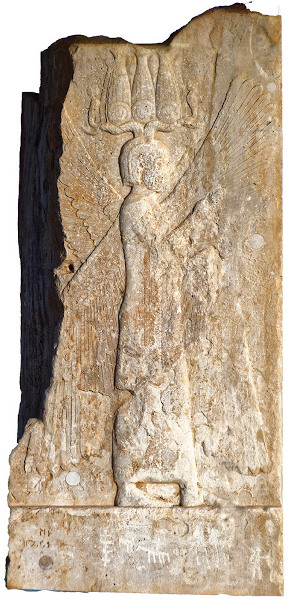
Relief of Cyrus the Great as a winged figure from Pasargadae, Iran. Cyrus was king of Persia (559–530 bc), and Isaiah refers to him as the “one from the east” (Isa 41:2).
Todd Bolen/BiblePlaces.com
Return to the main text.
41:4 from the beginning. See 40:21 and note. with the first . . . with the last. Since the Lord was present with the first of the generations and will still be there with the last of them, he is the eternal Lord of history and nations (Heb 13:8; Rev 1:8, 17; 2:8; 21:6; 22:13). I am he. This declaration (as well as Ex 3:14; see note there) may lie behind Jesus’ “I am” statements in the Gospel of John (see John 8:58 and note; see also chart; see further Is 43:10, 13,25; 46:4; 48:12).
41:5–7 By 546 bc Cyrus had fought his way victoriously to the west coast of Asia Minor, where his leading opponent was Croesus, king of Lydia. Sarcasm and satire are used in the description of the frantic efforts in vv. 6–7—all of them futile (cf. 40:19–20).
41:5 ends of the earth. See 11:12 and note.
41:6 Be strong! See 35:4 and note.
41:7 hammer. Cf. 44:12. so it will not topple. See 40:18–20 and notes.
41:8–9 my servant. A significant term in chs. 41–53, referring sometimes to the nation of Israel and other times to an individual who represents the entire nation. In these passages the title refers to one who occupies a special position in God’s royal administration of his kingdom, as in “my servant Moses” (Nu 12:7), “my servant David” (2Sa 3:18; 7:5,8), “my servants the prophets” (2Ki 17:13; Jer 7:25). See note on 42:1; see also 20:3; 22:20; 42:1,19; 43:10; 44:1–2,21; 45:4; 49:3,5–7; 50:10; 52:13; 53:11.
41:8 But. In contrast to the nations of vv. 5–7, Israel does not need to be afraid (v. 10). my friend. See Ge 18:17 and note; 2Ch 20:7; Jas 2:23 and note.
41:9 ends of the earth. See v. 5; probably a reference to Mesopotamia and Egypt (Ge 11:31; 12:1; 15:7; Ps 114:1–2; Jer 31:32).
41:10 do not fear . . . be dismayed. See vv. 13–14; 43:1,5; see also 35:4 and note. I am with you. Calls to mind God’s reassuring covenant presence with his people (Ex 3:14), ultimately realized in the coming of Immanuel, “God with us” (Mt 1:23). strengthen . . . help you. As one called to God’s service (vv. 9,15–16). See also v. 14; 40:29; 44:2; 49:8. right hand. A hand of power and salvation (Ex 15:6, 12; Ps 20:6; 48:10; 89:13; 98:1).
41:11 be ashamed and disgraced. Cf. 45:17; 50:7; 54:4. will be as nothing. See vv. 15–16 and notes.
41:13 takes hold . . . right hand. To strengthen them and keep them from stumbling. Do not fear. See v. 10 and note.
41:14 worm. A reference to their feeble and despised condition in exile (cf. Job 25:6; Ps 22:6). Redeemer. Deliverer from Babylonian exile (in a new exodus). The Hebrew for this word (goel) refers to an obligated family protector and thus portrays the Lord as the family protector of Israel. He is related to Israel as father (63:16; 64:8) and husband (54:5). As Guardian-Redeemer (or family protector), he redeems his people’s property (for he regathers them to their land, 54:1–8), guarantees their freedom (35:9; 43:1–4; 48:20; 52:11–12), avenges them against their tormentors (47:3–4; 49:25–26; 64:4) and secures their posterity for the future (61:8–9). See note on Ru 2:20. Holy One of Israel. See vv. 16,20; see also 1:4 and note. The title occurs with “Redeemer” also in 43:14; 47:4; 48:17; 49:7; 54:5.
41:15 threshing sledge. Cf. 28:27; Am 1:3 and note; Mic 4:13; Hab 3:12. mountains . . . hills. Probably represent the nations. See 2:14. reduce . . . to chaff. See v. 2; 17:13 and note; 29:5–6.
41:16 winnow. A figure of judgment used also in Jer 51:2 (see note on Ru 1:22). rejoice. Cf. 25:9; 35:10; 51:11.
41:17 poor and needy. Israel in exile or on the way home (cf. v. 14; 32:7). will answer. See 30:19 and note.
41:18 rivers . . . on barren heights. See 30:25 and note. desert into pools . . . springs. See 32:2; 35:6–7 and notes.
41:19 These trees will beautify the desert (cf. 35:1–2). Several are named in 60:13 in connection with adorning the place of God’s sanctuary. Acacia wood was used for the tabernacle (see Ex 25:5, 10,13 and note on 25:5). The juniper tree and myrtle replace thorns and briers in 55:13.
41:20 created it. These fruitful conditions are part of God’s new creation in behalf of his people (48:7; 57:19; 65:17–18).
41:21–22 God takes the nations and their idols to court (see v. 1 and note).
41:22 former things. Earlier divine predictions or accomplishments (42:9; 43:9,18; 46:9; 48:3).
41:23 Do something . . . good or bad. See note on 40:18–20; see also Ps 115:2–11; Jer 10:2–16.
41:24 less than nothing . . . your works are utterly worthless. Like the nations that worship them. See 40:17; 44:9; Hos 9:10. detestable. Like those who marry idolaters (see Mal 2:11 and note).
41:25 stirred up. See v. 2 and note. from the north. Cyrus came from the east (v. 2) but conquered a number of kingdoms north of Babylon early in his reign. From the perspective of those living in Jerusalem, invasions came primarily from the north (14:31; Jer 1:14; 6:1,22; 10:22; 46:20; 50:3,9,41; 51:48). calls on my name. Cyrus used the Lord’s name in his decree (Ezr 1:2) but did not acknowledge him (see 45:4–5 and note on 45:4). treads on . . . mortar . . . clay. Similar to Assyria in 10:6. Cf. Mic 7:10; Na 3:14.
41:26 from the beginning. Before these events began to unfold (cf. v. 4). you. Idols or their worshipers.
41:27 here they are. Words about the deliverance from Babylon. messenger of good news. Isaiah. See 40:9; 52:7 and notes.
41:28 no one to give answer. See 46:7.
41:29 amount to nothing. See v. 24.
42:1–4 Quoted in part in Mt 12:18–21 (see note there) with reference to Christ. There are four “servant songs” in which the servant is ultimately the Messiah: 42:1–4 (or 42:1–7 or 42:1–9); 49:1–6 (or 49:1–7 or 49:1–13); 50:4–9 (or 50:4–11); 52:13—53:12; cf. 61:1–2 and notes. He is “Israel” in its ideal form (49:3). The nation was to be a kingdom of priests (see Ex 19:6 and note), but the Messiah would be the high priest who would atone for the sins of the world (53:4–12). Cyrus was introduced in ch. 41 as a deliverer from Babylon, but the servant would deliver the world from its bondage to sin (v. 7).
42:1 my servant. See 41:8–9; Zec 3:8 and notes. In the royal terminology of the ancient Near East “servant,” in contexts like this, could mean “trusted envoy” or “confidential representative.” chosen one. See 41:8–9 and note. delight. Cf. Lk 3:22 and note. my Spirit on him. Like the “Branch” of 11:1–2 (see note on 11:2); cf. 61:1. justice. A righteous world order (see v. 4); see also 9:7; 11:4 and notes.
Isaiah refers to “the servant of the LORD” (42:19)—a figure that a number of NT writers draw on to describe Jesus as the Messiah who serves. What can we learn about this servant figure from Isaiah, before hearing how Jesus fills this role?
Four “servant songs” are usually identified in Isaiah: 42:1–4; 49:1–6; 50:4–9; 52:13—53:12, although the servant figure is referenced frequently across Isaiah 40–55. In quite a number of these, the “servant” is identified as Israel (or Jacob, an alternate name for Israel in poetic parallelism): “you, Israel, my servant, Jacob, whom I have chosen . . .” (41:8; also 44:1–2, 21; 45:4; 48:20; 49:3). The servant is Israel in its ideal form (42:1–4)—that is, Israel fulfilling its identity and mission to “bring justice [and hope] to the nations” (42:1,4). This mission was grounded in God’s promise to Abraham that his family would be a blessing to all peoples (see Ge 12:2–3 and note) and in God’s call to Israel to be “a kingdom of priests” interceding for and to the nations (see Ex 19:6 and note).
But soon after Isaiah gives this idealized portrait of Israel as the Lord’s servant, he indicates that Israel in reality is not able to fulfill their vocation and mission: “Who is blind but my servant . . . blind like the servant of the LORD?” (42:19). This failure is addressed by an increasingly individualized portrait of the servant in Isaiah 49–53 (e.g., reference to the servant being formed in the womb; 49:1, 5). In the second song, the servant is given the task of regathering Israel (from exile; 49:5–6) and even bringing salvation to the nations, suggesting that an individual is now in view. This individual is obedient to God, unlike Israel (50:4–9). The final servant song portrays the suffering, humiliation, and ultimate vindication of the servant of the Lord, who stands in for his people (“the many”) by taking their sickness (53:4) and sin (53:5, 10–12).
This representative figure becomes an important one for NT writers for demonstrating who Jesus is and what he came to accomplish. For example, Matthew quotes in full Isa 42:1–4 to highlight Jesus’ ministry of mercy and justice to Israel and for the nations (Mt 12:18–21). He also alludes to Isa 53:11–12 to express the representational nature of Jesus’ death for humanity (20:28; 26:28; cf. Mk 10:45). Parts of Isaiah 53 (vv. 6–7, 12) are used in 1 Peter to encourage Christians to follow the example of their Lord, who died in their place (1Pe 2:22–25).
Go to the Articles Index.
42:2 not shout or cry out. He won’t stir up trouble or inappropriately attract attention to himself.
42:3 bruised reed. Someone who is weak (see Ps 72:2,4). The servant will mend broken lives (see Mt 12:20 and note).
42:4 falter. Cf. 40:28. justice. Perfect order (see v. 1 and note). In his teaching . . . hope. As do the nations in 2:2–4. The servant will be a new Moses (Dt 18:15–18; Ac 3:21–23,26). islands. See note on 11:11.
42:5 Creator of the heavens . . . stretches. See 40:22 and note. gives breath . . . life. Cf. 57:15.
42:6 called . . . righteousness. Similar to the call of Cyrus (see 41:2 and note). take hold of your hand. See 41:13 and note. covenant. See 49:8. Through the Messiah as king, the Davidic covenant (see 2Sa 7:12–16; cf. Isa 55:3 and note) would be fulfilled (9:7), and he would institute the new covenant by his death (see Jer 31:31–34; Heb 8:6–13; 9:15 and notes). people. Probably the Israelites (49:8; Ac 26:17–18). light for the Gentiles. See note on 9:2. light. Parallel to “salvation” in 49:6 (cf. 51:4; Lk 2:32; Ac 13:47).
42:7 open eyes. See 29:18; 32:3; 35:5 and notes. free . . . from prison. From the prison of Babylon and also from spiritual and moral bondage (compare 61:1 with Lk 4:18).
42:8 my glory. See 40:5 and note.
42:9 former things. See 41:22 and note. new things. The restoration of Israel (43:19). Cf. 48:6.
42:10 new song. To celebrate the “new things” of v. 9. ends of the earth. See 11:12 and note; 41:5. islands. See v. 12; 11:11 and note.
42:11 wilderness. See 35:1 and note. Kedar. See note on 21:16. Sela. See note on 16:1.
42:12 give glory . . . praise. See 24:14–16.
42:13 champion. God will fight as he did at the Red Sea (Ex 15:3); see 9:6 and note. zeal. Cf. 9:7; 37:32; 59:17; 63:15. raise the battle cry. To cause panic among the enemy (see Jos 6:5 and note; 1Sa 4:5–8).
42:14 For a long time I have kept silent. During Israel’s humiliation and exile, God appeared to be absent. held myself back. See 63:15; 64:12. The Hebrew verb is also used of Joseph, who controlled his emotions while he tested his brothers (Ge 43:31; 45:1). See 30:18 and note.
42:15 lay waste . . . dry up. The opposite of 35:1–2; 41:18. rivers into islands. Perhaps to make travel easier. See 37:25; 44:27.
42:16 blind. Israel (vv. 19–20). rough places smooth. See note on 26:7. not forsake. Cf. 40:27; 49:14; 54:8.
42:18 deaf . . . blind. For Israel’s stubborn resistance, see 6:10 and note.
42:19 my servant. Israel. See note on 41:8–9. messenger I send. A term associated with prophets (see Hag 1:13; cf. Isa 44:26; Mal 3:1).
42:21 law great and glorious. Especially the law of Moses, given in the awesome setting of Mount Sinai (Ex 34:29).
42:22 plundered and looted. By the Assyrians (see 10:6 and note) and the Babylonians (39:6). trapped in pits . . . prisons. See v. 7 and note. Cf. Jdg 6:2–4.
42:24 Who handed Jacob over . . . ? Babylonia conquered Israel, not because the gods the Babylonians worshiped were stronger than the Lord (see 40:17–18; 1Ki 20:23 and note), but because the Lord was punishing his people.
42:25 poured out . . . anger. Israel had a foretaste of the day of the Lord (see 5:25; 9:12,17,21; 13:3; 34:2 and notes; cf. Jer 10:25).
43:1 created . . . formed. God made the nation Israel as surely as he made the first man and woman (see Ge 1:27 and note; see also Isa 43:7, 15,21; 44:2,24). Do not fear. See 41:10 and note. redeemed you. See notes on 35:9; 41:14. The verb is also used in 29:22; 44:22–23; 48:20 (cf. Ex 15:13). summoned . . . by name. God chose Israel to serve him in a special way. See 45:3–4 (Cyrus). In Ex 31:2; 35:30 the Hebrew underlying this expression is translated “chosen.”
43:2 waters . . . rivers. Probably an allusion to crossing the Red Sea (Ex 14:21–22) and the Jordan River (Jos 3:14–17). Cf. Ps 66:6,12. walk through the fire. Fulfilled literally in the experience of Shadrach, Meshach and Abednego (Da 3:25–27). Contrast 42:25.
43:3 Holy One of Israel. See notes on 1:4; 41:14. Savior. Who delivers from the oppression of Egypt or Babylonia and from the spiritual oppression of sin (see 19:20; 25:9 and notes; 33:22; 35:4 and note; 43:11–12; 45:15,21–22; 49:25; 60:16; 63:8–9). The name “Isaiah” means “The LORD is salvation.” ransom. The Persians conquered Egypt, Cush and Seba, and perhaps this was a reward or ransom for Persia’s kindness to Israel (see note on 41:2; cf. Eze 29:19–20). Cush. See note on 18:1. Seba. A land near Cush (cf. 45:14) or Sheba (Ps 72:10). It was probably either in south Arabia (see Ge 10:7 and note; see also Eze 27:21–22) or in east Africa.
43:5 Do not be afraid. See 41:10 and note. east. Especially Assyria and Babylonia. See 11:11–12 and notes; cf. Ps 107:3. west. For example, the “islands” of 11:11 (see also 24:14–15; 49:12).
43:6 north. For example, Hamath (see 10:9 and note; 11:11). south. Egypt. ends of the earth. See note on 11:12 (cf. 41:5; 42:10).
43:7 called by my name. People belonging to God. created . . . formed. See v. 1 and note.
43:8 blind . . . deaf. Probably referring to Israel (see 6:10 and note; 42:18–20).
43:9–13 A court scene; see also 41:21–22.
43:9 nations . . . peoples assemble. See 41:1 and note. foretold. See 41:26 and note. former things. See 41:22 and note. witnesses. To verify the accuracy of earlier predictions by idols or their worshipers (41:26).
43:10 You are my witnesses. See also v. 12; 44:8. God’s work in behalf of Israel is proof of his saving power. my servant. See 41:8–9 and note. I am he. See 41:4 and note.
43:11 The main thrust is repeated in 44:6,8; 45:5–6,18,21–22; 46:9 (see also Dt 32:39). savior. See v. 3 and note.
43:12 foreign god. Cf. Dt 32:12,16. Israel repeatedly worshiped other gods (see Jdg 2:12–13 and notes). witnesses. See v. 10 and note.
43:13 See v. 11. No one can deliver . . . hand. Identical to Dt 32:39.
43:14 Redeemer. See 41:14 and note. Holy One of Israel. See 1:4; 41:14 and notes. Babylon. See note on 13:1. fugitives . . . in the ships. The Babylonians used the Persian Gulf, as well as the Tigris and Euphrates Rivers, for trading purposes. But their splendid ships (cf. 2:16) would one day become their means of flight (cf. Jer 51:13).
43:15 Creator. See v. 1 and note. King. God was called “king over Jeshurun” (Israel) in Dt 33:5 (contrast 1Sa 8:7).
43:16–17 A reference to crossing the Red Sea (see v. 2 and note). The pharaoh’s chariots and horsemen were destroyed as Israel’s God fought against them (51:10; Ex 14:28; 15:1–5,10).
43:17 snuffed out like a wick. Contrast 42:3.
43:18–19 former things . . . new thing. See 41:22; 42:9 and notes.
43:19 way in the wilderness. See 35:8; 40:3 and notes. streams in the wasteland. See v. 20; 32:2 and note. Contrast 42:15 and note.
43:20 jackals . . . owls. Creatures of the desert (13:21–22; 34:13–15; 35:7).
43:21 people . . . proclaim my praise. Cf. 42:12.
43:22–24 The Israelites may have brought sacrifices (see 1:11–15 and note), but their hearts were not right with God.
43:22 not called . . . not wearied. Apparently their prayers were halfhearted (contrast Ps 69:3).
43:23 not burdened . . . nor wearied. God did not make excessive demands on his people.
43:24 calamus. Linked with incense (v. 23) also in SS 4:14; Jer 6:20 (see photo). fat. See note on 34:6. burdened . . . wearied. See 1:14.

43:25 blots out . . . transgressions. In spite of the punishment Israel must suffer (v. 28), God is eager to forgive and restore his people (see 1:18; 44:22–23; see also 38:17; 40:2 and notes). remembers your sins no more. God cannot forget in the sense that he no longer recalls what happened, but he can in the sense that he no longer treats people as if they had sinned (cf. 44:21–22).
43:26 state the case. The Lord takes Israel to court, as he did the nations in 41:21–22.
43:27 first father. Either (1) Adam (the ultimate father; see Ge 5:3 and note; see also note on Lk 3:23–38), (2) Abraham (the more immediate father; see 51:2) or (3) Jacob (the even more immediate father; cf. vv. 22,28). All were sinners, the main point for the present sinful generation. those I sent to teach you. Probably the priests and prophets.
43:28 consigned . . . to destruction. See NIV text note; see also note on 34:2. Any town of Israel that harbored idolatry was to suffer this fate (Dt 13:12–15). Jerusalem suffered destruction at the hands of the Babylonians (2Ki 25:8–9) because of idolatry (Eze 7:15–22).
44:1–2 my servant. See 41:8–9 and note.
44:2 formed you. See 43:1 and note. in the womb. See v. 24. The tenderness of the Creator is shown (see also 49:5; Jer 1:5 and note). Do not be afraid. See v. 8; 41:10 and note. Jeshurun. Israel (see NIV text note and v. 1); found elsewhere only in Dt 32:15; 33:5,26.
44:3 pour water . . . streams. See 30:25; 32:2; 35:6–7 and notes; see also 41:18. pour out my Spirit. Associated with the Messianic age in 32:15; Joel 2:28 (see notes there; see also note on Zec 12:10).
44:4 grass. A symbol of luxuriant growth also in 35:7 (contrast 37:27; 40:6–8).
44:5 call . . . by the name. A willingness to identify with Jacob, the Lord’s people. See 43:7 and note. write on their hand. Perhaps a mark of ownership (cf. 49:16; Rev 13:16) or a reminder of one’s allegiance (cf. Ex 13:9,16).
44:6 King. See 43:15 and note. Redeemer. See v. 24; 41:14 and note. first . . . last. See 41:4 and note. apart . . . God. See 43:11; Ex 20:3 and notes.
44:7 foretell. See 41:22,26 and notes.
44:8 You are my witnesses. See 43:10 and note. Rock. See 17:10 and note. As in v. 2; 43:11–13, Isaiah may be drawing on the song of Moses, which describes God as “the Rock” (Dt 32:4, 15,30–31), but the metaphor is also common in the Psalms (see note on Ps 18:2).
44:9–20 A satire on the folly of idolatry (see 40:18–20 and note).
44:9 nothing . . . worthless. Like the nations and their idols (see 40:17; 41:24 and notes). shame. Cf. v. 11; 42:17; 45:16.
44:11 craftsmen. See 40:19 and note.
44:12–13 blacksmith . . . carpenter. See 48:5.
44:12 loses his strength. But God never gets tired (40:28).
44:13 human form. Human beings were made in the image of God (see Ge 1:26–27 and notes), but an idol is made in their image (see Dt 4:16; Ro 1:23 and note).
44:14 cedars . . . cypress . . . oak. The most valuable kinds of wood known at that time. See 2:13; 9:10; 14:8 and notes.
44:15 worships . . . bows down. Repeated in vv. 17,19; see 2:8,20.
44:16 roasts his meat . . . warms himself. Although wood serves common purposes, it is also made into an idol (v. 19).
44:17 Save me! King Amaziah was condemned for worshiping the gods of Seir (Edom), a nation he had defeated in battle (see note on 2Ch 25:14–25). Isaiah denounces such idolatry as totally irrational (45:20). Whereas those who worshiped idols associated the god with the idol, for Isaiah there was no god for the idol to represent, so he depicts idolatry as worship of a mere “block of wood” (v. 19).
44:18 eyes are plastered . . . minds closed. Israel’s condition in 6:9–10 (see note there). The description ironically characterizes both the idols and those who worship them. See also Ps 82:5 and note.
44:19 detestable thing. The Lord detests idols (Dt 27:15). In 1Ki 11:5, 7; 2Ki 23:13 Molek and Chemosh are called detestable gods. Those who worship idols are also called detestable (see 41:24 and note).
44:20 feeds on ashes. Even fervent worship does not benefit the idolater. Cf. Hos 12:1. lie. Or “fraud.” See 2Th 2:11 and note.
44:21 my servant. See vv. 1–2; 41:8–9 and note. my . . . I . . . my . . . I. There are almost 50 first-person pronouns from here through ch. 45. God is the true “star” of this section, not Cyrus, king of Persia (see v. 28; 45:1 and notes). God simply used him to accomplish the divine purpose of restoring his people.
44:22 swept away your offenses. As in 40:2 (see note there), the suffering of Israel has paved the way for forgiveness and the restoration of the nation (see 43:25 and note). Return to me. Cf. Jer 31:18; Zec 1:3 and note. redeemed. Cf. v. 23; see notes on 35:9; 41:14; 43:1.
44:23 Sing for joy . . . shout aloud. Nature is here called on to join in praise (see also 35:1; 49:13). Isaiah frequently uses personification. See Introduction: Literary Features, and note on 14:8. Burst into song, you mountains. See 49:13; 55:12. displays his glory. See 35:2; 40:5 and notes.
44:24 Redeemer. See 41:14 and note. stretches out . . . spreads out. See 40:22 and note; cf. 51:13.
44:25 signs of false prophets. See Dt 13:1–5 and notes. diviners. The Hebrew for this word is used of Balaam (see Jos 13:22 and note), the medium at Endor (1Sa 28:8), and false prophets (see Jer 27:9 and note). It is linked with enchanting and sorcery (see 3:2–3 and note; Dt 18:9–11 and note on 18:9). overthrows . . . the wise. See 29:14 and note.
44:26 servants . . . messengers. The true prophets (see 42:19; Jer 7:25 and notes). inhabited . . . rebuilt. See Jer 32:15; cf. Isa 58:12; 61:4. ruins . . . restore. Contrast 6:11.
44:27 Be dry. A reference to the crossing of the Red Sea (see 11:15; 37:25; 43:16–17 and notes; cf. 50:2; 51:10).
44:28 Cyrus. See 41:2 and note; see also chart. shepherd. Often applied to rulers (2Sa 5:2; Jer 23:2). Jerusalem . . . temple. The decree of Cyrus (Ezr 1:2–4; 6:3–5) authorized the rebuilding of the temple, which would lead to a restored Jerusalem (45:13).
45:1 anointed. Cyrus, a foreign emperor, is called “his anointed” just as he is called “my shepherd” (44:28), because God has appointed him to carry out a divine commission in his role as king. Nebuchadnezzar is similarly called “my servant” (see Jer 25:9 and note; 27:6; 43:10). “Messiah” comes from the Hebrew for “anointed.” The servant—Christ (see note on 42:1–4)—is called “the Anointed One” in Da 9:25–26 (see NIV text note on Mt 1:1). See also Ps 2:2 and note. right hand I . . . hold. See 41:13 and note.
45:2 level the mountains. See 40:5 and note. gates of bronze . . . bars of iron. Normally the doors of city gates were made of wood, and the bars were metal (see Jdg 16:3 and note).
45:3 that you may know. God’s actions reveal his power (cf. Eze 6:7; 7:27). summons you by name. To indicate God’s control of Cyrus’s activities. See v. 4; see also note on 43:1.
45:4 my servant. See 41:8–9 and note. title of honor. Perhaps “anointed” (v. 1). though . . . not acknowledge me. See v. 5. Cyrus worshiped the chief Babylonian deity, Marduk (whom he praised in his inscriptions), as well as other gods (see 41:25; 46:1; Est 2:5; Da 1:7; 4:8 and notes).
45:5 I . . . there is no other. See vv. 6,14,18,21–22; 43:11 and note.
45:6 rising . . . to . . . setting. The whole earth (see Mal 1:11 and note).
45:7 darkness . . . disaster. Such as the darkness that plagued the Egyptians (see Ex 10:21–23; Ps 105:28; cf. Isa 47:11; Am 3:6).
45:8 rain down . . . shower. A picture of abundance (see Hos 10:12 and note). righteousness. In v. 13; 41:2 Cyrus is mentioned in connection with God’s righteousness. God is making things right through the Persian king. salvation spring up. God will deliver his people. righteousness flourish. Peace and justice will prevail (cf. 11:4).
45:9 clay say to the potter. See 29:16 and note; cf. 64:8; Jer 18:6; see also Ro 9:20–21 and notes.
45:11 Holy One of Israel. See 1:4 and note. children . . . work of my hands. See 29:23 and note.
45:12 stretched . . . heavens. See 40:22 and note. marshaled . . . starry hosts. See 40:26 and note.
45:13 Cyrus in my righteousness. See note on 41:2. make . . . ways straight. Enabling him to reach his goals (see v. 2; see also 40:3 and note; cf. Pr 3:6 and note). rebuild my city. See note on 44:28. not for a price. Since God had not received a payment when he sold them (see 52:3 and note; contrast note on 43:3).
45:14 products . . . merchandise. See 18:7 and note. Egypt . . . Cush . . . Sabeans. See notes on 18:1; 43:3. coming over to you . . . bow down. See Ps 68:31. Israel’s future domination over its former enemies has been mentioned in 11:14; 14:1–2 (see note on 14:1); it is also the theme of 49:23; 54:3; 60:11–14. Surely God is with you. One day the nations will acknowledge Israel’s God (see v. 23; 19:23,25; Zec 8:20–23 and notes).
45:15 hiding himself. God’s plans and actions are a mystery to humans (cf. 54:8; 55:8–9). Savior. See v. 21 and note on 43:3.
45:16 put to shame. See 42:17; 44:9.
45:17 everlasting salvation. Cf. the “everlasting kindness” of 54:8. never be put to shame. See 29:22 and note.
45:18 created . . . fashioned. See 40:21–22 and notes. empty. Or “formless” or “chaotic” (see Ge 1:2 and note). to be inhabited. The Holy Land was now “empty” (6:11; Jer 4:23–26) and chaotic but would soon have inhabitants (44:26,28) and be orderly again.
45:19 in secret . . . darkness. Probably an allusion to the clandestine ways of mediums and spiritists (see 8:19–20 and notes; 29:4). Seek me in vain. Cf. Jer 29:13–14.
45:20 Ignorant . . . save. See 44:17–18 and notes. idols of wood. See 44:17,19 and notes.
45:21 Declare . . . present. See 41:21–22 and note. foretold . . . distant past. See 41:26 and note.
45:22 Turn . . . be saved. See 49:6 and note; see also the invitation of 55:7. ends of the earth. See 11:12 and note; 42:10.
45:23 By myself I have sworn. Explained in Heb 6:13 (see note there). See also 62:8. word . . . not . . . revoked. See 55:10–11. every knee . . . every tongue. See v. 14 and note. Paul quotes this portion of Isaiah in Ro 14:11 and Php 2:10–11 to describe Christ’s exalted position.
45:24 In the LORD alone . . . strength. See v. 5 and note. This is the climax of the refrain that runs through the chapter. All . . . put to shame. Very similar to 41:11 except for “against you” (Israel).
45:25 make their boast. The Hebrew for this verb is translated “glory” in 41:16.
46:1 Bel. Another name for Marduk, the chief deity of Babylon. The name “Bel” is equivalent to Canaanite “Baal” and means “lord.” bows down . . . stoops. In disgrace (see v. 2; 21:9 and note). Nebo. Nabu, the son of Marduk and the god of learning and writing (see note on Ezr 10:43).
46:2 go off into captivity. The idols join their worshipers in exile (see Jer 48:7 and note; 49:3; Hos 10:5; Am 1:15).
46:3 remnant. See 1:9 and note. since . . . birth . . . since . . . born. See 44:2 and note.
46:4 old age and gray hairs. Cf. Ps 37:25. I am he. See 41:4 and note. sustain . . . made . . . rescue. Unlike the helpless idols of vv. 1–2. See 41:10,13; 43:1–2 and notes.
46:6 bow down and worship. See 44:15,17,19.
46:7 carry. See v. 1. cannot save. See 44:17 and note.
46:8 rebels. Israel. See 1:2 and note; cf. 1:20,23,28; 30:1; 57:4.
46:9 former things. See 41:22 and note. there is no other. See 43:11 and note.
46:10–11 My purpose. Especially God’s purposes and plans regarding Babylon and Israel (see 8:9–10; 14:24; 48:14 and notes). Cf. Ps 33:11.
46:10 from the beginning. See 41:26 and note.
46:11 east . . . bird of prey. Cyrus, king of Persia (see 41:2 and note). The swiftness and power of a bird of prey are in view (see 8:8 and note; Jer 49:22; cf. Da 8:4).
46:12 stubborn-hearted. See v. 8; 48:4; Eze 2:4.
46:13 righteousness. Here equivalent to “salvation.” See 41:2; 45:8 and notes. salvation. See note on 43:3. splendor. See 35:2; 40:5 and notes; see also 44:23; 49:3.
47:1 sit in the dust . . . on the ground. A sign of mourning (3:26). Virgin Daughter Babylon. A personification of Babylon (see note on 2Ki 19:21), as if she were pure and innocent, now about to be defiled and disgraced.
47:2 millstones and grind. A task usually performed by women (see Ex 11:5; Jdg 9:53 and notes; see also photo). through the streams. Probably on the way to exile.
Arab women working a millstone. Grain would be ground between the two stones in order to make flour: “Take millstones and grind flour” (Isa 47:2).
Library of Congress, LC-matpc-06017/www.LifeintheHolyLand.com
Return to the main text.
47:3 nakedness will be exposed. See Eze 16:36. Babylon is no longer a queen (vv. 5,7); she is reduced to a female servant or a prostitute (v. 8). take vengeance. See 34:8 and note. spare no one. See 13:18–20.
47:4 Redeemer. See note on 41:14. LORD Almighty. See 13:4 and note. Holy One of Israel. See 1:4; 41:14 and notes.
47:5 queen city of the Babylonians. See v. 1. queen of kingdoms. Babylon was a very beautiful city (see 13:19 and note) and the power center of the empire.
47:6 angry . . . desecrated my inheritance. See 10:5–6 (where Assyria is God’s tool); 42:24 and note; 43:28 and note; La 2:2. Even on the aged. Their suffering fulfilled Moses’ curse for covenant disobedience (Dt 28:49–50).
47:7 I am forever. Cf. the arrogant words of Nebuchadnezzar in Da 4:30.
47:8,10 I am . . . none besides me. Almost a claim of deity (cf. the Lord’s words in 43:11; 45:5–6,18,22; cf. also Ex 3:14–15; 20:3; Dt 6:4 and notes; see also Isa 14:12–15 and note).
47:8 lounging in your security. Similar language is used of the complacent women of Jerusalem in 32:9,11. widow. Deserted and distressed. loss of children. See v. 9; 13:16,18; 14:22.
47:9,12 sorceries . . . spells. Magical practices to avoid danger and to inflict harm on the enemy (see 3:2–3 and note).
47:10 No one sees me. See 29:15 and note.
47:11 with a ransom. The Medes and Persians would not accept any settlement short of surrender (13:17).
47:13 astrologers . . . stargazers. Babylonia probably utilized their services more than any other nation (Da 2:2,10).
47:14 stubble. This will be a rapid, powerful fire. See note on 1:31; cf. Mal 4:1 and note. cannot . . . save themselves. In contrast to the mighty Savior of Israel (see 43:3 and note), astrologers and sorcerers are as helpless as idols (see 44:17 and note). not coals for warmth. A subtle reference to firewood, a material from which pagans sometimes made idols (44:15).
48:1 called by the name. They belong to Israel (see 43:7 and note). Israel. See Ge 32:28 and note. Judah. The main tribe of the southern kingdom. See Ge 49:8 and note. not in truth. Contrast the oaths of 65:16 (see note there; cf. 1:11–15 and note).
48:2 holy city. Jerusalem, where the temple was located (see 2:2–4 and note; 52:1; 56:7; 57:13; 64:10–11; 65:11). See also 1:26; 4:3 and notes; Da 9:24. rely on . . . God. Superficially (see 10:20; contrast 31:1; 36:6,9; Eze 29:6–7). LORD Almighty. See 13:4 and note.
48:3 former things. See 41:22 and note. they came to pass. See 42:9.
48:4 stubborn . . . bronze. See Jer 6:28; cf. Eze 3:7.
48:5 My images brought them about. See Isaiah’s harsh words about idolatry in 44:17–20 (see notes there). wooden image and metal god. See note on 44:12–13.
48:6 new things. For example, Israel’s restoration by God through Cyrus (see 42:9 and note). The Messianic age and the new heavens and new earth may also be in view (cf. 65:17). hidden things. Cf. Ro 16:25–26 and notes.
48:7 created now. Now given substance in the prophetic announcement of their coming.
48:8 neither heard nor understood. See 1:3. ears . . . not . . . open. See 6:10 and note. rebel. See 1:2; 46:8 and notes.
48:9 delay my wrath. Cf. Ps 78:38. my praise. The praise God is worthy of.
48:10 refined . . . tested. Images of judgment (see Ps 12:6; Jer 9:7; Eze 22:18 and notes). Purifying fire is also mentioned in 1:25; 4:4. furnace of affliction. For Israel, Egypt had been an “iron-smelting furnace” (Dt 4:20 [see note there]; 1Ki 8:51; Jer 11:4). The fall of Jerusalem and the Babylonian exile were a similar furnace.
48:11 For . . . defamed. Jerusalem’s fall and God’s scattered people had brought dishonor to God’s name (see Eze 36:20–23 and notes). my glory. See 40:5 and note.
48:12 called. To be God’s servant, his chosen people. See 42:6; see also 41:2; 43:1 and notes. I am he; I am the first and . . . the last. See 41:4 and note.
48:13 laid the foundations . . . spread out the heavens. Isaiah often refers to God as Creator (see 40:21–22; 42:5; 51:13 and notes). Cf. Ps 102:25. when I summon . . . all stand up. All creation does God’s bidding (see 40:26 and note; Ps 103:22).
48:14 the idols . . . foretold. See 41:21–23,26; 43:9 and notes. chosen ally. Cyrus the Great (see 41:2 and note). his purpose. See 46:10–11 and note. Babylon. See 13:1 and note.
48:15 called him. Cyrus (see 41:2 and note). will succeed. See 44:28; 45:1–4 and notes.
48:16 first announcement. The prediction about Cyrus and his mission (see 41:25–27 and notes). not spoken in secret. See 45:19 and note. has sent me. A reference to either Isaiah or the servant of the Lord. endowed with his Spirit. The Spirit of the Lord comes upon the servant in 42:1 (see note there) and upon the Messianic prophet of 61:1 (see note there).
48:17 Redeemer, the Holy One of Israel. See 41:14 and note. teaches you . . . the way you should go. Through the prophets or priests (see 30:20–21; Ps 32:8–10 and notes).