Study Notes
 1:1 The LORD spoke to Moses. One of the most pervasive emphases in Numbers is the fact that the Lord spoke to Moses and through Moses to Israel. From the opening words to the closing words (36:13), this is stated over 150 times and in more than 20 ways. The Lord’s use of Moses as his prophet is described in 12:6–8 (see notes there). One of the Hebrew names for the book is wayedabber (“And he [the LORD] spoke”), from the first word in the Hebrew text. tent of meeting. The tabernacle. Desert of Sinai. The more common Hebrew name for Numbers is bemidbar (“in the Desert”), the fifth word in the Hebrew text. The events of Numbers cover a period of 38 years and nine or ten months, i.e., the period of Israel’s desert (or wilderness) wanderings. first day . . . second month . . . second year. Thirteen months after the exodus, Numbers begins. Israel had spent the previous year in the region of Mount Sinai receiving the law and erecting the tabernacle. Now the people were to be gathered as a military force for an orderly march. Dating events from the exodus (for another example, see 1Ki 6:1; see also note there) is similar to the Christian practice of dating years in reference to the incarnation of Christ (bc and ad). The exodus was God’s great act of deliverance of his people from bondage.
1:2 Take. The Hebrew for this word is plural, indicating that Moses and Aaron were to complete this task together (see v. 3, “You and Aaron”). However, the primary responsibility lay with Moses. census. Its main purpose was to form a military roster, not a social, political or taxing document.
1:3 able to serve in the army. Refers to the principal military purpose of the census. The phrase occurs 14 times in ch. 1 and again in 26:2 (see note on 26:1–51).
1:4 One man from each tribe. By having a representative from each tribe assist Moses and Aaron, the count would be regarded as legitimate by all.
1:5–16 The names of these men occur again in chs. 2; 7; 10. Most contain within them a reference to the name of God. Levi is not represented in the list (see vv. 47–53 and notes).
1:19 And so he counted them in the Desert of Sinai. A summary statement; vv. 20–43 provide the details.
1:20–43 For each tribe there are two verses in repetitive formulaic structure, giving: (1) the name of the tribe, (2) the specifics of those numbered, (3) the name of the tribe again and (4) the total count for that tribe. The numbers for each tribe are probably rounded off to the hundred (but Gad to the fifty, v. 25). The same numbers are given for each tribe in ch. 2, where there are four triads of tribes. A peculiarity in the numbers that leads some to believe that they are symbolic is that the hundreds are grouped between 200 and 700. Also, various speculations have arisen regarding the meaning of the Hebrew word for “thousand” (see article). In this chapter, the word has been rendered as 1,000 in order for the totals to be achieved.
1:32–35 Because the descendants of Levi were excluded from the census (see note on v. 47), the descendants of Joseph are listed according to the families of his two sons, Ephraim (vv. 32–33) and Manasseh (vv. 34–35). In this way the traditional tribal number of 12 is maintained, and Joseph is given the “double portion” of the ranking heir (cf. Ge 49:22–26; Dt 33:13–17; 2Ki 2:9 and notes).
1:46 603,550. Except for Joshua and Caleb, all these died in the wilderness. The mathematics of these numbers is complex in that the totals are reached in two ways: (1) a linear listing of 12 units (vv. 20–43), with the total given (v. 46); (2) four sets of triads, each with a subtotal, and then the grand total (2:3–32). These figures are also consistent with those in Ex 12:37; 38:26. This large number of men conscripted for the army suggests a population for the entire community in excess of 2,000,000, counting women and children (see article). Ex 1:7 describes the remarkable growth of the Hebrew people in Egypt during the 400-year sojourn. They had become so numerous that they were regarded as a grave threat to the security of Egypt (Ex 1:9–10,20). Israel’s amazing growth from the 70 who entered Egypt (Ge 46:26–27; Ex 1:5) was an evidence of God’s great blessing and his faithfulness to his covenant with Abraham (Ge 12:2; 15:5; 17:4–6; 22:17).
1:47 Because of their special tasks, the Levites were excluded from this military count. They too had to perform service to the Lord, but they were to be engaged in the ceremonies and maintenance of the tabernacle (see note on vv. 32–35).
1:50,53 the covenant law. The Ten Commandments written on stone tablets (Ex 31:18; 32:15; 34:29), which were placed in the ark (Ex 25:16, 21; 40:20), leading to the phrase the “ark of the covenant law” (Ex 25:22; 26:33,34). See notes on Ex 16:34; 25:16,22.
1:51 Anyone else. See Ex 29:33; 30:33; Lev 22:12. death. See 3:10,38; 18:7; cf. 16:31–33; 1Sa 6:19.
1:53 their tents around the tabernacle. See 3:21–38 and diagram. wrath. The Levites formed a protective hedge against trespassing by the non-Levites to keep them from experiencing divine wrath.
 1:54 as the LORD commanded Moses. In view of Israel’s great disobedience in the later chapters of Numbers, these words of initial compliance have a special poignancy.
2:1–34 This chapter is symmetrically structured to place a central focus on God, represented by the tabernacle and the Levites:
Summary command (vv. 1–2)
Details of execution (vv. 3–33)
Eastern camp (vv. 3–9)
Southern camp (vv. 10–16)
Tent and Levites (v. 17)
Western camp (vv. 18–24)
Northern camp (vv. 25–31)
Summary totals (vv. 32–33)
Summary conclusion (v. 34)
In ch. 1 the nation is gathered, and the genealogical relationships are clarified. In ch. 2 the marching order and encampment arrangement are established (see diagrams). The numbers of ch. 1 are given in a new pattern, and the same leaders are named here again.
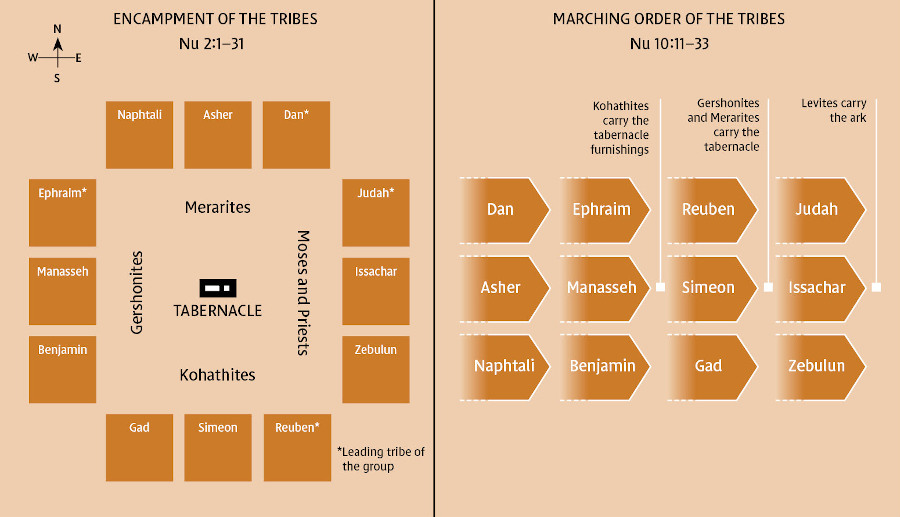
2:2 some distance from it. See 1:52–53. each of them. Each was to know his exact position within the camp. standard . . . banners. Each tribe had its banner, and each triad of tribes had its standard. Jewish tradition suggests that the tribal banners corresponded in color to the 12 stones in the breastpiece of the high priest (Ex 28:15–21).
2:3–7 Judah . . . Issachar . . . Zebulun. The fourth, fifth and sixth sons of Jacob and Leah. It is somewhat surprising to have these three tribes first in the order of march, since Reuben is regularly noted as Jacob’s firstborn son (1:20). However, because of the failure of the older brothers (Reuben, Simeon and Levi; see Ge 49:3–7), Judah is granted pride of place among his brothers (Ge 49:8). Judah produced the royal line from which the Messiah came (Ge 49:10; Ru 4:18–21; Mt 1:1–16).
2:10–12 Reuben . . . Simeon. The first and second sons of Jacob and Leah.
2:14 Gad. The first son of Jacob and Zilpah (Leah’s servant). Levi, Leah’s third son, is not included with the divisions of the congregation. Deuel. See NIV text note. The Hebrew letters for d and r were easily confused by scribes (copyists) because of their similarity in form (see note on Ge 10:4).
2:17 tent of meeting. Representing God’s presence in the heart of the camp (see 1:1 and note). Levites. In the line of march, the Judah and Reuben triads would lead the community, then would come the tabernacle protected by the Levites (see note on 1:53), and last would come the Ephraim and Dan triads.
2:18–22 The Rachel tribes (Joseph and Benjamin) were on the west. Joseph is represented by his two sons, Manasseh and Ephraim (see Ge 48:5–20 and notes). Here, true to Jacob’s words, Ephraim is ahead of Manasseh. Last comes Benjamin, the last son born to Jacob.
2:25 Dan. The first son of Bilhah, Rachel’s servant.
2:27 Asher. The second son of Zilpah, Leah’s servant.
2:29 Naphtali. The second son of Bilhah.
2:32 603,550. See 1:46 and note.
2:33 Levites. See notes on 1:47,53.
2:34 did everything the LORD commanded Moses. As in 1:54 (see note there), these words of absolute compliance contrast with Israel’s later folly. under their standards . . . each of them with their clan and family. A major accomplishment for a people so numerous, so recently enslaved and more recently a mob in disarray.
3:1 Aaron and Moses. Aaron is mentioned first because his family is described in vv. 2–4.
3:3 anointed priests. Ex 28:41 records God’s command to Moses to anoint his brother Aaron and his sons as priests of the Lord (Ex 30:30; Lev 8:30). By this solemn act they were consecrated in a special way to the Lord. Kings (see 1Sa 16:13 and note) were also anointed with oil for special service to God. Physical objects could be anointed as well (see Ge 28:18 and note; Ex 29:36). The Hebrew term for “anointed” (mashiah.) later became the specific term for the Messiah (Christ); see second NIV text note on Mt 1:1. ordained. See Ex 32:29 and note. The act of ordination was an investing of authority, a consecration and a setting apart.
3:4 Nadab and Abihu. See Lev 10:1–3 and notes. unauthorized fire. Or “strange fire.” This seems to be a deliberately obscure expression, as though the narrator finds the very concept distasteful. They were using fire that the Lord had not commanded (Lev 10:1). Proximity to God’s holiness requires righteousness and obedience from his priests. The deaths of Aaron’s newly consecrated sons serve to warn God’s ministers of the awesome seriousness of their tasks (cf. 1Sa 2:12–17, 22–25,27–36; 3:11–14; 4:1–11). For similar divine judgments at the beginning of new stages in salvation history, see Jos 7:1–26; 2Sa 6:7; Ac 5:1 and notes.
3:5–10 These commands are not followed by a report of obedience, as were the commands in chs. 1–2, but further details are given in 8:3–4,20,22. Clear distinctions are made here between the priestly house (the sons of Aaron) and the Levites. The latter were to be aides to the priests, and they served not only Aaron but also the whole nation (vv. 7–8).
3:9 to him. See NIV text note. It appears that the issue here is service to Aaron (and through him to the Lord); in 8:16 the service is to the Lord.
3:10 anyone else. Service at the tabernacle may be performed only at the express appointment of the Lord. The words of v. 10 follow the paragraph telling of the deaths of Aaron’s sons. They were authorized persons but used unauthorized means. See v. 38; 18:1–7 and notes.
3:12–13 See note on Ex 13:2. mine. Repeated for emphasis.
3:12 in place of. An example of the practice of substitution (see Ge 22:13; Mt 20:28 and notes).
3:15 a month old or more. The counting of the Levites corresponds to that of the other tribes in chs. 1–2, except that all males from the age of one month, rather than from 20 years, were to be counted. The Levites were being counted not for war but for special service in the sacred precincts of the Lord.
3:16 as he was commanded. The obedience of Moses to the Lord’s command is explicit and total.
3:21–38 The words of 1:53, “their tents around the tabernacle of the covenant law,” are detailed by the four paragraphs in this section: (1) Gershon to the west (vv. 21–26); (2) Kohath to the south (vv. 27–32); (3) Merari to the north (vv. 33–37); (4) Moses and Aaron and sons to the east (v. 38). The other tribes began with the most favored: (1) Judah on the east (2:3); (2) Reuben on the south (2:10); (3) Ephraim on the west (2:18); (4) Dan on the north (2:25). The Levitical clans lead up to the most favored. The leaders of the Levitical houses correspond to the leaders of the other tribes (see note on 1:5–16). As the names of the other tribal leaders include a form of God’s name, so do these names.
3:24 Eliasaph. Means “(My) God has added.” Lael. Means “belonging to God.”
3:25–26 There were three curtains or covering screens for the tabernacle: (1) at the gate of the courtyard (v. 26; 4:26); (2) at the entrance to the tent (vv. 25,31; 4:25); (3) between the Holy Place and the Most Holy Place (4:5).
3:27 Amramites. Aaron was an Amramite (see Ex 6:20 and note); thus he and Moses were from the family of Kohath. To the Kohathites was given the care of the most holy things (4:4–18).
3:28 8,600. The total number of Levites given in v. 39 is 22,000—300 less than the totals of 7,500 Gershonites (v. 22), 8,600 Kohathites (here) and 6,200 Merarites (v. 34). Many believe that a copyist may have made a mistake here and that the correct number is 8,300 (see NIV text note).
3:30 Elizaphan. Means “(My) God has protected.” Uzziel. Means “My strength is God.”
3:35 Zuriel. Means “My Rock is God.” Abihail. Means “My (divine) Father is powerful.”
3:38 toward the sunrise. The most honored location, but Moses and Aaron were placed there for a representative ministry (on behalf of the Israelites). Anyone else . . . was to be put to death. Service in the tabernacle was an act of mercy, a means for the people to come before God. Yet it was marked by strict discipline—it had to be done in God’s way. The sovereignty of God was evident in his limitations on the means to approach him (see v. 10; 1:51; 18:1–7 and notes).
3:41 I am the LORD. This phrase often comes at the end of legal statements (cf. Lev 18:4–6) to indicate that what is being commanded conforms to God’s character as Yahweh (“the LORD”; see notes on Ex 3:14; 6:2,3; Lev 18:2).
3:43 22,273. Seems too small for a population in excess of 2,000,000 and is used as an argument for attempting to find a means of reducing the total number of the people (calculations based on this number suggest a total population of about 250,000). See article.
3:47,50 according to the sanctuary shekel. See note on Ex 30:13.
4:3 thirty to fifty years. Ch. 3 listed all males over the age of one month (3:15). Ch. 4 lists those Levites who were of age to serve in the tabernacle. Of the 22,000 Levite males (3:39), 8,580 were of age for service (v. 48). From 8:24 we learn that the beginning age for service was 25; perhaps the first five years were something of an apprenticeship.
4:4 most holy things. See note on Ex 3:5. Despite the fact that the primary care of these holy things was given to the Kohathites, they were forbidden to touch them (v. 15) or even to look at them (v. 20), on pain of death. All the work of the Kohathites was to be strictly supervised by Aaron and his sons, and only the priests were able to touch and look at the unveiled holy things.
4:5 covenant law. See note on Ex 25:22.
4:6 durable leather. See NIV text note.
4:7 table of the Presence. See note on Ex 25:30.
4:16 Eleazar . . . the priest, is to have charge. The high priest could draw near to the most holy things on behalf of the people. If he had not been able to do so, there could have been no worship by the community.
5:2 defiling skin disease. See NIV text note; see also note on Lev 13:2; cf. Lk 5:12–16; 17:11–19. discharge of any kind. See note on Lev 15:2. Such discharges were primarily from the sexual organs and were chronic in nature (cf. Lk 8:43–48). The people who suffered from them became reminders to the whole camp of the necessity for all people to be “clean” in their approach to God. unclean. Ceremonially unfit to be with the community, and a possible contaminant to the tabernacle and the pure worship of the Lord. dead body. Physical contact with a corpse always caused uncleanness; normal contacts with the living would have to be curtailed until proper cleansing had been made. See note on 6:6 for application to the Nazirite vow. Jesus, in his kingdom authority, made the unclean clean, even those who were dead, by raising them back to life (Mk 5:41–42, Lk 7:14–15, Jn 11:43–44).
5:3 male and female alike. The concept of clean versus unclean cuts across gender lines. The essential issue was the presence of the Lord in the camp; there can be no uncleanness where he dwells. In the new Jerusalem (Rev 21:2–3) the dwelling of God with his people will be uncompromised by any form of uncleanness (Rev 21:27).
5:5–10 The connection of these verses (on personal wrongs) with the first paragraph (on ritual uncleanness) may be that of moving from the outward, visible defects to the inward, more secret faults that mar the purity of the community. Those with evident marks of uncleanness are to be expelled for the duration of their malady. But more insidious are those who have overtly sinned against others in the community, and who think that they may continue to function as though they had done nothing wrong.
5:8 atonement. See notes on Ex 25:17; Lev 17:11; Ro 3:25.
5:11–31 Issues of purity begin with physical marks (vv. 1–4), are expanded to interpersonal relationships (vv. 5–10), and then intrude into the most intimate of relationships (vv. 11–31)—the purity of a man and woman in their marriage bed (cf. Ex 20:14 and note). A test for marital fidelity is far more difficult to prove than a test for a skin disorder; hence, the larger part of the chapter is given to this most sensitive of issues.
5:14 feelings of jealousy. A husband suspecting his wife of adultery had to follow the process in vv. 15–28. This text was not to be used by a capricious, petty or malevolent husband to badger an innocent woman. impure. The purity of the camp where God dwells (v. 3) is the subject of the entire passage.
5:15–28 The actions presented here seem severe and harsh. But the consequences would have been worse for a woman charged with adultery by an angry husband if there was no provision for her guilt or innocence to be demonstrated. That she was taken to the priest (v. 15) is finally an act of mercy. The gravity of the ritual for a suspected unfaithful wife shows that the law regards marital infidelity most seriously. This was not just a concern of a jealous husband. The entire community was affected by this breach of faith; hence, the judgment was in the context of the community.
5:15,18 reminder-offering. A grain offering apparently designed to stimulate reflection on sin and guilt.
5:17 holy water. Pure water perhaps taken from the bronze basin (Ex 38:8) and placed in a consecrated vessel and dedicated to God’s service. This rendered it ritually clean for use in this ceremony. The effect on the woman of dust in the water will determine her cleanness or uncleanness.
5:18 loosen her hair. For the guilty, an expectation of judgment leading to shame and mourning. bitter water that brings a curse. It is not just that the water was bitter tasting but that the water had the potential of bringing with it a bitter curse. The Lord’s role in the proceedings (vv. 16,21,25) is emphasized repeatedly to show that this potion was neither simply a tool of magic nor merely a psychological device to determine stress. The verdict with respect to the woman was precipitated by her physiological and psychological responses to the bitter water, but the judgment was from the Lord.
5:21 your womb miscarry and your abdomen swell. Speaks of the loss of the capacity for childbearing (and, if pregnant, the miscarriage of the child). This is demonstrated by the determination of the fate of a woman wrongly charged (v. 28). For a woman in the ancient Near East to be denied the ability to bear children was a personal loss of inestimable proportions. Since it was in the bearing of children that a woman’s worth was realized in the ancient world, this was a grievous punishment.
6:2 man or woman. See ch. 30 for the differences between the vows of men and women. vow . . . Nazirite. Involved separation or consecration for a specific period of special devotion to God—on occasion even for life (see notes on Jdg 13:5; 1Sa 1:11). Attention is usually given to the prohibitions for the Nazirite; more important to the Lord is the positive separation (v. 8). This was not just a vow of personal self-discipline; it was an act of total devotion to the Lord.
6:4 anything that comes from the grapevine. Not only was the fermented beverage forbidden, but even the seed and skin of the grape. During the period of a Nazirite’s vow, three areas of his (or her) life were governed: (1) diet, (2) appearance and (3) associations. Every Israelite was regulated in these areas, but for the Nazirite each regulation was heightened.
6:5 no razor. See Jdg 13:5 and note. The unusually long hair of a Nazirite would become a physical mark of his (or her) vow of special devotion to the Lord. Cf. Lev 21:5. They must be holy. See note on Ex 3:5.
6:6 dead body. See note on 5:2. For the Nazirite, the prohibition of contact with dead bodies extended even to the deceased within his (or her) own family (v. 7; contrast Lev 21:1–3).
6:9–12 The provisions of the Nazirite vow concerned areas where he (or she) was able to make conscious decisions. This section deals with the unexpected and the unplanned events of daily living.
6:13–20 The offerings of the Nazirite at the completion of the period of the vow were extensive, expensive and expressive of the spirit of total commitment to the Lord during this time of special devotion. In addition to these several offerings, the Nazirite burned his (or her) hair (the sign of the vow).
 6:24–26 The Aaronic benediction. The threefold repetition of the divine name Yahweh (“the LORD”) is for emphasis and gives force to the expression in v. 27: “So they will put my name on the Israelites.” Each verse conveys two elements of benediction, and the verses are progressively longer (in the Hebrew text, the first verse has three words, the second has five and the third has seven). This benediction is echoed in Ps 67:1 (see note there). In 1979 a condensed version of these verses was found in a burial cave just outside Jerusalem. The words were inscribed in Hebrew on two tiny silver scrolls dating to c. 600 bc, making them the oldest citations of biblical texts thus far discovered. See photo.
6:25 make his face shine on you. In acceptance and favor.
6:26 peace. The Hebrew for this word is shalom, here seen in its most expressive fullness—not the absence of war, but a positive state of rightness and well-being. Such peace comes only from the Lord (cf. Jn 14:27 and note; see also article).
7:1–89 See Ex 40, which describes the setting up of the tabernacle and ends with the report of the cloud covering and the presence of the Lord filling the tabernacle. This chapter (the longest in the Pentateuch) records the magnificent (and identical) gifts to the Lord for tabernacle service from the leaders of the 12 tribes. The repetition makes the gifts memorable. The fact that the record of these gifts follows the text of the Aaronic benediction (6:24–26) seems fitting: In response to God’s promise to bless his people, they bring gifts to him in 12 sequential days of celebrative pageantry.
7:12–78 The leaders of the 12 tribes have already been named in 1:5–15; 2:3–32. The order of the presentation of their offerings to the Lord is the same as the order of march: first, the triad of tribes camped east of the tabernacle (Judah, Issachar and Zebulun: 2:3–9; 7:12,18,24); second, the triad camped to the south (Reuben, Simeon and Gad: 2:10–16; 7:30,36,42); third, the triad to the west (Ephraim, Manasseh and Benjamin: 2:18–24; 7:48,54,60); finally, those to the north (Dan, Asher and Naphtali: 2:25–31; 7:66,72,78). See diagram.
7:17,23 fellowship offering. See note on Lev 3:1.
7:19 according to the sanctuary shekel. See note on Ex 30:13.
7:84–88 The totals of the 12 sets of gifts.
7:89 The climax: Communion is established between the Lord and his prophet Moses. The people have an advocate with God. covenant law. See note on Ex 25:22.
8:2 area in front of the lampstand. The Holy Place in the tabernacle (see Ex 25:37; 26:31–35; 27:21 and notes).
8:5–26 Describes the ceremonial cleansing of the Levites and may be compared with the account of the ordination of Aaron and his sons to the priesthood (Lev 8). The Levites are helpers to the priests, and the language describing their consecration is somewhat different from that of the priests. The priests were made holy, the Levites clean; the priests were anointed and washed, the Levites sprinkled; the priests were given new garments, while the Levites washed theirs; blood was applied to the priests but was waved over the Levites.
8:7 shave their whole bodies. Symbolic of the completeness of their cleansing, as in the case of the ritual cleansing of one cured of skin disease (see Lev 14:8 and note).
8:10 Israelites are to lay their hands on them. The Levites represented the nation; by laying hands on them, the other people of the nation were acknowledging this representative act (vv. 16–18).
8:19 I have given the Levites as gifts to Aaron and his sons. The Levites were given to the Lord for his exclusive use (v. 14). Now the Lord gives his Levites to the priests as their aides for the work of ministry in the tabernacle worship. so that no plague will strike the Israelites. The Levites were a protective hedge for the community against trespassing in the sacred precincts of the tabernacle (see note on 1:53).
8:20 as the LORD commanded Moses. See vv. 4,22; 1:54; 2:34; 3:16,51; 4:49; 5:4; 9:5,23. The prompt obedience of Moses and the Israelites to God’s commands in the areas of ritual and regimen stands in sharp contrast to the people’s complaints against the Lord’s loving character and to their breaches of faith that begin in ch. 11.
8:24 twenty-five years old. See note on 4:3. The age at which the Levites entered service was reduced to 20 by David (see 1Ch 23:3, 24,27 and note on 23:3), as the circumstances of their work had greatly changed by the time of the monarchy (1Ch 23:26). It is difficult to imagine a change in circumstances between 4:3 and this verse, however. Therefore the rabbinical suggestion that these two verses indicate a five-year period of apprenticeship seems reasonable.
8:26 They may assist. After a Levite had reached the mandatory retirement age of 50 (v. 25), he was still free to assist his younger co-workers (perhaps at festivals), but he was no longer to do the difficult work he had done in his prime.
9:1–14 This unit is in four parts: (1) the command to keep the Passover (vv. 1–5); (2) the question concerning those ceremonially unclean (vv. 6–8); (3) the response of the Lord—giving permission for legitimate delay, but judgment for willful neglect (vv. 9–13); (4) the rights of the foreigner at Passover (v. 14). The first Passover was held in Egypt (Ex 12). The second is here at Sinai a year later. Because of Israel’s rebellion and God’s judgment on her (ch. 14), Israel would not celebrate the Passover again until they entered the promised land (see Jos 5:10 and note).
9:1 first month of the second year. The events of this chapter preceded the beginning of the census in ch. 1 (see 1:1 and note).
9:3 twilight. Traditional Jewish practice regards this period as the end of one day and the beginning of the next.
9:7 why should we be kept from presenting the LORD’s offering . . . ? Those with ceremonial uncleanness had a keen desire to worship the Lord “in the Spirit and in truth” (Jn 4:24; see note there).
9:10 they are still to celebrate. God’s gracious provision for these people was an alternative day one month later (v. 11) so that they would not be excluded totally from the Passover celebration. The Lord thus demonstrates the reality of the distance that uncleanness brings between these Israelites and their participation in the worship of the community, but he also provides a merciful alternative.
9:12 not . . . break any of its bones. When Jesus (“our Passover lamb,” 1Co 5:7; cf. Jn 1:29,36) was crucified, it was reported that none of his bones was broken, in fulfillment of Scripture (Jn 19:36). See also Ex 12:46; Ps 34:20.
9:13 fails to celebrate . . . cut off. The NT also issues grave warnings concerning the abuse or misuse of the celebration of the Lord’s Supper (1Co 11:28–30). See note on Ex 12:15.
9:14 foreigner. Must first be circumcised before participating in the Passover celebration (see Ex 12:48 and note).
9:15 covenant law. See note on Ex 25:22. cloud covered it. See notes on Ex 13:21; 40:34. The cloud was the visible symbol of the Lord’s presence hovering above the tabernacle. The Lord also directed the movements of his people by means of the cloud (vv. 17–18).
9:18 At the LORD’s command. The lifting and settling of the cloud are identified with the Lord’s command.
9:23 obeyed the LORD’s order . . . through Moses. Moses was the Lord’s agent, who interpreted the movement of the cloud as signaling the movement of the people. The repetitious nature of vv. 15–23 enhances the expectation of continued complete obedience to the Lord’s direction of Israel’s movements through the wilderness. The tragedy of their subsequent disobedience (ch. 11) is heightened by this paragraph on their obedience.
10:2 trumpets. Long, straight, slender metal tubes with flared ends. They were blown for order and discipline. See photo.

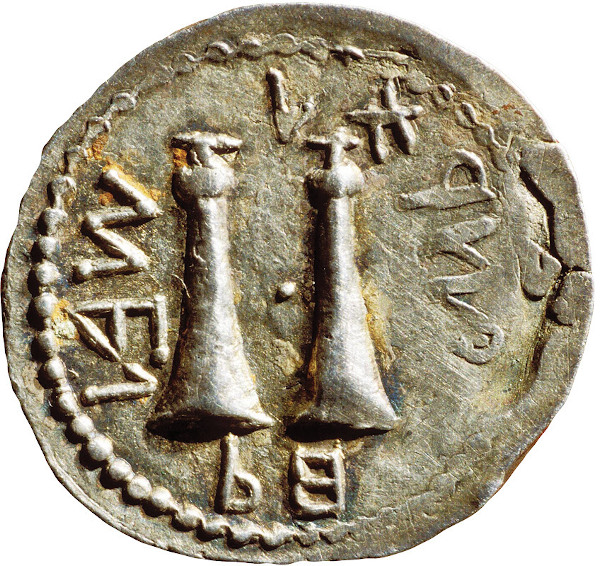
Silver coin depicting two trumpets (134–135 ad), reminiscent of the ones blown to summon the people together on important occasions (Nu 10:2–10).
Z. Radovan/www.BibleLandPictures.com
Return to the main text.
10:3 sounded. Not only for assembling but also for marching (vv. 5–6), battle (v. 9) and festivals (v. 10). Since different signals were used (v. 7), a guild of priestly musicians was developed (v. 8). See Jos 6:4 (see also note there) for the use of seven trumpets of rams’ horns (Hebrew shophar) in the battle of Jericho.
10:10 at your . . . appointed festivals . . . sound the trumpets. To prepare the people for communion with God. Later, David expanded the instruments to include the full orchestra in the worship of the Lord (see, e.g., 1Ch 25), but he maintained the playing of the silver trumpets regularly before the ark of the covenant (1Ch 16:6).
10:11—22:1 The account of the Israelites’ long trek from Sinai to Kadesh (13:26) to the plains of Moab, filled with disobedience (see Introduction: Outline).
10:11–28 The structure of this section is: (1) v. 11, time frame; (2) vv. 12–13, introductory summary of setting out; (3) vv. 14–17, setting out of the tribes led by Judah (2:3–9); (4) vv. 18–21, setting out of the tribes led by Reuben (2:10–16); (5) vv. 22–24, setting out of the tribes led by Ephraim (2:18–24); (6) vv. 25–27, setting out of the tribes led by Dan (2:25–31); (7) v. 28, concluding summary of the line of march.
10:11 twentieth day of the second month. After 11 months in the region of Mount Sinai, the people set out for the promised land, led by the cloud (see note on 9:15). Israel leaves on a journey that in a few months should have led to the conquest of Canaan. covenant law. See note on Ex 25:16.
10:14–27 The names of the leaders of the 12 tribes are given for the fourth time in the book (1:5–15; 2:3–31; 7:12–83). The order of the line of march is essentially the same as that in ch. 2. The new details are that the Gershonites and Merarites, who carry the tabernacle, follow the triad of the Judah tribes (v. 17), and the Kohathites, who carry the holy things, follow the triad of the Reuben tribes (v. 21) (see chart).
10:14 standard. As in 2:3,10,18,25, each of the four triads of tribes has a standard or banner for rallying and organization.
10:29 Hobab son of Reuel. Thus Hobab was Moses’ brother-in-law. Reuel. Jethro (Ex 2:18; 3:1).
10:31 be our eyes. Jdg 1:16 indicates that Hobab acceded to Moses’ request.
10:33 three days. Because of the huge numbers of people in the tribes of Israel, and because this was their first organized march, it is not likely that this first journey covered much territory (cf. note on Ge 22:4).
10:35–36 Reinforces the portrayal of Israel as the Lord’s army on the march, with the Lord leading the way.
10:35 Later used in the opening words of a psalm celebrating God’s triumphal march from Sinai to Jerusalem (see Ps 68:1 and note on 68:1–3).
11:1 people complained. The first ten chapters of Numbers repeatedly emphasize the complete obedience of Moses and the people to the dictates of the Lord. But only three days into their march, the people revert to disloyal complaints. They had expressed the same complaints a year earlier, only three days after their deliverance at the waters of the Red Sea (Ex 15:22–27), and had subsequently complained about manna (Ex 16) and a lack of water (Ex 17:1–7). fire from the LORD. By God’s mercy, this purging fire was limited to the outskirts of the camp.
11:3 Taberah. See NIV text note.
11:4 rabble. An apt term for the non-Israelite mixed group of people who followed the Israelites out of Egypt, pointing to a recurring source of complaints and trouble in the camp. Those who did not know the Lord and his mercies incited those who did know him to rebel against him. If only we had meat to eat! As in Ex 16, the people began to complain about their diet, forgetting what God had done for them (Ps 106:14). Certainly meat was not their common fare when they were slaves in Egypt. Now that they were in a new type of distress, the people romanticized the past and minimized its discomforts.
11:7 manna. See note on Ex 16:31.
11:10 The LORD became exceedingly angry. The rejection of his gracious gift of heavenly food (called “bread from heaven” in Ex 16:4) angered the Lord. God had said that the reception of the manna by the people would be a significant test of their obedience (Ex 16:4). In spurning the manna, the people had spurned the Lord. They had failed the test of faith. Moses was troubled. Instead of asking the Lord to understand the substance of their complaint, Moses asked him why he was given such an ungrateful people to lead.
11:11–15 A prayer of distress and complaint, filled with urgency, irony and passion.
11:12 Did I conceive all these people? The implication is that the Lord conceived the people of Israel, that he was their nurse and that their promises were his. Moses asks that he be relieved of his mediatorial office, for “the burden is too heavy for me” (v. 14; cf. Elijah, 1Ki 19). Even death, Moses asserts (v. 15), would be preferable to the burden of leading the people without the Lord’s help.
11:16–34 The Lord’s response to the great distress of his prophet was twofold—mercy and curse: (1) There was mercy to Moses in that his responsibility was now to be shared by 70 leaders (vv. 16–17). (2) There was a curse on the people that was analogous to their complaint: They asked for meat and would now become sick with meat (vv. 18–34; cf. Ps 78:27–31).
11:18 you will eat meat. Their distress at the lack of variety in the daily manna had led the people to challenge the Lord’s goodness. They had wailed for meat. Now they were going to get their fill of meat, so much that it would make them physically ill (v. 20).
11:20 you have rejected the LORD. The principal issue was not meat at all, but a failure to demonstrate proper gratitude to the Lord, who was in their midst and who was their constant source of good.
11:21 six hundred thousand men on foot. The numbers are consistent: A marching force of this size suggests a total population of over 2,000,000 (see note on 1:46). Moses’ distress at providing meat for this immense number of people (v. 22) is nearly comical—the task is impossible for him.
11:23 Is the LORD’s arm too short? The human impossibility of providing this much food is an occasion for demonstrating the Lord’s power. Cf. Isa 59:1.
11:25 came down. See 12:5 and note. the Spirit. God’s empowering presence (cf. Jdg 3:10 and note). they prophesied. Probably means that they gave ecstatic expression to an intense religious experience (see 1Sa 10:5; 18:10; 19:20,24; 1Ki 18:29 and notes). but did not do so again. It seems that the temporary gift of prophecy to the elders was primarily to establish their credentials as Spirit-empowered leaders.
11:29 Are you jealous for my sake? Here the true spirit of Moses is demonstrated. Rather than being threatened by the public demonstration of the gifts of the Spirit by Eldad and Medad, Moses desired that all God’s people might have the full gifts of the Spirit (cf. Joel 2:28 and note; Php 1:15–18). This verse is a fitting introduction to the inexcusable challenge to Moses’ leadership in ch. 12.
11:31–32 Cf. the great provision of Jesus in the feeding of the 5,000 (Jn 6:5–13) and the 4,000 (Mt 15:29–39). In those cases the feeding was a demonstration of God’s grace; in this instance it was accompanied by God’s wrath as well.
11:34 Kibroth Hattaavah. See NIV text note. These graves marked the death camp of those who had turned against the food of the Lord’s mercy.
Ham had a son named Cush. His descendants, as named in Ge 10:7, were all located in Arabia (see note on Ge 10:7). Nimrod, a descendant of perhaps another Cush, is identified as a great empire builder in lower Mesopotamia (Ge 10:8–12; see note on 10:8). Elsewhere “Cush” also frequently refers to a region lying just south of Egypt (ancient Nubia, modern Sudan; see note on Ge 10:6). Because of this diversity, we cannot know with any certainty the ethnic identity of Moses’ wife here referred to.
Perhaps Hab 3:7 provides a better clue. There “the tents of Cushan” appear to be identified with “the dwellings of Midian.” It is possible that one from “the tents of Cushan” could be referred to as “a Cushite.” In that case, the wife of Moses in question is Zipporah, a daughter of the Midianite priest Jethro (Ex 3:1; see note there). The attack on Moses because of his Cushite wife was a pretext; its focus was the prophetic gift of Moses and his special relationship with the Lord (v. 2).
Go to the Articles Index.
12:2 Hasn’t he also spoken through us? A rhetorical question. Mic 6:4 speaks of Moses, Aaron and Miriam as God’s gracious provision for Israel. The prophetic gifting of the 70 elders (11:24–30) seems to have been the immediate provocation for the attack of Miriam and Aaron on their brother.
12:3 Perhaps a later addition to the text, alerting the reader to the great unfairness of the charge of arrogance against Moses.
12:5 came down. Often used of divine manifestations. In 11:25 the Lord came down in grace; here and in Ge 11:5 he came down in judgment. In a sense every theophany (appearance of God) is a picture and promise of the grand theophany, the incarnation of Jesus, both in grace and in judgment.
12:6–8 The poetic cast of these words adds a sense of solemnity to them. The point of the poem is clear: All true prophetic vision is from the Lord, but in the case of Moses his position and faithfulness enhance his special relationship with the Lord.
12:7 my servant. See notes on Ex 14:31; Ps 18 title; Isa 41:8–9; 42:1. my house. The household of God’s people Israel (see notes on Heb 3:5–6).
12:8 clearly and not in riddles. God’s revelation does not come with equal clarity to his servants. There may be messages of the Lord that a prophet might not fully understand at the time; to him they may be riddles and mysteries (cf. 1Pe 1:10–11). But to Moses God spoke with special clarity, as though “face to face” (see also Dt 34:10 and note).
12:10 leprous. See NIV text note. Miriam has become an outcast, as she now suffers from a skin disease that would exclude her from the community of Israel (5:1–4).
12:14 disgrace for seven days. An act of public rebuke (Dt 25:9) demands a period of public shame. A period of seven days was a standard time for uncleanness occasioned by being in contact with a dead body (19:11,14,16).
12:16 Desert of Paran. The southernmost region of the promised land (see map). The people’s opportunity to conquer the land was soon to come.
13:2 Send some men to explore . . . Canaan. The use of spies was a common practice in the ancient Near East (see note on Jos 2:1–24). From Dt 1:22–23 it appears that this directive of the Lord was in response to the people’s request.
13:6 Although Caleb was not a native Israelite since he was a Kenizzite (32:12) and Kenaz was an Edomite (Ge 36:6, 9,11), he became associated with the tribe of Judah. See note on 14:24.
13:16 Moses gave Hoshea son of Nun the name Joshua. A parenthetical statement anticipating the later prominence of Joshua. The reader is alerted to the significance of this name in the list of the spies; here is a man of destiny. Hoshea means “salvation”; Joshua means “The LORD saves” (see NIV text note on Mt 1:21).
13:17–20 Moses’ instruction to the 12 spies was comprehensive; a thorough report of the land and its produce and the peoples and their towns was required in their reconnaissance mission.
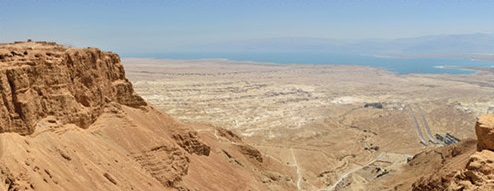
13:21 explored the land. The journey of the spies began in the southernmost extremity of the land (the Desert of Zin; see photo) and took them to the northernmost point (Rehob, near Lebo Hamath; see 34:8). This journey of about 250 miles each way took them 40 days (v. 25), perhaps a round number.
13:22 Hebron. The first city the spies came to in Canaan. The parenthetical comment about the city’s being built seven years before Zoan in Egypt (see note on Ps 78:12,43) may have been prompted by their amazement at the size and fortifications of the city that was so closely associated with the lives of their ancestors four centuries before this time (Ge 13:14–18; 14:13; 23:2; 25:9; 35:27–29; 50:13). In the stories of the ancestors of their people, Hebron had not been a great city but a dwelling and trading place for shepherds and herdsmen. descendants of Anak. The Anakites were people “of great size” (v. 32), who brought fear to the people (v. 33). Because of Caleb’s faith, he was able to drive them from their city (Jos 15:14; Jdg 1:10).
13:23 Valley of Eshkol. See NIV text note. This valley is near Hebron. The size of the grape cluster should have indicated the goodness of the land God was giving them.
13:26–29 The first part of the spies’ report was truthful, but the goodness of the land was offset in their fearful eyes by the powerful peoples who lived there.
13:26 Kadesh. See note on Ge 14:7.
13:27 flow with milk and honey. See notes on Ex 3:8; Dt 6:3.
13:30 we can. Only Caleb and Joshua gave a report prompted by faith in God.
13:32 bad report about the land. The promised land was a good land, a gracious gift from God. By speaking bad things about it, the faithless spies were speaking evil of the Lord (cf. 10:29).
13:33 Their words demonstrated their lack of faith. descendants of Anak. Now said to be Nephilim (see note on Ge 6:4). The reference to the Nephilim seems deliberately intended to evoke fear.
14:1 all the members . . . wept. The frightening words of the faithless spies led to mourning by the entire community and to their great rebellion against the Lord. They forgot all the miracles the Lord had done for them; they despised his mercies and spurned his might. In their ingratitude they preferred death (v. 2).
14:2,29 grumbled. See Introduction: Contents; see also note on Ex 15:24.
14:3 children. The people’s most reprehensible charge against God’s grace was that concerning their children. Only their children would survive (vv. 31–33).
14:8 flowing with milk and honey. See notes on Ex 3:8; Dt 6:3.
14:9 the LORD is with us. There are no walls, no fortifications, no factors of size or bearing, and certainly no gods that can withstand the onslaught of God’s people when the Lord is with them.
14:10 glory of the LORD appeared. This manifestation of God must have been staggering in its sudden and intense display of his majesty and wrath (see vv. 21–22; see also note on Ex 16:7).
14:11 treat me with contempt. By refusing to believe in the Lord’s power, especially in view of all the wonders they had experienced, the people of Israel were holding him in contempt.
14:12 I will make you into a nation. For the second time since the exodus, God speaks of starting over with Moses in creating a people faithful to himself (Ex 32:10).
14:13 Egyptians will hear about it! Moses desires to protect the Lord’s reputation. The enemies of God’s people will charge the Lord with inability to complete his deliverance and will be contemptuous of his power.
14:17–19 Moses now moves from the Lord’s reputation to his character, presenting a composite quotation of the Lord’s own words of loyal love for and faithful discipline of his people (see Ex 20:6; 34:6–7 and notes).
14:22 ten times. Perhaps to be enumerated as follows: (1) Ex 14:10–12; (2) Ex 15:22–24; (3) Ex 16:1–3; (4) Ex 16:19–20; (5) Ex 16:27–30; (6) Ex 17:1–4; (7) Ex 32:1–35; (8) Nu 11:1–3; (9) 11:4–34; (10) 14:3. But “ten times” may also be a way of saying “many times.”
14:24 Caleb . . . follows me wholeheartedly. Caleb may be singled out—even from Joshua—because he took the initiative to encourage the people to possess the land (13:30). His ultimate vindication came 45 years later (see note on 13:22; see also Jos 14:10 and note on 14:6).
14:28 I will do to you the very thing I heard you say. The people of Israel brought upon themselves their punishment. They had said that they would rather die in the wilderness (v. 2) than be led into Canaan to die by the sword. All those 20 years old or more, who were counted in the census, were to die in the wilderness (v. 29). The only exceptions would be Joshua and Caleb (v. 30). Only the people’s children would survive (v. 31)—the very children they had said God would allow to die in the wilderness (v. 3).
14:32 See Heb 3:16–19 and note; see also map and photo.
14:34 The 40 days of the travels of the spies became the numerical pattern for their suffering: one year for one day—for 40 years they would be reminded of their misjudgment, and for 40 years the people 20 years old or more would be dying, so that only the young generation might enter the land. Significantly, Israel’s refusal to carry out the Lord’s commission to conquer his land is the climactic act of rebellion for which God condemns Israel to die in the wilderness.
14:37 these men who were responsible for spreading the bad report . . . were struck down. The judgment on the ten evil spies was immediate; the generation that they influenced would live out their lives in the wilderness.
14:40 Now we are ready to go up. Now, too late, the people determine to go up to the land. Such a course of action was doomed to failure. Not only was the Lord not with them; he was against them (v. 41). Their subsequent defeat (v. 45) was another judgment the rebellious people brought down on their own heads (see note on Ob 15).
15:1–41 This chapter is divided into three units, each introduced by the phrase, “The LORD said to Moses” (vv. 1,17,37).
15:2 After you enter the land. The juxtaposition of this clause with the sad ending of ch. 14 is dramatic. The sins of the people were manifold; they would be judged. The grace and mercy of the Lord are magnified as he points to the ultimate realization of his ancient promise to Abraham (Ge 12:7), as well as to his continuing promise to the nation that they would indeed enter the land.
15:3–12 Grain and wine offerings were to accompany the food offerings; the grain was to be mixed with oil. The offerings increased in amounts with the increase in size of the sacrificial animal (vv. 6–12).
15:14 foreigner. As in the case of the celebration of the Passover (see note on 9:14), the foreigner had the same regulations as the native-born Israelite. The commonwealth of Israel would always be open to proselytes. Indeed, God’s promise to Abraham embraces “all peoples on earth” (see Ge 12:2–3 and note).
15:20 Present a loaf from the first. This law also looks forward to the time when the Israelites would be in the land. The first of the threshed grain was to be made into a loaf and presented to the Lord. This concept of the firstfruits is a symbol that all blessing is from the Lord and all produce belongs to him.
15:22 unintentionally fail. Sins may be unintentional, but they still need to be dealt with (see note on Lev 4:2). Such unintentional sins may be committed by the people as a whole (vv. 22–26) or by an individual (vv. 27–29).
15:30 defiantly. Hebrew “with a high hand.” Unlike unintentional sins, for which there are provisions of God’s mercy, those who set themselves to defiantly despise God’s word and blaspheme him must be punished. This was the experience of the nation in ch. 14, and it is described in the case of an individual here in vv. 32–36. cut off from the people. See note on Ex 12:15.
15:32 gathering wood on the Sabbath day. The penalty for breaking the Sabbath was death (v. 36; Ex 31:15; 35:2). As in the case of the willful blasphemer (Lev 24:10–16), the Sabbath-breaker was guilty of high-handed rebellion (see note on v. 30) and was judged with death. Centuries later, Jesus would criticize those who regarded Sabbath regulations as more important than the needs of people. He confronted the Pharisees on this issue on several occasions (see, e.g., Mt 12:1–14). From their point of view, these regulations (vv. 32–36) gave them reasons to seek his death (Mt 12:14).
15:38 tassels on the corners of your garments. As one would walk along, the tassels would swirl about at the edge of one’s garment (cf. v. 39), serving as excellent memory prods to obey God’s commands (cf. Dt 6:4–9 and notes).
15:39 prostitute yourselves. See Ex 34:15 and note.
15:41 I am the LORD your God, who brought you out. The demands that God made upon his people were grounded in his act of redemption (see Ex 20:2 and note).
16:1–7 Earlier, Miriam and Aaron had led a rebellion against the leadership of Moses (ch. 12). Now Korah and his allies attack the leadership of Moses and Aaron. Korah was descended from Levi through Kohath. As a Kohathite, he had important duties in the service of the Lord at the tabernacle (4:1–20), but he desired more. Korah was joined by the Reubenites—Dathan, Abiram and On—and about 250 other leaders of Israel who had their own complaints. Their charge was that Moses had “gone too far” (v. 3) in taking the role of spiritual leadership of the people; the “whole community is holy” (v. 3; see notes on Ex 7:5; 19:6). To this abusive charge Moses retorts, “You Levites have gone too far!” (v. 7), and sets up a trial by fire.
16:6 censers. See note on Lev 10:1.
16:12 Dathan and Abiram. Their charge against Moses was that he had not led them into the land of promise. They claimed that Moses had in fact led the people “out of a land flowing with milk and honey” (v. 13). By this reasoning, in their minds the land of Egypt has been transformed from prison to paradise.
16:13–14 flowing with milk and honey. See notes on Ex 3:8; Dt 6:3.
16:15 nor have I wronged any of them. Moses’ humanity is seen in his plea of innocence.
16:18–21 The trial was to be by fire: Which men would the Lord accept as his priests in the holy tabernacle? The 250 men allied with Korah came with arrogance to withstand Moses and Aaron at the entrance to the tent of meeting. The revelation of the Lord’s glory was sure and sudden (v. 19), with words of impending doom for the rebellious people (v. 21). The punishment was fittingly ironic. Those 250 men who dared to present themselves as priests before the Lord with fire in their censers were themselves put to death by fire (perhaps lightning) from the Lord (v. 35).
16:19,42 glory of the LORD. See note on Ex 16:7.
16:24 Move away. God’s judgment was going to be severe, but he did not want to lash out against bystanders. It appears that Korah himself had left the 250 false priests and was standing with Dathan and Abiram to continue their opposition to Moses.
16:30 something totally new. Moses wished to assure the people that the imminent judgment was the direct work of the Lord and not a chance event. The opening of the earth to swallow the rebels was a sure sign of the wrath of God and the vindication of Moses and Aaron. realm of the dead. See v. 33; see also note on Ge 37:35.
16:32 swallowed them and their households. Some of the sons of Korah must not have died (26:11). Apparently these sons had not joined their father in his rash plan. The households of the other rebels died with them.
16:37 remove the censers. The true priests took the censers of the 250 deceased impostors from their charred remains and hammered them into bronze sheets for the altar as a reminder of the folly of a self-proclaimed priest (v. 40).
16:41 the whole Israelite community grumbled. Again the community attacked Moses, unfairly charging him with the deaths of the Lord’s people. Except for the intervention of Moses and Aaron (vv. 4,22), the entire nation might have been destroyed because of their continued rebellion (v. 45).
16:49 14,700 people died. The number makes sense only if the community is as large as the census lists of ch. 2 suggest.
17:1–13 This story follows the account of the divine judgment of Korah (16:1–35), the narrative of the symbolic use given to the censers of the rebels and its aftermath (16:36–50). The selection of 12 staffs, one from each tribe, was a symbolic act whereby the divine choice of Aaron would be vindicated.
17:3 On the staff of Levi write Aaron’s name. The test needed to be unequivocal because of the wide support given to Korah’s rebellion. The 250 who had joined with Korah were from many, perhaps all, of the tribes.
17:4 in front of the ark of the covenant law. In front of the ark, with the Ten Commandments, thus probably in the Holy Place, near the altar of incense (see vv. 7–8,10; see also note on Ex 25:22).
17:8 had not only sprouted but had budded, blossomed and produced almonds. God exceeded the demands of the test so that there might be no uncertainty as to who had acted or what he intended by his action.
17:10 in front of the ark of the covenant law. Aaron’s rod joined the stone tablets of the law of Moses (see note on Ex 25:16) and the jar of manna (Ex 16:33–34) within or near the ark of the covenant (Heb 9:4). These holy symbols were ever before the Lord as reminders of his special deeds on behalf of his people. Moreover, if anyone of a later age should dare to question the unique and holy place of the Aaronic priests in the Lord’s service, this symbolic reminder of God’s choice of Aaron would stand in opposition to their audacity (see note on 18:1–7).
17:12 We will die! At last the people realized the sin of their arrogance in challenging Aaron’s role. The appropriate ways of approaching the Lord are detailed in chs. 18–19.
18:1–7 Aaron and his family, chosen by the Lord to be the true priests of holy worship, faced a burdensome task. The lament of the people in 17:12–13 was real; grievous sins against the holy meeting place of the Lord and his people would be judged by death. The Lord’s mercy in providing a legitimate priesthood was actually an aspect of his grace (cf. Ps 99:6–8), because it was the people’s only hope for deliverance from judgment.
18:2 Bring your fellow Levites. The Aaronic priests were to be assisted by the others in the tribe of Levi, but the assistants were not to go beyond their serving role. If they did so, not only would they die, but so would the priests who were responsible (v. 3). covenant law. See note on Ex 25:22.
18:7 the service of the priesthood as a gift. Of all the Israelites, the priests were privileged to approach the Holy Place and minister before the Lord.
18:8 your portion, your perpetual share. The priests were to be supported in their work of ministry (Lev 6:14—7:36). Since the Levites as a whole and the priests in particular had no part in the land that God was going to give them, it was necessary that the means for their provision be spelled out fully. They were not to have a part in the land; their share was the Lord himself (v. 20).
18:11 your sons and daughters. Provision was made not only for the priests but also for their families. Only family members who were ceremonially unclean were forbidden to eat the gifts and offerings of the people (v. 13). Provisions for cleansing were stated in Lev 22:4–8.
18:12 finest olive oil . . . finest new wine and grain. Since the best items of produce were to be given to the Lord, these became the special foods of the priests and their families.
18:16 according to the sanctuary shekel. See note on Ex 30:13.
18:19 everlasting covenant of salt. A permanent provision for the priests. The phrase “covenant of salt” (2Ch 13:5) remains obscure. In Lev 2:13 the salt that must accompany grain offerings is called the “salt of the covenant.” According to Eze 43:24, salt is also to be sprinkled on burnt offerings, and Ex 30:35 specifies salt as one of the ingredients in the special incense compounded for the sanctuary. A “covenant of salt” is perhaps an allusion to the salt used in the sacrificial meal that commonly accompanied the making of a covenant (Ge 31:54; Ex 24:5–11; Ps 50:5).
18:26–32 Although the Levites were the recipients of the tithe given to the Lord, they were not themselves exempt from tithing. They in turn were to give a tenth of their income to Aaron (v. 28) and were to be sure that the best part was given as the Lord’s portion (v. 29). By obedient compliance the Levites would escape judicial death (v. 32).
19:2 red heifer. The qualifying words, “without defect or blemish,” are familiar in contexts of sacrificial worship in the OT. But this is not a sacrificial animal. It is a cow, not an ox; it is to be slaughtered, not sacrificed; and it is to be killed outside the camp, not at the holy altar. The ashes of the red heifer (v. 9) are the primary focus of this act, for they will be used in the ritual of the water of cleansing. The burning of the animal with its “blood and intestines” (v. 5) is unprecedented in the OT. The normal pattern for the sacrifice of the burnt offering is given in Lev 1:3–9.
19:6 cedar wood, hyssop and scarlet wool. Associated with the cleansing properties of the ashes of the red heifer.
19:12 purify themselves with the water. The ashes from the red heifer were kept outside the camp and would be mixed as needed with water to provide a means of cleansing after contact with dead bodies.
19:13 defile the LORD’s tabernacle. Willful neglect of the provision for cleansing brought not only judgment on the person but pollution of the tabernacle itself. cut off from Israel. See note on Ex 12:15.
19:14 anyone who is in it. There would be many occasions in which a person would become unclean, not because of deliberate contact with a dead body, but just by being in the proximity of one who died.
19:18 hyssop, dip it in the water and sprinkle. Here the method of the cleansing ritual is explained. A ceremonially clean person had to sprinkle the ceremonially unclean person or thing. The cleansing power of the blood of Christ is specifically contrasted (“much more”; Heb 9:13–14) with the cleansing effectiveness of the water of the ashes of the red heifer.
20:1–29 This chapter begins with the death of Miriam (v. 1), concludes with the death of Aaron (v. 28), includes the record of the conflict with Edom (vv. 14–21) and centers on the tragic sin of Moses (vv. 11–12). Such was the sad beginning of Israel’s last year in the wilderness.
20:1 first month. The year is not given, but a comparison of vv. 22–29 with 33:38 leads to the conclusion that this chapter begins in the 40th year after the exodus (see notes on 1:1; 9:1). Most of the people 20 years old or more at the time of the rebellion at Kadesh (chs. 13–14) would already have died. at Kadesh. See note on Ge 14:7. The larger part of the wilderness wandering (32:13) is left without record. The people may have traveled about, seeking the water sources and the sparse vegetation, supported primarily by manna. But their circuits would bring them back to the central camp at Kadesh, the scene of their great rebellion (chs. 13–14). They have now come full circle; the land of promise lies before them again.
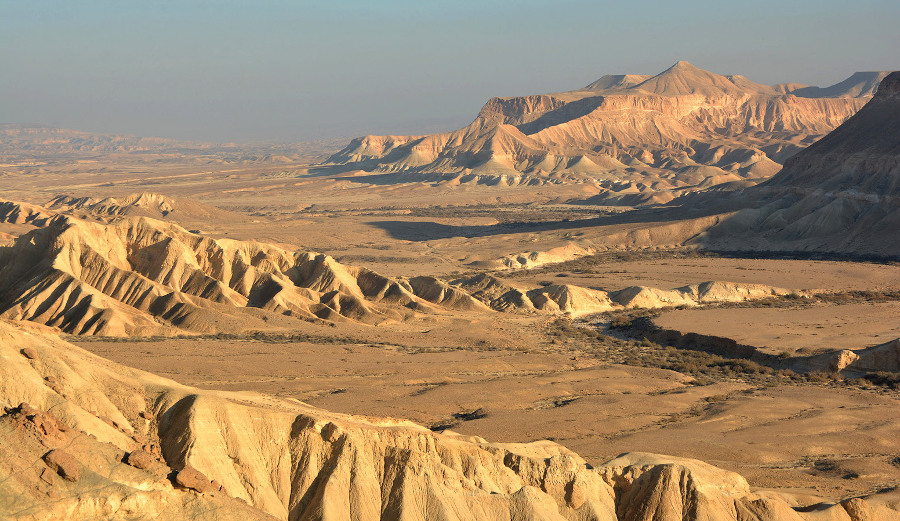
The Desert of Zin, where the Israelites spent many years during their wilderness wanderings.
© Martin Hrouzek/Shutterstock
Return to the main text.
20:2 no water. Forty years earlier the Lord had instructed Moses to take the staff he had used to strike the Nile (Ex 7:17) and to strike the rock at Horeb to initiate a flow of water (Ex 17:1–7). Now, 40 years later, at the place of Israel’s worst acts of rebellion, the scene was recurring. The children of the rebellious nation now express their desire to have died (v. 3) with their parents; the parents’ complaints about the bread from heaven are repeated by the children (v. 5).
20:6 glory of the LORD. See note on Ex 16:7.
20:8 Speak to that rock. Moses was told to take his staff, through which God had performed wonders in Egypt and in the wilderness all these years, but this time he was merely to speak to the rock and it would pour out its water for the people. Cf. Ps 114:8 and note.
20:10 Listen, you rebels. At once the accumulated anger, exasperation and frustration of 40 years came to expression (see Ps 106:33 and note).
20:11 struck the rock twice with his staff. In his rage Moses disobeyed the Lord’s instruction to speak to the rock (v. 8). Moses’ rash action brought a stern rebuke from the Lord (v. 12). These other factors were also involved: (1) Moses’ action was a lack of trust in God (v. 12), as though he believed that a word alone would not suffice. (2) God’s holiness was offended by Moses’ rash action (v. 12), for he had not shown proper deference to God’s presence (see v. 24; 27:14; Dt 1:37 and note; Ps 106:32–33).
20:12 to honor me as holy. See note on Lev 11:44. you will not bring this community into the land. The end result of Moses’ action is sure: Neither Aaron nor Moses would enter the land of promise. Of their contemporaries only Joshua and Caleb would survive to enter the land. The inclusion of Aaron demonstrates his partnership with his brother in the breach against God’s holiness (see v. 24 and note).
20:13 Meribah. See NIV text note. The same name was used 40 years earlier at the first occasion of bringing water from the rock (Ex 17:7, where it is also called Massah, “testing”; see note there). Ps 95:8 (see note there) laments the rebellion at Meribah and Massah. was proved holy. See Lev 10:3 and note.
20:14–21 Moses’ attempt to pass through the territory of Edom by peaceful negotiation and payment for services rendered is met by arrogant rebuff.
20:14 your brother Israel. The people of Edom were descended from Esau, the brother of Jacob (see Ge 36:1; Ob 10 and notes).
20:17 King’s Highway. The major north-south trade route in Transjordan, extending from Arabia to Damascus.
20:20 large and powerful army. The show of force by Edom caused Israel to turn away so as not to risk conflict with this brother nation. Israel was forbidden by the Lord to take even a foothold in Edom (Dt 2:4–6).
20:22 Mount Hor. Somewhere “near the border of Edom” (v. 23).
20:24 gathered to his people. A euphemism for death (see, e.g., Ge 25:8, 17; 35:29). both of you. Aaron had joined Moses in rebellion against God (v. 12); his impending death was a precursor of Moses’ death as well (Dt 34).
20:25 Aaron and his son Eleazar. There was no doubt about Aaron’s successor, just as there was none about Moses’ successor (Dt 34).
20:26–28 Just before his death, the transfer of Aaron’s garments to his son was meant to ensure the continuity of the high priesthood.
20:29 mourned for him. Aaron’s death (and that of Moses) marked the passing of a generation. The old generation was now nearly gone; in 40 years there had been almost a complete turnover of the people 20 years old or older.
21:1–3 The first battle of the new community against the Canaanites was provoked by the king of Arad, perhaps as he was raiding them (see photo). The result was a complete victory for the Israelites—a new day for them, since they had been defeated by the Amalekites and Canaanites a generation before (14:41–45).
21:1 Negev. See note on Ge 12:9.
21:2 totally destroy. See NIV text note.
21:3 Hormah. See NIV text note; the association with Israel’s earlier defeat is made certain by the use of this place-name (cf. 14:45).
21:4 With Moses’ determination not to engage Edom in battle (see note on 20:20), the people became impatient with him and with the direction the Lord was taking them. Flushed with victory, they were confident in themselves. They forgot that their victory over Arad had been granted by the Lord in response to their solemn pledge (v. 2); now they were ready to rebel again.
21:5 we detest this miserable food! The people’s impatience (v. 4) led them to blaspheme God, to reject his servant Moses and to despise the “bread from heaven” (Ex 16:4; see note there). This is the most bitter of their several complaints about the manna (see note on 11:7). Just as Moses’ attack on the rock was more than it appeared to be (see note on 20:11), so the people’s contempt for the heavenly bread was more serious than one might think. Rejecting the heavenly manna was tantamount to spurning God’s grace (cf. Jn 6:32–35, 48–51,58).
21:8–9 See the typological use of this incident in Jn 3:14–15.
21:10–13 The people skirt Edom and make their way to the Arnon, the wadi that serves as the border between Moab and the region of the Amorites and that flows west into the midpoint of the Dead Sea.
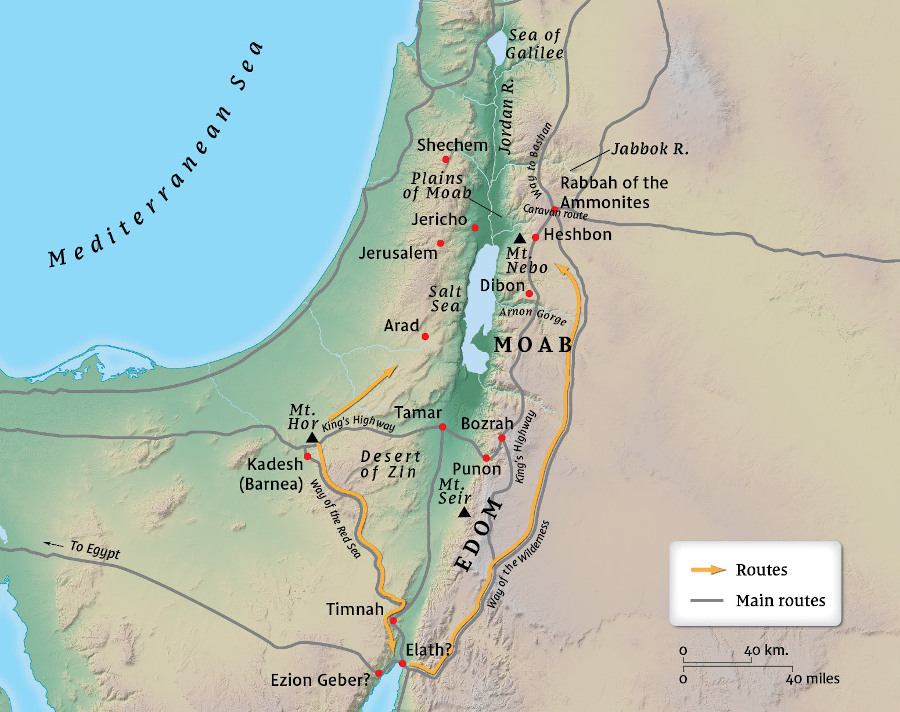
21:12 Zered. See note on Dt 2:13.
21:14 Book of the Wars of the LORD. This book is not in existence today. It is mentioned only here in the OT. It was presumably an ancient collection of songs of war in praise of God (see note on 10:3 for music in war). Cf. the “Book of Jashar” (Jos 10:13 [see note there]; 2Sa 1:18).
21:16 I will give them water. The quest for water had been a constant problem during the wilderness experience (see ch. 20; Ex 17).
21:17–18 The song about the well may also come from the “Book of the Wars of the LORD” (v. 14).
21:21–26 As they had done with Edom (20:14–19), Israel requested freedom to pass through the land of the Amorites. When Sihon their king tried to meet Israel with a show of force, he suffered an overwhelming defeat. The land of the Amorites referred to here was in Transjordan, extending from the Arnon River (at the midpoint of the Dead Sea) to the Jabbok River (v. 24), which flows into the Jordan some 24 miles north of the Dead Sea (see map).
21:27–30 This third ancient poem in ch. 21 was an Amorite taunt song about their earlier victory over Moab (v. 29). Perhaps the song about Heshbon was also preserved in the “Book of the Wars of the LORD” (v. 14).
21:33 Bashan. The region northeast of the Sea of Galilee.
21:35 struck him down. By defeating Og, Israel now controlled Transjordan from Moab to the heights of Bashan in the vicinity of Mount Hermon. The victory over Sihon and Og became a subject of song (Ps 135:11; 136:19–20) and is now a regular part of the commemoration of the works of the Lord in the Passover celebration.
22:1 plains of Moab. The Israelites now marched back to their staging area east of the Jordan and just north of the Dead Sea. From this point they would launch their attack on Canaan, beginning with the ancient city of Jericho. Moab did not trust Israel’s intentions, however. Moab’s fear leads to a remarkable interval in the story of Israel: the account of Balak and Balaam (chs. 22–24).
22:3 Moab was filled with dread. Balak, king of Moab, would not have known that Israel had no plans against him.
22:4 said to the elders of Midian. Balak made an alliance with the Midianites to oppose Israel (v. 7). as an ox licks up the grass of the field. A proverbial simile particularly fitting for a pastoral people.
22:5 summon Balaam. Since Balak believed that there was no military way to withstand the Israelites, he sought to oppose them through pagan divination (vv. 6–7), sending for a diviner with an international reputation. (One of Balaam’s non-biblical prophecies is preserved in an Aramaic [or, according to some, a dialect of Hebrew] inscription from Deir ‘Alla—east of the Jordan River, just north of the Jabbok River—dating to the eighth or seventh century bc; see photo.) Pethor. Located in Northwest Mesopotamia and mentioned in Assyrian inscriptions.
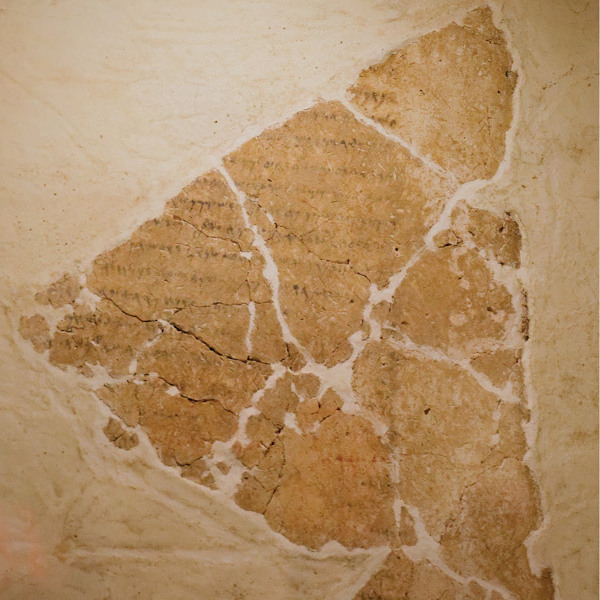
Inscription attributed to Balaam from Deir ‘Alla, dating to the 8th or 7th century bc. Photo taken at the Jordan Museum.
Todd Bolen/BiblePlaces.com
Return to the main text.
22:6 put a curse on these people. See note on Ge 12:3.
22:8 the answer the LORD gives me. The language here and in v. 18 (“the LORD my God”) has led some to believe that Balaam was a believer in Yahweh (“the LORD”), the God of Israel. Based on the subsequent narrative, however, it seems best to take Balaam’s words as claiming to be the spokesman for any god. Balaam is universally condemned in Scripture for moral, ethical and religious faults (31:7–8,15–16; Dt 23:3–6; Jos 13:22; 24:9–10; Ne 13:1–3; Mic 6:5; 2Pe 2:15–16; Jude 11; Rev 2:14).
22:9 That God spoke to Balaam is not to be denied, but Balaam did not yet realize that the God of Israel was unlike the supposed deities that he usually schemed against.
22:12 they are blessed. Israel was under the Lord’s blessing promised to Abraham (see note on Ge 12:2–3).
22:20 go with them. There appears to be a contradiction between the permission God grants Balaam here and the prohibition he had given earlier (v. 12), and then the anger the Lord displayed against Balaam on his journey (v. 22). The difficulty is best understood as lying in the contrary character of Balaam. God had forbidden him to go to curse Israel. He then allowed Balaam to go, but only if he would follow the Lord’s direction. But Balaam’s real intentions were known to the Lord, and so with severe displeasure he confronted the pagan prophet.
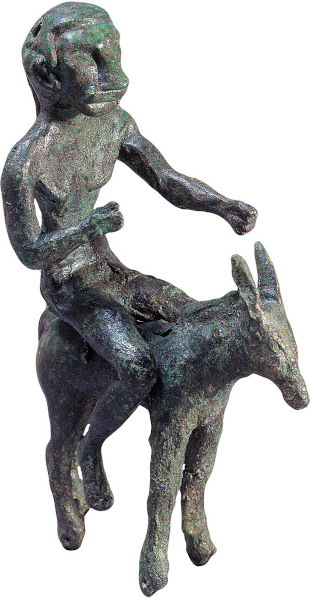
Bronze figurine of a person riding a donkey (10th century bc, Anatolia), reminiscent of the Balaam story.
Z. Radovan/www.BibleLandPictures.com
Return to the main text.
22:23 the donkey saw the angel of the LORD. As a pagan prophet, Balaam was a specialist in animal divination, but his dumb beast saw what Balaam was blind to observe.
22:29 If only I had a sword. A ridiculous picture of the hapless Balaam. A sword was nearby (vv. 23,31–33), but its victim was not going to be the donkey. See photo.
22:31 Then the LORD opened Balaam’s eyes. The language follows the same structure as the opening words of v. 28. In some ways, the opening of the eyes of the pagan prophet to see the reality of the angel was the greater miracle.
22:35 speak only what I tell you. The one great gain was that Balaam was now more aware of the seriousness of the task before him; he would not be able to change the word the Lord would give him (23:12,20,26).
22:37 Did I not send you an urgent summons? The comic element of the story is seen not only in the hapless Balaam but also in the frustrated Balak (23:11,25; 24:10).
22:40 The pieces given to Balaam would have included the livers, for, as a pagan diviner, Balaam was a specialist in liver divination. Balaam subsequently gave up his acts of sorcery as the power of the Lord’s word came upon him (24:1).
23:1 seven altars . . . seven bulls and seven rams. These sacrifices were prepared as a part of Balaam’s pagan actions. The number seven (signifying completeness) was held in high regard among Semitic peoples in general. The many animals would provide abundant liver and other organ materials for this diviner from Northwest Mesopotamia.
23:2 Balak did as Balaam said. Balaam is in charge; Balak is now his subordinate.
23:7—24:24 There are seven poetic messages here. The first four are longer, have introductory narrative bridges and are written in exquisite poetry (23:7–10; 23:18–24; 24:3–9; 24:15–19). The last three are brief, are much more difficult to understand, and follow one another in a staccato pattern (24:20; 24:21–22; 24:23–24).
23:8 How can I curse those whom God has not cursed? That which Balaam had been hired to do he was unable to do. God kept him from pronouncing a curse on his people, who were unlike the nations of the world (v. 9).
23:10 Let me die the death of the righteous. A wish not granted (31:8,16). may my final end be like theirs! He who had come to curse desired to share in Israel’s blessing.
23:13 not see them all but only the outskirts. Balak attempted to reduce Israel’s power by selecting a point where their immense numbers would be obscured. Unfortunately for Balak, the message that followed (vv. 18–24) exceeded the first in its blessing on Israel.
23:19 God is not human, that he should lie. Balaam is a foil to God—constantly shifting, deceiving, equivocating, changing—a prime example of the distinction between God and human beings.
Scripture asserts that God does not change his mind (Nu 23:19; 1Sa 15:29; Mal 3:6). So how are we to understand passages that describe God as “regretting” (Ge 6:6, 7; 1Sa 15:11,35) or “relenting” (Ex 32:14; Jdg 2:18; 2Sa 24:16; Am 7:3,6)? Don’t regretting and relenting involve a change of mind with respect to a prior decision? Is this a biblical contradiction?
It is true that from a human perspective, God does sometimes seem to change his mind. In the passages cited above, for example, God is said to act or think in a certain way for a period of time and then subsequently act or think another way at a later time. For example, he may bring judgment and then withdraw judgment in response to prayer or groaning (Ex 32:14; Jdg 2:18). He may raise up a king and then “regret” doing so (1Sa 15:11,35).
What is changing in these instances, however, is God’s response to changing human behavior. What is not changing is God’s fundamental nature. He continues to be perfectly holy, just, wise, and good. In fact, for God’s fundamental nature to remain the same, he must respond differently to changing human behavior. For example, for God to remain just, he must punish human sin. But when human beings turn away from their sin, that same divine justice (and mercy) demands that he “relent” from judgment. Not doing so would compromise his unchanging divine attributes.
So, when Scripture asserts that God does not change his mind, it means that his divine nature does not change. He does not respond to situations in a morally inconsistent manner, as do his human creations. His unchanging and perfectly righteous nature consistently manifests itself by means of his appropriately varied responses to vacillating human faithfulness.
Go to the Articles Index.
23:21 the shout of the King is among them. That the first explicit declaration of the Lord’s kingship in the Pentateuch was made by pagan Balaam is ironic. Because God is King (Sovereign), he was able to use Balaam for his own ends—to bless his people in a new and wonderful manner.
23:22 wild ox. Possibly an “oryx,” a large, straight-horned antelope (also in 24:8; see also photo).

23:23 no divination against Jacob. See note on Ge 30:27. Balaam speaks from his frightful experience. He had no means in his bag of tricks to withstand God’s blessing of Israel.
23:24 like a lioness. Israel was about to arise and devour its foes, like a lioness on the hunt (see 24:9; Ge 49:9 and note).
24:1 divination as at other times. Balaam’s magic and divination are identified here (see notes on 22:40; 23:1).
24:2 the Spirit of God came on him. This unexpected language indicates that God has overpowered the pagan prophet for his own purposes. Cf. note on Jdg 3:10.
24:3–4 The extensive introduction of this message describes Balaam’s experience in the Lord’s presence. Now Balaam’s eyes were opened (see note on 22:31).
24:6–7 Balaam speaks here in general, but luxuriant, terms of the blessings that will come to the Israelites as they settle in their new land. The lushness of their blessing from the Lord is reminiscent of Eden.
24:7 Agag. Possibly a throne name for the king of the Amalekites (cf. 1Sa 15:32–33). The allusion here may be to the Amalekites who attacked Israel when they came out of Egypt (Ex 17:8–13) and again when they first approached Canaan (14:45).
24:8 God brought them out of Egypt. These central words about Israel’s salvation are recited by one who was a hostile outsider (see notes on 23:21; 25:1–18; Lev 11:45). wild ox. See photo and note on 23:22.
24:9 May those who bless you be blessed . . . cursed! The theology of blessing and cursing in the promises made to Abraham (Ge 12:2–3; see note there) is now a part of this message of blessing. Perhaps here Balaam was reasserting his desire to be a part of Israel’s blessing (see 23:10–11 and note on 23:10).
24:11 the LORD has kept you from being rewarded. In his disgust with Balaam’s failure to curse Israel, Balak now dismisses him without pay—the ultimate insult to his greed (see 2Pe 2:15 and note).
24:14 in days to come. The distant (Messianic) future is usually indicated by this expression (see, e.g., Jer 48:47 and note).
24:15–16 As in the third message (vv. 3–4), the introduction to the fourth message is lengthy, helping to prepare the reader for the startling words of the prophecy.
24:17 star . . . scepter. Fulfilled initially in David, and ultimately in the coming Messianic ruler. Israel’s future Deliverer will be like a star (cf. 2Pe 1:19; Rev 22:16); he will wield a royal scepter (see Ge 49:10 and note; see also photo) and bring victory over the enemies of his people (v. 19). Sheth. Possibly the early inhabitants of Moab, known as the Shutu people in ancient Egyptian documents (but see NIV text note; see also Jer 48:45–46 and note).
24:20 Amalek was first. The first to attack Israel and oppose the Lord’s purpose with his people (Ex 17:8–13).
24:21 Kenites. The name suggests a tribe of metal workers. In other passages the Kenites are allied with Israel (see, e.g., Jdg 1:16; 4:11; 1Sa 15:6 and note). Since Moses’ father-in-law was a Kenite but also associated with Midian (Ex 2:16), it may be that Balaam’s reference is to Midianites (22:4,7). nest. Hebrew qen, a wordplay on the word for Kenite (Hebrew qeni).
24:22 Ashur. Assyria.
24:24 they will subdue Ashur and Eber, but . . . ruin. One nation will rise and supplant another, only to face its own doom. By contrast, there is the implied ongoing blessing on Israel and the sure promise of a future deliverer who will have the final victory (vv. 17–19).
25:1–18 It is not until 31:8,16 that we learn that the principal instigator of Israel’s apostasy here was Balaam (see notes on 22:5,8). Failing to destroy Israel by means of a curse, Balaam seduced Israel by the Canaanite fertility rites of Baal.
25:1 Shittim. Another name for the region of Israel’s staging for the conquest of Canaan; it was across the Jordan River opposite the ancient city of Jericho (Jos 2:1). indulge in sexual immorality. Israel’s engagement in the fertility rites of Baal involved not only the evil of sexual immorality. It was also a breach of covenant with the Lord (see Ex 20:3–4; 34:15 and notes), a worship of the gods of the land (vv. 2–3) and a foretaste of the people’s ruin in the unfolding of their history.
25:4 kill them and expose them in broad daylight. The special display of the corpses would warn survivors of the consequences of sin.
25:6 brought into the camp a Midianite woman. Shows extreme contempt for the holy things and the word of the Lord by Zimri (v. 14) and his lover Kozbi (v. 15).
25:9 24,000. The number of those who died because of the flagrant actions of the people in their worship of Baal exceeded even that of those who had died in the rebellion of Korah and his allies (14,700; see 16:49 and note). The large number of those who died fits well with the immense number of the people stated in the first census (see 1:46 and note) and the second (see 26:51 and note).
25:11 he was as zealous for my honor among them as I am. Cf. Ex 20:4–6. The zeal of Phinehas for the Lord’s honor became the occasion for the Lord’s covenant with him and his descendants as God’s true priests (see note on Ge 9:9; see also v. 12 and chart). This son of Eleazar contrasts with the casual wickedness of his uncles, Nadab and Abihu (see Lev 10:1–3 and notes).
25:12 covenant of peace. Cf. note on Isa 54:10.
25:17 Treat the Midianites as enemies. Because of their active participation in the seduction of the Israelites. Midianites had been in league with Balak from the beginning of the confrontation (22:4,7) and became the objects of a holy war (31:1–24).
26:1–51 The first census of those who were conscripted for the war of conquest had been taken more than 38 years earlier (ch. 1). That first generation of men 20 years old or more had nearly all died. It was now time for the new generation to be numbered and conscripted for the campaign that awaited them. Note the comparison of the numbers of each tribe from the first census to the second:
Tribe | First Census | Second Census |
Reuben | 46,500 | 43,730 |
Simeon | 59,300 | 22,200 |
Gad | 45,650 | 40,500 |
Judah | 74,600 | 76,500 |
Issachar | 54,400 | 64,300 |
Zebulun | 57,400 | 60,500 |
Ephraim | 40,500 | 32,500 |
Manasseh | 32,200 | 52,700 |
Benjamin | 35,400 | 45,600 |
Dan | 62,700 | 64,400 |
Asher | 41,500 | 53,400 |
Naphtali | 53,400 | 45,400 |
Total | 603,550 | 601,730 |
Despite the variation within some tribes, the overall totals remained remarkably similar.
26:9 Dathan and Abiram. The listing of Reuben’s families becomes an occasion to remind the reader of the part that certain of their number played in Korah’s rebellion (see 16:1–7 and note; cf. Jude 11 and note).
26:14 22,200. The greatest loss was in the tribe of Simeon (down from 59,300). Zimri was from the house of Simeon (25:14). Perhaps most of the 24,000 who died in the plague of that time were from Simeon. The judgment was so recent that the tribe had not had time to recover, as had the tribe of Reuben (see note on vv. 1–51).
26:19 Er and Onan. The names of the evil sons of Judah had not been forgotten, but they had no heritage (Ge 38:1–10).
26:20 Perez. The line of David and Jesus would be traced through him (see Ru 4:18–22 and note; Mt 1:1–3).
26:29,35 Manasseh . . . Ephraim. The order of the tribes is the same as in ch. 1, except for the inversion of Ephraim and Manasseh, perhaps due to the much larger relative growth of Manasseh’s tribe (see note on vv. 1–51; see also note on v. 34).
26:33 Zelophehad . . . daughters. See 27:1–11; 36.
26:34 52,700. The greatest gain was in the tribe of Manasseh (up from 32,200). The reason for this increase is not known.
26:46 daughter named Serah. The listing of this solitary daughter is highly unusual, perhaps due to some prominent role she played.
26:51 601,730. Despite all that the people had been through during the years of wilderness experience, their total number was nearly the same as that of those who were first numbered. This remarkable fact is to be regarded as the blessing of the Lord, in fulfillment of his many promises to give numerical strength to the people descended from Abraham through Jacob (see note on Ge 12:2–3). This grand total and its parts are in accord with the general pattern of the numbers in the book (see note on 1:46).
26:53–56 Larger tribes would receive larger shares, but decisions of place would be made by lot (v. 56; 33:54).
26:57 Levites. As in the first census (ch. 3), the Levites were counted separately.
27:1–11 The daughters of a man who had no son (26:33) were concerned about their rights of inheritance and the preservation of their father’s name in the land (v. 4). Their action in approaching Moses, Eleazar and the leaders of the nation was unprecedented, an act of courage and conviction.
27:3 he died for his own sin. A particular case from among those who died in the wilderness (26:64–65). These pious women had a sound understanding of the nature of the wilderness experience and a just claim for their family.
27:5 Moses brought their case before the LORD. This verse indicates how case law might have operated in Israel. The general laws would be proclaimed. Then legitimate exceptions or special considerations would come to the elders, and perhaps to Moses himself. He would then await a decision from the Lord. In this case, the Lord gave a favorable decision for these women. Ch. 36 provides a follow-up to this account.
27:14 honor me as holy. See 20:12 and note.
27:16 appoint someone. Moses’ reaction to this reassertion of his restriction is a prayer for a successor.
27:18 Take Joshua. Just as Moses and Aaron needed to determine the true successor of Aaron before his death (20:22–29), so the true successor of Moses also needed to be established. Joshua and Caleb were the two heroes in the darkest hour of Israel’s apostasy (chs. 13–14). It was fitting that the Lord selected one of them (cf. Ex 17:9–14; 24:13; 32:17; 33:11).
27:20 Give him some of your authority. The transition from Moses’ leadership to that of any successor would have been difficult. The change would be made smoother by a gradual shift of power while Moses was still alive.
27:21 Urim. See notes on Ex 28:30; 1Sa 2:28.
28:1—29:40 These chapters attest to the all-pervasiveness of sacrifice in the life of the people and to the enormity of the work of the priests. Perhaps the reason for these passages at this point in the narrative is to give continuity to the impending transition from the leadership of Moses to that of Joshua (27:12–23).
28:1–8 See Ex 29:38–41; Lev 1–7 and notes.
28:9–10 The Sabbath offerings were in addition to the daily offerings.
28:11–15 The sacrifices at the beginning of the month were of great significance. These were times for celebration and blowing of trumpets in worship (see 10:10 and note).
28:16–25 The priests are instructed as to the proper preparation for the Passover in the first month of the year. Passover is also associated with the Festival of Unleavened Bread (see Ex 12:15 and note on 12:17; Lev 23:4–8). The number seven reappears frequently in the paragraph (see note on 23:1).
28:26–31 The Festival of Weeks came 50 days after the Festival of Unleavened Bread (see Lev 23:9–22); from this number the term “Pentecost” (meaning “fifty”) was used in the NT (see Ac 2:1 and note).
29:1–6 The Festival of Trumpets came at the beginning of the seventh month, a busy month for the worship of the Lord in holy festivals (see Lev 23:23–25; see also chart). Later in Jewish tradition this festival came to commemorate the New Year (Rosh Hashanah). The trumpet used was the ram’s horn (shophar).
29:7–11 The Festival of Trumpets leads into the Day of Atonement, a time of confession, contrition and celebration (see Lev 16:1–34 and note; 23:26–32).
29:12–34 In the seventh month the Festival of Trumpets took place on the first day, the Day of Atonement occurred on the tenth day, and the Festival of Tabernacles began on the fifteenth day and lasted for seven days (Lev 23:33–44). Each day of the Festival of Tabernacles had its own order for sacrifice (see note on Zec 14:16).
29:40 Moses told the Israelites. The recapitulation of these festivals was a necessary part of the transfer of power from Moses to Joshua.
30:1–16 The principal OT passage on vows (Dt 23:21–23). A vow is not to be made rashly (cf. Ecc 5:1–7), and a vow to the Lord must be kept.
30:3–8 In Near Eastern society, women were subject to the authority of their fathers (vv. 3–5) or husbands (vv. 6–8), who could disallow the carrying out of a vow.
30:9 widow or divorced woman. Such women remained responsible for the vows they made.
30:10–15 Further examples of the complications that come in the making of vows within the husband-wife relationship. Such complications may have come up much as in the case of Zelophehad’s daughters (27:1–11). One case after another presented itself, resulting in this final codification. In the centuries leading up to the NT, the legal decisions on vows became even more complex. The words of Jesus that one is to avoid all such oaths (Mt 5:33–37) are liberating.
31:1–24 The Lord declares war (see article) against the Midianites as one of Moses’ last actions before the end of his life. Moses was not motivated by petty jealousy; rather, the war was “the LORD’s vengeance” (v. 3) for the Midianites’ part in seducing the Israelites to engage in sexual immorality and to worship the Baal of Peor. (See 25:16–18, where the specific mention of Kozbi, a Midianite woman, heightens the anger expressed in ch. 31.)
31:2 be gathered to your people. In death (see note on Ge 25:8).
31:4 a thousand men from each of the tribes of Israel. The burden of the Lord’s war had to be shared equally among the tribes.
31:6 Phinehas. His zeal for the Lord’s honor led him to execute Zimri and Kozbi (25:8). Now he leads in the sacred aspects of the battle to demonstrate that this is the Lord’s war. trumpets. See note on 10:3.
31:8 They also killed Balaam. Ch. 25 lacks the name of the principal instigator of the seduction of the Israelite men to the depraved worship of Baal. But here he is found among the dead. What Balaam had been unable to accomplish through acts of magic or sorcery (chs. 22–24) he was almost able to achieve by his advice to the Midianites (v. 16).
31:9–18 While the troops killed the men of Midian, they spared the women and children as plunder. Moses commanded that only the virgin women (who were thus innocent of the indecencies at Peor) could be spared; the guilty women and the boys (who might endanger the inheritance rights of Israelite men) were to be put to death (vv. 15–17; see note on Jos 7:24).
31:16 the Peor incident. See notes on v. 8; 25:1–18.
31:19–24 Since this was the Lord’s war, both people (vv. 19–20) and things (vv. 21–24) had to be cleansed (cf. 19:11–13).
31:26–35 Another aspect of the Lord’s war was the fair distribution of the spoils of war, both among those who fought in the battle and among those who stayed with the community, with appropriate shares to be given to the Lord, whose battle it was (v. 28).
32:1 Reubenites and Gadites. The abundance of fertile grazing land in Transjordan prompted the leaders of these two tribes to request that they be allowed to settle there and not cross the Jordan. This area too was a gift of God won by conquest.
32:8 This is what your fathers did. Moses’ fear was that the failure of these two tribes to stay with the whole community in conquering Canaan would be the beginning of a general revolt against entering the land. It would be the failure of Kadesh (chs. 13–14) all over again. Moreover, the conquest of Canaan was a commission to all Israel.
32:12 followed the LORD wholeheartedly. See note on 14:24.
32:23 your sin will find you out. Cf. Jos 7:18. The bargain was struck, but not without strong warnings if they failed to live up to their word.
32:33 and the half-tribe of Manasseh. It appears that after the requirements for Transjordan settlement were established with the tribes of Reuben and Gad, half the tribe of Manasseh joined with them.
33:1–49 The numerous places (significantly 40 in number between Rameses and the plains of Moab) in Israel’s wilderness experience are listed. Most of the sites were wilderness encampments, not cities with lasting archaeological records; so they are difficult to locate. Many of the places (e.g., in vv. 19–29) are not recorded elsewhere in Exodus and Numbers, while some of the places mentioned elsewhere (e.g., Taberah, 11:3; see 21:19) are missing here. The data warrant these conclusions: (1) Moses recorded the list at the Lord’s command (v. 2). (2) The list should be taken seriously, as an accurate recapitulation of the stages of the journey, despite difficulty in locating many of the sites. (3) The numerical factor of 40 sites between Rameses and the plains of Moab suggests some styling of the list, which helps to account for the sites not included. (4) As in the case of genealogies in the Pentateuch, some factors of ancient significance may not be clear to us today. (5) Ultimately the record is a recital of the Lord’s blessing on his people for the extended period of their wilderness experience. Although certainly not without geographic importance, the listing of the stages of Israel’s experience in the wilderness is fundamentally a religious document, a litany of the Lord’s deliverance of his people.
33:40 Negev. See note on Ge 12:9.
33:50—36:13 A summary statement dealing with matters of land and other property in the promised land. The first and last verses—with their several verbal links—frame the section.
33:52 drive out all the inhabitants of the land . . . Destroy all their . . . idols. What Israel had accomplished in the war against the Midianites (ch. 31) was now to be extended to all the inhabitants of Canaan. Particularly important was the command to destroy all symbols of the pagan religious system of the Canaanites.
34:3–12 The listing of the four boundaries displays the dimensions of God’s great gift to his people.
34:13–15 The new realities that the settlement of Reuben, Gad and the half-tribe of Manasseh in Transjordan brought about (ch. 32).
34:16–29 The listing of the new tribal leaders recalls the listing of the leaders of the first generation (1:5–16). This time the promise will be realized; these new leaders will assist Eleazar and Joshua in actually allotting the land.
34:19 Caleb . . . Judah. See note on 13:6.
35:1–5 Since the Levites would not receive an allotment with the other tribes in the land (1:47–53), they would need towns in which to live and to raise their families and care for their livestock. The Levites were to be dispersed throughout the land (see Ge 49:5,7 and notes), not to settle in an isolated encampment. Jos 21 presents the fulfillment of this command.
35:6–15 Six Levitical cities were to be stationed strategically in the land—three in Transjordan and three in Canaan proper—as cities of refuge, where a person guilty of unintentional manslaughter might escape blood revenge. Jos 20 describes the sites that were chosen. See map and accompanying text.
The idea of providing cities of refuge (see Jos 20:1–9 and notes) for capital offenses is rooted in the tension between customary tribal law (retaliation or revenge, in which the blood relative is obligated to execute vengeance) and civil law (carried out less personally by an assembly according to a standard code of justice).
Blood feuds are usually associated with nomadic groups; legal procedures, with villages and towns. Israel, a society in the process of settling down, found it necessary to adopt an intermediate step regulating manslaughter, so that an innocent person would not be killed before standing trial. Absolution was possible only by being cleared by the assembly and by the eventual death of the high priest (when there would be general amnesty).
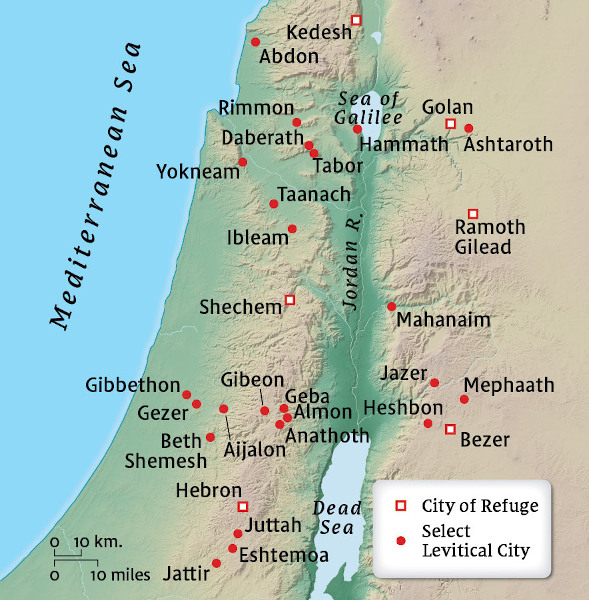
Go to the Maps Index.
35:16–21 Various descriptions of willful murder.
35:21 avenger of blood. See note on Jos 20:3.
35:22 without enmity. The cities of refuge were to be established for the person who had committed an act of involuntary manslaughter.
35:24 according to these regulations. Any gracious provision is subject to abuse. For this reason the case of the involuntary slayer had to be determined by the judges. Further, the accused had to stay in the city of refuge until the death of the high priest, which probably atoned for the act of manslaughter and so foreshadowed the substitutionary atonement of Christ (see Ro 3:25; Heb 2:17; 1Jn 2:2; 4:10 and notes). Any accused person who left the city of refuge would become fair game again for the avenger of blood.
35:25–28 See note on Jos 20:6.
35:25 send the accused back. The trial of the accused apparently took place outside the city of refuge.
35:30 witnesses. To avoid the possibility of an innocent party being accused and sentenced to death on insufficient evidence.
35:32 Not even an involuntary slayer could leave the city of refuge on the payment of a ransom.
35:33 Bloodshed pollutes the land. The crime of murder is not only an offense against the sanctity of life but also a pollutant to the Lord’s sacred land (cf. Ge 4:10–11 and notes).
36:1–13 Presents an interesting further development of the account of Zelophehad’s daughters (27:1–11). Since the Lord had instructed Moses that the women might inherit their father’s land, new questions arose: What will happen to the family lands if these daughters marry among other tribes? Will not the original intention of the first provision be frustrated? Such questions led to the decision that marriage is to be kept within one’s own tribe, so that the family allotments will not “pass from one tribe to another” (v. 9).
36:4 Year of Jubilee. See Lev 25:10 and note.
36:10 Zelophehad’s daughters did as the LORD commanded. The book of Numbers, which so often presents the rebellion of God’s people against his grace and in defiance of his will, ends on a happy note. These noble women, who were concerned for their father’s name and their own place in the land, obeyed the Lord.
36:11 See note on 33:50—36:13; cf. Lev. 27:34.