101:2b–3a The essential commitment. heart . . . look. In OT understanding, a person follows the dictates of the heart—the inmost being (see note on 4:7)—and/or the attractions of the eye—external influences (119:37; Jdg 14:1–2; 2Sa 11:2; 2Ki 16:10; Job 31:1; Pr 4:25; 17:24). For the combination of heart and eyes, see v. 5; Nu 15:39; Job 31:7; Pr 21:4; Ecc 2:10; Jer 22:17.
101:2b house. Royal administration (also in v. 7).
101:3a vile. “Belial” (2Co 6:15) is derived from the Hebrew for this word (see note on Dt 13:13).
101:3b–4 A repudiation of evil deeds and those who promote them (v. 7).
101:3b faithless. Those who rebel against what is right (see Hos 5:2, “rebels”).
101:4 perverse. The opposite of “blameless” (see 18:26, “devious”; see also Pr 11:20; 19:1; 28:6). A perverse heart and a deceitful tongue (v. 7) are root and fruit (Pr 17:20).
101:5 A pledge to remove from his presence all slanderous and all arrogant persons (v. 8). put to silence. Destroy (as in 54:5; 94:23). See v. 8. haughty eyes . . . proud heart. See vv. 2b–3a and note; called “the unplowed field of the wicked” in Pr 21:4; cf. Ps 131:1; Isa 10:12. The arrogant tend to be ruthless (Isa 10:12) and are a law to themselves (see note on 31:23).
101:6 A pledge to surround himself in his reign with the faithful and blameless. My eyes will be on. I will look with favor on (see 33:18; 34:15). the faithful. Those who maintain moral integrity. minister to me. Serve as my aide (Ex 24:13), attendant (Ge 39:4; 1Ki 19:21), personal servant (2Ki 4:43), commander and official (1 Ch 27:1; 2Ch 17:19; Pr 29:12).
101:7 A repudiation of all who make their way by double-dealing (vv. 3b–4).
101:8 A pledge to remove all the wicked from the Lord’s kingdom (v. 5). Every morning. With diligence and persistence (Jer 21:12; Zep 3:5). It appears to have been customary for kings to hear judicial cases in the morning—when the mind is fresh and the air cool. That is when victims looked for deliverance from those oppressing them (cf. 88:13; 143:8; Isa 33:2). city of the LORD. See Ps 46; 48; 87; see also note on 3:4.
Ps 102 The lament of an unnamed individual in a time of great distress. For its relationship to Ps 109 in the arrangement of the Psalter, see introduction to Ps 101–110. In early Christian worship this psalm came to be used as a penitential prayer (see introduction to Ps 6), even though it contains no explicit confession of sin.
The main body of the psalm (vv. 1–22) is developed in four stanzas (initial appeal for God to hear, vv. 1–2; description of distress, vv. 3–11; assurance that the Lord will surely hear, vv. 12–17; call for the Lord’s certain deliverance to be recorded for his enduring praise, vv. 18–22), followed by a concluding recapitulation (vv. 23–28).
102 title Unique in the Psalter (no author named and no liturgical or historical notes), the title identifies only the life situation in which the prayer is to be used, and in accordance with vv. 1–11,23–24 it designates the prayer as that of an individual. In addition, vv. 12–22,28 clearly indicate national involvement in the calamity. prayer. See vv. 1,17. weak. See 61:2; 77:3; 142:3; 143:4; see also 107:5; Jnh 2:7. lament. The Hebrew for this word is translated “complaint” in 64:1; 142:2; Job 7:13; 9:27; 10:1; 21:4. See Introduction: Psalm Types; Introduction to Lamentations: Themes and Theology.
102:1–2 Initial appeal for God to hear.
102:2 hide your face. See note on 13:1. when I call, answer me. See note on 118:5.
102:3–11 The description of distress—a suffering so great that it withers body and spirit—brought on by a visitation of God’s wrath (v. 10) and making him the mockery of his enemies (v. 8). For the framing imagery that binds this section together, see vv. 3–4 and v. 11.
102:3 my days vanish like smoke. See also vv. 11,23. bones burn. As if a fire is consuming his physical frame (31:10; 32:3; 42:10).
102:4 heart. Here “heart” is used in combination with “bones” (v. 3) to refer to the whole person (body and spirit); see note on 4:7; 22:14; Pr 14:30; 15:30; Isa 66:14 (“and you” represents the Hebrew for “and your bones”); Jer 20:9; 23:9. blighted. Or “scorched” (by the hot sun); see 121:6. withered like grass. See v. 11; see also note on 90:5–6.
102:6 owl. Associated with desert areas and ruins (Isa 34:11, 15; Jer 50:39; Zep 2:14).
102:8 enemies taunt me. See 109:25; see also notes on 5:9; 39:8. use my name as a curse. A disdainful expression using the psalmist’s name.
102:9 drink . . . tears. For tears as food and drink, see 42:3; 80:5.
102:10 wrath. See note on 2:5.
102:11 An echo of vv. 3–4. shadow. See 109:23; 144:4; Job 8:9; 14:2; Ecc 6:12. grass. See 37:20; 90:5–6 and notes.
 102:12–17 Assurance that heaven’s eternal King will surely hear the prayer of the destitute (v. 17) and restore Zion. For such expressions of assurance in the laments of the Psalter, see note on 3:8. This six-verse stanza weaves its themes in a balanced a-b-c/a-b-c pattern (see notes on vv. 15–17).
102:12 sit enthroned forever. A central theme of the preceding collection (Ps 90–100). Because God reigns forever and remains the same (v. 27), his mercies to those who look to him for salvation will not fail. renown. See note on 30:4 (“name”). For elaborate celebrations of the Lord’s renown, see Ps 111; 135; 145.
102:13 This verse and v. 16 (see also v. 14) suggest that the psalmist’s distress was occasioned by the Babylonian exile. arise. See note on 3:7. appointed time. The time set by God for judgment and deliverance (75:2; Ex 9:5; 2Sa 24:15; Da 11:27,35). Perhaps the psalmist is referring to a time announced by a prophet.
102:14 dear to your servants. If Zion, the city of God (46:4; 48:1–2,8; 87:3; 101:8; 132:13), is so loved by the Lord’s servants (Ps 126; 137), how much more is she cherished by the Lord!
102:15 nations will fear. See notes on 25:12; 46:10. the name of the LORD. An echo of reference to the Lord’s “renown” (v. 12; see note on 30:4 [“name”]). Yahweh’s “renown” that “endures through all generations” (v. 12) will evoke the awe of earth’s most powerful inhabitants. name. See note on 5:11.
102:16 will rebuild Zion. Yahweh will “have compassion” on Zion (v. 13) by rebuilding her. and appear in his glory. Or “and thus appear in his glory” (see v. 15 and note on 46:10; see also Isa 40:1–5). This hope will find its fullest expression in the “new Jerusalem” (Rev 21).
102:17 the destitute. Reference is to “your servants” (v. 14). their plea. Expressive of the pity they feel for their beloved Zion now lying in ruins (v. 14).
102:18–22 Let God’s certain deliverance of his people be recorded for his continual praise (v. 8)—until that great day when the worshiping community celebrating Zion’s redemption has expanded to include representatives of the “peoples” and “kingdoms” of the world (v. 22). See introduction to Ps 117; see also Rev 15:4; 21:24,26.
102:18 written. Only here does a psalmist call for memory to be sustained by a written record of God’s saving act; usually oral transmission suffices (22:30; 44:1; 78:1–4). created. Brought into being by God’s sovereign act (51:10; 104:30; 139:13).
102:20 prisoners . . . those condemned to death. Perhaps prisoners of war, but more likely the exiles in Babylon (see 79:11 and note).
102:21 praise. See note on 9:1.
102:22 See note on 46:10; see also 47:9 and note; 96; 98; 100. The expectation here expressed may also be influenced by such prophecies as Isa 2:2–4; Mic 4:1–3.
102:23–28 Concluding recapitulation. The stanza is framed by the radical contrast expressed in vv. 23,28. That human life is cut short (v. 23) by the One whose own being spans all ages (vv. 25–27) adds to the psalmist’s sense of loss on the one hand but also to his hope on the other (v. 28) and thus to the urgency of his prayer—as in 90:1–6 (see note on 90:4–5).
102:23–24a See vv. 3–11.
102:24b–27 See v. 12 and note. For a NT application of vv. 25–27 to Christ, see Heb 1:10–12 and note on 1:10.
102:26 Like clothing. With his first creation God clothed himself with the manifestation of his glory (see 8:1,3–4; 19:1; 29:3–9; 104:1,31; Isa 6:3; see also Job 38–41, especially 40:10). But he is more enduring than what he has made—and the first creation will give way to a new creation (Isa 65:17; 66:22).
102:28 Because the Lord does not change (v. 27), Israel’s future is secure (Mal 3:6). live in your presence. Or “dwell in the (promised) land” (see 37:3,29; see also 69:36; Isa 65:9). established before you. See 2Sa 7:24.
Ps 103 A salvation-history hymn, celebrating God’s love and compassion toward his people. For its relationship to Ps 108 in the arrangement of the Psalter, see introduction to Ps 101–110. Calls to praise (vv. 1–2,20–22) frame the body of the hymn (vv. 3–19) and set its tone. The recital of praise falls into two unequal parts: (1) a three-verse celebration of personal benefits received (vv. 3–5) and (2) a 14-verse recollection of God’s mercies to his people Israel (vv. 6–19). The major division (vv. 6–19) is composed of six couplets framed by the breakup of a seventh couplet (vv. 6,19) that describes the general character of God’s reign. Thematic development divides the six framed couplets into two equal parts (vv. 7–12,13–18), of which the first celebrates God’s compassion on his people as sinners, while the second sings of his compassion on them as frail mortals (78:38–39). The concluding couplets of these two parts proclaim the vastness of his love (vv. 11–12) and its unending perseverance (vv. 17–18). As with the hymn found in Ps 33, the length of the psalm has been determined by the number of letters in the Hebrew alphabet (see introduction to Ps 33).
103:1–2 Call to praise God, directed inward (cf. vv. 20–22).
103:1–2,22 my soul. A conventional Hebrew way of addressing oneself (104:1,35; 116:7; see also note on 6:3).
103:3–5 Recital of personal blessings received.
103:3 forgives . . . heals. See Mt 9:2,5 and parallels.
103:4 redeems. A synonym for “delivers” (see note on 71:23). pit. A metaphor for the grave (see note on 30:1). love and compassion. The key words of the hymn (see vv. 8,11,13,17). love. See vv. 8,11,17; see also article.
103:5 like the eagle’s. The vigor of youth is restored to match the proverbial, unflagging strength of the eagle (see Isa 40:30–31).
103:6–19 God’s love and compassion toward his people.
103:6 Verses 6 and 19 form a literary frame characterizing the reign of God, under which Israel has been so graciously blessed. righteousness. See v. 17; see also note on 4:1.
103:7–12 God’s compassion on his people as sinners.
103:7–8 See Ex 33:13; see also note on Ex 34:6–7.
103:7 his ways. See 25:10 and note.
103:11–12 The vastness of God’s love (note the spatial imagery) is supremely shown in his forgiving Israel’s sins.
103:11 See 36:5–9. so great is. So prevails. those who fear him. See vv. 13,17–18; see also note on 66:16.
103:12 See Isa 1:18; 38:17; 43:25; Jer 31:34; 50:20; Mic 7:18–19.
103:13–18 God’s compassion on his people as frail mortals (78:39).
103:13–14 In Hebrew the initial words of these two verses strikingly echo the sounds of the initial words of vv. 11–12, thereby effecting a tight literary bond between vv. 13–18 and vv. 7–12.
103:14 we are dust. See Ge 2:7; 3:19.
103:17–18 The infinite temporal span of God’s love (cf. the spatial imagery in vv. 11–12).
103:17 everlasting to everlasting . . . their children’s children. God’s love outlasts anyone’s little time in this life (cf. note on 109:12).
103:18 who keep his covenant . . . obey his precepts. See 25:10; Ex 19:5 and note; 20:6 and note; Dt 4:40; 29:9.
103:19 See v. 6 and note; see also 9:4,7; 11:4; 47:2,7–8; 123:1.
103:20–22 Concluding call to praise, directed to all creatures—from the psalmist’s inner self (vv. 1–2) to the creatures who serve God in heaven. A call to praise God is often the climax of praise in the Psalter (as also of the whole collection; see Ps 148–150). See note on 9:1. Praise . . . Praise . . . Praise. See note on 96:1–3. (The final line was probably added by the editors of the Psalter; see 104:1,35.)
103:20 who do his bidding. See 91:11; Heb 1:14.
103:21 servants. Translates the participle of the Hebrew verb for “minister” in 101:6 (see note there; see also note on 104:4).
103:22 all his works. See 65:13; 96:11–12 and notes.
Ps 104 A hymn to the Creator. For its relationship to Ps 108 in the arrangement of the Psalter, see introduction to Ps 101–110. The preexilic author has adapted Ge 1 to his own quite different purpose and has subordinated its sequence somewhat to his own design (see next paragraph). Ge 1 recounts God’s acts of creation as his first work at the beginning, but the poet views the created world displayed before his eyes and sings the glory of its Maker and Sustainer. The psalmist’s theme is the visible creation, which he views as the radiant and stately robe with which the invisible Creator has clothed himself to display his glory.
Following his one-verse introduction, the psalmist designed the main body of his hymn concentrically, with stanzas of three-five-nine-five-three verses. The first stanza speaks of the celestial realm above (vv. 2–4) and the fifth of the nautical realm below (vv. 24–26)—the two realms that bracket the “earth” (see note on v. 5). The second sings of the earth’s solid foundations and secure boundaries (vv. 5–9) and the fourth of the orderly cycles of life on earth, governed by sun and moon (vv. 19–23). At the center a nine-verse stanza (composed of three triplets) celebrates the marvelous diversity and abundance of life in the earth (vv. 10–18). To the psalm’s main body the author added a four-verse stanza that recites how God maintains life on earth (vv. 27–30), a two-verse conclusion (vv. 31–32—which together with v. 1 frames the whole), and a three-verse epilogue (vv. 33–35). The outer frame (“Praise the LORD, my soul”) was probably added by the editors of the Psalter when they inserted the Book division after Ps 106—thus concluding Book IV with doxologies (see the liturgical frames added to Ps 105–106 and the similar conclusion to Book V: Ps 146–150).
104:1–2 clothed with . . . wraps himself in. See note on 109:29.
104:1 Introduction: the theme of the hymn.
104:2–4 The celestial realm above.
104:2 light. Cf. the first day of creation (Ge 1:3–5). heavens. Cf. the second day of creation (Ge 1:6–8). like a tent. Over the earth and the luminaries that give it light.
104:3 upper chambers. Vivid imagery for the heavenly abode of God (see v. 13). In the singular, the Hebrew for this phrase usually refers to the upper-level room of a house (as in 1Ki 17:19; 2Ki 1:2). their waters. The waters above the “tent” (v. 2; see Ge 1:7), from which, in the imagery of the OT, God gives the rain (see v. 13; see also 36:8 and note). clouds his chariot. See 18:7–15; 68:4; 77:16–19 and notes.
104:4 winds . . . flames of fire. The winds and lightning bolts of the thunderstorm, here personified as the agents of God’s purposes (see 148:8; cf. 103:21; see also Heb 1:7 and note).
104:5–9 God establishes an orderly earth. Verses 5,9 frame the stanza, highlighting its two main themes.
104:5 earth. Land in distinction from sky and seas, not the earth as a planet (Ge 1:10). foundations. See 24:2 and note. can never be moved. Firmly founded (93:1; 96:10), it will not give way (cf. v. 9).
104:7 rebuke. See note on 76:6. waters fled. Cf. the third day of creation (Ge 1:9–13).
104:9 set a boundary. So that the land (“earth”) will never be overwhelmed by the sea (cf. v. 5; see 33:7 and note; see also Ge 9:15).
104:10–18 God makes the earth a flourishing garden of life—the center of the psalm and the focal point of the author’s contemplation of the creation (the earth, bounded by sky, vv. 2–4, and sea, vv. 24–26). Cf. the third and sixth days of creation (Ge 1:9–13, 24–31).
104:10–12 The gift of water from below—watering the ravines of the Negev, south of Israel’s heartland.
104:13–15 The gift of water from above—watering the uplands of Israel’s heartland with its cultivated fields.
104:13 upper chambers. See v. 3 and note.
104:15 hearts . . . hearts. See note on 4:7. oil. Olive oil. make their faces shine. As food (1Ki 17:12), causing a person’s face to glow with health, and/or as cosmetic (Est 2:12).
104:16–18 Well-watered Lebanon (north of Israel’s heartland), with its great trees, its hordes of birds and its alpine animals, the very epitome of God’s earthly parkland (72:16; 2Ki 14:9; 19:23; Isa 10:34; 35:2; 40:16; 60:13; Jer 22:6; Hos 14:7).
104:19–23 The orderly cycles of life (the temporal element; see notes on vv. 2–4,5–9; see also introduction) on earth, governed by the moon and sun. Cf. the fourth day of creation (Ge 1:14–19).
104:24–26 The nautical realm below (see note on vv. 19–23). Cf. the fifth day of creation (Ge 1:20–23). The realm of the sea is structurally balanced with the celestial realm (vv. 2–4) as the other boundary to the realm of earth.
104:24 A pause to recapitulate before treating the sea.
104:25 teeming. See Ge 1:20–21.
104:26 Leviathan. That fearsome mythological monster of the deep (see Job 3:8 and note) is here portrayed as nothing more than God’s harmless pet playing in the ocean.
104:27–30 By God’s benevolent care this zoological garden flourishes. Cf. the sixth day of creation (Ge 1:24–31).
104:29 hide your face. See note on 13:1.
104:30 your Spirit. See note on 51:11. created. See note on 102:18.
104:31 glory of the LORD. Such as is displayed in his creation (see 19:1–4a and note).
104:32 He is so much greater than his creation that with a look or a touch or a word (33:6,9) he could undo it.
104:33–35 A concluding expression of the psalmist’s devotion to Yahweh (cf. NIV text note on v. 35).
104:33 A vow to praise God—here attached to a hymn of praise (see note on 7:17).
104:34 my meditation. The preceding hymn (see 19:14 and note).
104:35 Praise the LORD (last occurrence). Probably belonged originally to Ps 105 (see NIV text note and 105:45; 106:1,48).
Ps 105 A salvation-history hymn, exhorting Israel to worship and trust in the Lord because of all his saving acts in fulfillment of his covenant with Abraham to give his descendants the land of Canaan. It was composed to be addressed to Israel by a Levite (see 1Ch 16:7 and compare vv. 1–15 with 1Ch 16:8–22) on one of Israel’s annual religious festivals (see chart), possibly the Festival of Tabernacles (Lev 23:34) but more likely the Festival of Weeks or Pentecost (see Ex 23:16; Lev 23:15–21; Nu 28:26; Dt 16:9–12; see also Dt 26:1–11). For other recitals of the same history (but for different purposes), see Ps 78; 106; Jos 24:2–13; Ne 9:7–25. For the relationship of this psalm to Ps 106 in the arrangement of the Psalter, see introduction to Ps 101–110.
The introduction is composed of seven verses in two parts: (1) an exhortation (with ten imperatives) to worship the Lord (vv. 1–4); (2) a call to remember what the Lord has done (vv. 5–7). The main body that follows is framed by two four-verse stanzas (vv. 8–11, 42–45) that summarize—as introduction and conclusion—its main theme: The Lord has remembered his covenant with Abraham (see chart). The editors of the Psalter have added an outer frame of “Praise the LORD” (Hebrew “Hallelujah”; see NIV text note on 104:35).
105:1–4 The exhortation to worship Yahweh and trust in him.
105:1 Give praise. See note on Ps 100 title. his name. See v. 3; see also note on 5:11. make known among the nations. As an integral part of praise (see note on 9:1).

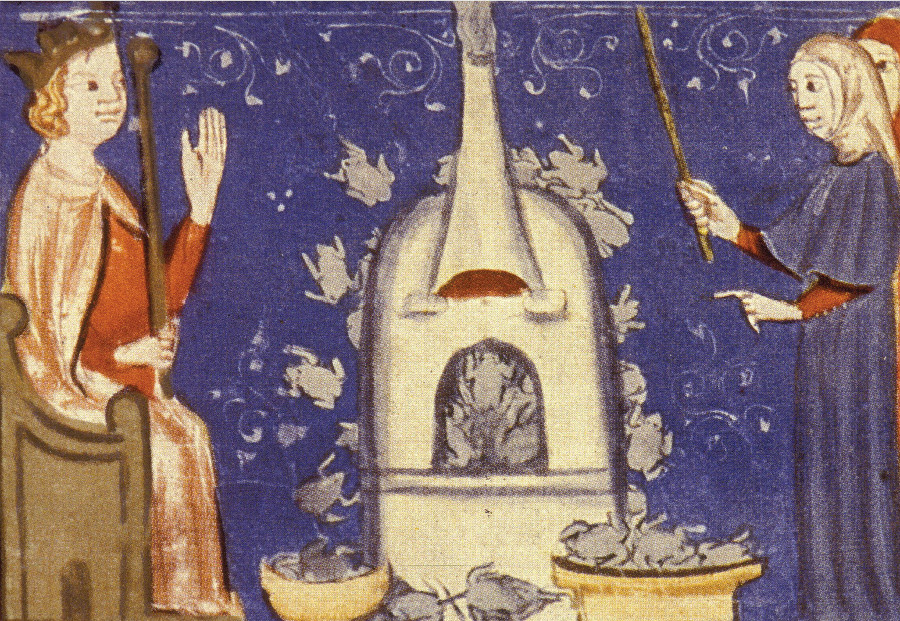
Illustration of the plague of frogs from a 14th-century Hebrew manuscript. Ps 105 recounts the plagues in Egypt.
Z. Radovan/www.BibleLandPictures.com
Return to the main text.
105:2 wonderful acts. See v. 5 (“wonders”); see also note on 9:1.
105:3,25 hearts. See note on 4:7.
105:5–7 Exhortation to remember God’s saving acts.
105:5 Remember. As a motivation for and focus of worship and the basis for trust—remember how the Lord has remembered (vv. 8–11). judgments. See v. 7; see also notes on 48:11; 97:8. pronounced. As Lord, he commands and it is done (7:6 [“decree justice”]; 33:9; 71:3; 78:23; 147:15,18; 148:5; Isa 5:6; 55:11; Jer 1:12; Am 9:3–4).
105:6,9 Abraham . . . Jacob . . . Isaac. While “Jacob” occurs 34 times in the Psalter, Abraham is recalled by name in Psalms only here (see also v. 42) and in 47:9. Reference to Isaac occurs in Psalms only here.
105:8–11 The Lord remembers his covenant with Abraham (vv. 42–45).
105:8 covenant. The promissory covenant of Ge 15:9–21 (see chart). This verse and v. 9 may be echoed in Lk 1:72–73. thousand generations. See Ex 20:6; Dt 7:9; 1Ch 16:15.
105:10 as a decree. As a fixed policy governing his future actions (see note on v. 45).
105:12–41 A recital of God’s saving acts in Israel’s behalf from the granting of the covenant (v. 11; Ge 15:9–21) to its fulfillment (v. 44; Jos 21:43). Cf. the recital prescribed by Moses in conjunction with the offering of firstfruits (Dt 26:1–11).
105:14–15 See Ge 20:2–7 and note on 20:7.
105:22 instruct. Or “bind,” i.e., govern or control. He whose “neck” (v. 18; Hebrew nephesh) had been shackled was given authority to “bind” the pharaoh’s princes “as he pleased” (Hebrew “with his nephesh”—here meaning his will). elders. The pharaoh’s counselors, conventionally older men of wide experience and learning (see note on Ex 3:16).
105:23,27 land of Ham. See 78:51 and note.
105:25 turned. In OT perspective God’s sovereign control over Israel’s destiny is so complete that it governs—mysteriously—even the evil that others commit against them; hence the bold language used here (Ex 4:21; 7:3; Jos 11:20; 2Sa 24:1; Isa 10:5–7; 37:26–27; Jer 34:22).
105:26,42 servant. See 78:70 and note.
105:28–36 Recital of the plagues against Egypt. In this poetic recollection seven plagues (symbolizing completeness) represent the ten plagues of Ex 7–11. Apart from omissions (the plagues of livestock disease and boils) the poet follows the order of Exodus, except that he combines the third and fourth plagues (gnats and flies)—in reverse order—to stay within the number seven. He also places the ninth plague (darkness) first in order to frame his recital with mention of the two plagues that climaxed the series.
105:37 laden with silver and gold. See Ex 3:22 and note; 12:35–36.
105:39 as a covering. Elsewhere it is said that the cloud (symbolic of God’s presence) served (1) as a guide for Israel in their wilderness journeys (78:14; Ex 13:21; Nu 9:17; Ne 9:12,19), (2) as a shield of darkness to protect Israel from the pursuing Egyptians (Ex 14:19–20) and (3) as a covering for the fiery manifestations of God’s glorious presence (Ex 16:10; 24:16; 34:5; 40:34–35,38; Nu 11:25; 12:5; 16:42; Dt 31:15; 1Ki 8:11). The psalmist appears to highlight yet another function: God’s protective cover over his people in the wilderness, perhaps as his shading “wings” (17:8; see note there), so that the sun would not harm them by day (121:5–6).
105:40 bread of heaven. See 78:24–25 and notes on 78:25; Jn 6:31–32.
105:41 like a river. Poetically heightened imagery to evoke due wonder for the event. This miracle of the wilderness wanderings concludes the recital and has been placed in climactic position as one of the most striking manifestations of God’s redeeming power and benevolence (see 114:8; Isa 43:19–20; cf. Isa 50:2).
105:42–45 Concluding summary (balancing the introduction to the recital: vv. 8–11).
105:44 gave them the lands. See v. 11.
105:45 precepts. God has kept his “decree” (v. 10) so that Israel might keep his “precepts”—the Hebrew word is the same (see note on v. 5: “remember”). God’s redemptive working in fulfillment of his covenant promise has as its goal the creating of a people in the earth who conform their lives to his holy will (Isa 5:1–7).
Ps 106 A salvation-history hymn, stressing Israel’s long history of rebellion and a prayer for God to once again save his people. In length, poetic style and shared themes it has much affinity with Ps 105, even while it contrasts with it by reciting the past as a history of rebellion (Ps 78; Ne 9:5–37). See further the introduction to Ps 101–110.
In the final edited form of the Psalter, the psalm is set between two liturgical calls to praise (“Hallelujah!”). Within this outer frame stands another, also drawn from the liturgical language of praise (vv. 1b,48a; see notes there). And still a third frame (formed by two couplets devoted to prayer [vv. 4–5,47; see notes there]) encloses the main body of the psalm. Verses 2–3 are transitional. While the recital character of the central theme (as in Ps 105; see also Ps 78) controls the basic outline, attention to symmetry brings to light the carefully designed pattern of thematic development. The recital begins with 14 Hebrew poetic lines devoted to the period of the exodus and the wilderness wanderings (vv. 6–18) and ends with 14 Hebrew lines devoted to Israel’s time in the promised land (vv. 34–46). The intervening verses (vv. 19–33) make up three stanzas with a six-four-six line pattern. In the two six-line stanzas, instances of Israel’s engagement in idolatry in the wilderness period are recalled (the golden calf at Horeb [vv. 19–23]; the Baal of Peor in the plains of Moab [vv. 28–33]). These stanzas each end with a word about Moses: In the first, Moses intercedes for Israel and wards off God’s wrath; in the second, Israel so vexes Moses that he acts rashly and loses his opportunity to enter the promised land—a most poignant contrast. At the center, a four-line stanza recalls Israel’s refusal to take over the promised land and Yahweh’s condemnation of that generation to die in the wilderness (see Nu 14:1–23; cf. Heb 3:16–19 and note).
106:1–5 Introduction.
106:1 Give thanks to the LORD. With praise (see note on Ps 100 title); a conventional, liturgical call to praise God (107:1; 118:1,29; 136:1). love. See article.
106:2–3 Transition to the main body of the psalm—question and answer.
106:2 Who can . . . declare his praise? A rhetorical question. No one can fully declare his praise. his praise. See note on 9:1.
106:3 Blessed. See note on 1:1. act justly . . . do what is right. See note on 119:121. This verse answers the question posed in v. 2.
106:4–5 A poetic couplet, voicing the prayer of an individual (cf. v. 47).
106:4 Remember me. As one committed to the way of life described in v. 3. when you show favor. Or “with the favor you show” (vv. 44–46). when you save them. Or “with your salvation.” The psalmist prays that God will include him in all the mercies of his “great love” (v. 45), which he shows to his people. Thus the inner logic of the prayer seems to be completed at v. 46.
106:5 prosperity . . . joy . . . praise. A progressive sequence of cause and effect. your inheritance. See v. 40.
106:6–12 Israel’s rebelliousness and the Lord’s mercy in the exodus event.
106:6 A general confession of sin introducing the recital. We. The author identifies himself with Israel in their rebellion, even as he prays for inclusion in God’s mercies toward his people (Ezr 9:6–7).
106:7,22 miracles. For example, the plagues against Egypt (see note on 9:1, “wonderful deeds”).
106:10 redeemed. Here, as often, a synonym for “delivered” (see note on 71:23).
106:12 sang his praise. See Ex 15:1–21.
106:13–18 Israel’s discontent and the Lord’s judgments.
106:13–15 Discontent with the Lord’s provisions (Ex 16; Nu 11).
106:16–18 Discontent with the Lord’s leadership arrangements (Nu 16:1–35).
106:19–23 Idolatry at Horeb and Moses’ intercession.
106:19 Horeb. See note on Ex 3:1.
106:20 glorious God. See 1Sa 15:29; Jer 2:11 and notes; Hos 4:7.
106:22 land of Ham. See 78:51 and note.
106:23 stood in the breach. See Ex 32:11–14,31–32. wrath. See note on 2:5.
106:24–27 Israel’s lack of faith at the border of the promised land and the Lord’s judgment (Nu 14:1–23).
106:24 pleasant land. So described in Jer 3:19; 12:10; Zec 7:14; see also Dt 8:7–9; Eze 20:6.
106:26–27 fall. See note on 13:4.
106:27 scatter them throughout the lands. See Lev 26:33; Dt 28:36–37,64 and note on 28:64; Eze 20:23.
106:28–33 Idolatry at Peor (vv. 28–31), and Moses barred from entering the land (vv. 32–33).
106:28 yoked themselves to. See Nu 25:3,5.
106:31 credited to him as righteousness. As Abram’s faith was “credited . . . to him as righteousness” (Ge 15:6; see note there), so, says the psalmist, was Phinehas’s priestly zeal for the Lord (Nu 25:7–8). for endless generations. The psalmist refers to the “covenant of a lasting priesthood” (Nu 25:13) that the Lord granted Phinehas as a gracious reward for his zealous act. It was the granting of this promissory covenant that warranted the statement about crediting righteousness, for God’s granting of a promissory covenant to Abram had followed upon his crediting Abram’s faith to him as righteousness (Ge 15:9–21). Similarly, God’s promissory covenants with Noah (Ge 9:9–17) and with David (2Sa 7:5–16) followed upon God’s testimony to their righteousness (Ge 7:1; 1Sa 13:14). See chart.
106:32 Meribah. See note on Ex 17:7.
106:33 against the Spirit of God. For an alternative rendering of the Hebrew, see NIV text note. The interpretation embodied in the NIV text appears warranted by Isa 63:10 (see also Ps 78:40). For the Spirit of God present and at work in the wilderness wanderings, see Ex 31:3; Nu 11:17; 24:2; Ne 9:20; Isa 63:10–14. See also note on 51:11.
106:34–39 A general description of Israel’s rebelliousness in the promised land, applicable from the time of the judges to the Babylonian exile.
106:36 became a snare to them. See Ex 23:33; Dt 7:16; Jdg 2:3; 8:27; cf. Ex 10:7; 34:12; 1Sa 18:21; cf. also note on 9:15.
106:37 false gods. The Hebrew word for this phrase occurs elsewhere in the OT only in Dt 32:17.
106:38 Cf. Jer 19:4–5. innocent blood. The blood of anyone not guilty of a capital crime. desecrated. The very land itself is defiled by the slaughter of innocents (Nu 35:33; Jer 3:2,9).
106:39 defiled. See Lev 18:24; Jer 2:23; Eze 20:30–31; 22:3–4. prostituted themselves. See Ex 34:15 and note.
106:40–46 God’s stern measures against his rebellious people (vv. 40–43), but at the same time his gracious remembering of his covenant (vv. 44–46). The judgments here recalled focus particularly on God’s most severe covenant sanctions (Lev 26:25–26, 33,38–39; Dt 28:25, 36–37,48–57,64–68).
106:40 angry. See note on 2:5. abhorred. See 5:6.
106:44 heard their cry. See Ex 2:23; 3:7–9; Nu 20:16; Jdg 3:9, 15; 4:3; 6:6–7; 10:10; 1Sa 9:16; 2Ch 20:6–12; Ne 9:27–28.
106:45 remembered his covenant. See 105:8,42; Ex 2:24; Lev 26:42,45. love. See article.
106:46 Makes clear that the author’s recital includes the Babylonian captivity (1Ki 8:50; 2Ch 30:9; Ezr 9:9; Jer 42:12). Although there were earlier captivities of Israelite communities, no other captive group was said to have been shown “mercy.”
106:47 A communal prayer for deliverance and restoration from dispersion (see introduction and note on v. 4). name. See note on 5:11. glory in. Triumphantly celebrate. The Hebrew for this phrase is found elsewhere only in the parallel in 1Ch 16:35. praise. See note on 9:1.
106:48a A conventional word of praise, serving as the doxology to close the psalm and Book IV (see 41:13 and note; see also introduction to this psalm and note on v. 1).
106:48b Let all the people say. 1Ch 16:36 sets off the closing exclamations somewhat differently. Amen! See Dt 27:15 and note; 1Ch 16:36; Ne 5:13; Jer 11:5; Ro 1:25 and note; 1Co 14:16.
Ps 107 A salvation-history hymn, exhorting Israel to praise the Lord for his unfailing love in that he hears the prayers of those in need and saves them (see next paragraph—on structure). It was composed for liturgical use at one of Israel’s annual religious festivals. Interpretations vary widely, but the following is most likely: Having experienced anew God’s mercies in their return from Babylonian exile (v. 3; see Jer 33:11), Israel is led by a Levite in celebrating God’s unfailing benevolence toward those who have cried out to him in the crises of their lives. In its recitative style the psalm is closely related to Ps 104–106, and in its language to Ps 105–106. See introduction to Ps 101–110.
The introduction (vv. 1–3) and conclusion (v. 43) enclose six stanzas, of which the last two (vv. 33–38, 39–42) stand apart as an instructive supplement focusing in a more general way on reversals in fortunes—which, however, end up with God restoring the “hungry” (v. 36) and the “needy” (v. 41). Of the four remaining stanzas (marked by recurring refrains: vv. 6,13,19,28; vv. 8,15,21,31), the first and last refer to God’s deliverance of those lost in the trackless desert (vv. 4–9) and those imperiled on the boisterous sea (vv. 23–32). The two central stanzas celebrate deliverance from the punishment of foreign bondage (vv. 10–16) and from the punishment of disease (vv. 17–22). Of the concluding lines to these four stanzas, the first two (vv. 9,16) and the last two (vv. 22,32) are similar.
107:1–3 Introductory call to praise Yahweh.
107:1 A conventional, liturgical call to praise the Lord (see 106:1; 118:1,29; 136:1; Jer 33:11 and note on 1Ch 16:34). Give thanks. See vv. 8,15,21,31; see also note on Ps 100 title. he is good. See note on 73:1. love. See vv. 8,15,21,31,43; see also article.
107:2 redeemed. Here, as often, a synonym for “delivered” (see note on 71:23).
107:3 from the lands. From the dispersion resulting from the Assyrian (2Ki 17:6) and Babylonian captivities (see 2Ki 24:14, 16; 25:11,26; Jer 52:28–30; see also Ne 1:8; Est 8:5, 9,13; Isa 11:12; 43:5–6; Eze 11:17; 20:34). south. See NIV text note. The NIV translation assumes that the last two letters of the Hebrew word have been lost, which if supplied yield “south.”
107:4–9 Deliverance for those lost in the “desert wastelands.” No reference is made to rebellion (as in the third and fourth stanzas), but since Israel had journeyed through the desert on their way to Canaan they had firsthand experience of the terrors of the desert. They were, moreover, bounded on the east by the great Arabian Desert (as on the west by the Mediterranean Sea; see vv. 23–32), across which their merchant caravans traveled.
107:4,7,36 city where they could settle. Where a steady supply of food and water makes human life possible.
107:6 they cried out. The author uses the same Hebrew verb in v. 28, thus linking the fifth stanza with the second. In vv. 13,19 he uses a different (but similar-sounding) Hebrew verb, linking the third and fourth stanzas. Just as Israel’s history was a history of divine deliverance (Ps 105) and a history of rebellion (Ps 106), so also it was a history of crying out to the Lord in distress (see references in note on 106:44).
107:7 straight way. Direct route, clear of dangerous and difficult obstacles.
107:8 For other refrains, see introduction to Ps 42–43. wonderful deeds. See vv. 15,21,24,31; see also note on 9:1.
107:9 satisfies the thirsty . . . fills the hungry. See v. 5; see also 105:40–41.
107:10–16 Deliverance from the punishment of foreign bondage. God even delivers those who cry out to him when their distress is a result of his discipline for their sins (vv. 17–20, 33–41).
107:10 sat in darkness . . . utter darkness. Vivid imagery for distress (see 18:28; Isa 5:30; 8:22; 59:9; see also note on 44:19). prisoners. While the reference is no doubt to foreign bondage, the imagery of being bound was also used by OT poets to refer to other forms of distress (Job 36:8; Isa 28:22; La 3:7); so the reference may be deliberately ambiguous.
107:11 plans. God’s wise directives embodied in his words (see 73:24 and note).
107:12 subjected them to bitter labor. A labor so burdensome it broke their spirit. stumbled. Their strength failed (31:10; 109:24; Ne 4:10; Isa 40:30; Zec 12:8).
107:13 cried to. See note on v. 6.
107:16 Either this verse is quoted from Isa 45:2 or both verses quote an established saying. gates of bronze. City gates—normally of wood; here proverbially of bronze, the strongest gates then imaginable (see 1Ki 4:13; cf. Jer 1:18). bars of iron. Bars that secured city gates (Dt 3:5; Jer 51:30). “Can a man break iron . . . or bronze?” was a proverb of the time (Jer 15:12).
107:17–22 Deliverance from the punishment of a wasting disease (see note on vv. 10–16).
107:17 fools. See Jer 4:22; see also NIV text note on 14:1. “Fools despise wisdom and instruction” (Pr 1:7; see v. 43). affliction because of their iniquities. See Lev 26:16, 25; Dt 28:20–22, 35,58–61.
 107:18 gates of death. The realm of the dead was sometimes depicted as a netherworld city with a series of concentric walls and gates (seven, each inside the other, according to ancient Near Eastern mythology) to keep those descending there from returning to the land of the living (see 9:13 and note on Job 38:17; see also Mt 16:18).
107:19 cried to. See note on v. 6. saved. See v. 13 (another link between the second and third stanzas); cf. vv. 6,28.
107:20 his word. His command, here personified as the agent of his purpose (see 147:15,18; see also note on 23:6).
107:22 thank offerings. See Lev 7:12–15; 22:29–30. tell of his works. See note on 7:17. In their concluding lines, stanzas four and five are linked, as are stanzas two and three. songs of joy. See, e.g., Ps 116.
107:23–32 Deliverance from the perils of the sea (see note on vv. 4–9). Israel’s merchants also braved the sea in pursuit of trade (Ge 49:13; Jdg 5:17; 1Ki 9:26–28; 10:22).
107:23 mighty waters. See 29:3.
107:24 wonderful deeds in the deep. Since the peoples of the eastern Mediterranean coastlands associated the “mighty waters” (v. 23) of the sea with the primeval chaotic waters (see note on 32:6), the Lord’s total control of them was always for Israel a cause of wonder and a sense of security. Therefore the terrifying storms that sometimes swept the Mediterranean (Jnh 1; Ac 27) are here included among his wonderful deeds.
107:30 haven. Perhaps trading center.
107:32 See v. 22. elders. See note on Ex 3:16.
107:33–42 A twofold instructive supplement recalling how the Lord sometimes disciplined his people by turning the fruitful land (v. 34) into a virtual desert (1Ki 17:1–7; 2Ki 8:1) but then restored the land again (Ru 1:6; 1Ki 18:44–45), so that the hungry (v. 36) could live there and prosper in the midst of plenty. But then he sent powerful armies against them (such as the Assyrians, 2Ki 17:3–6, and the Babylonians, 2Ki 24:10–17; 25:1–26) that devastated the land once more and deported its people; yet afterward he restored the needy (v. 41). But the poet generalizes upon these experiences in the manner of the wisdom teachers.
107:33–35 The imagery is similar to that found in Isa 35:6–7; 41:18; 42:15; 43:19–20; 50:2 and may indicate that the author has been influenced by Isaiah.
107:40 Perhaps quoted from Job 12:21,24. In their prosperity the people, led by their nobles, grow proud and turn their backs on the God who has blessed them (Dt 31:20; 32:15), so he returns them to the desert (Dt 32:10; Hos 2:3,14).
107:41 needy. Those in need of help (see v. 39; see also 9:18 and note).
107:42 Conclusion to the instruction (vv. 33–41); perhaps an echo of Job 5:16. upright . . . wicked. A frequent contrast in OT wisdom literature (Pr 2:21–22; 11:6–7; 12:6; 14:11; 15:8; 21:18,29; 29:27—but the Hebrew for “wicked” here is shared more often with Job).
107:43 Conclusion to the psalm. one who is wise. See Dt 32:29; Hos 14:9. these things. The instruction in vv. 33–42. ponder the loving deeds of the LORD. The theme of vv. 4–32, emphatically reiterated.
Ps 108 A hymn of praise for God’s love and a prayer for his help against the enemies—a combination (with very slight modifications) of 57:7–11 and 60:5–12 (see notes there). For a similar composition of a new psalm by combination of portions from several psalms, see 1Ch 16:8–36. The celebration of the greatness of God’s love (v. 4) links this psalm thematically with Ps 103 (103:11). See introduction to Ps 101–110.
108 title song. See note on Ps 30 title. of David. Both sources (Ps 57; 60) were credited to him.
108:1–5 Praise of God’s love, possibly intended to function here as an expression of trust in God (the God of vv. 7–9,11), to whom appeal is to be made (vv. 6,12); see 109:1 and note. For this stanza, see notes on 57:7–11.
108:1 soul. Or “glory” (see note on 7:5).
108:6–13 Prayer for God’s help against enemies (see notes on 60:5–12).
Ps 109 A lament to God requesting deliverance from false accusers. The author speaks of his enemies in the singular in vv. 6–19 but in the plural elsewhere. Either (1) the author shifts here to a collective mode of speaking, or (2) the enemies are united under a leader whose personal animosity toward the psalmist has fired the antagonism of others and so is singled out for special attention (see article). Thematically, this prayer has much affinity with Ps 35. Within the cluster in which it stands, its affinity is with Ps 102 (see introduction to Ps 101–110)—and it is only one line longer than that psalm.
Two (Hebrew) four-line stanzas of petition frame the whole (vv. 1–5,26–29), followed by a two-line conclusion (vv. 30–31). The remaining 20 lines fall into two main divisions of ten lines each (vv. 6–15,16–25). Of these, the second is thematically divided into two parts of five lines each, the first of which (vv. 16–20) catalogues what “he” has done, while the second (vv. 21–25) describes how “I” am suffering.
109 title See note on Ps 4 title.
109:1–5 Appeal to God to deliver David from false accusers.
109:1 whom I praise. The one he publicly praises as his trustworthy deliverer and defender (see 22:3 and note; see also 35:18; 74:21; 76:10; 79:13; 102:18). silent. (Judicially) inactive (28:1; 35:22; 50:3,21; 83:1).
109:2–5 The particulars of his case, which he presents before the heavenly bar of justice (35:11–16).
109:2 opened their mouths against me. See note on 5:9.
109:4 but I am a man of prayer. In contrast to the enemy (vv. 16–18). The intent may be: But I have prayed for them (as in 35:13–14; see note there).
109:6–15 Appeal for judicial redress—that the Lord will deal with them in accordance with their malicious intent against him, matching punishment with crime (see note on 5:10; see also 35:4–10 and note).
109:6 someone evil . . . accuser. The psalmist’s enemy falsely accused him in order to bring him down; now let the enemy be confronted by an accuser.
109:7 his prayers. The petitions he offers in his defense.
109:8 days be few. The false accuser was no doubt seeking to effect David’s death (1Ki 21:8–15). another take his place of leadership. The enemy held some official position and was perhaps plotting a coup. For a NT application of these words to Judas, see Ac 1:20.
109:10–11 May he also be deprived of all his property so that he has no inheritance to pass on to his children.
109:12 no one extend kindness. See v. 16. his . . . children. The close identity of a man with his children and of children with their parents, resulting from the tightly bonded unity of the three-or four-generation households of that ancient society, is alien to the modern reader, whose sense of self is highly individualistic. But that deep, profoundly human bond accounts for the ancient legal principle of “punishing the children for the sin of the parents to the third and fourth generation” (see Ex 20:5; but see also 103:17; Ge 18:19).
109:13 Since a man lived on in his children (see previous note), the focus of judgment remains on the false accuser (21:10; 37:28). names blotted out. See note on 9:5.
109:14–15 iniquity of his fathers . . . sin of his mother . . . their sins. These verses return to the theme of vv. 7–8 (and thus form a frame around the stanza): May the indictment the accuser lodges against him include the sins of his parents (see note on v. 12).
109:15 blot out their name. May this slanderer be the last of his family line.
109:16–20 The ruthless character of the enemy—may he be made to suffer the due consequences (10:2–15; 59:12–13). Accusation of the adversary is a common feature in psalms that are appeals to the heavenly Judge (see, e.g., 5:9–10; 10:2–11; 17:10–12).
109:17 pronounce a curse. The enemy added curses to lies (see note on Ge 12:3). come back on him. See note on Est 7:10.
109:18–19 garment . . . cloak wrapped. See note on v. 29.
109:18 into his body like water, into his bones like oil. Pronouncing curses on others was his food and drink, as well as his clothing; he lived by such cursing (cf. Pr 4:17 and note).
109:20 the LORD’s payment. See 54:5; 94:23; Isa 3:11; 2Ti 4:14.
109:21–25 The intensity of “my” suffering—Lord, deliver me!
109:21 for your name’s sake. See notes on 5:11; 23:3. love. See v. 26; see also article.
109:22 The psalmist’s description of his situation echoes the words of v. 16. poor and needy. Dependent on the Lord (see notes on 34:6, 35:10). heart. See note on 4:7. is wounded. The Hebrew for this phrase sounds like the Hebrew for “curse” in vv. 17–18, a deliberate wordplay—while he lives by cursing, I live with deep inward pain.
109:23 I fade away. Apparently the psalmist suffers a life-sapping affliction, which is the occasion for his enemies to turn on him (see vv. 24–25; see also note on 5:9). like an evening shadow. See 102:11. shaken off. See Ne 5:13; Job 38:13.
109:26–29 Concluding petition, with many echoes of preceding themes.
109:28 servant. Perhaps identifies the psalmist as the Lord’s anointed (see title; see also 78:70 and note).
109:29 clothed with . . . wrapped in. For other uses of this imagery, see vv. 18–19; 35:26; 45:3; 73:6; 104:1–2; 132:9,16,18; Job 8:22; 29:14; 40:10; Pr 31:25; Isa 59:17; 61:3,10; Eze 7:27; 26:16; 31:15; Zec 6:13; Lk 24:19; Ro 13:14; 1Co 15:53–54; Gal 3:27; Col 3:12; 1Pe 5:5.
109:30–31 A vow to praise the Lord for his deliverance (see note on 7:17).
Ps 110 Prophecies concerning the Messianic King-Priest. This psalm (specifically its two brief prophecies, vv. 1,4) is frequently referred to in the NT testimony to Christ. Like Ps 2, it has the marks of a coronation psalm, composed for use at the enthronement of a new Davidic king. Before the Christian era, Jews already viewed it as Messianic. Because of the manner in which it has been interpreted in the NT—especially by Jesus (see Mt 22:43–45 and parallels, where Jesus attributes Ps 110 to David; see also note on Lk 20:44) but also by Peter (Ac 2:34–36) and the author of Hebrews (see especially Heb 1:13; 5:6–10; 7:11–28)—Christians have generally held that this is the most directly “prophetic” of all the psalms. If so, David, speaking prophetically (2Sa 23:2), composed a coronation psalm for his great future Son, of whom the prophets did not speak until later. It may be, however, that David composed the psalm for the coronation of his son Solomon, that he called him “my lord” (v. 1; but see NIV text note) in view of his new status, which placed him above the aged David, and that in so doing he spoke a word that had far larger meaning than he knew at the time. This would seem to be more in accord with what we know of David from Samuel, Kings and Chronicles. For this psalm’s setting in the Psalter, see introduction to Ps 101–110.
The psalm falls into two precisely balanced halves (vv. 1–3, 4–7). Each of the two brief prophecies (vv. 1,4) is followed by thematically and structurally similar elaboration: As v. 4 is to v. 1, so v. 5 is to v. 2 and vv. 6–7 are to v. 3 (a poetic couplet).
110:1–3 The Lord’s decree, establishing his anointed as his regent in the face of all opposition (2:7–12).
110:1 The first prophecy (see note on v. 4). my lord. My sovereign, therefore superior to David (see Mt 22:44–45; Mk 12:36–37; Lk 20:42–44; Ac 2:34–35; Heb 1:13 and their contexts). Sit. Sit enthroned. right hand. The place of honor beside a king (45:9; 1Ki 2:19); thus he is made second in authority to God himself. NT references to Jesus’ exaltation to this position are many (Mt 26:64; Mk 14:62; 16:19; Lk 22:69; Ac 2:33; 5:31; 7:55–56; Ro 8:34; Eph 1:20; Col 3:1; Heb 1:3; 8:1; 10:12; 12:2). enemies. See note on 2:1–3. footstool for your feet. See Heb 10:12–13. Ancient kings often had themselves portrayed as placing their feet on vanquished enemies (Jos 10:24). For a royal footstool as part of the throne, see 2Ch 9:18. For the thought here, see 1Ki 5:3. Paul applies this word to Christ in 1Co 15:25; Eph 1:22.
110:2 extend your mighty scepter. Expand your reign in ever widening circles until no foe remains to oppose your rule. Zion. David’s royal city (2Sa 5:7,9), but also God’s (see 9:11 and note), where he rules as the Great King (Ps 46; 48; 132:13–18). The Lord’s anointed is his regent over his emerging kingdom in the world.
110:3 willing. Or “freewill offerings,” i.e., they will offer themselves as dedicated warriors to support you on the battlefield (Jdg 5:2)—as the Israelites offered their treasures for the building of the tabernacle in the wilderness (see Ex 35:29; 36:3; see also Ezr 1:4; 2:68). Accordingly, Paul speaks of Christ’s followers offering their bodies “as a living sacrifice” (Ro 12:1) and of himself as a “drink offering” (Php 2:17); see also 2Co 8:5. Arrayed in holy splendor. If the phrase is descriptive of the Lord’s anointed, it depicts him as clothed in royal majesty and glory. If it speaks of the young warriors who flock to him, it apparently describes them as dressed in priestly garb, ready for participation in a holy war (1Sa 21:4–5; 25:28; 2Ch 13:8, 12; 20:15,21; Isa 13:3–4; Jer 6:4; 51:27) and pouring into his camp morning by morning as copious as the dew (2Sa 17:11–12). holy splendor. See note on 29:2.
110:4–7 The Lord’s oath, establishing his anointed as king-priest in Zion and assuring him of victory over all powers that oppose him.
110:4 The second prophecy (see note on v. 1). has sworn. In accordance also with his sworn covenant to maintain David’s royal line forever (89:35–37). The force of this oath is elaborated by the author of Hebrews (Heb 6:16–18; 7:20–22). priest . . . in the order of Melchizedek. See article. forever. Permanently and irrevocably; perhaps alluded to in Jn 12:34.
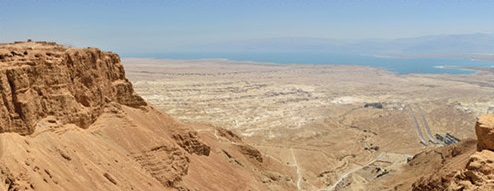
“A Priest . . . in the Order of Melchizedek”
David and his royal sons, as chief representatives of the rule of God, performed many worship-focused activities, such as overseeing the ark of the covenant (see 2Sa 6:1–15, especially v. 14; 1Ki 8:1), building and overseeing the temple (1Ki 5–7; 2Ki 12:4–7; 22:3–7; 23:4–7; 2Ch 15:8; 24:4–12; 29:3–11; 34:8) and overseeing the work of the priests and Levites and the temple liturgy (1Ch 6:31; 15:11–16; 16:4–42; 23:3–31; 25:1; 2Ch 17:7–9; 19:8–11; 29:25,30; 31:2; 35:15–16; Ezr 3:10; 8:20; Ne 12:24, 36,45). In all these duties they exercised authority over even the high priest. But they could not engage in those specifically priestly functions that had been assigned to the Aaronic priesthood (2Ch 26:16–18).
In the present message the son of David is installed by God as king-priest in Zion after the manner of Melchizedek, the king-priest of God Most High at Jerusalem in the days of Abraham (see Ge 14:18,20 and notes). As such a king-priest, he was appointed to a higher order of priesthood than that of Aaron and his sons. (For the union of king and priest in one person, see Zec 6:13 and note.) What this means for Christ’s priesthood is the main theme of Heb 7 (see notes there).
Go to the Articles Index.
110:5 The Lord is at your right hand. God is near to assist you in your warfare (see v. 2; cf. 109:31). Some take these words as an address to God (see NIV text note): The Lord (David’s superior son) is at your (God’s) right hand (as in v. 1). on the day of his wrath. See 2:5 and note.
110:6 He. The Lord’s anointed. heaping up the dead. Battlefield imagery (borrowed from David’s victories) that depicts the victory of the Lord’s anointed over all powers that oppose the kingdom of God (2:9; Rev 19:11–21).
110:7 drink from a brook. Even in the heat of battle he will find refreshment and “lift his head high” with undiminished vigor (see note on 3:3).
Ps 111–119 A cluster of nine psalms framed by unusual alphabetic acrostics (see introductions to Ps 111; 119; see also Introduction: Literary Features) that enclose the “Egyptian Hallel” (see introduction to Ps 113–118). The framing psalms that enclose the celebration of redemption contained in the Hallel (which means “praise” in Hebrew) offer instruction in the piety that must characterize those who join in the celebration of God’s saving acts in behalf of his people.
Ps 111 A hymn of praise to God for his unfailing righteousness. The psalm combines hymnic praise with wisdom instruction, as its first and last verses indicate. Close comparison with Ps 112 shows that these two psalms are twins, probably written by the same author and intended to be kept together. The two psalms are most likely postexilic. For the relationship of these psalms with those that follow, see introduction to Ps 111–119.
Structurally, both Ps 111 and Ps 112 are alphabetic acrostics (see NIV text note; see also Introduction: Literary Features), but unique in that each (Hebrew) half-line advances the alphabet. Both psalms are framed by first and last verses that highlight their primary themes, and in both psalms the main body develops the theme introduced by the first verse, while the closing verse adds a counterpoint. In both psalms the main body of eight verses falls thematically into two halves of four verses each, with the corresponding verses of each half containing certain thematic links (compare, e.g., 111:2 and 111:6; also vv. 5 and 9). Corresponding verses of the two psalms also tend to share common themes (compare, e.g., 111:3–5 with 112:3–5). Both of these twin psalms are composed of the same number of Hebrew syllables.
111:1 I will extol. Introductory to the praise that follows in vv. 2–9. with all my heart. A verbal link with a recurring phrase in Ps 119 (vv. 2,10,34,58,69,145). council of the upright. Probably a more intimate circle than the assembly (see 107:32 for a similar distinction) and referring to those who are truly godly—such as the “upright” of 112:2,4 (11:7; 33:1; 49:14; 97:11; 107:42; 140:13). in the assembly. See note on 9:1.
111:2–5 The stanza is framed by references to the Lord’s “works” and “his covenant” (see vv. 6–9 and note).
111:2 works of the LORD. The hymn focuses especially on what God has done for his people. Verses 5,9 sum it up. pondered. Reflectively examined (see Ezr 10:16, “investigate”; Ecc 1:13, “study”).
111:3 righteousness. As embodied in his deeds (see note on 4:1).
111:4 wonders. See note on 9:1. gracious and compassionate. See Ex 34:6–7 and note.
111:5 provides food. Illustrative of his bountiful provisions for the daily needs of his people (as in the Lord’s prayer: “Give us today our daily bread,” Mt 6:11). fear. See v. 10 and note. his covenant. The Lord remembers “forever” the covenant he “ordained . . . forever” (v. 9; see also 105:8–11).
111:6–9 The stanza is framed by references to the Lord’s “works” and “his covenant” (see vv. 2–5 and note).
111:7 faithful and just. Cf. “Glorious and majestic” (v. 3). precepts are trustworthy. See note on 93:5.
111:8 They. “The works of his hands” (v. 7). faithfulness and uprightness. Cf. “gracious and compassionate” (v. 4).
111:9 provided redemption. The other great benefit of God’s deeds in behalf of his people (cf. “provides food,” v. 5). holy and awesome. As shown by his works. name. See note on 5:11.
111:10 Concluding word of godly wisdom. The fear of the LORD is the beginning of wisdom. The classic OT statement concerning the religious basis of what it means to be wise (see Job 28:28; Pr 1:7; 9:10; see also note on Ps 66:16). precepts. Refers back to the “precepts” in v. 7 (see 19:7–9, where “The fear of the LORD” stands parallel to “statutes,” “precepts,” “commands,” “decrees”; see also 112:1).
Ps 112 A eulogy to the godly—in the spirit of Ps 1 but formed after the pattern of Ps 111 and likely intended as its complement (see introduction to Ps 111).
112:1 The basic theme, developed more fully in vv. 2–9. Verse 10 states its converse. See 1:1–2; 128:1. Blessed. See note on 1:1. fear the LORD. See 66:16 and note. delight . . . commands. A verbal and conceptual link with Ps 119 (see 119:35).
112:2–5 The stanza is framed by references to godly people’s children and their generosity (see vv. 6–9 and note).
112:2 children. The godly bring blessing to their children and to themselves—not least in the fact that through their children they are “remembered” in the community (see v. 6; see also Dt 25:6; Ru 4:10; see further Ps 37:26; 127:3–5; 128:3 and note on 109:12). will be mighty. Will be persons of influence and reputation.
112:3 Cf. 111:3. Wealth and riches. See 1:3; 128:2. righteousness. See v. 9; see also note on 1:5. endures. It is not just an occasional characteristic of their actions (see “steadfast,” v. 7).
112:4 darkness. A metaphor for calamitous times (see 107:10 and note). light. See note on 27:1. gracious and compassionate. See 111:4; cf. Ex 34:6–7 and note. righteous. Cf. what is said of the Lord in 116:5; 145:8,17.
112:5 Good. Well-being and prosperity (see 34:8–14 and note). are generous and lend freely. See v. 9; see also 111:5.
112:6–9 The stanza is framed by reference to the righteous being “remembered” (see note on v. 2) and to their generosity (see note on vv. 2–5).
112:6 shaken. See note on 10:6.
112:7 Shares with 111:7 the basic theme of reliability. hearts. See v. 8; see also note on 4:7. trusting. Their trust in God will be as steadfast as their righteousness is enduring (v. 3). For trust and obedience to God’s righteous will as the sum of true godliness, see 34:8–14 and note.
112:8 secure. In Hebrew a verbal echo of “established” in 111:8. will look in triumph. “Even in darkness light dawns” (v. 4).
112:9 See 2Co 9:9 and note. gifts to the poor. See v. 5. their righteousness. Just as the Lord remembers his covenant (111:5,9), so the righteous act according to “justice” (v. 5) and “righteousness” (v. 9), two of the prime moral virtues the Lord requires of his covenant servant (see Ge 18:19; Ps 106:3; Isa 5:7; 56:1; Eze 18:5, 21; 33:14,16,19; 45:9; Am 5:24; 6:12; see also 2Sa 8:15; Pr 1:3; 21:3; Jer 22:15; 32:15—sometimes rendered “just” and “right”). lifted high in honor. As God’s name is held in holy awe (111:9), so the godly will be held in honor.
112:10 The counterpoint—like 111:10. see and be vexed. Godliness is the way to blessedness, whereas the way the wicked have chosen leads to a dead end (10:2–11; 107:42). come to nothing. See 1:4–6; see also Ps 37; Pr 10:28.
Ps 113–118 The “Egyptian Hallel,” a collection of psalms celebrating Israel’s deliverance from Egypt, which came to be used in Jewish liturgy at the great religious festivals (Passover, Weeks, Tabernacles, Dedication, New Moon; see Lev 23; Nu 10:10; Jn 10:22; see also chart). At Passover, Ps 113 and 114 were sung before the meal (before the second cup was passed) and Ps 115–118 after the meal (when the fourth cup had been filled). For the frame within which the “Hallel” has been set, see introduction to Ps 111–119.
Ps 113 A hymn to the Lord celebrating his high majesty and his mercies to the lowly (138:6). It was probably composed originally for the temple liturgy. Thematically, the psalm has strong links with the song of Hannah (1Sa 2:1–15) and the song of Mary (Lk 1:46–55).
Three precisely balanced stanzas (each having three verses) give the psalm a pleasing symmetry. With seven (the number of completeness) verbs the author celebrates God’s praise in stanzas two and three (“is exalted,” “sits . . . on high,” “stoops down,” “raises,” “lifts,” “seats,” “settles”)—and note the fourfold praise in the first stanza. At the center (v. 5; see note on 6:6) a rhetorical question focuses and heightens the hymnic theme.
113:1b–3 The fourfold call to praise.
113:1 name of the LORD. See vv. 2–3. Triple repetition was a common liturgical convention (see note on 96:1–3). name. See note on 5:11.
113:2 now and forevermore. The praise of those who truly praise the Lord cannot rest content until it fills all time—and space (v. 3).
113:3 The psalmist employs an ancient formula for indicating universal space. Canaanite Amarna letter No. 288 reads as follows: “Behold, the king, my lord, has set his name at the rising of the sun and at the setting of the sun” (see chart; cf. Ps 139:9 and note).
113:4–6 The Lord is enthroned on high, exalted over all creation.
113:4 See the refrain in 57:5,11. exalted over all the nations. And implicitly over all their gods (see 95:3; 96:4–5; 97:9; see also 47:2,7–8). Accordingly, those who receive his saving help exalt him in grateful praise (118:28)—a thematic frame to the “Hallel.” above the heavens. Above even the most exalted aspect of the creation (v. 6; 148:13).
113:5 The rhetorical center (see note on 6:6). Who is like the LORD . . . ? See note on Mic 1:1. our God. What grace, that he has covenanted to be “our” God (Ge 17:7; Ex 19:5–6; 20:2)!
113:7–9 The Lord exalts the lowly—the God of highest majesty does not ally himself with the high and mighty of the earth but stands with and raises up the poor and needy (1Sa 2:3–8; Lk 1:46–55). Cf. the deliverance celebrated in Ps 118.
113:7–8 Repeated almost verbatim from Hannah in 1Sa 2:8.
113:7 poor . . . needy. See 9:18; 34:6; 35:10 and notes. dust . . . ash heap. Symbolic of a humble status (Ge 18:27; 1Ki 16:2), but here probably also of extreme distress and need (Job 30:19; 42:6; Isa 47:1; Jer 25:34).
113:9 childless woman. In that ancient society barrenness was the greatest disgrace and the deepest tragedy for a woman (Ge 30:1; 1Sa 1:6–7,10); in her old age she would be as desolate as Naomi because she would have no one to sustain her (see Ru 1:11–13; see also 2Ki 4:14). home. Family circle. happy mother. Because of God’s gracious provision, as in the case of Sarah (Ge 21:2), Rebekah (Ge 25:21), Rachel (Ge 30:23), Hannah (1Sa 1:20), the Shunammite (2Ki 4:17) and others.
Ps 114 A hymnic celebration of the exodus, the second psalm in the “Egyptian Hallel” (see introduction to Ps 113–118). It is one of the most exquisitely fashioned songs of the Psalter. It probably dates from the period of the monarchy sometime after the division of the kingdom (v. 2). No doubt it was composed for liturgical use at the temple during one of the annual religious festivals (see introduction to Ps 113). The theme is progressively developed through four balanced stanzas, reaching its climax in the fourth. The first two stanzas (vv. 1–4) recall the great events of the exodus; the last two (vv. 5–8) celebrate their continuing significance.
114:1–2 The great OT redemptive event.
114:1 Israel . . . Jacob. Synonyms (Ex 19:3). came out of Egypt. Recalls the exodus and all the great events of the wilderness journey. According to 105:37, it was God who brought them out.
114:2 Judah . . . Israel. The southern and northern kingdoms, viewed here as the one people of God. became. The crucial event was the establishment of the covenant at Sinai, where Israel became bound to the Lord as a “kingdom of priests and a holy nation” (Ex 19:3–6). sanctuary. His temple, in which he took up his residence in the world—symbolized by the tabernacle, later the temple. In Ex 15:17 the promised land is similarly called God’s sanctuary. dominion. The special realm over which he ruled as King. This, rather than the exodus itself, was the great wonder of God’s grace.
114:3–4 The author evokes a fearsome scene, such as that portrayed by other poets (18:7–15; 68:7–8; 77:16–19; Jdg 5:4–5; Hab 3:3–10).
114:3 sea . . . Jordan. The Red Sea and the Jordan River, through which the Lord brought his people, are here personified. looked and fled. Saw the mighty God approach in his awesome pillar of cloud and fled.
114:4 leaped. The mountains and hills quaked at God’s approach (29:6).
114:7–8 The Lord of yesterday (vv. 5–6)—“The God of Jacob”—is still with us.
114:7 Tremble. In awesome recognition. earth. All creation. Jacob. A synonym for Israel (Ge 32:28).
114:8 turned the rock into a pool. Thus sustaining and refreshing life (Ex 17:6; Nu 20:11).
Ps 115 This third psalm in the “Egyptian Hallel” (see introduction to Ps 113–118) offers praise to the Lord, the one true God, for his love and faithfulness toward his people. It may have been a liturgy of praise for the temple worship, written for use at the dedication of the second temple (Ezr 6:16) when Israel was beginning to revive after the disruption of the exile. See introduction to Ps 113. Structurally, the song advances in five movements, involving a liturgical exchange between the people and temple personnel: (1) vv. 1–8: the people; (2) vv. 9–11: Levitical choir leader (the refrain perhaps spoken by the Levitical choir); (3) vv. 12–13: the people; (4) vv. 14–15: the priests; (5) vv. 16–18: the people.
115:1–8 Praise of God’s love and faithfulness toward his people, which silences the taunts of the nations.
115:1 Not to us . . . not to us. The introductory confession of faith. Israel’s existence, and now their revival, is not their own achievement. name. See note on 5:11. love and faithfulness. The most common OT expression for God’s covenant benefits (see note on 26:3). love. See article.
115:2 Where is their God? The taunt of the nations when Israel is decimated by natural disasters (Joel 2:17) or crushed by enemies, especially when Judah is destroyed and the temple of God razed (see 3:2; 10:11 and notes; 42:3; 79:10; Mic 7:10).
115:3 is in heaven. Sits enthroned (113:5) in the “highest heavens” (v. 16). whatever pleases him. If Israel is decimated or destroyed, it is God’s doing; it is not his failure or inability to act, nor is it the achievement of the idols the nations worship. When Israel is revived, that is also God’s doing, and no other god can oppose him.
115:4–7 Whatever glory and power the false gods are thought to have (as symbolized in the images made to represent them), they are mere figments of human imagination and utterly worthless (135:15–18; Isa 46:1–7).
115:8 Those who make them. The taunting nations (cf. v. 2). like them. Powerless and ineffectual. For a graphic elaboration of this truth, see Isa 44:9–20.
115:9–11 The call to trust in the Lord, not in idols (v. 8). For triple repetition as a liturgical convention, see note on 96:1–3. For the same groupings, see 118:2–4; see also 135:19–20.
115:11 You who fear him. Perhaps proselytes (1Ki 8:41–43; Ezr 6:21; Ne 10:28).
115:12–13 The people’s confession of trust.
115:14–15 The priestly blessing.
115:14 cause you to flourish. In numbers, wealth and strength.
115:16–18 The people’s concluding doxology.
115:16 highest heavens . . . earth. The heavens are the exclusive realm of the exalted, all-sovereign God; the earth is the divinely appointed place for human beings, where they live under God’s rule and care, enjoy his abundant blessings (vv. 12–13) and celebrate his praise (v. 18).
115:17 not the dead. The dead no longer live in “the earth” (v. 16) but have descended to the silent realm below, where blessings are no longer enjoyed and hence praise is absent (see notes on 6:5; 30:1).
Ps 116 The fourth of the “Egyptian Hallel” psalms (see note on Ps 113–118) praises the Lord for deliverance from death. It may have been written by a king (see v. 16 and note; cf. also Hezekiah’s thanksgiving, Isa 38:10–20); its language echoes many of the psalms of David. In Jewish liturgy (see introduction to Ps 113–118), the singular personal pronoun must have been used corporately (see note on Ps 30 title), and the references to “death” may have been understood as alluding to the Egyptian bondage and/or the exile.
Structurally, the psalm is so designed that the second half (vv. 10–19) mirrors the first half (vv. 1–9)—which may be why the Septuagint (the pre-Christian Greek translation of the OT) divides the psalm into two. Basically the theme is developed in a series of couplets (vv. 1–2,3–4,5–6, 8–9//10–11,13–14,15–16, 17–19—the final couplet being expanded into a triplet). Verse 7 (between the last two couplets of the first half) and v. 12 (between the first two couplets of the second half) have striking verbal and thematic links (see notes on those verses).
116:1–2 I love the Lord because he has heard and saved me (cf. 18:1).
116:2 I will call on him. In him I will trust, and my prayers will ever be to him. “I will call/I called” is a key thematic phrase (in Hebrew one word, and always in the same form as here), occurring twice in each half of the psalm (vv. 2,4,13,17).
116:3–4 The deadly threat (18:4–6).
116:3 cords of death. See note on 18:5.
116:5–6 Testimony to God’s goodness—echoing Ex 34:6.
116:5 gracious . . . righteous . . . compassion. See 145:8,17; cf. 112:4. our God. The author is conscious of those about him; he is praising the Lord “in the presence of all his people” (vv. 14,18).
116:6 unwary. Those who are childlike in their sense of dependence on and trust in the Lord (see note on 19:7).
116:7 rest. A state of unthreatened well-being (cf. Jer 6:16; see 1Ki 5:4 and note; see also note on Ps 23:2, “quiet waters”). my soul. See note on 103:1–2,22. has been good. See v. 12 and note.
116:8–9 The deliverance experienced—a return to the theme of vv. 3–4.
116:10–11 Introduction to the second half of the psalm, an elaboration on the introduction to the first half (vv. 1–2).
116:10 I trusted in the LORD. The author speaks of his faith that moved him to call on the Lord when he was threatened. I am greatly afflicted. This and the quotation in v. 11 should perhaps be taken, together with the one in v. 4, as a brief recollection of the prayer offered when the psalmist was in distress. The threat of death from which he had been delivered was brought on by the false accusations of enemies, as in Ps 109 (see notes on 5:9; 10:7). (For another interpretation, see following note.)
116:11 Everyone is a liar. The heart of the accusation he had lodged against his false accusers (for examples of similar accusations, see 5:9–10; 35:11,15; 109:2–4). Others interpret these words as a declaration that all people offer but a false hope for deliverance (60:11; 118:8–9)—therefore the psalmist called on the Lord.
116:12 goodness. The Hebrew for this word occurs only here in the OT but represents the same basic root as “has been good” in v. 7. Verses 7,12, taken together, concisely focus the central movement of the psalm’s theme (cf. 13:6).
116:13–14 Answer to the question in v. 12: By offering to the Lord those expressions of devotion he desires (compare vv. 13–14,17–18 with 50:14–15,23).
116:13 cup of salvation. Often thought to be related to the cup of the Passover meal referred to in Mt 26:27 and parallels, but far more likely the cup of wine drunk at the festal meal that climaxed a thank offering (cf. 22:26,29; Lev 7:11–21)—called the “cup of salvation” because the thank offering and its meal celebrated deliverance by the Lord. See the parallel with “sacrifice a thank offering” in the corresponding series in vv. 17–18.
116:14 vows. To praise the Lord (see note on 7:17).
116:15–16 Elaboration on vv. 3–4. Note the references to “death” in vv. 3,15; cf. vv. 8–9.
116:15 Precious . . . is the death. The death of his servants is of great concern to the Lord; cf. the analogous expression, “precious is their blood in his sight” (72:14). his faithful servants. See note on 4:3.
116:16 your servant. This may identify the psalmist as the Lord’s anointed (78:70), but in any event as one devoted to the Lord (19:11,13). I serve you just as my mother did. See 86:16 and note.
116:17–19 Reiteration of the vows of vv. 13–14.
116:17 sacrifice a thank offering. See note on v. 13.
116:19 courts. Of the temple (84:2,10; 2Ki 21:5; 23:11–12).
Ps 117 The fifth of the “Egyptian Hallel” psalms (see note on Ps 113–118), the shortest psalm in the Psalter and the shortest chapter in the Bible. Psalm 117 is an expanded Hallelujah (cf. introduction to Ps 119). It may originally have served as the conclusion to the preceding collection of Hallelujah psalms (Ps 111–116)—of which it is the seventh. All nations and peoples are called on to praise the Lord (as in 47:1; 67:3–5; 96:7; 98:4; 100:1; see note on 9:1) for his great love and enduring faithfulness toward Israel (Isa 12:4–6). Thus the Hallelujahs of the OT Psalter, when fully expounded, express that great truth, so often emphasized in the OT, that the destiny of all peoples is involved in what God was doing in and for his people Israel (see, e.g., 2:8–12; 47:9; 67:2; 72:17; 102:15; 110). See introduction to Ps 113–118.
117:1 Quoted in Ro 15:11 as proof that the salvation of Gentiles and the glorifying of God by Gentiles was not a divine afterthought.
117:2 The reason for the praise. love. See article.
Ps 118 A hymn of thanksgiving for deliverance from enemies. The setting may be that of a Davidic king leading the nation in a liturgy of thanksgiving for deliverance and victory after a hard-fought battle with a powerful confederacy of nations (cf. 2Ch 20:27–28; see note on v. 19). The speaker in vv. 5–21 is the king. As the last song of the “Egyptian Hallel” (see note on Ps 113–118), this psalm may have been the hymn sung by Jesus and his disciples at the conclusion of the Last Supper (see Mt 26:30 and note).
Following a liturgical call to praise (vv. 1–4), the king offers a song of thanksgiving for deliverance and victory in battle (vv. 5–21). A three-verse stanza (vv. 5–7) summarizing the main theme is followed by two seven-verse composite stanzas (vv. 8–14,15–21) of elaboration, each closing with the refrain: “has/have become my salvation.” In vv. 22–27 the people rejoice over what the Lord has done. Thereafter, the king speaks his final word of praise (v. 28), and a liturgical conclusion (v. 29) repeats the opening call to praise, thus framing the whole.
118:1–4 The liturgical call to praise.
118:1 A conventional call to praise (shared in whole or in part with Ps 105–107; 136; 1Ch 16:8,34; 2Ch 20:21). Give thanks. See note on Ps 100 title. This, together with vv. 2–4 (except for the refrain) and 29, may have been by the same voice that speaks in vv. 5–21. love. See vv. 2–4,29; see also article.
118:2–4 Israel . . . house of Aaron . . . those who fear the LORD. See 115:9–11 and note. Triple repetition is a common feature in this psalm (see note on 96:1–3).
118:4 fear the LORD. See note on 66:16.
118:5–21 The king’s song of thanksgiving for deliverance and victory.
118:5–7 The introduction: I cried to the Lord; he answered; I need fear no one.
118:5 I cried . . . he brought me. For the conjunction of this appeal and response elsewhere, see 3:4; 4:1; 17:6; 22:2; 27:7; 86:7; 91:15; 99:6; 102:2; 120:1; 138:3; 1Ki 18:24; Pr 21:13; Isa 65:24; Jer 33:3; Jnh 2:2—all these passages share the same Hebrew terms. into a spacious place. See 18:19 and note.
118:8–14 Reflection on the experience of the Lord’s saving help—framed by vv. 8–9 and v. 14.
118:8–9 See 33:16–19; see also Ps 62; 146.
118:10 in the name of the LORD. See 1Sa 17:45. name. See vv. 11–12,26; see also note on 5:11.
118:12 as burning thorns. See 58:9 and note.
118:13 fall. Be killed (see vv. 17–18; see also note on 13:4).
118:14 Perhaps recalls the triumph song of Ex 15, but more likely the verse had become a widely used testimony of praise to the Lord (Isa 12:2).
118:15–21 Celebration of the Lord’s deliverance—framed by vv. 15–16 and v. 21.
118:15 tents. Dwellings. righteous. Israel as the people (ideally) committed in heart and life to the Lord (see v. 20; see also 68:3 and note). Cf. “the tents of the wicked” (84:10).
118:17 live, and . . . proclaim. See 115:17–18; see also note on 6:5.
118:18 chastened me. The king acknowledges that the grave threat through which he has passed has also served God’s purpose—to discipline him and teach him humble godliness (6:1; 38:1; 94:12; Dt 4:36; 8:5).
118:19 Open for me. This line suggests a liturgical procession (v. 27) in which the king approaches the inner court of the temple at the head of the jubilant worshipers (Ps 24; 68). gates. Those leading to the inner temple court. of the righteous. Often thought to be the name of a particular gateway, but more likely only descriptive here of the gate “through which the righteous may enter” (v. 20). It is possible that the procession began outside the city and that “the gates of the righteous” are the gates of Jerusalem, the city of God (see note on 24:7; see also Isa 26:2).
118:21 This closing verse of the thanksgiving song echoes the “Give thanks” of v. 1, the “brought me” of v. 5 and the testimony of v. 14.
118:22–27 The people’s exultation.
118:22 The stone the builders rejected. Most likely a reference to the king (whose deliverance and victory are being celebrated), who had been looked on with disdain by the kings invading his realm—the builders of worldly empires. Others suppose that the stone refers to Israel, a nation held in contempt by the world powers. cornerstone. Either (1) a capstone over a door (a large stone used as a lintel), (2) a large stone used to anchor and align the corner of a wall or (3) the keystone of an arch (Zec 4:7; 10:4). By a wordplay (pun) the author hints at “chief ruler” (the Hebrew word for “corner” is sometimes used as a metaphor for leader/ruler; see Isa 19:13; see also Jdg 20:2; 1Sa 14:38). This stone, disdained by the worldly powers, has become the most important stone in the structure of the new world order that God is bringing about through Israel. Jesus applied this verse (and v. 23) to himself (see Mt 21:42; Mk 12:10–11; Lk 20:17; see also Ac 4:11; Eph 2:20; 1Pe 2:7).
118:24 The LORD has done it this very day . . . rejoice. This day of rejoicing was made possible by God’s deliverance in the victory being celebrated. Others suppose a reference to Passover or the Festival of Tabernacles. has done it. Has made the “stone” the “cornerstone” (v. 22; see also vv. 15–17, 23).
118:25 Prayer for the Lord to continue to save and sustain his people (cf. note on Mt 21:9).
118:26 who comes in the name of the LORD. The one who with God’s help had defeated the enemies “in the name of the LORD” (vv. 10–12). From the house of the LORD. From God’s very presence (134:3). you. The plural (see NIV text note) may have been used to exalt the king (the plural was often used with reference to God), whom God had so singularly blessed (see NIV text note on 1Ki 9:6). Alternatively, it may refer to those who have come with the king victoriously from the battle. The crowds who greeted Jesus at his entrance into Jerusalem as King used the words of vv. 25–26 (Jn 12:13).
118:27 made his light shine on us. An echo of the priestly benediction (see Nu 6:25 and note). With boughs . . . up. Apparently a call to complete the climax of the liturgy of a thank offering (Lev 7:11–21), though others suggest the liturgy of the Festival of Tabernacles. horns of the altar. See photo.
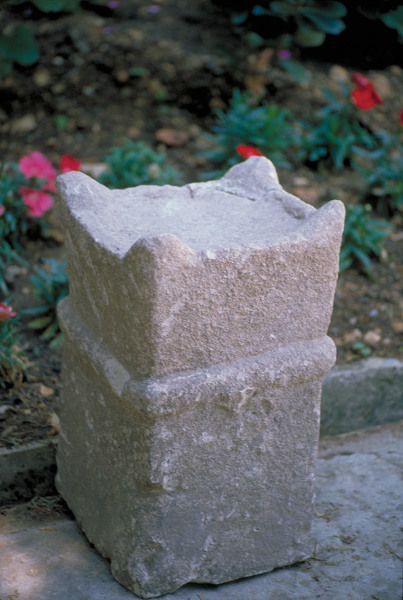
118:28 The king’s closing reiteration of his vow in v. 21.
118:29 Renewal of the opening call to grateful praise (see v. 1 and note).
Ps 119 The longest psalm in the Psalter—and the longest chapter in the Bible—is a hymn celebrating the word of God (cf. introduction to Ps 117). The author was an Israelite of exemplary piety who (1) was passionately devoted to the word of God as the word of life; (2) humbly acknowledged, nevertheless, the errant ways of his heart and life; (3) knew the pain—but also the fruits—of God’s corrective discipline; and (4) had suffered much at the hands of those who arrogantly disregarded God’s word and made him the target of their hostility, ridicule and slander. It is possible that he was a priest (see notes on vv. 23,57)—and the psalm might well be a vehicle for priestly instruction in godliness. He elaborated on the themes of 19:7–13 and interwove with them many prayers for deliverance, composing a massive alphabetic acrostic (see NIV text note; see also Introduction: Literary Features) that demands patient, meditative reading. Most of its lines are addressed to God, mingling prayers with professions of devotion to God’s law. Yet, as the opening verses (and perhaps also its elaborate acrostic form) make clear, it was intended for godly instruction (in the manner of Ps 1; see v. 9 and note). For its placement in the Psalter, see introduction to Ps 111–119. See also notes on 111:1; 112:1.
Whereas elsewhere in the Psalter the focus falls primarily on God’s mighty acts of creation and redemption and his rule over all the world, here devotion to the word of God (and the God of the word) is the dominant theme. The author highlights two aspects of that word: (1) God’s directives for life and (2) God’s promises—the one calling for obedience, the other for faith. In referring to these, he makes pervasive use of eight Hebrew terms: torah, “law”; ‘edot, “statutes”; piqqudim, “precepts”; miṣwot, “commands, commandments”; mishpaṭim, “laws”; ḥuqqim, “decrees”; dabar, “word” (in the sense of either “law” or “promise”); ‘imrah, “word,” but more often “promise.”
The first three and the last three verses of the composition were designed as introduction and conclusion to the whole. The former sets the tone of instruction in godly wisdom; the latter succinctly restates and summarizes the main themes. The middle of the psalm has been marked by a similar three-verse introduction to the second half (see note on vv. 89–91).
119:1–3 General introduction.
119:1–2 Blessed. See note on 1:1.
119:1 whose ways are blameless. This opening general description is further elaborated in the rest of the introduction, which concludes with an equally general statement: “follow his ways” (v. 3). See Ge 17:1; cf. Ge 26:5 and note. law. Hebrew torah, a collective term for God’s covenant directives for his people (see Dt 4:44 and note). “Law” often came, especially later, to have a broader reference—the whole Pentateuch (see Lk 24:44 and note) or even the whole OT (see Jn 10:34; 12:34; 15:25; 1Co 14:21 and notes)—but here it is limited by the synonyms with which it is used interchangeably.
119:2 statutes. Hebrew ‘edot, a specifically covenantal term referring to stipulations laid down by the covenant Lord (see 25:10, “demands”; Dt 4:45, “stipulations”). seek him with all their heart. See Dt 4:29 and note. heart. See v. 7; see also note on 4:7.
119:3 ways. The Hebrew for this word occurs only rarely in this psalm but is common in Deuteronomy and elsewhere as a general reference to God’s covenant requirements (see note on 25:4)—used here to balance “ways” in v. 1.
119:4–8 Those who obey God’s law (vv. 4–5,8) can hope for God’s help (vv. 6–8).
119:4 precepts. Hebrew piqqudim, covenant regulations laid down by the Lord (19:8; 111:7).
119:5 decrees. Hebrew ḥuqqim, covenant directives (Dt 6:2; 28:15,45; 30:10,16; 1Ki 11:11), emphasizing their fixed character.
119:6 not be put to shame. The psalmist would not suffer poverty, sickness or humiliation at the hands of his enemies and so become the object of sneers (see vv. 31,46,80; 25:2–3,20; see also introduction to this psalm), but he would have reason to praise the Lord (v. 7) for blessings received and deliverances granted because the Lord does not forsake him (v. 8). consider. Respect, have regard for (v. 15; 74:20). commands. Hebrew miṣwot, covenant directives (Ex 20:6; 24:12; Dt 4:2) designated specifically as that which God has commanded.
119:7 righteous. One of the author’s favorite characterizations of God’s law (see vv. 62,75,106,123,138,144,160,164,172; see also 19:9). laws. Hebrew mishpaṭim, covenant directives (Ex 21:1; 24:3; Dt 4:1), as the laws laid down by a ruler (king).
119:8 not . . . forsake me. To poverty, sickness or my enemies (cf. 9:10; 22:1; 27:9–10; 38:21; 71:9,11,18).
119:9 a young person. Indicates instruction addressed to the young after the manner of the wisdom teachers (see 34:11; Pr 1:4; Ecc 11:9; 12:1; see also the first two paragraphs of Introduction to Proverbs: Purpose and Teaching). purity. Free from all moral taint (73:13). word. Hebrew dabar, a general designation for God’s (word) revelation but here used with special reference to his law (sometimes promises).
119:10 I seek you. The author’s devotion is first of all to the God of the law and the promises; they have meaning for him only because they are God’s word of life for him. heart. See v. 11; see also note on 4:7.
119:11 word. Hebrew ‘imrah, a synonym of dabar (“word”; see note on v. 9; see also Dt 33:9; Pr 30:5). Except where noted, as here, “word” in this psalm is dabar; ‘imrah is usually translated “promise.”
119:13 recount. Either in meditation or in liturgies of covenant commitment to the Lord (see 50:16, “recite”).
119:14 as one rejoices in great riches. See vv. 72,111,162.
119:15 ways. The Hebrew for this word is a synonym of the Hebrew for “ways” in v. 3 (see 25:4 and note).
119:17–24 Devotion to God’s law marks the Lord’s servant but alienates him from the arrogant (v. 21) of the world.
119:17 that I may obey. Out of gratitude for God’s care and blessing.
119:18 wonderful things. Usually ascribed to God’s redeeming acts (see 9:1 and note)—but God’s law also contains wonders (v. 27) to contemplate, if only God opens a person’s eyes.
119:19 stranger on earth. As a servant of the Lord, i.e., a citizen of his kingdom, the psalmist is not at home in any of the kingdoms of the world (see 39:12 and note; see also note on v. 54).
119:20 My soul is. I am (see vv. 28,81; see also note on 6:3).
 119:21 the arrogant. Those who are a law to themselves, most fully described in 10:2–11 (see vv. 51,69,78,85,122; see also note on 31:23). The author has suffered much from their hostility because of his zeal for God and his law, as the next two verses and many others indicate. accursed. Ripe for God’s judgment.
119:22 scorn and contempt. Of the arrogant.
119:23 rulers. Because the author mentions also speaking “before kings” (v. 46) and being persecuted by “rulers” (v. 161), it may be that he held some official position, such as priest (one of whose functions it would have been to teach God’s law; see Lev 10:11; Ezr 7:6; Ne 8:2–8; Jer 2:8; 18:18; Mal 2:7; see also note on v. 57). The kings and rulers referred to may have been Israelite in the time of the monarchy but more likely were local rulers in the postexilic Persian imperial system. sit. As those securely settled in the world—not as strangers (cf. v. 19). together and slander. As they share their worldly counsels, they speak derisively of the one who stands apart because he delights in God’s statutes and makes them his “counselors” (v. 24).
119:25–32 Whether “laid low” (v. 25) or having his understanding broadened (v. 32), he is determined to “hold fast” (v. 31) to God’s word.
119:25 laid low. The author speaks much of his sorrow, suffering and affliction (vv. 28,50,67,71,75, 83,92,107,143,153). Ridicule, slander and persecution from his adversaries often accompany this suffering of God’s devoted servant, who makes God’s word (his law and promises) the hope of his life (see vv. 42,51,65,69,78,85,95,110,134,141, 150,154,157,161; see also notes on v. 6; 5:9; 31:11–12). in the dust. See 44:25 and note. word. Especially its promises, as also in vv. 28,37,42,49,65,74,81,107,114,147.
119:27 wonderful deeds. See note on v. 18.
119:29 deceitful ways. Ways that seem right but lead to death (see Pr 14:12 and note)—in contrast to the ways prescribed by God’s law, which are trustworthy (vv. 86,138) and true (vv. 142,151,160). teach me your law. By keeping me true to your law, let me enjoy your blessings.
119:30 way of faithfulness. See note on v. 29.
119:31 put to shame. See note on v. 6.
119:32 broadened my understanding. See 1Ki 4:29, “breadth of understanding.”
119:33–40 Prayer for instruction in God’s will as he longs for his precepts.
119:34 heart. See v. 36; see also note on 4:7.
119:36–37 heart . . . eyes. See 101:2b–3a and note.
119:38 that you may be feared. The Lord’s saving acts in fulfillment of his promises contribute to the recognition that he is the true God (130:4; 2Sa 7:25–26; 1Ki 8:39–40; Jer 33:8–9).
119:39 disgrace I dread. See notes on vv. 6,25.
119:40 righteousness. See note on 4:1.
119:41–48 May the Lord deliver me and not take his truth from my mouth; then I will honor his law in my life and speak of it before kings, for I love his commands.
119:41 love. See vv. 64,76,88,124,149,159; see also article.
119:42 anyone who taunts me. See note on v. 25 (“laid low”). word. See note on v. 25.
119:43 word of truth from my mouth. See v. 13 and note; see also v. 46.
119:45 freedom. Unconfined by affliction or oppression (see 18:19 and note).
119:46 before kings. Such will be his boldness (see note on v. 23).
119:48 I reach out for. An act accompanying praise (as in 63:4; 134:2); so the sense may be: I praise.
119:49–56 God’s word is my comfort and my guide, whatever my circumstances.
119:49 word. See note on v. 25.
119:50–51 in my suffering . . . The arrogant mock. See note on v. 25 (“laid low”).
119:51 arrogant. See note on v. 21.
119:52 ancient. God’s law is not fickle but is grounded firmly in his unchanging moral character. This is a major source of the author’s comfort and one of the main reasons he cherishes the law so highly (vv. 89,144,152,160).
119:53 Indignation grips me. Zeal for God’s law (vv. 136,139) awakens righteous anger against those who reject it (vv. 113,115,158) and brings abhorrence of all that is contrary to it (vv. 104,128,163), but it draws together those who honor it (v. 63).
119:54 wherever I lodge. The sense may be that of v. 19 (see note there).
119:55 name. See note on 5:11.
119:57–64 The Lord is the psalmist’s true homestead because it is God’s law that fills the earth with all that makes life secure and joyous. So God’s promises are his hope and God’s righteous laws his delight.
119:57 portion. May identify the author as a priest or Levite (see 73:26 and note).
119:58 heart. See note on 4:7.
119:61 bind me with ropes. Oppress me.
119:62 give you thanks. See note on Ps 100 title. righteous. See note on v. 7.
119:63 friend. See note on v. 53.
119:65–72 Do good to me in accordance with your goodness, even if that means affliction, because your affliction is good for me; it teaches me knowledge and good judgment from your law.
119:65 Do good. Cf. v. 68; see 31:19; 86:17 and notes. to your servant. To me. word. See note on v. 25.
119:66 trust. Have confidence in; God’s commands are not deceitful (see note on v. 29) or fickle (see note on v. 52).
119:67 afflicted. At the hands of God (see v. 71; see also note on v. 25, “laid low”). word. See note on v. 11.
119:69 arrogant. See note on v. 21.
119:71 While one cannot assume that all or even most affliction is designed to teach God’s people lessons they should learn, at times it is (Heb 12:5–11).
119:72 than thousands . . . of silver and gold. See vv. 14,57, 111,162.
119:73–80 Complete your forming of me by helping me to conform to your righteous laws so that the arrogant may be put to shame and those who fear you may rejoice with me. (The stanza has a concentric structure; compare vv. 73 and 80, 74 and 79, 75 and 78, 76 and 77.)
119:73 understanding. What I need to perfect the work you began when you formed me.
119:74 fear you. See v. 79; see also note on 34:8–14. when they see me. When I am perfectly formed and enjoying the blessings of the godly. word. See note on v. 25.
119:75 laws. Here the Hebrew for this word (mishpaṭim) may refer to God’s just decisions in dealing with his servant, as the rest of the verse implies (see v. 84 and note). you have afflicted me. See vv. 67,71.
119:76 unfailing love. See article. my comfort. In my affliction.
119:77 that I may live. And not perish in my affliction.
119:78 the arrogant. See note on v. 21. be put to shame. As they have subjected me to shame (see note on 5:10). for wronging me. See note on v. 25 (“laid low”).
119:79 turn to me. See v. 63 and note on v. 53.
119:80 not be put to shame. See note on v. 6.
119:81–88 Save me from my affliction and my persecutors, according to your promises, and I will obey your statutes. This last stanza of the first half of the psalm, like the closing stanza, is dominated by prayer for God’s help (see note on v. 25).
119:82 My eyes fail. See note on 6:7.
119:83 like a wineskin in the smoke. As a wineskin hanging in the smoke and heat above a fire becomes smudged and shriveled, so the psalmist bears the marks of his affliction.
119:85 The arrogant. See note on v. 21. dig pits. Probably referring to slander—public accusations that the psalmist must be guilty of vile sins or he would not be suffering such affliction (see notes on 5:9; 9:15). contrary to your law. See Ex 20:16.
119:86 trustworthy. See note on v. 29 (“deceitful ways”).
119:89–91 God’s sovereign and unchanging word governs and maintains all creation. (These first three verses of the second half of the psalm teach a general truth; cf. vv. 1–3.)
119:89 Your word. Here God’s word by which he created, maintains and governs all things (33:4,6; 107:20; 147:15,18). stands firm in the heavens. The secure order of the heavens and the earth (v. 90) declares (19:1–4) the reassuring truth that God’s word (his “laws,” v. 91), by which he upholds and governs all things, is enduring (eternal) and trustworthy (“your faithfulness,” v. 90). And that is the larger truth that confirms the confidence of the godly in the trustworthiness of God’s word (his laws and promises) of special revelation (see notes on 93:5; 96:10; see also note on v. 29, “deceitful ways”).
119:90 Your faithfulness. An indirect reference to God’s word (see v. 89 and note).
119:92 would have perished in my affliction. Would not have learned the way of life (v. 93) from your law (see vv. 67,71 and note on vv. 65–72).
119:95 The wicked. See note on v. 21 (“the arrogant”). waiting to destroy me. See note on v. 25 (“laid low”).
119:96 perfection. Probably that which has been perfected in the sense of completed, given fixed bounds so that it is no longer open-ended. boundless. An inexhaustible source of wise counsel for life.
119:97–104 Meditation on God’s law yields the highest wisdom.
119:98 my enemies. Those arrogant ones (see note on v. 21) who place confidence in worldly wisdom.
119:99 teachers. Merely human teachers (cf. v. 102).
119:100 elders. Older men, taught by experience (see note on Ex 3:16).
119:102 you . . . have taught me. Through your laws.
119:103 words. Perhaps better understood here as “laws” (see vv. 67,133,158,172 and note on v. 11).
119:104 hate every wrong path. See note on v. 53.
119:105 lamp . . . light. Apart from which I could only grope about in the darkness (see photo).
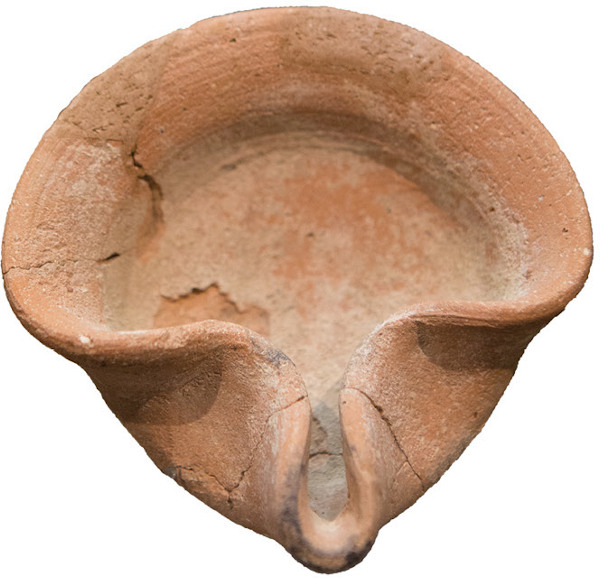
In Old Testament times oil lamps were made of clay and shaped like saucers. “Your word is a lamp for my feet, a light on my path” (Ps 119:105).
© 2018 by Zondervan
Return to the main text.
119:106 have taken an oath and confirmed it. Have covenanted (Ne 10:29).
119:109 take my life in my hands. By publicly honoring God’s law even in the face of threats and hostility (see especially vv. 23,46,161).