Study Notes
 1:1–5 The preamble gives the historical setting for the entire book and introduces Moses, the Great King’s covenant mediator.
1:1 Moses spoke. Almost all of Deuteronomy is presented as speeches by Moses during the final months of his life, just before the Israelites crossed the Jordan to enter Canaan. Arabah. Includes the valley of the Jordan (from the Sea of Galilee to the southern end of the Dead Sea) and the valley extending down to the Gulf of Aqaba. Suph . . . Paran . . . Tophel, Laban, Hazeroth and Dizahab. Places along the route from Sinai to the territory of Moab (see, e.g., Nu 12:16 and note).
1:2 Horeb. The usual name for Mount Sinai in Deuteronomy (the only exception is in 33:2). Kadesh Barnea. See notes on Ge 14:7; Nu 20:11. Seir. See notes on Ge 36:8; Eze 35:2.
 1:3 fortieth year. After leaving Egypt. The Lord had condemned the Israelites to 40 years of wandering in Sinai as punishment for not entering Canaan as he had commanded them to do at Kadesh (Nu 14:33–34). The 40 years included the time spent at Sinai and on the journey to Kadesh, as well as the next 38 years (2:14). See 8:2–5; 29:5–6; Nu 14:29–35; 32:13; Ac 7:36; Heb 3:7–19. eleventh month. January-February.
1:4 Sihon . . . Og. See notes on Nu 21:21–26,35. Heshbon. See note on Isa 15:4.
1:5 this law. The Ten Commandments and other laws given at Mount Sinai and recorded in Ex 20–24, Leviticus and Numbers. In Deuteronomy the laws are summarized, interpreted and adjusted to the new, specific situation Israel would face in Canaan. Thus Deuteronomy is, in essence, a covenant renewal (and updating) document (see Introduction: Theological Teaching and Purpose; Structure and Outline).
1:6 The LORD our God. Together with “the LORD your God,” this title occurs almost 300 times in Deuteronomy, in addition to the many times that “LORD” is used alone or in other combinations (see notes on 28:58; Ge 2:4; Ex 3:14–15; 6:3,6; Lev 18:2).
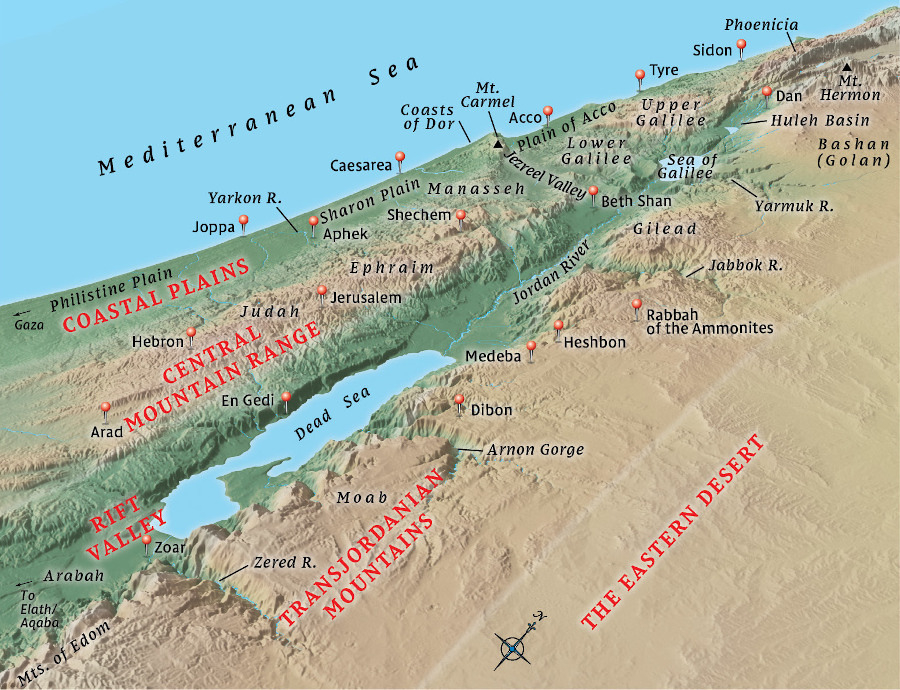
1:7 See Jos 1:4. The land is described by its various geographic areas (see map; see also diagrams). Arabah. See note on v. 1. mountains. The midsection running north and south. western foothills. Sloping toward the Mediterranean. Negev. See note on Ge 12:9. coast. The Mediterranean coastal strip. The “land of the Canaanites” and “Lebanon, as far as . . . the Euphrates” make up the northern sector. The “hill country of the Amorites” is, in general, the central and southern mountains. This description of the land agrees with that in the promise (v. 8) to Abraham in Ge 15:18–21, a promise later given to Isaac’s descendants (Ge 26:2–4) and still later to the descendants of Jacob (Ge 35:11–12).
1:9–18 Cf. 16:18–20; Ex 18:13–26.
1:10 as the stars in the sky. See 10:22; 28:62; Ge 13:16 and note; 15:5 and note; 22:17; 26:4; Ex 32:13.
1:19–46 See Nu 13–14 and notes.
1:21 as the LORD . . . told you. The promise of the land (see note on v. 7) was reaffirmed to Moses (v. 8) at the burning bush (Ex 3:8,17). Now the Israelites are told to enter the land and conquer it. Do not be afraid . . . discouraged. See 31:8; Jos 1:9; 8:1; 10:25.
1:23 twelve. They are named in Nu 13:4–15.
1:24 Eshkol. See note on Nu 13:23.
1:27 grumbled. See note on Ex 15:24. The LORD hates us. The people’s statement is ironic in the light of Deuteronomy’s major theme of the Lord’s love (see Introduction: Theological Teaching and Purpose).
1:28 Anakites. Earlier inhabitants of Canaan, described as giants (2:10,21; 9:2; Nu 13:32–33).
1:29 Do not be terrified . . . afraid. See notes on Isa 41:10, 13; 43:1–2.
1:30 as he did for you in Egypt. See Ex 14:1—15:19.
1:31 God carried you. Cf. Isa 40:11; Jer 31:10; Eze 34:11–16.
1:33 in fire by night and in a cloud by day. The presence of the Lord was in the cloud over the tabernacle to guide the Israelites through their wilderness journeys (see Ex 13:21 and note; 40:34–38).
1:36 Caleb. See Nu 13:30—14:38; Jos 14:6–15. followed the LORD wholeheartedly. See note on Nu 14:24.
1:37 Because of you. See 3:26; 4:21. God was angry with Moses who, failing to honor the Lord as holy, struck the rock at Meribah to get water (see Nu 20:9–13 and note on 20:11; 27:12–14). And since it was the Israelites who had incited him to sin, God was angry with them too. This event (v. 37) occurred almost 40 years after that of the preceding verses (vv. 34–36), but Moses, interested in telling about the Israelites’ sin and his own, brings the two events together.
1:39 do not yet know good from bad. See notes on Ge 2:9; Isa 7:15.
1:41 We will go up. See v. 26; Nu 14:40 and note.
1:43 You rebelled against the LORD’s command. The same charge as in v. 26. First the people rebelled against the Lord’s command to go into the land, then against his command not to enter the land. After their first rebellion the Lord would not go with them. His presence was essential, and Israel needed to learn that lesson.
1:44 bees. See note on Ex 23:28.
1:45 before the LORD. At the tabernacle.
2:1—3:11 See Nu 20:14—21:35 and notes.
2:1 Red Sea. Here probably the Gulf of Aqaba (see note on 1Ki 9:26). hill country of Seir. Edom, the mountainous area south of the Dead Sea.
2:5 I will not give you any of their land. See vv. 9,19. The Lord told Moses to bypass Edom, Moab and Ammon because of their blood relationship to Israel. The Israelites were to take over only those lands east of the Jordan that were in the hands of the Amorites (v. 24; 3:2). I have given. See vv. 9,19. The Lord had given the descendants of Esau (Edomites) and Lot (Moabites and Ammonites) their lands, just as he was giving the Israelites the territories of Transjordan and Canaan (see map).
2:6,28 silver. See note on 14:25.
2:8 Elath and Ezion Geber. Towns at the head of the Gulf of Aqaba. The “Arabah road” ran from the head of the gulf northward and to the east of Moab.
2:10 Anakites. See note on 1:28.
2:11 Rephaites. People of large stature (3:11).
2:12 Horites. See note on Ge 14:6. the land the LORD gave them. Either (1) the Transjordan regions (2:24—3:20), (2) Canaan itself or (3) Transjordan and Canaan. If either (2) or (3) is intended, editorial updating is involved (see note on Ge 14:14).
2:13 Zered. The main stream (intermittent) that flows into the southern end of the Dead Sea from the east. It marked the border between Edom and Moab (see map).
2:14 Thirty-eight years. See note on 1:3.
2:20 Zamzummites. Perhaps to be identified with the Zuzites of Ge 14:5.
2:23 Avvites. Pre-Philistine people otherwise unknown (Jos 13:3). Caphtorites. See note on Ge 10:14. Caphtor. See NIV text note.
2:24 Arnon. See note on Nu 21:10–13. Sihon . . . Heshbon. See 1:4 and note.
2:26 Kedemoth. Means “eastern regions.”
2:30 God had made his spirit stubborn and his heart obstinate. In the OT, actions are often attributed to God without the mention of intermediate or contributing situations or persons. Sihon by his own conscious will refused Israel passage, but it was God who would give Sihon’s land to Israel (see notes on Ex 4:21; 9:16).
2:32 Jahaz. See Nu 21:23; see also note on Isa 15:4.
2:34 completely destroyed. See NIV text note. The Hebrew for this expression usually refers to the destruction of everyone and everything that could be destroyed. Objects like gold, silver and bronze, not subject to destruction, were put in a secure place as God’s possession. Destruction of people and things made them useless to the conquerors but put them in the hands of God. So the word is sometimes translated “destroyed” and sometimes “devoted” (see, e.g., Nu 18:14; Jos 6:17). God sometimes permitted exclusion from this practice, as when he assigned captured livestock and other plunder to his people as recompense for service in his army (v. 35; 3:7; Jos 8:2). no survivors. Likely hyperbole, given the presence of survivors at a later time (see notes on Jos 18:3; 21:43–45; Jdg 1:1; 3:1–6).
2:36 Aroer. See note on Isa 17:2. Gilead. See note on Ge 31:21.
2:37 Jabbok. See note on Ge 32:22.
3:3 gave into our hands Og. As in 2:26–37. See 1:4 and note.
3:4 sixty cities. These were “large walled cities” (1Ki 4:13), implying a heavily populated territory (v. 5). region of Argob. An otherwise unidentified area in Bashan (vv. 13–14; 1Ki 4:13), which was northeast of the Sea of Galilee.
3:8 Mount Hermon. Rising to a height of over 9,200 feet and snowcapped throughout the year, it is one of the most prominent and beautiful mountains in Lebanon.
 3:9 Sirion. This name for Mount Hermon is found also in a Canaanite document contemporary with Moses. Senir. This name for Mount Hermon is also found in Assyrian sources.
3:10 Salekah. A city marking the eastern boundary of Bashan (see Jos 12:5 and note).
3:11 bed . . . with iron. Possibly a sarcophagus made of black basalt. Such sarcophagi (stone coffins) have been found in Bashan. If an actual bed, it was probably made of wood but with certain iron fixtures, as were the “chariots fitted with iron” (see note on Jos 17:16). Rabbah of the Ammonites. Called Philadelphia in NT times, Rabbah was the capital of ancient Ammon (Am 1:13–14). Today its name is Amman, the capital of the kingdom of Jordan.
3:12–20 See Nu 32; 34:13–15 and notes.
3:14 Jair . . . Havvoth Jair. See NIV text note; see also note on Jdg 10:3. the Geshurites and the Maakathites. Two comparatively small kingdoms, Geshur was east of the Sea of Galilee and Maakah was east of the Waters of Merom (see note on Jos 11:5) and north of Geshur.
3:15 Makir. See note on Ge 50:23.
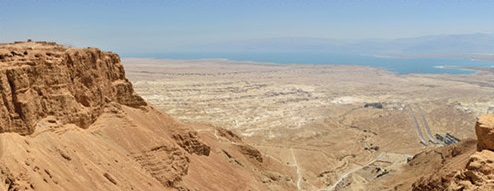
3:17 Kinnereth. See note on Mk 1:16. This name may be related to the Hebrew word kinnor, meaning “harp”; the Sea of Galilee is a harp-shaped lake (see photo). Or reference may be to the town on the northwestern shore of the Sea of Galilee that gave its name to the lake (Jos 11:2). Pisgah. On the edge of the high plateau overlooking the Dead Sea from the east (Nu 21:20).
3:18 you. The tribes of Reuben and Gad and the half-tribe of Manasseh.
3:20 rest. A peaceful situation—free from external threat and oppression, and untroubled within by conflict, famine or plague (see 12:9–10; 25:19; see also notes on Jos 1:13; 1Ki 5:4; Heb 4:1–11).
3:22 God himself. The conquest narratives emphasize the truth that without the Lord’s help Israel’s victory would be impossible. The Lord’s power, not Israel’s unaided strength, achieved victory. Moses bolstered Israel’s resolve and faith by giving this assurance (1:30; 2:21–22,31; 20:4).
3:23–25 Moses’ final plea to be allowed to enter the land (see 1:37 and note; 31:2).
3:26 because of you. See note on 1:37.
3:27 Go up to the top of Pisgah. Moses did so after he had expounded the law to the Israelites to prepare them for life in the promised land (32:48–52; 34:1–6). Pisgah. See note on v. 17. look west and north and south and east. Like Abraham (Ge 13:14), Moses would inherit the promised land only through his descendants (34:1–4).
3:28 commission Joshua. See 31:7–8.
3:29 Beth Peor. Means “house/sanctuary of Peor.” Very likely, reference is to the place where the Baal of Peor was worshiped (Nu 23:28; 25:3,5).
4:1 Israel, hear. God’s call to his people to hear and obey is a frequent theme in Deuteronomy (see, e.g., 5:1; 6:3–4; 9:1; 20:3) and elsewhere in the OT. See also note on 6:4–9.
4:2 Do not add . . . do not subtract. The revelation the Lord gives is sufficient. All of it must be obeyed, and anything that diminishes or contradicts it cannot be tolerated (12:32; Pr 30:6; Gal 3:15; Rev 22:18–19).
4:4 held fast. See note on 10:20.
4:7 near us whenever we pray. The Israelites always had access to the Lord in prayer. His presence was indicated by the tabernacle in the center of the camp, and by the pillar of cloud over the tabernacle (Ex 40:34–38; Nu 23:21).
4:9 Teach them to your children. See v. 10; 6:7; 11:19; Ps 78:4–8; cf. Ex 12:26–27.
4:10–14 See Ex 19–24 and notes.
4:10 Remember. The divine call to Israel to remember the Lord’s past redemptive acts—especially how he delivered them from slavery in Egypt—is a common theme in Deuteronomy (5:15; 7:18; 8:2,18; 9:7,27; 11:2; 15:15; 16:3,12; 24:9,18,22; 25:17) and is summarized in 32:7: “Remember the days of old.”
4:12 no form. See v. 15; see also note on Ex 20:4. “God is spirit” (Jn 4:24; cf. Isa 31:3). only a voice. See v. 36; 5:23–26; Nu 7:89; 1Ki 19:13.
4:13 his covenant, the Ten Commandments. See notes on Ex 20:1; 34:28. two stone tablets. See note on Ex 31:18.
4:19 Cf. 17:3. do not be enticed. As kings of Judah would be later (2Ki 17:16; 21:3,5; 23:4–5).
4:20 iron-smelting furnace. The period in Egypt was a time of affliction and refining for the Israelites (see 1Ki 8:51; Jer 11:4; see also Isa 48:10 and note).
4:21 because of you. See note on 1:37.
4:24 consuming fire. See 9:3; see also Ex 24:17; Isa 33:14 and notes; Heb 12:29. jealous God. See 5:9; 6:15; see also note on Ex 20:5.
4:25 After you . . . have lived in the land. The pattern of the Israelites’ rebellion, resulting in expulsion from the land, and then their repentance, leading to restoration to the land, is prominent in Deuteronomy (see, e.g., the blessing and curse formulas in chs. 27–28).
4:26 the heavens and the earth as witnesses. See notes on 30:19; Ps 50:1; Isa 1:2; Mic 6:1–2.
4:27 will scatter you. See note on 28:64.
4:29 with all your heart and . . . soul. Indicates total involvement and commitment. The phrase is applied not only to how the Lord’s people should seek him but also to how they should fear (revere) him, live in obedience to him, love and serve him (6:5; 10:12; 11:13; 13:3; 30:6), and, after forsaking him, renew their allegiance and commitment to him (26:16; 30:2,10).
4:31 covenant . . . confirmed . . . by oath. See notes on Ge 21:23; 22:16; Ex 19:5; Heb 6:13,18. In ancient times, parties to a covenant were expected to confirm their intentions by means of a self-maledictory oath (see note on Ge 15:17).
4:35 so that you might know. See v. 10. besides him there is no other. See v. 39; 5:7; 6:4 and note; 32:39.
4:37 he loved. The first reference in Deuteronomy to God’s love for his people (see Introduction: Theological Teaching and Purpose). See 5:10; 7:9,13; 10:15; 23:5. The corollary truth is that his people should love him in grateful response (see note on 6:5). Presence. See notes on Ex 25:30; 33:14.
4:40 it may go well with you. That is, you will receive the covenant benefits. This assurance occurs ten times in Deuteronomy (here; 5:16,29; 6:3,18; 8:16; 12:25,28; 19:13; 22:7). Cf. also 28:1–14; 30:1–10.
4:41–43 See 19:1–13; Nu 35:9–28; Jos 20 and notes.
4:43 Bezer . . . Ramoth . . . Golan. See map.
5:1 Hear, Israel. See note on 4:1.
5:2 covenant with us at Horeb. See note on Ex 19:5. God’s covenant with Israel, given at Horeb (Mount Sinai) and now being confirmed, bound the Israelites to the Lord as their absolute Sovereign, and to his laws and regulations as their way of life. Adherence to the covenant would bring God’s people the blessings of the Lord, while breaking the covenant would bring against them the punishments described as “curses” (see, e.g., 28:15–20). Jer 31:31–34 predicted the establishing of a new covenant, which fulfilled the Sinaitic covenant (see Mt 5:17,21–22 and notes; cf. Heb 8:6–13; 10:15–18 and notes). See chart.
5:3 not with our ancestors . . . but with us. See NIV text note. The covenant was made with those who were present at Sinai, but since they were representatives of the nation it was made with all succeeding generations as well.
5:5 See vv. 23–27; Ex 20:18–21.
5:6–21 The Ten Commandments are the central stipulations of God’s covenant with Israel made at Sinai. It is almost impossible to exaggerate their effect on subsequent history. They constitute the basis of the moral principles found throughout the Western world and summarize what the one true God expects of his people in terms of faith, worship and conduct (see notes on Ex 20:2–17; Jer 16:2).

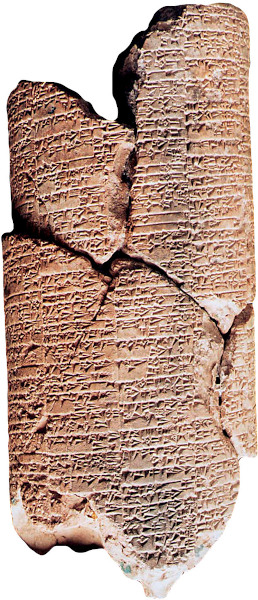
The Sumerian law code of Ur-Nammu—the oldest known code of laws (21st century bc). When Moses gave the people a set of laws, this was not a new idea to them since other law codes have been found from centuries before Moses’ time.
The Schøyen Collection, MS 2064, Oslo and London
Return to the main text.
5:12 as the LORD your God has commanded you. Missing from the parallel verse in Exodus (20:8), this clause reminds the people of the divine origin of the Ten Commandments 40 years earlier at Mount Sinai (vv. 15–16).
5:14 so that your male and female servants may rest. See v. 15; see also note on Ex 20:10.
5:15 Remember. See note on 4:10.
5:16–21 The NT quotes often from this section of the Ten Commandments (see cross references with asterisks on these verses).
5:16 that it may go well with you. Missing from the parallel in Ex 20:12, this clause explains that the life the Lord desires for his people is not to be measured merely in terms of longevity (see note on 4:40).
5:20 See 19:18–19; Lev 19:11–13; 1Ki 21:10,13.
5:22 two stone tablets. See note on Ex 31:18.
5:25 we will die. See notes on Ge 16:13; 32:30.
5:27 We will listen and obey. See note on Ex 19:8.
6:2 fear the LORD. See note on Ge 20:11. enjoy long life. See 4:40; 5:16 and note. By obeying the Lord and keeping his decrees, individual Israelites would enjoy long life in the land, and the people as a whole would enjoy a long national existence there.
6:3 Hear, Israel. See v. 4 and note on 4:1. land flowing with milk and honey. See note on Ex 3:8. The phrase is used 14 times from Exodus through Deuteronomy and 5 times elsewhere in the OT.
6:4–9 This passage in Deuteronomy, along with 11:13–21 and Nu 15:37–41, is known as the Great Shema (Hebrew for “Hear”). It has become the Jewish confession of faith, recited daily by the pious and every Sabbath day in the synagogue. See Mk 12:29–30; see also Mt 22:37–38; Lk 10:27.
6:4 the LORD is one. The truth revealed to Israel that God is one and that this one God created all things, sustains all things and governs all things stood in radical opposition to all the religions of the ancient Near Eastern world. All of Israel’s neighbors had to come to terms in their daily lives with scores of gods, each with its own sphere of influence, its own limitations, its own petty self-interests and its own morally erratic ways. But Israel could live serenely in the knowledge that all things and all times were under the rule of one divine King, whose ways are righteous and whose purpose with them and through them (as Yahweh, their God) is salvation for humankind—from sin and judgment and every evil that has burdened human life. Such serenity in the midst of the ragings of history and all its seeming chaos remains the precious gift of faith for all who know and trust the God of Israel (see article).
The second half of v. 4 can be translated at least four ways, as the NIV text note indicates with its three variants to the text itself. The problem is that the Hebrew contains no explicit verb but simply juxtaposes the four words for “Yahweh,” “our God,” “Yahweh” and “one.” Throughout Jewish and Christian history, this half-verse has been understood as at least teaching some form of monotheistic belief: There is only one true God in the universe. Individuals and entire people groups may worship other entities as gods, and there are certainly angelic and demonic beings in the world, but there is no other Creator of the universe.
The translation, “The LORD our God, the LORD is one,” suggests a second meaning, however. Yahweh is himself a unity, a single and unified Being. This means that he has integrity and is single-minded in his purposes. He can be trusted to carry out his plans and keep his promises. A different Hebrew word for “one” (yaḥid) than is used here could pose problems for the Christian doctrine of the Trinity because it can refer to undifferentiated unity. But the term actually used in the text (‘eḥad) allows for differentiation within unity. That is not to say that Moses consciously taught Trinitarian doctrine here, merely that the word allows for it when the NT later teaches it explicitly.
Go to the Articles Index.
6:5 Love the LORD. Primarily in view here is the love shown by a subject to a king (see note on Ex 20:6). To love King Yahweh is to be his loyal and obedient servant (Israel was the Lord’s kingdom people). Love for God and neighbor (see Lev 19:18; Mk 12:31 and note) is built on the love that the Lord has for his people (see 4:37 and note; 7:8–9,13; 23:5; 1Jn 4:19–21) and on his identification with them. Such love is to be total, involving one’s whole being (see notes on 4:29; Jos 22:5).
6:6 commandments . . . on your hearts. A feature that would especially characterize the “new covenant” (see Jer 31:31–33 and note on 31:33; 2Co 3:3 and note).
6:8–9 Many Jews take these verses literally and tie phylacteries (see note on Mt 23:5) to their foreheads and left arms. They also attach mezuzot (small wooden or metal containers in which passages of Scripture are placed) to the doorframes of their houses. But a figurative interpretation is supported by 11:18–20; Ex 13:9,16. See note on Ex 13:9.
6:10–12 Because the emphasis in Scripture is always on what God does and not on what his people achieve, they are never to forget what he has done for them. See note on 4:10.
6:13 Quoted in part by Jesus in response to Satan’s temptation (Mt 4:10; Lk 4:8). Jesus quoted from Deuteronomy in response to the devil’s other two temptations as well (see notes on v. 16; 8:3). Fear the LORD. See note on Ge 20:11. take your oaths in his name. In ancient Israel’s world, when people appealed to the gods to affirm and uphold their oaths, they singled out the divine power or powers they most revered. For this reason, to take an oath in the Lord’s name was a key sign of loyalty to and trust in him and of the rejection of all other gods, even an implicit denial that they amounted to anything or even existed. The Israelites were to swear oaths in no other name.
6:15 jealous God. See 4:24; 5:9; see also note on Ex 20:5.
6:16 Quoted in part by Jesus in Mt 4:7; Lk 4:12 (see also note on v. 13). as you did at Massah. See 9:22; 33:8; see also note on Ex 17:7.
6:23 brought us out . . . to bring us in. See note on Ex 6:7–8.
6:25 our righteousness. Obedience to the covenant law of God (24:13).
7:1–6 When this passage is carefully examined together with 1Ki 11:1–13; Ezr 9:1–2, 10–12,14, it seems clear that what was prohibited was intermarriage with idolatrous and immoral foreigners (see note on v. 4). On the other hand, outsiders who placed themselves under the Lord’s rule and thus became affiliated with the covenant community were treated for the most part just like ordinary Israelites (see Ex 12:48–49; Lev 17:8–9; 19:33–34; Nu 9:14; 15:13–16,26–31; Dt 16:11–14; cf. Mal 2:11 and note; see also Rahab [Jos 2; 6:17,22–25] and Ruth [the book of Ruth]; see further Isa 56:3 and note; Mt 1:5 and note on 1:3).
7:1 Hittites . . . Jebusites. See 20:17; see also notes on Ge 10:6, 15–18; 13:7; Jos 9:7. seven nations. See note on Ex 3:8.
7:2–5 Make no treaty . . . Do not intermarry . . . Break down their altars. Israel was to have no association—political, social or religious—with the idol worshipers of Canaan (see v. 16; cf. Mal 2:11 and note).
7:2 destroy them totally. See note on 2:34.
7:4 turn your children away . . . to serve other gods. See note on vv. 1–6. The Lord’s command against intermarriage with foreigners was not racially motivated but was intended to prevent spiritual contamination and apostasy (see, e.g., Jos 23:12–13 and notes; 1Ki 11:1–11; Ne 13:25–27).
7:5 altars . . . sacred stones . . . Asherah poles. Objects of Canaanite idolatrous worship (12:3; 16:21–22). See also NIV text note; Ex 34:13,15 and notes.
7:6 holy. Separated from all corrupting people or things and consecrated totally to the Lord (see note on Ex 3:5). treasured possession. See note on Ex 19:5.
7:8 because the LORD loved you. See 4:37 and note.
7:9,12 his covenant of love. See 1Ki 8:23; 1Ch 6:14; Ne 1:5; 9:32; Da 9:4; cf. Ps 89:28; 106:45; Isa 54:10; 55:3; i.e., the covenant in which God pledges on oath to show the Israelites his unfailing love (kindness, mercy; see note on Ps 6:4) in all his ways with them through the vicissitudes of their history so that all his particular promises to them (see vv. 13–15; 19:8–9; 28:1–14; 30:1–10; see also Ge 22:17–18; Lev 26:3–13) might be fulfilled. A closely related phrase is “covenant of peace” (Nu 25:12; Isa 54:10; Eze 34:25; 37:26).
7:9 Know . . . that the LORD . . . is God. See 11:28; Ps 100:3 and notes. thousand generations . . . keep his commandments. See note on Ex 20:6.
7:12–15 The blessings are stated more fully in 28:1–14; 30:1–10.
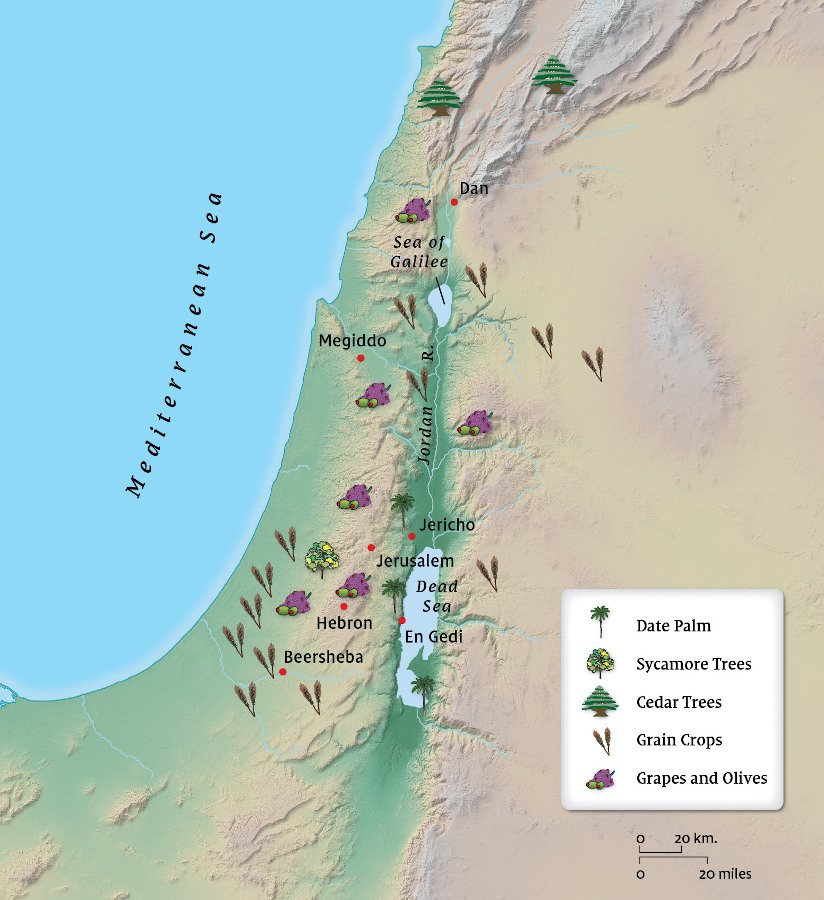
7:13 grain, new wine and olive oil. A common OT summary of the produce of field, vineyard and olive grove (see, e.g., 11:14; 14:23; 18:4; 28:51). See map.
7:15 not inflict . . . diseases. See notes on 28:60; Ex 15:26.
7:18 remember. See note on 4:10.
7:20 hornet. See note on Ex 23:28.
7:22 God will drive out. See note on 3:22. wild animals will multiply. The rapid expulsion of the Canaanites would leave much of the land deserted and therefore open to wild animals.
7:25–26 Cf. the story of Achan (Jos 6:17–19; 7:1,20–25).
7:26 set apart for destruction. See note on 2:34.
8:2 Remember. See note on 4:10. test. See v. 16; see also note on Ge 22:1.
8:3 manna. See v. 16; see also note on Ex 16:31. man does not live on bread alone. See note on 6:13; quoted by Jesus in response to the devil’s temptation (Mt 4:4; Lk 4:4). Bread sustains but does not guarantee life, which is God’s gift to those who trust in and live by his word: his commands and promises (vv. 1,18). God’s discipline (v. 5) of his people by bringing them through the wilderness taught them this fundamental truth. There they were humbled (v. 16; cf. v. 14) by being cast on the Lord in total dependence.
8:7–9 A concise description of the rich and fertile land of promise that the Israelites were about to enter and possess (11:8–12). See maps here and here.
8:9 iron . . . copper. The mountains of southern Lebanon and the regions east of the Sea of Galilee and south of the Dead Sea contain iron. Both copper and iron were plentiful in the part of the Arabah south of the Dead Sea. Some of the copper mines date to the time of Solomon and earlier. Zarethan, located in the Jordan Valley north of the Dead Sea, was a center for bronze works in Solomon’s time (1Ki 7:45–46). Some bronze objects from this site precede the Solomonic period, and today there are copper works at Timnah in the Negev.
8:11 not forget. See note on 4:10; cf. 8:14,19.
8:15 water out of hard rock. See Ex 17:6 and note.
8:16 test. See v. 2; see also note on Ge 22:1.
8:18 remember. See note on 4:10.
9:1 Hear, Israel. See note on 4:1.
9:2 Anakites. See note on 1:28.
9:3 devouring fire. See 4:24 and note. he will subdue them before you . . . you will drive them out. The Lord not only went ahead of the Israelites but also exerted his power alongside them and through them to assure victory. The Lord’s involvement, together with that of the Israelite armies, continues throughout Deuteronomy and the conquest narratives.
9:4 because of my righteousness. See note on 7:8. wickedness of these nations. See note on Ge 15:16.
9:6,13 stiff-necked. See 10:16; 31:27; see also note on Ex 32:9.
9:7,27 Remember. See note on 4:10.
9:9 tablets of the covenant. See notes on Ex 20:1; 34:28.
9:10 two stone tablets . . . finger of God. See Ex 31:18 and note; see also note on Ex 8:19.
9:11–21 See Ex 31:18—32:20 and notes.
9:12–13 your people . . . this people. See note on Ex 17:4.
9:14 blot out their name. See Ex 32:32–33 and notes. The Phoenician cognate of the Hebrew for this phrase appears in a ninth-century bc inscription on a gateway: “If . . . a man . . . blots out the name of Azitawadda from this gate . . . may (the gods) wipe out . . . that man!” (see photo).
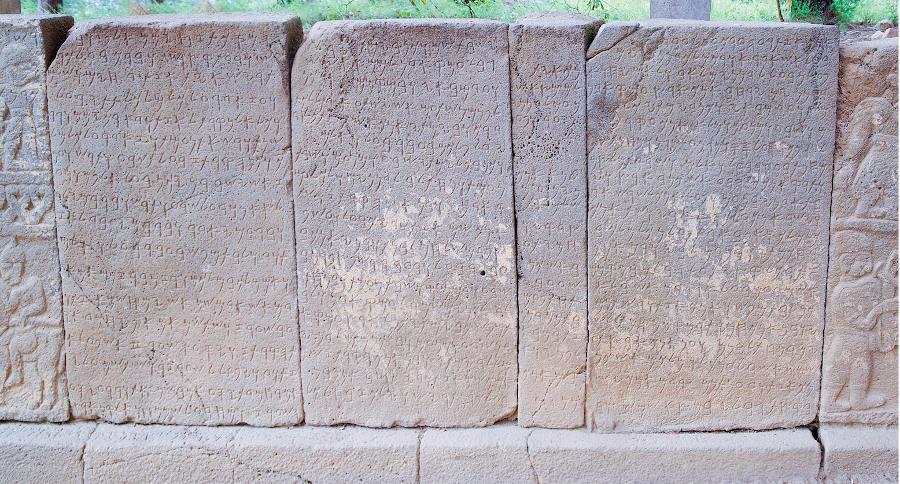
Three versions of Phoenician text as well as some Hittite inscribed on this wall in Karatepe, discovered in 1946. The inscription contains a phrase comparable to “blot out their name” found in Dt 9:14.
A.D. Riddle/BiblePlaces.com
Return to the main text.
9:19 the LORD listened to me. Moses’ intercessory prayer on this occasion (vv. 26–29) ranks among the great prayers for Israel’s national survival (see Ex 32:11–13 and notes; see also Ezr 9:6–15; Ne 9:5–38; Da 9:4–19).
9:22 Taberah. See Nu 11:3 and NIV text note. Massah. See 6:16; 33:8; see also note on Ex 17:7. Kibroth Hattaavah. See Nu 11:34 and NIV text note.
9:23 Kadesh Barnea. See notes on Ge 14:7; Nu 20:1.
9:27 Overlook. See note on Ac 17:30.
10:1–3 ark. The Hebrew word means “chest” or “box” (see NIV text note on v. 1; see also note on Ex 25:10).
10:1 two stone tablets. See note on Ex 31:18.
10:2 put them in the ark. See notes on Ex 16:34; 25:16.
10:3 The order of events here is different from that in Exodus 34–37 (see Introduction to Deuteronomy: Structure and Outline).
10:6–9 A historical parenthesis, apparently stemming from Moses’ prayer for Aaron and the Israelites (9:26–29) and the reference to the ark (vv. 1–5).
10:8 carry the ark. See note on Nu 1:50. to minister . . . to pronounce blessings. See note on 21:5.
10:12 what does the LORD . . . ask of you . . . ? See Mic 6:8 and note. fear the LORD. See note on Ge 20:11. love him. See notes on 4:29,37; 6:5.
10:13 for your own good. See 6:24; see also note on 6:2.
10:15 set his affection . . . loved. See 7:7–8 and note on 7:8. ancestors. The patriarchs (cf. v. 22).
10:16 Circumcise your hearts. God promises to do this in 30:6. See note on Ge 17:10. stiff-necked. See 9:6,13; 31:27; see also note on Ex 32:9.
10:18 fatherless . . . widow . . . foreigner. Deuteronomy’s emphasis on care for the most vulnerable begins here. See note on Ex 22:21–27.
10:20 Hold fast. The Hebrew for this phrase is used elsewhere in relational contexts: e.g., a man is “united” to his wife (Ge 2:24), and Ruth “clung” to Naomi (Ru 1:14). See 4:4; 11:22; 13:4; 30:20.
10:21 He is the one you praise. See Ps 22:3 and note.
10:22 seventy. See notes on Ge 10:2; 46:26–27; see also Ex 1:5. as the stars in the sky. See note on 1:10.
11:1 Love. See note on 6:5. keep. Love and obedience are frequently linked in Scripture (e.g., 6:5–6; Jn 14:15; 1Jn 5:3; see note on Ex 20:2).
11:2–7 Moses continually emphasizes the involvement of his listeners in the Lord’s works of providence and deliverance. In 5:3 it was not the patriarchs (but see NIV text note there: “not only . . . parents”) but they themselves with whom the covenant was made at Sinai. Here it is not their children (vv. 2–6) but they themselves who saw God’s great deeds (v. 7).
11:2 Remember. See note on 4:10.
11:9 live long. See note on 6:2.
11:10 irrigated it by foot. Irrigated with channels fed by foot-powered devices that brought the water of the Nile to the gardens in Egypt, in contrast to the rains that watered Canaan (v. 11).
11:14 autumn and spring rains. The rainy season in Israel begins in October and ends in April.
11:17 shut up the heavens. The all-important seasonal rains (v. 14) were controlled by the Lord—not by Baal, as the inhabitants of Canaan thought (cf. Jer 14:22; Hos 2:8 and notes).
11:22 hold fast. See note on 10:20.
11:24 Every place where you set your foot. See 1:7 and note; Jos 1:3.
11:26–30 The blessings and curses proclaimed on Mount Gerizim and Mount Ebal are detailed in chs. 27–28.
11:28 known. Experienced or acknowledged (see 13:2,6,13; 28:64; 29:26; 32:17; see also note on Ex 6:3).
11:29 Mount Gerizim . . . Mount Ebal. See photo.
11:30 great trees of Moreh. See note on Ge 12:6. Arabah. See note on 1:1. The Canaanites who lived there controlled the territory around Gerizim and Ebal. Gilgal. See Jos 4:19 and note.
12:2 under every spreading tree. See note on 2Ki 16:4.
12:3 altars . . . sacred stones . . . Asherah poles. See note on 7:5.
12:4 in their way. The rituals and accessories of idolatrous worship were not to be used to worship the Lord, the one true God (cf. vv. 29–31). Everything that dishonors him must be eliminated from his people’s worship (see Mic 5:10–14 and note).
12:5 the place the LORD . . . will choose . . . to put his Name. The tabernacle, the Lord’s dwelling place during the wilderness journey, will be located in the city in the promised land where the Lord would choose to dwell. Moses stresses the importance of centralizing the place of worship (ultimately the temple in Jerusalem) as he prepares the people for settlement in the promised land, where the Canaanites had established many places of worship. See vv. 11,14,18,21,26; 14:23–24; 16:2,6,11; 26:2. his Name. See article. Since in the ancient Semitic world “name” often stood for the essence of the thing named, God’s “Name” is equivalent to his presence (see notes on Ex 3:13–15; 23:21; 2Sa 7:13; 1Ki 5:5).
In Deuteronomy 12:5 God says that when Israel comes into the land, they must worship at a central location where “the LORD your God will . . . put his Name.” The “name” of the Lord is the manifestation of his character (see notes on Ex 3:14–15; 34:6–7). It has no separate existence apart from the Lord, but is synonymous with the Lord himself in his gracious manifestation and accessibility to his people. Hence the Jerusalem temple is the earthly residence of his name among his people (74:7; Dt 12:5, 11; 2Sa 7:13), and his people can pray to him by calling on his name (Ps 79:6; 80:18; 99:6; 105:1; 116:4,13,17).
The name of the Lord protects (Ps 20:1; Pr 18:10); the Lord saves by his name (Ps 54:1); and his saving acts testify that his name is near (Ps 52:9). Accordingly, the godly “trust in” his name (Ps 20:7; 33:21), hope in his name (Ps 52:9), “sing praise” to his name (Ps 7:17; 9:2; 18:49) and “rejoice in” his name (Ps 89:16). Both the “love” and the “fear” that belong alone to God are similarly directed toward his name (love: Ps 69:36; 119:132; fear: Ps 61:5; 86:11; 102:15).
Go to the Articles Index.
12:7 rejoice in everything you have put your hand to. The Lord wants his people to enjoy the fruit of their labor, because it is the result of his blessing (see v. 18; cf. Ecc 2:24–25 and note; 5:18–20).
12:8 as we do here today. The Israelites were not able to follow all the procedures of the sacrificial system during the wilderness wandering and conquest periods. Moses was giving directives for their worship and way of life when settled in the land (vv. 10–14). as they see fit. See note on Jdg 17:6.
12:9 resting place. See note on 3:20.
12:11 dwelling for his Name. See note on v. 5.
12:12 rejoice before the LORD. Joy, based on the Lord’s blessings, was to be a major feature of Hebrew life and worship in the promised land (vv. 7,18). Levites . . . have no . . . inheritance. See 10:9; Nu 18:1–8, 20,24 and note on 18:1.
12:13 not . . . anywhere you please. Sacrifices and offerings to the Lord were to be brought only to the central sanctuary, not to the various Canaanite worship sites (see v. 5 and note).
12:15 as if it were gazelle or deer. Animals slaughtered in places other than the designated place (vv. 13–14) may be treated as wild game and eaten regardless of a person’s ceremonial cleanness (v. 22). See note on Lev 4:12.
12:16,24 you must not eat the blood. See notes on Ge 9:4; Lev 17:11.
12:31 burn . . . sons and daughters . . . as sacrifices. See 18:10; see also note on Lev 18:21.
12:32 do not add . . . or take away. See note on 4:2.
13:1–5 Eventual fulfillment is only one test of true prophecy (18:21–22), but the more stringent rule given here guards against intelligent foresight masquerading as prophecy and against coincidental fulfillment of the predictions of false prophets (cf. Isa 8:20).
13:3 testing. See note on Ge 22:1. all your heart. See note on 4:29.
13:4 hold fast. See note on 10:20.
13:5 prophet . . . must be put to death. See 18:20; Jer 28:15–17. You must purge the evil from among you. The purpose was to eliminate the evildoers as well as the evil itself. This command is repeated in 17:7; 19:19; 21:21; 22:21,24; 24:7, and quoted in 1Co 5:13.
13:13 troublemakers. See 1Sa 1:16; 2:12; 25:17. The same Hebrew word is also used, e.g., in 1Sa 10:27; 30:22; 1Ki 21:10,13 (sometimes rendered as “scoundrels” or “worthless”); Job 34:18. Later, this word (beliyya’al in Hebrew) was used as a name for Satan (2Co 6:15; Greek Beliar, a variant of Belial), who is the personification of wickedness and lawlessness.
13:15 destroy it completely. See NIV text note and note on 2:34.
14:1 cut yourselves. A pagan religious custom (1Ki 18:28). shave the front of your heads. Shaving the forehead was a practice of mourners in Canaan.
14:2,21 holy to the LORD. See note on Lev 11:44. The regulations regarding clean and unclean foods were intended to separate Israel from things the Lord had identified as detestable or ceremonially unclean.
14:2 a people holy to the LORD. See Ex 3:5 and note; 19:6. treasured possession. See note on Ex 19:5.
14:3–21 The subject of clean and unclean food is discussed in greater detail in Lev 11 (see notes there).
14:7 camel. See photo. ceremonially unclean. See note on Lev 4:12.
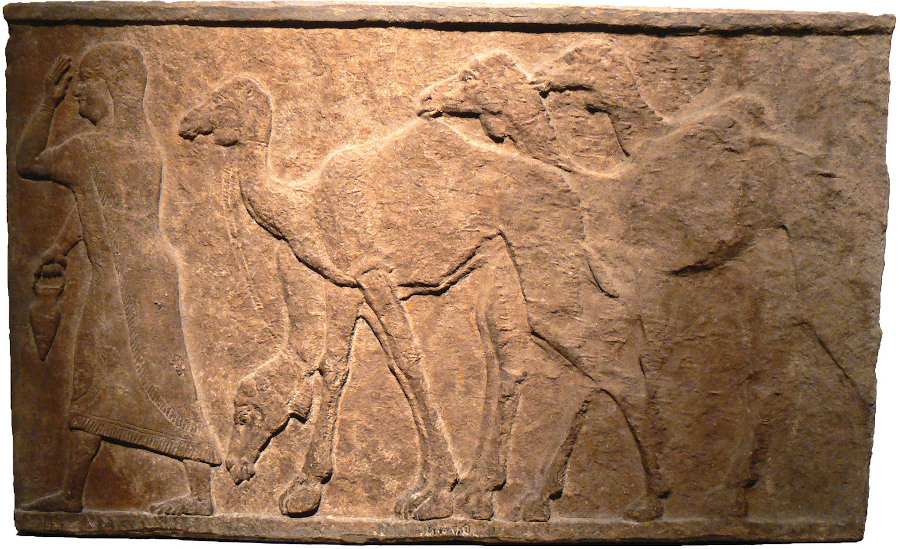
Woman with captured camels (Assyrian, 728 bc). God declares camels to be unclean food in Dt 14:7.
Kim Walton, taken at the British Museum
Return to the main text.
14:21 Do not eat . . . already dead. Because of the prohibition against eating blood, since the dead animal’s blood would not be properly drained (see 12:16,24; see also notes on Ge 9:4; Lev 17:11). Do not cook a young goat in its mother’s milk. See note on Ex 23:19.
14:22–29 See Nu 18:21–29. Taken together, the two passages suggest the following: (1) Annually, a tenth of all Israelite produce was to be taken to the city of the central sanctuary for distribution to the Levites. (2) At that time, at an initial festival, all Israelites ate part of the tithe. (3) The rest, which would be by far the major part of it, belonged to the Levites. (4) Every third year the tithe was gathered in the towns and stored for distribution to the Levites and the less fortunate: foreigners, fatherless and widows (see 26:12; see also note on 10:18). (5) The Levites were to present to the Lord a tenth of their tithe. See note on Lev 27:30.
14:22 set aside a tenth. See notes on Ge 14:20; 28:22.
14:23 dwelling for his Name. See note on 12:5.
14:25 silver. Pieces of silver of various weights were a common medium of exchange, but not in the form of coins (see note on Ge 20:16).
15:1 every seven years. See Ex 23:10–11; Lev 25:1–7 and note on 25:4.
15:3 require payment from a foreigner. Since foreigners were not subject to the command to allow their fields to lie fallow during the seventh year, they would probably be financially able to pay their debts if asked to do so.
15:4 there need be no poor people among you. Because of the Lord’s reward for obedience (vv. 4–6) and because of the sabbath-year arrangement (vv. 7–11). This “year for canceling debts” (v. 9) gave Israelites who had experienced economic reversals a way to gain release from indebtedness and so, in a measure, a way to equalize wealth. Cf. the provisions of the Year of Jubilee (see Lev 25:8–38 and notes).
15:6 you will lend. If Israel failed to follow the Lord’s commands, the reverse would be true (28:43–44).
15:11 There will always be poor people. See also Jesus’ statement in Mk 14:7 (and note there). Even in the best of societies under the most enlightened laws, the uncertainties of life and the variations among people result in some of them becoming poor. In such cases the Lord commands that generosity and kindness be extended to them (see note on Ex 22:21–27).
15:15 Remember. See note on 4:10.
15:16 because he loves you. In Ex 21:5 an additional reason is given: The servant may want to stay with his family.
15:17 take an awl and push it through his earlobe. See note on Ex 21:6.
15:18 worth twice as much. A Hebrew servant worked twice as many years as the Code of Hammurapi required for release from debt (see chart). Other ancient legal texts, however, support “equivalent to” as a possible translation of the phrase.
15:19 Set apart . . . every firstborn male. Because the Lord saved his people from the plague of death on the firstborn in Egypt (see Ex 12:12, 29; 13:2,15 and note on 13:2).
15:21 If an animal has a defect . . . you must not sacrifice it. See note on Lev 1:3.
15:22 ceremonially unclean. See note on Lev 4:12.
15:23 See 12:16,24; see also notes on Ge 9:4; Lev 17:11.
16:1–17 See chart; see also Ex 23:14–19; 34:18–26; Lev 23:4–44; Nu 28:16—29:40 and notes.
16:1–8 See Ex 12:1–28; 13:1–16 and notes.
16:3,12 remember. See note on 4:10.
16:7 to your tents. To wherever they were staying while at the festival, whether in permanent or temporary quarters.
16:8 assembly. That is, the closing assembly (Lev 23:36).
16:9 seven weeks. Symbolizing the full season of grain harvest.
16:10 giving . . . in proportion to. See v. 17; cf. 1Co 16:2; 2Co 8:12 and notes.
16:15 your joy will be complete. As a result of God’s blessing (cf. Jn 3:29; 15:11; 16:24; Php 2:2; 1Jn 1:4; 2Jn 12).
16:16 Three times a year. The three annual pilgrimage festivals (see Ex 23:14, 17; 34:23; see also chart).
16:17 a gift in proportion. See 1Co 16:2; 2Co 8:12 and notes.
16:18–20 Cf. 1:9–18; Ex 18:13–26.
16:19 Israel must emulate the Lord in these matters (see 10:17; see also Ex 23:8 and note).
16:21–22 Asherah pole . . . sacred stone. See note on 7:5.
17:1 defect or flaw. See note on Lev 1:3.
17:3 bowing down to . . . the sun or the moon or the stars. See 4:19 and note.
17:6 two or three witnesses. A further specification of the law set forth in Nu 35:30 (see note there). See also 19:15; cf. Mt 18:16; 2Co 13:1; 1Ti 5:19; Heb 10:28.
17:7 You must purge the evil from among you. See v. 12; see also note on 13:5.
17:14 a king . . . like all the nations around us. Moses, Joshua and a succession of judges were chosen directly by the Lord to govern Israel on his behalf. As Gideon later said, “The LORD will rule over you” (Jdg 8:23; see note there). Moses here, however, anticipates a time when the people would ask for a king (1Sa 8:4–9) contrary to the Lord’s ideal for them (see notes on 7:2–5; 1Sa 8:1—12:25; see also Lev 20:23). So Moses gives guidance concerning the eventual selection of a king (vv. 14–20).
17:16–17 The very things that later kings were guilty of, beginning especially with Solomon (1Ki 4:26; 10:14–22; 11:1–4)—except that they did not make Israel return to Egypt (but see Jer 42:13—43:7).
17:18 write for himself . . . a copy of this law. As a sign of submission to the Lord as his King, and as a guide for his rule in obedience to his heavenly Suzerain. This was required procedure for vassal kings under the suzerainty treaties among the Hittites and others before and during this period (see note on 31:9). See chart. copy of this law. See Introduction: Title.
17:20 not consider himself better. The king was not above God’s law, any more than were the humblest of his subjects.
18:1 no allotment or inheritance. No private ownership of land. Towns and surrounding pasturelands were set aside for the use of the Levites (Jos 21:41–42), as were the tithes and parts of sacrifices (see 14:22–29; Lev 27:30 and notes; Nu 18:21–29).
18:4 firstfruits. See Ex 23:19 and note; 34:26; Lev 23:10–11; Nu 15:18–20; 18:12–13.
18:9 detestable ways of the nations. What follows is the most complete list of magical or spiritistic arts in the OT. All were practiced in Canaan, and all are condemned and prohibited. The people are not to resort to such sources for their information, guidance or revelation. Rather, they are to listen to the Lord’s true prophets (vv. 14–22; Isa 8:19–20).
18:10 sacrifices their son or daughter. See 12:31; 2Ki 16:3; see also note on Lev 18:21.
18:12 these things. Verses 10–11 refer to various methods people use in divining—employing demonic, occult, supernatural means to discover the will of their false gods and the course of future events. The Lord describes them as “detestable” (see note on Lev 20:13).
18:15 prophet like me. See 34:10. Verse 16, as well as the general context (see especially vv. 20–22), indicate that a series of prophets is meant. At Horeb (Mount Sinai) the people requested that Moses take the message from God and deliver it to them (see Ex 20:19 and note). But now that Moses is to leave them, he says that another spokesman will take his place, and then another will be necessary for the next generation. This is therefore a collective reference to the prophets who will follow. As such, it is also the basis for later Messianic expectation and receives a unique fulfillment in Jesus (see Jn 1:21, 25,45; 5:46; 6:14; 7:40; Ac 3:22–26; 7:37).
18:16 See Ex 20:18–21; Heb 12:18–21 and notes.
18:18 my words in his mouth. See Ex 4:15–16; see also notes on Ex 7:1–2; Jer 1:9.
18:20 prophet who presumes to speak. See note on 13:1–5. is to be put to death. See 13:5; Jer 28:15–17.
19:1–13 See 4:41–43; Nu 35:9–28; Jos 20 and notes.
19:14 boundary stone. See photos here and here. Such stones were set up to indicate the perimeters of fields and landed estates. Moving them illegally to increase one’s own holdings was considered a serious crime (see 27:17; Pr 15:25 and note). Amenemope’s (Egyptian) Wisdom (see chart) has a similar prohibition in ch. 6 of that work.
19:18 giving false testimony. See 5:20; Ex 20:16 and note; Lev 19:11–12; 1Ki 21:10,13.
19:19 You must purge the evil from among you. See note on 13:5.
19:21 life for life. See notes on Ex 21:23–25; Lev 24:20; see also Mt 5:38–42.
20:2 priest shall . . . address. Priests sometimes accompanied the army when it went into battle (see, e.g., Jos 6:4–21; 2Ch 20:14–22).
20:3 Hear, Israel. See note on 4:1.
20:5–8 Cf. the curses in 28:30. Let him go home. Israel was to trust not in the size of its army but in the Lord (see notes on 2Sa 24:1; Ps 30:6–7). The number of exemptions from military duty was sometimes extensive (see, e.g., Jdg 7:2–8).
20:10–15 Rules regarding warfare against nations outside the promised land.
20:11 subject to forced labor. A fulfillment of Noah’s curse on Canaan (see Ge 9:25 and note).
20:17 Hittites . . . Jebusites. See 7:1; see also notes on Ge 10:6, 15–18; 13:7; Jos 9:7.
20:19 do not destroy its trees. The failure of later armies to follow this wise rule stripped bare much of the land (though the scarcity of woodlands in the region today is of relatively recent origin).
Major Social Concerns in the Covenant
1. Personhood
Everyone’s person is to be secure (Ex 20:13; Dt 5:17; Ex 21:16–21, 26–32; Lev 19:14; Dt 24:7; 27:18).
2. False Accusation
Everyone is to be secure against slander and false accusation (Ex 20:16; Dt 5:20; Ex 23:1–3, 6–8; Lev 19:16; Dt 19:15–21).
3. Women
No woman is to be taken advantage of within her subordinate status in society (Ex 21:7–11, 20,26–32; 22:16–17; Nu 27:1–11; 36:1–12; Dt 21:10–14; 22:13–30; 24:1–5).
4. Punishment
Punishment for wrongdoing shall not be excessive so that the culprit is dehumanized (Dt 25:1–3).
5. Dignity
Every Israelite’s dignity and right to be God’s servant are to be honored and safeguarded (Ex 21:2, 5–6; Lev 25; Dt 15:12–18).
6. Inheritance
Every Israelite’s inheritance in the promised land is to be secure (Lev 25; Nu 27:5–7; 36:1–9; Dt 25:5–10).
7. Property
Everyone’s property is to be secure (Ex 20:15; Dt 5:19; Ex 21:33–36; 22:1–15; 23:4–5; Lev 19:35–36; Dt 22:1–4; 25:13–15).
8. Fruit of Labor
Everyone is to receive the fruit of their labors (Lev 19:13; Dt 24:14; 25:4).
9. Fruit of the Ground
Everyone is to share the fruit of the ground (Ex 23:10–11; Lev 19:9–10; 23:22; 25:3–55; Dt 14:28–29; 24:19–21).
10. Rest on Sabbath
Everyone, down to the humblest servant and the resident foreigner, is to share in the weekly rest of God’s Sabbath (Ex 20:8–11; Dt 5:12–15; Ex 23:12).
11. Marriage
The marriage relationship is to be kept inviolate (Ex 20:14; Dt 5:18; see also Lev 18:6–23; 20:10–21; Dt 22:13–30).
12. Exploitation
No one, however disabled, impoverished or powerless, is to be oppressed or exploited but is to be cared for (Ex 22:21–27; Lev 19:14, 33–34; 25:35–36; Dt 23:19; 24:6,12–15,17; 27:18).
13. Fair Trial
Everyone is to have free access to the courts and is to be afforded a fair trial (Ex 23:6–8; Lev 19:15; Dt 1:17; 10:17–18; 16:18–20; 17:8–13; 19:15–21).
14. Social Order
Every person’s God-given place in the social order is to be honored (Ex 20:12; Dt 5:16; Ex 21:15, 17; 22:28; Lev 19:3, 32; 20:9; Dt 17:8–13; 21:15–21; 27:16).
15. Law
No one shall be above the law, not even the king (Dt 17:18–20).
16. Animals
Concern for the welfare of other creatures is to be extended to the animal world (Ex 23:5, 11; Lev 25:7; Dt 22:4, 6–7; 25:4).
Go to the Charts Index.
21:5 to minister. To officiate at the place of worship before the Lord on behalf of the people (10:8; 18:5). to pronounce blessings. See Nu 6:22–27.
21:6 wash their hands. Symbolic of a declaration of innocence (v. 7; see Mt 27:24).
21:10 take captives. The enemies here were those outside Canaan (20:14–15), so they were not subject to total destruction (see 20:17 and NIV text note there).
21:12 shave her head. Indicative of leaving her former life and beginning a new life, or perhaps symbolic of mourning (v. 13; see, e.g., Jer 47:5; Mic 1:16) or of humiliation (see note on Isa 7:20). For cleansing rites, see Lev 14:8; Nu 8:7 and note; cf. 2Sa 19:24.
21:14 dishonored. Probably here refers to the man forcing the woman to have sexual intercourse (22:24,29; Ge 34:2; Jdg 19:24; 20:5; 2Sa 13:12, 14, 22,32; La 5:11; Eze 22:10–11).
21:15 two wives. See notes on Ge 4:19; 25:6.
21:16 in preference to. The order of birth rather than parental favoritism governed succession, though the rule was sometimes set aside with divine approval (cf., e.g., Jacob and Solomon).
21:17 double share. In Israel the oldest son enjoyed a double share of the inheritance. Parallels to this practice come from Nuzi, Larsa in the Old Babylonian period and Assyria in the Middle Assyrian period (see chart). Receiving a double portion of an estate was also tantamount to succession. Thus Elisha succeeded Elijah (see 2Ki 2:9 and note). first sign of his father’s strength. The first result of a man’s procreative activity.
21:18 stubborn and rebellious . . . does not obey. In persistent, wicked defiance of the fifth commandment (see 5:16; Ex 20:12 and note).
21:21 stone him to death. See 5:16; 27:16; Ex 21:15,17. You must purge the evil from among you. See note on 13:5.
21:22 put to death and . . . exposed on a pole. The offender was first executed, then the body was impaled on a pole (see Ge 40:19; Est 2:23 and note).
21:23 not leave the body hanging on the pole overnight. Prolonged exposure would give undue attention to the crime and the criminal, and would desecrate the land. under God’s curse. God had condemned murder, and hanging on a pole symbolized divine judgment and rejection. Christ accepted the full punishment of our sins, thus becoming “a curse for us” (Gal 3:13; see note there).
22:1 take it back. See vv. 3–4. The biblical legislation was intended not only to punish criminal behavior but also to express concern for people and their possessions. See chart.
22:5 Probably intended to prohibit practices such as transvestism and homosexual acts, especially under religious auspices. The God-created differences between men and women are not to be disregarded (Lev 18:22; 20:13).
22:9–11 See note on Lev 19:19.
22:12 tassels. See note on Nu 15:38; cf. Mt 23:5.
22:14 proof of her virginity. A blood-stained cloth or garment (see, e.g., vv. 15,17,20).
22:15 elders at the gate. See 21:19; 25:7; see also notes on Ge 19:1; Ru 4:1; La 5:14.
22:19 hundred shekels of silver. A heavy fine—several times what Hosea paid to buy Gomer back (Hos 3:2) or what Jeremiah paid for the field at Anathoth (Jer 32:9). It may have been about twice the average bride-price (see note on v. 29). The high fine, in addition to the no-divorce rule, was intended to restrain not only a husband’s charges against his wife but also easy divorce. shekels. See note on Ge 20:16.
22:21,24 You must purge the evil from among you. See v. 22; see also note on 13:5.
22:29 fifty shekels of silver. Probably equaled the average bride-price, which must have varied with the economic status of the participants (see note on Ex 22:16). He must marry the young woman. Although shocking to modern readers, in this culture the command was intended to ensure that the woman was provided for after being violated. The social stigma now attached to her would otherwise have prevented her from being married.
22:30 his father’s wife. Refers to a wife other than his mother (27:20).
23:1 For blessings on eunuchs in later times, see Isa 56:4–5; Ac 8:26–39.
23:2–3 not even in the tenth generation. Perhaps meaning forever, since ten is symbolic of completeness or finality. In v. 6 the equivalent expression is “as long as you live.”
23:4 Balaam son of Beor. See Nu 22:4—24:25 and notes.
23:6 See the prophets’ denunciation of Moab and Ammon (Isa 15–16; Jer 48:1—49:6; Eze 25:1–11; Am 1:13—2:3; Zep 2:8–11).
23:7 Edomite . . . related to you. Edom (Esau) is often condemned for his hostility against his “brother” Jacob (Israel; see Am 1:11; Ob 10; see also notes on Ge 25:22,26).
23:9–14 Purity rules for Israel’s military camps. For similar rules for the people in general, see Lev 15 and notes.
23:14 Your camp must be holy. Even as the Lord is holy (see Lev 11:44 and note).
23:15 If a slave has taken refuge. A foreign slave seeking freedom in Israel.
23:17–18 See notes on Ge 38:21; Ex 34:15; Jdg 2:17; 1Ki 14:24; Mic 1:7.
23:18 male prostitute. See NIV text note. This Hebrew word is often associated with moral or spiritual impurity (cf. Mt 7:6 and note; 15:26; Php 3:2; Rev 22:15 and note).
23:19 interest. See note on Ex 22:25–27.
23:20 charge a foreigner. A foreign merchant would come into Israel for financial advantage and so would be subject to paying interest.
23:21–23 See notes on Nu 30; Ecc 5:1–7.
24:1–4 In the books of Moses, divorce was regulated (Lev 21:7, 14; 22:13; Nu 30:9). Jesus commented on the law of 24:1 in Mt 5:31–32 (see note on Mt 19:3). He also cited the higher law of creation (Mt 19:3–9).
24:5 any other duty. Military or governmental. happiness. Marital bliss was held in high regard (cf. Pr 5:18; Ecc 9:9).
24:6 millstones. Used for grinding grain for flour and daily food (see note on Jdg 9:53).
24:7 as a slave. Cf. 23:15. You must purge the evil from among you. See note on 13:5.
24:8 defiling skin diseases. See NIV text note; see also note on Lev 13:2.
24:9,18,22 Remember. See note on 4:10.
24:10–13 See notes on 6:25; Ex 22:26–27.
24:16 each will die for their own sin. See Eze 18:4 and note.
24:17–18 See 10:18–19. When the Israelites were in trouble, the Lord helped them. Therefore they were not to take advantage of others in difficulty.
24:19–21 See note on Lev 19:9–10.
25:3 not . . . more than forty lashes. Beating could subject the culprit to abuse, so the law kept the punishment from becoming arbitrary. Cf. Paul’s experience in 2Co 11:24–25 (see note there).
25:4 Applied to ministers of Christ in 1Co 9:9–10; 1Ti 5:17–18. treading out the grain. See notes on Ge 50:10; Ru 1:22.
25:5–6 The continuity of each family and the decentralized control of land through family ownership were basic to the Mosaic economy (see note on Ge 38:8).
25:7 if a man does not want to marry his brother’s wife. See vv. 8–10; note the experiences, with some variations, described in Ge 38:8–10; Ru 4:1–12. elders at the town gate. See 21:19; 22:15; see also notes on Ge 19:1; Ru 4:1.
25:11–12 Cf. Ex 21:22–25 and notes.
25:13–16 See note on Lev 19:35.
25:14 measures. Of quantity.
25:17 Remember. See note on 4:10. Amalekites. See Ex 17:8–16; Nu 14:45; 1Sa 15:2–3; 30:1–20.
25:18 fear of God. See note on Ge 20:11.
26:1 inheritance. See note on Ex 15:17.
26:2 firstfruits. The offering described here occurred only once and must not be confused with the annual offerings of firstfruits (see 18:4 and note). the place the LORD . . . will choose as a dwelling for his Name. See note on 12:5.
26:5 a wandering Aramean. Or “an Aramean headed for ruin”; a reference to Jacob, who had wandered from southern Canaan to Harran in Aram (see note on Ge 10:22 and map) and back (Ge 27–35) and who later migrated to Egypt (Ge 46:3–7). He also married two Aramean women (Ge 28:5; 29:16,28). The Arameans were a Semitic people who spoke a form of the Aramaic language (see also Ge 22:23–24 and note; 25:20; 31:20,24; 1Ch 18:5 and note). with a few people . . . became a great nation. See Ex 1:5,7 and note on 1:7.
26:11 rejoice. See note on 12:12.
26:16 with all your heart . . . soul. See note on 4:29.
26:17 The terminology is that of a covenant or treaty, involving a renewal of Israel’s vow that the Lord was God and that they would obey him (see 5:27; see also note on Ex 19:8).
26:18 treasured possession. See note on Ex 19:5.
26:19 a people holy to the LORD. See 14:2 and note.
27:2–4 set up . . . stones. Setting up stones inscribed with messages to be remembered was a common practice in the ancient Near East. Many such stones have been uncovered by archaeologists. coat them with plaster. So that the writing inscribed on them would stand out clearly (v. 8).
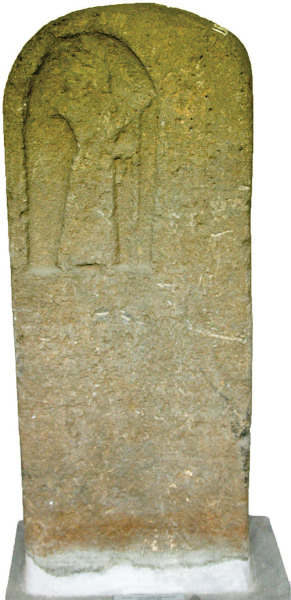
Example of a standing or boundary stone (19:14) with Phoenician inscription, dating to the 8th century bc.
Gaziantep Museum of Archaeology. A.D. Riddle/BiblePlaces.com
Return to the main text.
27:3,8 all the words of this law. The stipulations (see note on Ex 20:1) of the covenant that Moses’ reaffirmation contained.
27:4 Mount Ebal. See note on Jos 8:30.
27:5 Build . . . an altar of stones. Different from the altars of the tabernacle, both in form and in use (see note on Ex 20:25; see also photo).
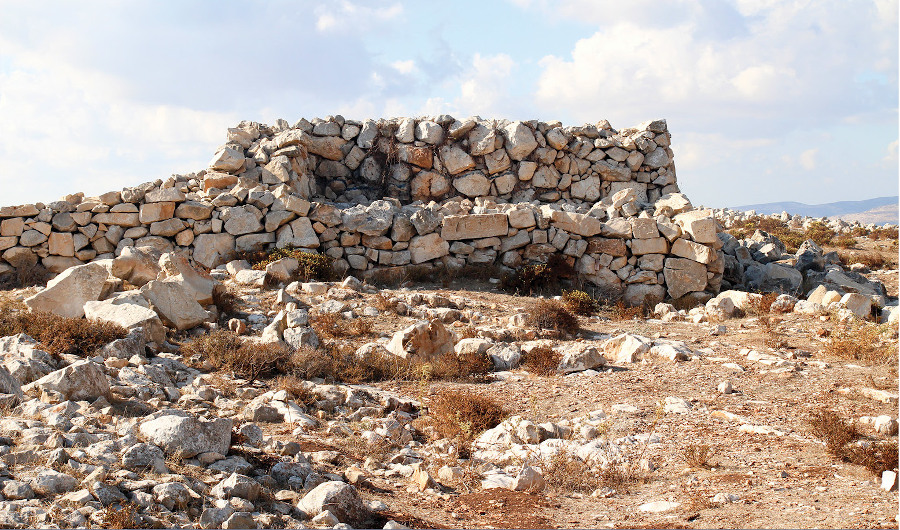
27:9 have . . . become the people of the LORD. The language of covenant renewal.
27:12 these tribes shall stand on Mount Gerizim. All six were descendants of Jacob by Leah and Rachel (Ge 35:23–24). See 1:30 and note. Mount Gerizim. See note on Jn 4:20. to bless. No blessings appear in vv. 15–26, which consist entirely of 12 curses (28:15–68). Blessings, however, are listed and described in 28:1–14.
27:13 these tribes shall stand on Mount Ebal. See photo. Reuben and Zebulun were descendants of Jacob by Leah; the rest were his descendants by the female servants Zilpah and Bilhah (Ge 35:23,25–26).
27:15 makes an idol. In violation of the first and second commandments of the Decalogue (see notes on Ex 20:1,4). See 4:28; 5:6–10; 31:29; Isa 40:19–20; 41:7; 44:9–20; 45:16; Jer 10:3–9; Hos 8:4–6; 13:2. Amen! Not simply approval but a solemn, formal assertion that the people accept and agree to the covenant with its curses and blessings (see vv. 16–26).
27:16 See 5:16; 21:18,21; Ex 20:12 and notes.
27:20 See 22:30; Lev 18:8 and notes.
27:21 See Ex 22:19 and note; Lev 18:23; 20:15–16.
27:22 See Lev 18:9,11 and note.
27:24–25 See 5:17; Ex 20:13 and note; 21:12; Lev 24:17,21.
27:26 Quoted in Gal 3:10 to prove that humankind is under a curse because no one follows the law of God fully (cf. Jas 2:10; 1Jn 1:8,10).
Jewish tradition, as far back as scholars and historians can trace it, has kept the five books attributed to Moses, Genesis through Deuteronomy, as some kind of compositional and theological unity. During the rise of modern biblical criticism over the last two centuries, that unity has often been questioned, though sometimes unnecessarily. At the same time, stylistic and thematic similarities between Deuteronomy, Joshua, Judges-Ruth, 1-2 Samuel and 1-2 Kings have often been noted. Those who have discerned the closest parallels between Deuteronomy and Joshua have spoken of a Hexateuch (the six books of Genesis through Joshua) rather than the Pentateuch. Others have joined the narrative framework of Deuteronomy with Joshua through Kings to speak of a Deuteronomistic history.
Irrespective of the questions source criticism tries to address, there is no doubt that a theological unity pervades Deuteronomy through 2 Kings. As God renews the Mosaic covenant when the Israelites are poised to take possession of the promised land, he stresses that his blessings of life in the land, in peace and prosperity, as an independent people free from occupation by foreign nations, will depend on the measure of obedience of his people to his law, and especially on the godliness of Israel’s leaders. To the extent that the people, and especially their leaders, disobey the law, they will eventually experience famine, drought, poverty or attack from their enemies (Dt 28).
Joshua falls neatly into two halves (chs. 1–12, 13–24) that stress the corresponding successes and failures of Israel in conquering Canaan. Judges contains numerous cycles of Israel’s disobedience, punishment, repentance and deliverance with each new judge. Among the kings, Saul is more faithless than faithful, David more faithful than faithless, and Solomon has years of faithfulness, followed by a decline toward the end of his life. The kings of the divided monarchy are all labeled according to whether they did good or evil in God’s eyes.
The so-called prosperity gospel today often appeals to this Deuteronomistic theology in promising health and wealth to faithful Christians without recognizing that it was a unique arrangement with ancient Israel, applied more to the nation as a whole than to individuals, and acknowledged numerous exceptions at the individual level.
Go to the Articles Index.
28:2 these blessings. The opposites of the curses in vv. 15–44 (compare especially vv. 3–6 with vv. 16–19).
28:5,17 basket . . . kneading trough. Used for storage and for the preparation of foods, particularly bread.
28:7 For the opposite, see v. 25.
28:9 establish you as his holy people. See 7:6 and note.
28:12 the heavens, the storehouse. For the heavens as the storehouse of rain, snow, hail and wind, see Job 38:22; Ps 135:7; Jer 10:13; 51:16. You will lend. For the opposite, see v. 44; see also note on 15:6.
28:13 the head, not the tail. For the opposite, see v. 44.
28:16–19 The opposites of vv. 3–6 (see note on vv. 1–14).
28:23 sky . . . bronze . . . ground . . . iron. No rain would pierce the sky or penetrate the ground (v. 22).
28:25 For the opposite, see v. 7.
28:27 boils of Egypt. See note on Ex 9:9.
28:30–33 See Mic 6:14–15; Hag 1:6 and note.
28:30 See 20:5–8 and note; contrast Isa 65:21–22.
28:49 ends of the earth. An indefinite figurative expression meaning “far away”—anywhere from the visible horizon to the outer perimeter of the then-known world. eagle swooping down. Later used to symbolize the speed and power of the Assyrians (Hos 8:1) and Babylonians (Jer 48:40; 49:22). whose language you will not understand. The Lord’s threat was fulfilled through the actions of Assyria and Babylonia, whose languages, though related to Hebrew, were not understood by the average Israelite (see Isa 28:11; 33:19 and note; cf. 1Co 14:21).
28:53 suffering your enemy will inflict on you during the siege. The repetition of the clause (vv. 55,57) emphasizes the distress that the Israelites would suffer if they refused to obey the Lord. you will eat . . . sons and daughters. For the actualizing of this curse, see 2Ki 6:24–29; La 2:20; 4:10; cf. Zec 11:9 and note.
28:58 words of this law. See note on 31:24. this glorious and awesome name—the LORD. See article.
28:60 diseases of Egypt. Those brought on the Egyptians during the plagues (7:15; Ex 15:26).
28:61 Book of the Law. See note on 31:24.
28:62 as the stars in the sky. See 1:10; see also notes on 1:10; Ge 13:16; 15:5.
28:64 will scatter you. Experienced by Israel in the Assyrian (722–721 bc) and Babylonian (586 bc) exiles (2Ki 17:6; 25:21).
28:68 a journey I said you should never make again. See 17:16; Ex 13:17; Nu 14:3–4.
29:2 Your eyes have seen. Only those who were less than 20 years old (Nu 14:29) when Israel followed the report the majority of spies gave at Kadesh Barnea and refused to enter Canaan would have actually experienced life in Egypt before the exodus. But Moses is speaking to the people as a nation and referring to the national experience (see note on 5:3).
29:4 Quoted in Ro 11:8 and applied to the partial hardening of Israel.
29:7 Sihon . . . Og. See 1:4 and note.
29:8 gave it as an inheritance. See 3:12–17.
29:9–15 A clear summary of the nature of covenant reaffirmation.
29:13 his people . . . your God. See note on Zec 8:8.
29:17 idols. See note on Lev 26:30.
29:18 root . . . that produces such bitter poison. The poison of idolatry, involving the rejection of the Lord (see Ex 20:3–4; 34:15 and notes).
29:19 oath. God’s covenant with his people (vv. 12–14). watered land . . . dry. A disaster of major proportions is indicated (vv. 20–21).
29:20 The LORD will never be willing to forgive them. As long as they persist in this attitude (v. 19), and so not contradicting 2Pe 3:9 (“not wanting anyone to perish”). Peter, too, says that those who deny the “sovereign Lord” bring “swift destruction on themselves” (2Pe 2:1). See note on 2Pe 3:9. this book. See note on 31:24. blot out their names. See 9:14 and note.
29:21 Book of the Law. See note on 31:24.
29:23 destruction of Sodom. See Ge 19:24–25; see also notes on Ge 10:19; 13:10.
29:27 this book. See note on 31:24.
29:28 as it is now. This would be said when Israel was in exile (vv. 22–25).
29:29 secret things. The hidden events of Israel’s future relative to the blessings and curses; but the phrase can also have wider application to other things not yet revealed. things revealed. Primarily the “words of this law.”
30:2,6,10 with all your heart and . . . soul. See note on 4:29.
30:3 restore your fortunes. See NIV text note.
30:6 circumcise your hearts. See 10:16; see also note on Ge 17:10. love him. See 6:5 and note.
30:7 curses on your enemies. Cf. Ge 12:3.
30:9 your ancestors. The patriarchs (v. 20).
30:10 Book of the Law. See note on 31:24.
30:12,14 It is not up in heaven . . . the word is very near you. Moses declares that understanding, believing and obeying the covenant were not beyond them. Paul applies this passage to the availability of the “message concerning faith” (Ro 10:8; see Ro 10:6–10).
30:16 love . . . keep. Love obeys (see notes on 6:5; 11:1; cf. Jn 14:15 and note).
30:19 I call the heavens and the earth as witnesses. Personification. The typical ancient covenant outside the OT contained a list of gods who served as “witnesses” to its provisions. The covenant in Deuteronomy was witnessed by “the heavens and the earth” (see 31:28; 32:1; see also notes on Ps 50:1; Isa 1:2).
30:20 hold fast. See note on 10:20. the LORD is your life. When they chose the Lord, they chose life (v. 19). In 32:46–47 “all the words of this law” are said to be their “life.” The law, the Lord and life are bound together. “Life” in this context refers to all that makes life rich, full and productive—as God created it to be (cf. Lev 18:5; Jn 10:10 and notes).
31:2 no longer able to lead. Not a reference to physical disability (34:7). Because of his sin, the Lord did not allow Moses to lead the people into Canaan (see 1:37; 3:23–27; 4:21–22; 32:48–52; Nu 20:2–13 and notes).
31:4 what he did to Sihon and Og. See 2:26—3:11; see also note on 1:4.
31:6 Be strong and courageous. The Lord’s exhortation, often through his servants, to the people of Israel (Jos 10:25), to Joshua (vv. 7,23; Jos 1:6–7, 9,18), to Solomon (1Ch 22:13; 28:20) and to Hezekiah’s military officers (2Ch 32:7). By trusting in the Lord and obeying him, his followers would be victorious in spite of great obstacles. he will never leave you nor forsake you. See v. 8; Jos 1:5; 1Ki 8:57; see also note on Ge 28:15. The clause is quoted in the first person in Heb 13:5 and applied to God’s faithfulness in providing for the material needs of his people.
31:9 wrote down this law and gave it to the Levitical priests. Ancient treaties specified that a copy of the treaty was to be placed before the gods at the religious centers of the nations involved. For Israel, that meant to place it in the ark of the covenant (see notes on 33:9; Ex 16:34; 31:18).
31:10 every seven years. See 15:4 and note; Ex 23:10–11; Lev 25:1–7; see also chart (“Tabernacles”).
31:11 place he will choose. See note on 12:5. read this law before them. Reading the law to the Israelites (and teaching it to them) was one of the main duties of the priests (33:10; Mal 2:4–9).
31:12 fear the LORD. See notes on Ge 20:11; Ps 34:8–14. words of this law. See note on v. 24.
31:14 I will commission him. See v. 23; cf. Nu 27:18–23 and notes on 27:18,20.
31:16 prostitute themselves. See Ex 34:15 and note.
31:17–18 hide my face. See 32:20; see also note on Ps 13:1.
31:19 write down this song and teach it. See v. 22; 31:30—32:44 and note.
31:23 Be strong and courageous. See note on v. 6.
31:24 words of this law from beginning to end. The book of Deuteronomy up to this place (see note on v. 9).
31:26 place it beside the ark. See note on v. 9.
31:27 stiff-necked. See 9:6,13; 10:16; see also note on Ex 32:9.
31:28 the heavens and the earth to testify. See note on 30:19.
31:29 what your hands have made. A reference to idols (see 4:28; 27:15 and note).
31:30—32:44 The song of Moses (see notes on Ex 15:1–18; Rev 15:3) set within the narrative frame of 31:30 and 32:44. The song may be outlined as follows: (1) summoning of covenant witnesses and description of the covenant God (32:1–4), (2) charges against the people (32:5–6), (3) review of God’s covenant benefits (32:7–14), (4) the people’s disobedience to the covenant stipulations (32:15–18), (5) covenant curses for such disobedience (32:19–27), (6) the impotence of false gods (32:28–38) and (7) the Lord’s vindication and vengeance (32:39–43).
32:1 Listen, you heavens. For similar introductions see Isa 1:2 and note; 34:1; Mic 1:2; 6:1–2.
32:4 He is the Rock. A major theme of the song of Moses (see vv. 15,18,30–31; see also notes on Ge 49:24; Ps 18:2).
32:5 warped and crooked generation. See Php 2:15 and note.
32:6 Father. Reflects God’s close relationship with Israel as the one who brought them into being (Isa 63:16; 64:8).
32:7 Remember the days of old. See note on 4:10.
32:8 Most High. The only occurrence in Deuteronomy of this title for God (see note on Ge 14:19). It emphasizes the Lord’s sovereignty over all creation. gave the nations their inheritance. See Ge 10. divided all mankind. See Ge 10 again; the consequence of the action in Ge 11:1–9 (see note there). according to the number. Perhaps corresponding to the number (70; see 10:22) of the sons of Jacob (Israel) who went down to Egypt (see Ge 46:27; Ex 1:5; see also note on Ge 10:2). But see NIV text note, which could mean “according to the number of angels in his heavenly court.”
32:10 apple of his eye. Referring to the pupil, a delicate part of the eye that is essential for vision and that therefore must be protected at all costs.
32:11 hovers over. See note on Ge 1:2.
32:13 honey from the rock. See Ps 81:16. In Canaan, bees sometimes built their hives in crevices in the rocks (cf. Isa 7:18–19). oil from the flinty crag. Olive trees often grew on rocky hillsides, as on the Mount of Olives east of Jerusalem.
32:14 choice rams of Bashan. See note on Eze 39:18. foaming blood of the grape. Red wine (Ge 49:11).
32:15 Jeshurun. See NIV text note; see also Isa 44:2 and note. Rock. See v. 18 and note on v. 4.
32:17 false gods. See Ps 106:37 and note.
32:20 hide my face. See note on 31:17–18.
32:21 Quoted in part in Ro 10:19 to illustrate Gentile inclusion after Israel’s failure to understand the good news about Christ. See also v. 16. those who are not a people. See note on Ro 10:19.
32:22 realm of the dead below. See notes on Ge 37:35; Job 17:16; Ps 6:5; Pr 15:11; Am 9:2–4; see also Job 3:13–19; 11:8; 26:6; Ps 139:8; Pr 23:14; 27:20; Isa 7:11; 14:9–11,15–20; 38:10.
32:26 I said I would scatter them. See 28:64 and note; see also 4:27. erase their name from human memory. See 9:14 and note; cf. 25:19.
32:30 their Rock. Israel’s God (see note on v. 4).
32:31 their rock. The god of Israel’s enemy.
32:34 sealed it in my vaults. The Lord’s plans for the future are fixed and certain. Sin will be punished in due time.
32:35–36 Quoted in part in Heb 10:30 as a warning against rejecting the Son of God.
32:35 It is mine to avenge; I will repay. Quoted in Ro 12:19 to affirm that avenging is God’s prerogative, not ours.
32:39 I myself am he. See Ex 3:12–15 and notes; cf. Jn 4:26 and note. no god besides me. See note on 4:35. I put to death and I bring to life. See note on 1Sa 2:6–8.
32:40 lift my hand. See Ge 14:22 and note.
32:43 Rejoice, you nations, with his people. One of the Dead Sea Scrolls has an additional clause here (see NIV text note), and the clause is quoted in Ro 15:10; Heb 1:6 (see note there).
32:47 they are your life. See note on 30:20.
32:50 gathered to your people. See note on Ge 25:8. Aaron died on Mount Hor. See 10:6; Nu 20:22–29 and notes.
32:51 you broke faith with me. See 1:37; 3:23–27; 4:21–22; 31:2; Nu 20:12. Meribah Kadesh in the Desert of Zin. See 33:8; see also notes on Ex 17:7; Nu 20:13.
33:1 blessing. See Ge 12:1–3; 22:15–18; 27:27–29; 28:10–15. Moses’ blessings on the tribes (vv. 6–25) should be compared particularly with Jacob’s blessings on his sons in Ge 49:3–27. man of God. The first occurrence of this title. It appears next in Jos 14:6 (also of Moses; see Ps 90 title). Later it designates other messengers of God (see note on 1Sa 2:27, including prophets).
33:2 Sinai . . . Seir . . . Paran. Mountains associated with the giving of the law (see Ge 21:21 and note; Jdg 5:4–5; Hab 3:3 and note). holy ones. Angels.
33:3 holy ones. Israelites (see 7:6 and note; 14:2; 26:19; 28:9).
33:5 king. The Lord, not an earthly monarch, was to be king over Israel (see Jdg 8:23 and note). Jeshurun. See NIV text note; see also Isa 44:2 and note.
33:6 Reuben. For the boundaries of the tribal territories, see map.
33:8 Thummim and Urim. See note on Ex 28:30. Massah. See 6:16; 9:22; see also note on Ex 17:7. Meribah. See note on 32:51.
33:9 he watched over your word. The Levites had charge of the tabernacle with its ark, in which the Book of the Law was placed (see note on 31:9).
33:10 teaches your precepts to Jacob. See note on 31:11.
33:12 between his shoulders. See Isa 49:22; cf. Dt 33:27.
33:13 About Joseph. Moses included the blessing on the two tribes of Ephraim and Manasseh (v. 17), Joseph’s sons, with that of Joseph himself. dew from heaven . . . deep waters. See note on Ge 49:25.
33:15–16 See Ge 49:26 and note.
33:16 best gifts of the earth. Under the Lord’s blessing, Joseph’s land in the central part of Canaan was to be unusually fertile and productive. who dwelt in the burning bush. See Ex 3:1–6.
33:19 abundance of the seas . . . treasures hidden in the sand. References to maritime wealth (see note on Ge 49:13).
33:21 He chose the best land. For his livestock (see 3:12–20 and notes).
33:22 springing out of Bashan. The lion’s cub, not the tribe of Dan, is the subject. Another possible translation is “keeping away from the viper.” Although someday the tribe would be like a viper (see Ge 49:17 and note), their early history pictured them as being somewhat more timid (Jdg 18).
33:23 lake. The Sea of Galilee.
33:26 Jeshurun. See note on 32:15. rides . . . on the clouds. See note on Ps 68:4.
33:27 underneath are the everlasting arms. See v. 12 and note.
33:29 shield. See note on Ge 15:1. tread on their heights. See Mic 1:3 and note; cf. Dt 32:13.
34:1 Moses climbed Mount Nebo. In obedience to the Lord’s command in 32:48–52. See photo.
34:3 Negev. See note on Ge 12:9. as far as Zoar. See Isa 15:5 and note.
34:4 land I promised. See 1:8; Ge 12:1; 15:18 and note; Ex 33:1.
34:5 servant of the LORD. A special title used to refer to those whom the Lord, as the Great King, has taken into his service; they serve as members of God’s royal administration. For example, it was used especially of Abraham (Ge 26:24), Moses (Ex 14:31; Jos 1:1), Joshua (Jos 24:29), David (2Sa 3:18; 7:5), the prophets (2Ki 9:7), Israel collectively (Isa 41:8–9), and even a foreign king the Lord used to carry out his purposes (Jer 25:9). See notes on Ex 14:31; Isa 41:8–9; 42:1–4.
34:6 Beth Peor. See note on 3:29.
34:7 a hundred and twenty years old. See 31:2; perhaps a round number, indicating three generations of about 40 years each (see Ac 7:23 and note).
34:8 grieved . . . thirty days. See Ge 50:3 and note.
34:10 no prophet has risen in Israel like Moses. See note on 18:15. face to face. See Nu 12:8 and note.
34:12 no one has ever. Until Jesus came, no one was superior to Moses. See Heb 3:1–6, where Moses the “servant in all God’s house” (v. 5, emphasis added) is contrasted with Christ the “Son over God’s house” (v. 6, emphasis added).