Study Notes
 1:1—9:31 The account of the reign of Solomon is primarily devoted to his building of the temple (chs. 2–7); his endowment with wisdom is mainly to facilitate the building work. Much of the material in Kings that does not bear on building the temple is omitted by the Chronicler; e.g., he does not mention the judgment between the mothers (1Ki 3:16–28) or the building of the royal palace (1Ki 7:1–12).
1:1 established himself. This expression, or a variation of it, is common in Chronicles (12:13; 13:7–8,21; 15:8; 16:9; 17:1; 21:4; 23:1; 25:11; 27:6; 32:5; 1Ch 11:10; 19:13). Here and in 21:4 it includes the elimination of enemies and rivals to the throne (see 1Ki 2, especially v. 46).
1:2–13 See 1Ki 3:4–15 and notes. Verses 2–6 are largely unique to Chronicles and show some of the writer’s emphases: (1) The support of “all Israel” (v. 2) is emphasized (see Introduction to 1 Chronicles: Purpose and Themes). (2) While the writer of Kings is somewhat apologetic about Solomon’s visit to a high place (1Ki 3:3), the Chronicler adds the note that this was the location of the tabernacle made by Moses in the wilderness (v. 3), bringing Solomon’s action into line with the provisions of the law (Lev 17:8–9).
1:5 Bezalel. See Introduction: The Building of the Temple in Chronicles. It is specifically in connection with his offering on the altar built by Bezalel (Ex 31:1–11; 38:1–2) that Solomon receives the wisdom from God to reign. In the account that follows, Solomon devotes his gift of wisdom primarily to building the temple, just as Bezalel had been gifted by God to serve as the master craftsman of the tabernacle.
1:9 numerous as the dust. In provisional fulfillment of the promise to Abraham (Ge 13:16; 22:17; see note on 1Ch 27:23; cf. Ge 28:14).
1:14–17 The Chronicler does not include the material in 1Ki 3:16—4:34. He moves rather to the account of Solomon’s wealth in 1Ki 10:26–29; part of this material is repeated in 2Ch 9:25–28. Recounting Solomon’s wealth at this point shows the fulfillment of God’s promise (v. 12).
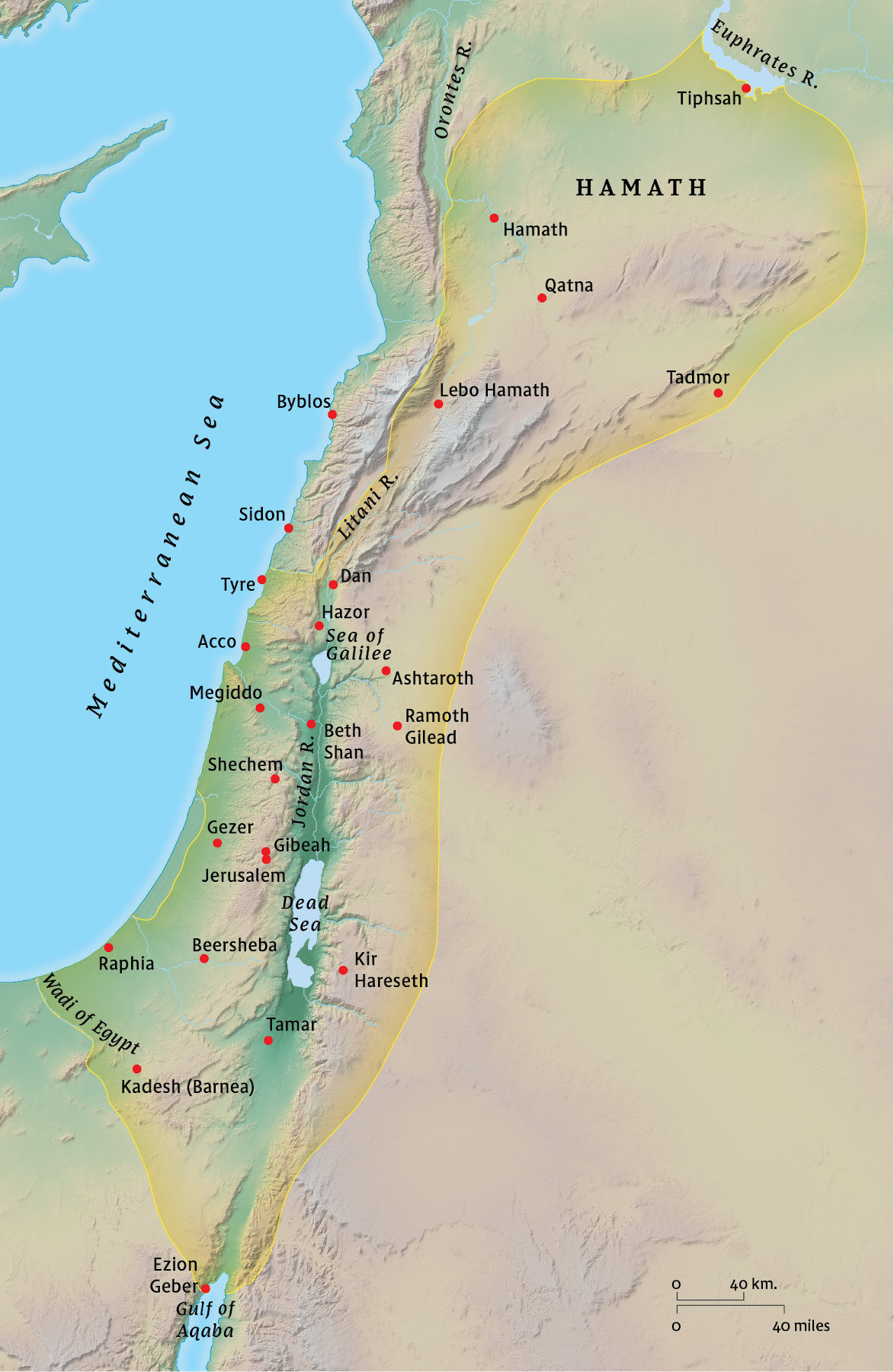
1:15 sycamore-fig trees. See note on Am 7:14.
1:16–17 imported . . . exported. See note on 1Ki 10:29.
1:17 Hittites. See note on Ge 10:15. Arameans. See notes on 1Ch 18:5; Dt 26:5.
2:1 palace. Although the Chronicler frequently mentions the palace Solomon built (7:11; 8:1; 9:11), he gives no details of its construction (1Ki 7:1–12)
2:3–10 The Chronicler’s theological interests appear in his handling of Solomon’s correspondence with Hiram of Tyre. In the Kings account the correspondence was initiated by Hiram (1Ki 5:1). The Chronicler does not include this (or the material in 1Ki 5:3–5) but adds his own material, reflecting his emphasis on temple worship in vv. 3–7.
2:4 See 1Ch 23:28–32 and note.
 2:5–6 Though Israel’s God lives among them in the temple, their God is not contained by it (see 1Ki 8:27; Isa 66:1–2 and notes; Ac 7:48–50 and note on 7:49).
2:7 See Introduction: The Building of the Temple in Chronicles. In the Kings account Solomon’s request for a master craftsman is found late in the narrative (1Ki 7:13); to carry out his parallel between Oholiab and Huram-Abi, the Chronicler includes it in the initial correspondence. Furthermore, here and in vv. 13–14 the list of Huram-Abi’s skills is expanded and matches that of Bezalel and Oholiab (Kings is concerned only with casting bronze).
2:10 In 1Ki 5:11, the payment is an annual sum delivered to the royal household of Hiram, while Chronicles speaks of one payment to “the woodsmen who cut the timber.” The goods paid are also not identical; the oil specified in Kings is of a finer quality.
2:11–16 See 1Ki 5:7–9; 7:13–14 and notes.
2:13 Huram-Abi. See note on v. 7. Kings reports that the ancestry of Huram-Abi was through a widow of Naphtali (1Ki 7:14); Chronicles strengthens the parallel between Huram-Abi and Oholiab by assigning Huram-Abi Danite ancestry. These statements are not necessarily contradictory: (1) The mother’s ancestry may have been Danite, though she lived in the territory of Naphtali; or (2) her parents may have been from Dan and Naphtali, allowing her descent to be reckoned to either. The Danites had been previously associated with the Phoenicians (Jdg 18:7).
2:17–18 See 1Ki 5:13–18 and notes. The Chronicler specifies that this levy of forced laborers was from foreigners living among the Israelites, not from the Israelites themselves. This is not stated in the parallel passage in Kings, though 1Ki 9:20–22 confirms that foreign laborers were used (8:8).
2:18 3,600 foremen. See v. 2. The number given in 1Ki 5:16 is 3,300; however, some manuscripts of the Septuagint (the pre-Christian Greek translation of the OT) also have 3,600. The Chronicler may have been following a different text of Kings from the traditional Hebrew text at this point (but see note on 1Ki 5:16).
3:1–17 The Chronicler has considerably curtailed the description of the temple’s construction found in Kings, omitting completely 1Ki 6:4–20. The Chronicler’s audience was familiar with the details of the earlier history. On the other hand, the Chronicler goes into more detail on the furnishings and implements (3:6–9; 4:1,6–9).
3:1 Mount Moriah. The only passage in the OT where Mount Zion is identified with Mount Moriah, the place where Abraham was commanded to offer Isaac (Ge 22:2,14). place provided by David. See 1Ch 21:18—22:5.
3:2 second month in the fourth year. In the spring of 966 bc (see note on 1Ki 6:1).
3:3 cubit of the old standard. About three inches longer than the common cubit, which was c. 18 inches (see Eze 40:5 and note).
3:4 portico. See model. overlaid. This could mean partially overlaid, or inlaid, which would imply that the entire interior was not covered with gold leaf but that designs (palm trees, chains) were inlaid with gold leaf (v. 5).
3:6 Parvaim. Designates either the source of the gold (perhaps southeast Arabia) or a particular quality of fine gold.
3:7 cherubim. See vv. 10–14; see also notes on Ge 3:24; Eze 1:5.
3:8 twenty cubits long and twenty cubits wide. It was also 20 cubits high (1Ki 6:20), making the dimensions of the Most Holy Place a perfect cube, as also in the tabernacle. In the new Jerusalem there is no temple (Rev 21:22); rather, the whole city is in the shape of a cube (Rev 21:16), for the whole city becomes “the Most Holy Place.”
3:9 gold nails. The fact that gold is a soft metal would make it unlikely that nails were made of this substance. It is probable that this small amount (only 1 1/4 pounds; see NIV text note) represents gold leaf or sheeting used to gild the nail heads.
3:10–13 See 1Ki 6:23–27 and notes.
3:14 curtain. Separated the two rooms of the tabernacle (Ex 26:31). Wooden doors could also be closed across the opening (4:22; 1Ki 6:31–32; cf. Mt 27:51; Heb 9:8).
3:15 together were thirty-five cubits long. The word “together” has been supplied in the translation in view of the measurement of 18 cubits for each pillar in 1Ki 7:15; 2Ki 25:17 (see note there); Jer 52:21 (though the Septuagint, the pre-Christian Greek translation of the OT, at Jer 52:21 has 35). Thirty-five cubits would then be a round number for the combined length of both pillars.
 3:17 pillars. Remains of such pillars have been found in the excavations of numerous temples in the Holy Land. Cf. Rev 3:12. Jakin . . . Boaz. See NIV text notes.
4:1 bronze altar. The parallel text in Kings does not mention the main altar of the temple described here (1Ki 7:22–23), though several other passages in Kings do refer to it (1Ki 8:64; 9:25; 2Ki 16:14). The main altar of Solomon’s temple was similar to the altar with steps that is described in Eze 43:13–17.
4:2 Sea of cast metal. A larger reservoir of water that replaced the bronze basin of the tabernacle (Ex 30:18); it was used by the priests for their ceremonial washing (v. 6; Ex 30:21). The NT views these rituals as foreshadowing the cleansing provided by Christ (Heb 9:11–14). In the temple of Ezekiel, the Sea, which was on the south side in front of the temple (v. 10), has been replaced by a life-giving river that flows from the south side of the temple (Eze 47:1–12; cf. Joel 3:18; Zec 14:8; Jn 4:9–15; Rev 22:1–2).
4:3 bulls. 1Ki 7:24 has “gourds.” The Hebrew for the two words is similar, so the difference may be due to a copyist’s mistake.
4:4 twelve bulls. Possibly symbolic of the 12 tribes, which also encamped three on each side of the tabernacle during the wilderness journeys (Nu 2; cf. Eze 48:30–35).
4:5 three thousand baths. 1Ki 7:26 has 2,000 baths. The Hebrew for these figures could easily have been misread by the ancient scribes.
4:6 ten basins. See 1Ki 7:38–39.
4:7 ten gold lampstands. Instead of one, as in the tabernacle (Ex 25:31–40). specifications. See 1Ch 28:15. These lamps were not necessarily of the same shape as those described in Ex 25:31–40 but could have resembled the style depicted in Zec 4:2–6.
4:8 ten tables. Instead of one, as in the tabernacle (Ex 25:23–30; 40:4; Lev 24:5–9; 1Sa 21:1–6; Eze 41:22; Heb 9:2; cf. 2Ch 13:11; 29:18).
4:11–16 See 1Ki 7:40–45.
4:11 sprinkling bowls. See notes on Ex 27:3; 1Ki 7:40.

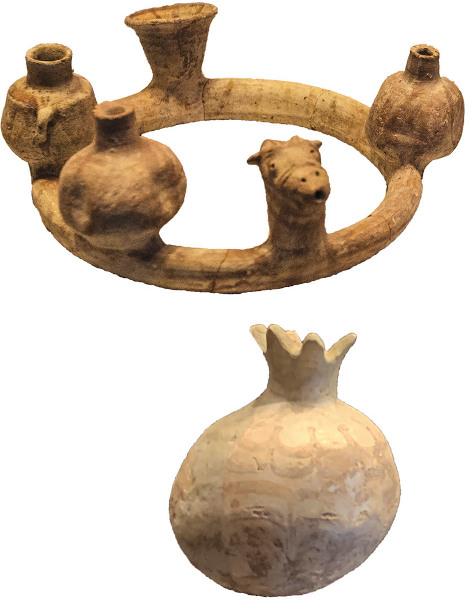
As a natural and supple produce in the Levant, pomegranates were frequently attested in religious art like the Solomonic pillars (2Ch 4:13). The lower pomegranate was discovered in Enkomi, Cyprus, dated between the 14th–13th centuries bc. The top image with two pomegranates was a vessel for drink offerings from Tell el-Hammah, dating to the 10th century bc.
© 2019 by Zondervan
Return to the main text.
4:17–22 See 1Ki 7:46–50 and notes.
4:17 clay molds. The clay of the Jordan plain was used to make molds for these bronze castings. Sukkoth and Zarethan. See note on 1Ki 7:46.
5:1 things his father David had dedicated. See notes on 1Ch 18:1—20:8; 22:2–16; 29:2–5; see also 1Ch 26:26 and note.
5:2–14 See 1Ki 8:1–11 and notes.
5:2 ark. Had been in a tent provided for it 40 years earlier when David brought it to Jerusalem (1Ch 15:1—16:6).
5:3 festival in the seventh month. The Festival of Tabernacles. The month is designated by its Canaanite name, Ethanim, in 1Ki 8:2; the Hebrew name is Tishri. According to 1Ki 6:38 the temple was completed in the eighth month of Solomon’s 11th year, i.e., September–October, 959 bc. This celebration of dedication probably took place 11 months after the completion of the work (see note on 1Ki 8:2).
5:5 brought up . . . the tent of meeting. The tabernacle had been at Gibeon (see 1:13; see also note on 1Ch 16:39).
5:6 Cf. David’s bringing of the ark to Jerusalem (1Ch 15:26; 16:1–3).
5:9 still there today. See note on 1Ki 8:8; see also 2Ch 8:8; 10:19; 20:26; 21:10; 35:25; 1Ch 4:41, 43; 5:26; 13:11; 17:5.
5:10 two tablets. See Ex 31:18 and note; see also Ex 32:15–16. The ark had earlier contained also the gold jar of manna (Ex 16:32–34) and Aaron’s staff (Nu 17:10–11; Heb 9:4). These items were presumably lost, perhaps while the ark was in Philistine hands.
5:12 fine linen. See 1Ch 15:27 and note.
5:14 cloud . . . glory of the LORD. Cf. 7:1–3. The cloud of God’s glory represented the presence of God. It had guided Israel out of Egypt and through the wilderness and was present above the tabernacle (see Ex 13:21–22 and note on 13:21; 40:34–38 and note on 40:34; cf. Eze 43:1–5; Hag 2:9; Zec 1:16; 2:10; 8:3).
6:1–11 See notes on 1Ki 8:12–21.
6:8–9 Cf. David’s speech in 1Ch 28:2–3.
6:12–21 See notes on 1Ki 8:22–30.
6:13 Not in 1Ki 8. The Chronicler may have wished to clarify the fact that Solomon was not “before the altar” (v. 12) exercising priestly duties.
6:14 who keep your covenant of love. See 1Ki 8:23 and note.
6:22–39 See notes on 1Ki 8:31–46.
6:22–23 See Ex 22:10–11; Lev 6:3–5.
6:24–25 See Lev 26:17, 23; Dt 28:25, 36–37,48–57, 64; Jos 7:11–12.
6:26–27 See Lev 26:19; Dt 11:10–15; 28:18,22–24.
6:28–31 See Lev 26:16, 20,25–26; Dt 28:20–22, 27–28,35,42.
6:32–33 The Chronicler elsewhere highlights the presence of foreigners in Israel (2:17; 30:25; 1Ch 22:2) and notes Israel’s past identity as strangers and foreigners (1Ch 16:19; 29:15). The prophets also envisaged the Gentiles coming to Jerusalem to worship the Lord (Isa 2:3; 56:6–8; Mic 4:2; Zec 8:20–23; 14:16–21; cf. Ps 87).
6:34–35 See Lev 26:7–8; Dt 28:6–7. The Chronicler repeatedly demonstrates God’s answer to prayer in time of battle (ch. 13; 14:9–15; 18:31; 20:1–29; 25:5–13; 32:20–22).
6:36 no one who does not sin. See Jer 13:23; Ro 3:23. captive to a land far away. See 36:15–20; Lev 26:33, 44–45; Dt 28:49–52; 2Ki 17:7–20; 25:1–21.
6:40–42 The Chronicler replaces the ending of Solomon’s prayer in Kings (1Ki 8:50–53) with Ps 132:8–10, a psalm that deals with bringing the ark to the temple, the theme of this section in Chronicles (5:2–14). The prayer in Kings ends with an appeal to the exodus deliverance under Moses, while in Chronicles the appeal is on the basis of the eternal promises to David.
7:1–22 See 1Ki 8:54—9:9 and notes.
7:1–3 Not found in 1Ki 8. The additional detail of fire descending from heaven to consume the sacrifices provides the same sign of divine acceptance given at the dedication of the tabernacle (Lev 9:23–24) and at David’s offering on the threshing floor of Araunah the Jebusite (1Ch 21:26; cf. 1Ki 18:38).
7:1 glory of the LORD. See 5:14 and note.
7:3 He is good . . . forever. See v. 6; 5:13.
7:6 The verse is unique to Chronicles and reflects the author’s overall interest in the Levites, especially the musicians (cf. 29:26–27; see note on 1Ch 6:31–48). all the Israelites. See Introduction to 1 Chronicles: Purpose and Themes.
7:8 festival. Tabernacles (see note on v. 9). from Lebo Hamath to the Wadi of Egypt. Not only were the patriarchal promises of descendants provisionally fulfilled under David and Solomon (see 1:9; 1Ch 27:23–24 and notes), but also the promises of land (Ge 15:18–21). Lebo Hamath. See note on Eze 47:15. Wadi of Egypt. See note on Eze 47:19.
7:9 eighth day. The final day of the Festival of Tabernacles (see 5:3 and note; Lev 23:36; Nu 29:35). seven days . . . seven days. The dedication had run from the 8th to the 14th day of the month, and the Festival of Tabernacles from the 15th to the 22nd day. The Day of Atonement was on the 10th day of the 7th month (Lev 16; cf. 1Ki 8:65–66).
7:12 appeared to him. The second time God appeared to Solomon; the first was at Gibeon (1:3–13; 1Ki 9:2). your prayer. See 6:14–42.
7:13–15 Unique to Chronicles. These verses illustrate the writer’s emphasis on immediate retribution, while holding out the hope of restoration if the people repent (see Introduction to 1 Chronicles: Purposes). The Chronicler subsequently portrays the kings in a way that demonstrates this principle (see v. 22).
7:14 my people. This verse is often applied to nations today, but “my people” here refers to Israel. As the people of God in the present age, the church (Jews and Gentiles alike) is the NT equivalent of those who must pray and humble themselves (Gal 3:29; 1Pe 2:9).
7:17–18 See 1Ki 9:4–5. Such words as these reinforced ancient Israel’s Messianic hopes.
8:1–18 See 1Ki 9:10–18 and notes. Verses 13–16 are unique to Chronicles and underscore the Chronicler’s concern to show continuity with the past and his association of David with Moses (see Introduction to 1 Chronicles: Purpose and Themes).
8:1–2 In 1 Ki 9:10–14 the cities were given to Hiram by Solomon, whereas in Chronicles the reverse is true. Perhaps as part of his effort to idealize Solomon, the Chronicler does not record the fact that Hiram found these cities unacceptable payment (1Ki 9:11–13); he mentions only the sequel to the story, the return of the cities to Solomon and their subsequent improvement. They may also have served as a kind of collateral against the money owed Hiram, who returned them when the debt was satisfied (see note on 1Ki 9:11).
8:3–4 The Chronicler records an additional military campaign to the north, not mentioned in Kings. David had also campaigned in the north against Zobah (1Ch 18:3–9; 19:6; 2Sa 8:3–12; 10:6–8; cf. 1Ki 11:23–24).
8:5 The two Beth Horons were situated on a strategic road from the coastal plain to the area just north of Jerusalem (see map).
8:7 not Israelites. See 2:17; 1Ch 22:2; 1Ki 9:21.
8:8 to this day. See note on 5:9.
8:11 holy. Both 1Ki 9:24 and Chronicles record the transfer of the pharaoh’s daughter to special quarters, but only Chronicles adds the reason: Not only the temple but also David’s palace was regarded as holy, because of the presence of the ark (see note on Lev 11:44). As an idol worshiper, the pharaoh’s daughter could not live in this sacred place.
8:12–16 In line with his overall emphases, the Chronicler elaborates on the sacrificial and temple provisions made by Solomon. While 1Ki 9:25 mentions only the sacrifices at the three annual festivals, the Chronicler adds the offerings on Sabbaths and New Moons to conform these provisions fully to Mosaic instructions (Lev 23:1–37; Nu 28–29).
8:17–18 See 1Ki 9:26–28. This joint venture between Solomon and Hiram secured for these kings the lucrative trade routes through the Mediterranean to the south Arabian peninsula; Solomon became the middleman between these economic spheres.
8:17 Ezion Geber and Elath. See note on Dt 2:8.
8:18 Hiram sent him ships. Presumably ships built in Phoenicia and assembled at the port of Ezion Geber after being shipped overland (9:21).
9:1–12 See 1Ki 10:1–13 and notes. The visit of the queen of Sheba portrays the fulfillment of God’s promise to give Solomon wisdom and wealth (1:12). Although the themes of Solomon’s wisdom and wealth are highlighted here, a major motive for the queen’s visit may have been commercial, perhaps prompted by Solomon’s naval operations toward south Arabia (8:17–18).
9:1 Sheba. See note on 1Ki 10:1; see also Job 1:15; 6:19; Ps 72:10,15; Isa 60:6; Jer 6:20; Eze 27:22; 38:13; Joel 3:8.
9:8 his throne. The most significant variation from the account of the queen’s visit in 1 Kings (10:9) is found here. The queen’s speech becomes the vehicle for the Chronicler’s conviction that the throne of Israel is the throne of God, for whom the king ruled (see 13:18; see also note on 1Ch 17:14).
9:16,20 Palace of the Forest of Lebanon. The royal palace in Jerusalem (cf. note on 1Ki 7:2).
9:28 The accounts of Solomon’s wives and the rebellions at the end of his reign (1Ki 11:1–40) are not found in the Chronicler’s account, perhaps because they would detract from his uniformly positive portrayal of Solomon. horses . . . Egypt. See note on 1:16–17.
9:29–31 See 1Ki 11:41–43.
10:1—36:23 The material covering the divided monarchy in Chronicles is considerably shorter than that in Kings: 27 chapters compared to 36 (1Ki 12-2Ki 25). Moreover, about half of this material is unique to Chronicles and shows no dependence on Kings. The most obvious reason for this is that the Chronicler has written a history of the Davidic dynasty in Judah; the history of the northern kingdom is passed over in silence except where it impinges on that of Judah. At least two considerations prompt this treatment of the divided kingdom: (1) The Chronicler is concerned to trace God’s faithfulness to his promise to give David an unbroken line of descent on the throne of Israel. (2) At the time of the Chronicler the restored community was confined to the returnees of the kingdom of Judah, who were actually the remnant of all Israel (see Introduction to 1 Chronicles: Purposes).
10:1–19 See 1Ki 12:1–20 and notes. In line with his idealization of Solomon, the Chronicler places most of the blame for the schism on the rebellious Jeroboam (cf. 13:6–7).
10:1 Rehoboam. Reigned 930–913 bc.
10:2 Jeroboam. Reigned 930–909 bc; his second mention in Chronicles (9:29). The Chronicler assumes the reader’s familiarity with 1Ki 11:26–40 (Jeroboam’s rebellion).
10:15 Ahijah. The Chronicler assumes the reader’s familiarity with 1Ki 11:29–33.
10:18 Adoniram . . . in charge of forced labor. Had held the same office under Solomon (see 1Ki 4:6 and note; 5:14).
10:19 to this day. See note on 5:9.
11:1–23 Verses 1–4 are parallel to 1Ki 12:21–24; vv. 5–23 are largely unique to Chronicles. The Chronicler’s account of Rehoboam is a good example of his emphasis on immediate retribution and also of adding positive material about Judahite kings (see Introduction to 1 Chronicles: Purposes). Ch. 11 traces the rewards for obedience to the command of God (vv. 1–4): Rehoboam enjoys prosperity and power (vv. 5–12), popular support (vv. 13–17) and progeny (vv. 18–23). Ch. 12 demonstrates the reverse: Disobedience brings judgment.
11:2 Shemaiah. The function of the prophets as guardians of the theocracy (God’s kingdom) is prominent in Chronicles; most of Judah’s kings are portrayed as receiving advice from prophets (see Introduction to 1 Chronicles: Purposes).
11:3 all Israel in Judah and Benjamin. A variation from the wording found in 1Ki 12:23, in accordance with the Chronicler’s interest in “all Israel.”
11:5–10 This list of cities is not found in Kings. Rehoboam fortified his eastern, western and southern borders, but not the north, perhaps demonstrating his hope of reunification of the kingdoms, as well as the threat of invasion from Egypt.
11:13–17 The Chronicler assumes the reader’s familiarity with 1Ki 12:26–33 (Jeroboam’s idolatry). This material is unique to Chronicles and reflects the author’s concern both with the temple and its personnel and with showing that the kingdom of Judah was the remnant of all Israel.
11:14 pasturelands and property. See 1Ch 6:54–80; Lev 25:32–34; Nu 35:1–5; see also Introduction to 1 Chronicles: Purposes.
11:15 goat and calf idols. The account in Kings mentions only the golden calves. For the worship of goat idols, see Lev 17:7.
11:17 three years. See note on 12:2. ways of David and Solomon. Characteristic of the Chronicler’s idealization of Solomon; contrast the portrait of Solomon in 1Ki 11:1–13.
11:18–22 The report on the size of Rehoboam’s family is placed here as part of the Chronicler’s effort to show God’s blessing on his obedience (see note on 11:1–23). The material is not in chronological sequence with the surrounding context but summarizes events throughout his reign. The Chronicler uses numerous progeny as a sign of divine blessing (see 13:21; see also notes on 21:2; 1Ch 25:5).
11:20 Maakah daughter of Absalom. See note on 1Ki 15:2. She was likely the granddaughter of Absalom, through his daughter Tamar (2Sa 14:27; 18:18), who was married to Uriel (2Ch 13:2).
11:21–22 These verses explain why the eldest son was not appointed Rehoboam’s successor.
11:23 dispersing some of his sons. Rehoboam may have sought to secure the succession of Abijah by assigning other sons to outlying posts, perhaps to avoid the difficulties faced by David, whose sons at court (Absalom and Adonijah) had attempted to seize power.
12:1–14 See note on 11:1–23. Whereas obedience to the prophetic word (11:1–4) had brought blessing (11:5–23), now the prophet comes to announce judgment for disobedience (1Ki 14:25–28). While the writer of Kings also reports the attack of Shishak, the Chronicler provides the rationale that the invasion was because of forsaking the commands of God (vv. 1–2,5).
12:1 all Israel. Used in a variety of ways in 2 Chronicles: (1) of both kingdoms (9:30), (2) of the northern kingdom (10:16; 11:13) or (3) of the southern kingdom alone (as here; 11:3). See also Introduction to 1 Chronicles: Purpose and Themes, 6. abandoned. The opposite of “seeking the LORD” (v. 14); see v. 5; see also note on 24:18,20,24.
12:2 Shishak. Founder of the Twenty-Second Dynasty of Egypt, he ruled c. 945–924 bc. The Bible mentions this invasion only as it affected Jerusalem, but Shishak’s own inscription on the wall of the temple of Amun at Karnak (Thebes) indicates that his armies also swept as far north as Megiddo (see photo). fifth year. 925 bc. The Chronicler often introduces chronological notes not found in Kings (e.g., 11:17; 15:10,19; 16:1,12–13; 17:7; 21:20; 24:15,17,23; 26:16; 27:5,8; 29:3; 34:3; 36:21). These become a vehicle for his emphasis on immediate retribution by dividing the reigns of individual kings into cycles of obedience-blessing and disobedience-punishment. This sequence is clear for Rehoboam: Three years of obedience and blessing (11:17) are followed by rebellion, presumably in the fourth year (12:1), and punishment in the fifth (here).
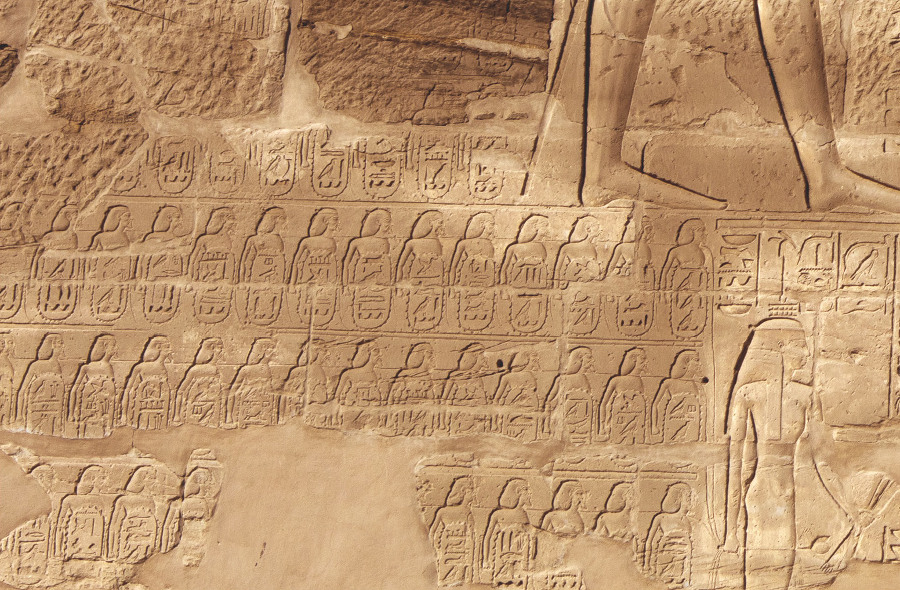
Cartouches (oblong hieroglyphs) of conquered towns along the wall of the Karnak temple describe Shishak’s military campaign in Canaan. Shishak’s attack on Jerusalem is recorded in 2Ch 12:2–4.
© 2018 by Zondervan
Return to the main text.
12:3 Sukkites. Probably a group of mercenary soldiers of Libyan origin who are known from Egyptian texts.
12:5 See notes on vv. 1–14; v. 1.
12:6–7 See v. 12. The Chronicler alludes to God’s promise in 7:14.
12:13 seventeen years. See note on 10:1.
12:15–16 See 1Ki 14:29–31.
13:1—14:1 The Chronicler’s account of Abijah’s reign is about three times longer than that in 1Ki 15:1–8, largely due to Abijah’s lengthy speech (13:4–12; see note on 28:1–27). The most striking difference in the accounts of Abijah’s reign in Kings and in Chronicles is the evaluation given in each: Kings offers a negative evaluation (1Ki 15:3), for which there was no doubt warrant, while the assessment in Chronicles is positive, in view of what the Chronicler is able to report of him. The kings’ reigns, like the lives of common people, were often a mixture of good and evil.
13:2 three years. 913–910 bc. Maakah. See note on 11:20.
13:3 four hundred thousand . . . eight hundred thousand. Surprisingly large figures but in line with those in 1Ch 21:5 (see note there; see also article).
13:4 Mount Zemaraim. The town of Zemaraim was in the territory of Benjamin (Jos 18:22); presumably the battle was along the common border of Benjamin and Israel. all Israel. See note on 12:1; here and in v. 15 the reference is to the northern kingdom.
13:5 See 7:17–18; 1Ch 17:13–14. covenant of salt. See notes on Nu 18:19; 2Ki 2:20.
13:7 Not all in the northern kingdom are rebuked, only the leadership—a subtle appeal to those in the north who had been led into rebellion. scoundrels. See note on Dt 13:13. young and indecisive. Cf. 1Ch 22:5; 29:1. Rehoboam was 41 years old at the time of the schism (12:13).
13:8 kingdom of the LORD. The house of David represents the kingdom of God (see 9:8 and note).
13:9 See 1Ki 12:25–33. consecrate himself. Cf. Ex 29:1.
13:10–12 The Chronicler’s emphasis on acceptable worship focuses on the legitimate priests and the observance of prescribed worship (cf. 1Ch 23:28–31).
14:1 peace for ten years. For the Chronicler peace and prosperity go hand in hand with righteous rule. This first decade of Asa’s reign (910–900 bc) preceded the invasion by Zerah (14:9–15) and was followed by 20 more years of peace, from the 15th (15:10) to the 35th years (15:19). Contrast this account with the statement that there was war between Asa and Baasha throughout their reigns (see 1Ki 15:16 and note). The tensions between the two kingdoms may have accounted for Asa’s fortifications (14:7–8), though actual combat was likely confined to raids until the major campaign was launched in Asa’s 36th year (16:1). See 15:8 and note.
14:2—16:14 See article.
Asa as a Model of Covenant Faithfulness and Unfaithfulness
The account of Asa’s reign (910–869 bc) in Chronicles is greatly expanded over the one in 1Ki 15:9–24, with the additions highlighting the relationship between obedience and blessing, disobedience and punishment. Chronological notes are added to divide Asa’s reign into three periods (see note on 12:2), with the final period of unfaithfulness leading to Asa’s downfall: (1) For ten years Asa did what was right and prospered (14:1–7), and an invasion by a powerful Cushite force was repulsed because he called on the Lord (14:8–15). (2) There followed further reforms (15:1–9) and a covenant renewal in Asa’s 15th year (15:10–18), and so he enjoyed peace until his 35th year (15:19). (3) But then came a change: When confronted by an invasion from the northern kingdom of Israel in his 36th year (16:1), he hired Aramean reinforcements rather than trusting in the Lord (16:2–6) and imprisoned the prophet who rebuked him (16:7–10). In his 39th year he was afflicted with a disease (16:12) but still steadfastly refused to seek the Lord. In his 41st year he died (16:13).
Go to the Articles Index.
14:3 sacred stones. See note on 1Ki 14:23; see also photo. Asherah poles. See note on Ex 34:13; see also photo.
14:5 removed the high places. This is not an absolute statement about Asa’s reign (cf 15:17; 1Ki 15:14). Early in his reign Asa did attempt to remove the high places, but pagan worship was extremely resilient, and ultimately his efforts were unsuccessful (15:17). Statements that the high places both were and were not removed are also found in the reign of Jehoshaphat (17:6; 20:33). Cf. Dt 12:2–3.
14:7 rest on every side. See note on 20:30.
14:9 Zerah. Probably a general leading Egyptian forces in the service of Pharaoh Osorkon I. The invasion appears to have been an attempt to duplicate the attack of Shishak 30 years earlier (12:1–12), but the results against Asa were quite different. Cushite. See vv. 12–13. The Cushites were natives of Nubia, the region that borders Egypt on the south—not to be confused with modern Ethiopia (Abyssinia). See also note on Isa 18:1.
14:10 Valley of Zephathah. Marked the entrance to a road leading to the hills of Judah and Jerusalem. Mareshah. Earlier fortified by Rehoboam (11:8) to protect the route mentioned here.
14:13 Gerar. See note on Ge 20:1. plunder. Much of which (v. 14) made its way to the storehouses of the temple (15:18; see note on 1Ch 18:1—20:8).
14:14 terror of the LORD. See note on 1Ch 14:17.
15:1–19 This chapter appears to recount a second stage in the reforms introduced by Asa, beginning with the victory over Zerah and encouraged by the preaching of Azariah (v. 1).
15:3 priest to teach. The duties of the priests were not only to officiate at the altar but also to teach the law (17:7–9; Lev 10:11; Dt 17:9–11).
15:8 towns he had captured in . . . Ephraim. A tacit admission that there had been some fighting between Baasha and Asa prior to Asa’s 36th year (16:1); see 17:1.
15:9 large numbers had come over to him. Cf. the defection from the northern kingdom that also occurred under Rehoboam (11:13–17).
15:10 third month of the fifteenth year. Spring, 895 bc, the year after Zerah’s invasion (v. 19). The Festival of Weeks (or Pentecost) was held in the third month (Lev 23:15–21) and may have been the occasion for this assembly.
15:12 covenant. A renewal of the covenant made at Sinai, similar to the covenant renewals on the plain of Moab (Dt 29:1), at Mount Ebal (Jos 8:30–35), at Shechem (Jos 24:25) and at Gilgal (1Sa 11:14; see note there). Later the priest Jehoiada (23:16), as well as Hezekiah (29:10) and Josiah (34:31), would also lead in renewals of the covenant—events of primary significance in the view of the Chronicler.
15:13 would not seek the LORD. Would turn to other gods. were to be put to death. In accordance with basic covenant law (Ex 22:20; Dt 13:6–9).
15:15 rest. See note on 20:30.
15:16 Asherah. See note on Ex 34:13; see also photo. Kidron Valley. Just east of Jerusalem (see note on Isa 22:7 and map; see also 1Ki 15:13 and note).
15:17 did not remove the high places. See 14:5 and note.
16:1 thirty-sixth year of Asa’s reign Baasha. According to Kings, Baasha ruled for 24 years and was succeeded by Elah in the 26th year of Asa (1Ki 15:33; 16:8). Baasha could not have been alive in the 36th year of Asa, where this passage places him—he had been dead for a decade. The action described here is not dated in 1Ki 15:17. It seems best to take “the thirty-sixth year” as the time of the kingdom’s division.
16:2–9 Hiring foreign troops brought Asa into a foreign alliance, which showed lack of trust in the Lord. Other examples of condemned foreign alliances are found in the reigns of Jehoshaphat (20:35–37), Ahaziah (22:1–9) and Ahaz (28:16–21). By hiring Ben-Hadad to the north, Asa opened a two-front war for Baasha and forced him to withdraw.
16:3 treaty . . . between my father and your father. See note on 1Ki 15:19.
16:9 eyes of the LORD range throughout the earth. Asserted also in Zec 4:10.
16:11 book of the kings of Judah and Israel. See Introduction to 1 Chronicles: Author, Date and Sources.
16:12 disease in his feet. For other examples of disease as punishment for sin, see 21:16–20; 26:16–23; Ac 12:23. Cf. 2Ki 15:5. did not seek help from the LORD, but only from the physicians. Contrast King Hezekiah (Isa 38); cf. Jer 17:5–8; Jas 5:14–16.
17:1—21:3 The Chronicler’s account of Jehoshaphat’s reign is more than twice as long as that in Kings, where the interest in Ahab and Elijah overshadows the space allotted to Jehoshaphat (1Ki 22:1–46). The Chronicler has also used Jehoshaphat’s reign to emphasize immediate consequences. This theme is specifically announced in 19:10 and is illustrated in the blessing of Jehoshaphat’s obedient faith and in the reproof for his wrongdoing (19:2–3; 20:35–37). Jehoshaphat reigned 872–848 bc, from 872 to 869 likely as coregent with his father Asa (see 20:31 and note; see also chart). The details of his reign may not be in chronological order; the teaching mission of 17:7–9 may have been part of the reforms noted in 19:4–11.
17:1 Jehoshaphat. For the meaning of his name, see note on 1Ki 22:4.
17:2 cities of Judah . . . towns of Ephraim. See note on 15:8. Abijah (13:19), Asa (15:8) and now Jehoshaphat had managed to hold these cities; they would be lost under Amaziah (25:17–24).
17:6 removed the high places. Just as his father Asa had attempted to remove the high places, only to have them be restored (14:5; 15:17), so also Jehoshaphat removed them initially, only to have them revive and persist (20:33; cf. 1Ki 22:43). But see notes on 1Ki 3:2; 15:14. Asherah poles. See NIV text note on 14:3 and note on Ex 34:13.
17:7–9 This incident may be part of the reform more fully detailed in 19:4–11. In the theocracy (God’s kingdom), the law of the Lord was supposed to be an integral part of the law of the land; the king and his officials, as well as the priests and prophets, were representatives of the Lord’s kingship over his people.
17:7 third year. Perhaps the first year of his sole reign after a coregency of three years with his father Asa (see 20:31 and note; see also chart).
17:9 Book of the Law of the LORD. See 34:14–15; Jos 8:31, 34; 23:6; see also notes on Jos 1:8; 2Ki 22:8; Ne 8:1.
17:10–11 See note on 1Ch 18:1—20:8.
17:10 fear of the LORD. See note on 1Ch 14:17.
17:14–18 300,000 . . . 280,000 . . . 200,000 . . . 200,000 . . . 180,000. See notes on 1Ch 12:23–37; 27:1.
18:1—19:3 See 1Ki 22:1–40 and notes. In conformity with his interest in the southern kingdom and Jehoshaphat, the Chronicler omits elaboration on the death of Ahab and his succession (1Ki 22:36–40) and adds the material on the prophetic condemnation of Jehoshaphat’s association with Ahab (19:1–3).
18:1 Not found in 1Ki 22. The verse enhances the status of Jehoshaphat by mentioning the blessing of wealth for his fidelity, and also sets the stage for an entangling foreign alliance condemned by the prophet in 19:2–3. allied himself with Ahab by marriage. This marriage alliance to Athaliah, daughter of Ahab, resulted later in an attempt to exterminate the Davidic line (22:10—23:21).
18:2 The Chronicler further enhances the status of Jehoshaphat by noting the large number of animals Ahab slaughtered in his honor, a note not found in 1Ki 22. urged him. Also not found in the parallel account in 1Ki 22. The Hebrew for this verb is often used in the sense of inciting to evil (e.g., 1Ch 21:1) and may express the Chronicler’s attitude toward Jehoshaphat’s association with Ahab. Ramoth Gilead. See notes on 22:5; 1Ki 22:3; see also map.
18:4 seek the counsel of the LORD. This request fits the Chronicler’s overall positive portrait of Jehoshaphat.
18:22 deceiving spirit. See note on 1Ki 22:23.
18:29 The fact that Ahab directs Jehoshaphat into battle in royal regalia, thus making Jehoshaphat the logical target for attack, is consistent with Israel’s dominant position at this time.
19:2 Should you help the wicked . . . ? Jehu’s father, Hanani, had earlier given Jehoshaphat’s father, Asa, the same warning (16:7–9). Jehoshaphat later aligned himself with another evil king and suffered for it (20:35–37).
19:3 Asherah poles. See NIV text note on 14:3 and note on Ex 34:13.
19:4 Jehoshaphat . . . went . . . among the people. The king traveled throughout the realm personally to promote religious reformation.
19:5 appointed judges. The name Jehoshaphat (meaning “The LORD judges”) is appropriate for the king who instituted this judicial reform. The arrangement of the courts under Jehoshaphat (vv. 5–11) would be of particular interest to the Chronicler’s audience in the postexilic period, when the courts of the restored community would have their own existence and structure legitimized by this precedent.
19:6 Cf. Dt 16:18–20; 17:8–13.
19:7 let the fear of the LORD be on you. Let a terrifying sense of God’s presence restrain you from any injustice (see note on 1Ch 14:17).
19:8 Levites, priests . . . to administer the law. See note on 1Ch 26:29–32. One effect of this judicial reform appears to be the bringing of the traditional system of justice administered by the elders of the city under closer royal and priestly supervision.
20:1–30 This episode held special interest for the Chronicler since the restored community was being harassed by the descendants of these same peoples (Ne 2:19; 4:1–3,7–9; 6:1–4; 13). He uses it to encourage his contemporaries to trust in the Lord and his prophets, as Jehoshaphat, son of David, had exhorted (v. 20; see note there). The account is carefully structured. Apart from the outer frame, which highlights the reversal of circumstances (vv. 1–4,28–30), it falls into three divisions: (1) Jehoshaphat’s prayer (vv. 5–13), (2) the Lord’s response (vv. 14–19) and (3) the great victory (vv. 20–27). At the center of each is its crucial statement, and these are all linked by a key Hebrew word: v. 9, “we will stand in your presence before this temple”; v. 17, “stand firm and see the deliverance the LORD will give you”; v. 23, “The Ammonites and Moabites rose up (or ‘stood up’) against the men from Mount Seir to destroy . . . them.”
20:1 Meunites. A people from the region of Mount Seir in Edom (26:7; 1Ch 4:41; cf. 2Ch 20:10,22–23).
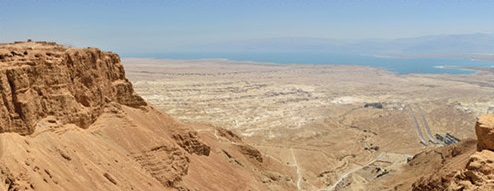
20:2 Edom. See NIV text note. Since the Arameans are well to the north and not mentioned among the attackers named in v. 1, the NIV has followed the reading “Edom.” The difference between “Aram” and “Edom” in Hebrew is only one letter, which is very similar in shape and was often confused in the process of copying manuscripts. En Gedi. See photo.
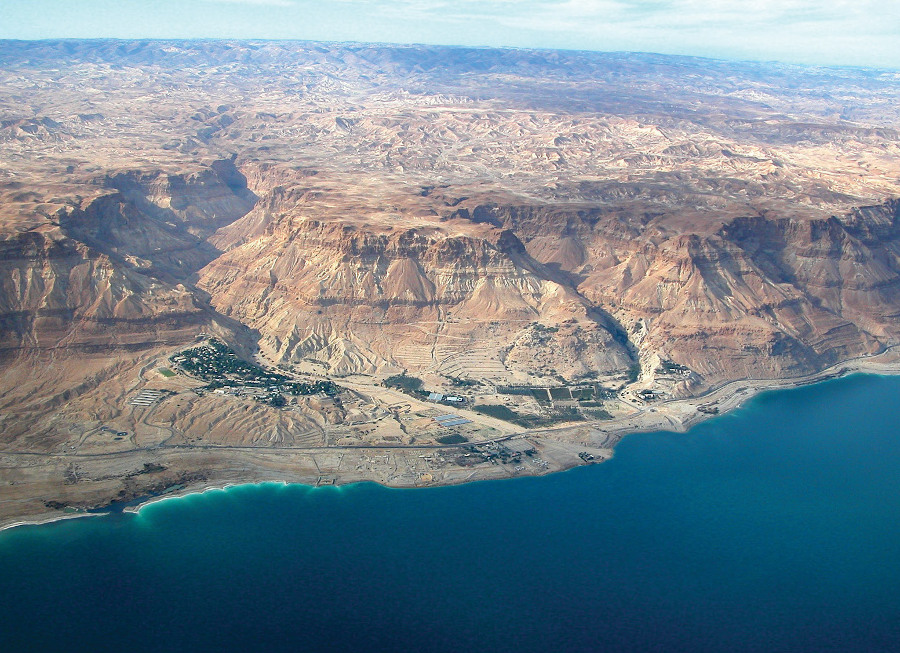
En Gedi is located on the western side of the Dead Sea. In 2Ch 20:2, some people warn Jehoshaphat that a vast enemy army has already come as far as En Gedi.
Todd Bolen/BiblePlaces.com
Return to the main text.
20:5–12 Jehoshaphat’s prayer shows him to be a true theocratic king (one who rules under God’s authority), a worthy son of David and type (foreshadowing) of the awaited Messiah (see Introduction to 1 Chronicles: Purposes).
20:7 Abraham your friend. See Isa 41:8; Jas 2:23 and note.
20:9 An apparent reference to Solomon’s prayer and the divine promise of response (6:14–42; 7:12–22).
20:15 See Ex 14:13–14 and note on 14:14.
20:16 Pass of Ziz. Began seven miles north of En Gedi and wound inland, emerging west of Tekoa. Jeruel. Southeast of Tekoa.
20:19 Levites. The Chronicler’s interest in the priests and Levites is apparent throughout the account (vv. 14,21–22,28).
20:20 Have faith in the LORD your God and . . . in his prophets. A particularly apt word for the Chronicler’s contemporaries to hear from this son of David—at a time when their only hope for the future lay with the Lord and the reassuring words of his prophets.
20:21 splendor of his holiness. See note on 1Ch 16:29.
20:22 ambushes. Their nature is indicated in v. 23: Israel’s foes destroyed each other in the confusion of battle, similar to the victory under Gideon (Jdg 7:22).
20:26 to this day. See note on 5:9.
20:29 The fear of God. See note on 1Ch 14:17.
20:30 rest on every side. Rest from enemies is part of God’s blessing for obedience in Chronicles (14:5–7; 15:15; 1Ch 22:8–9,18). Righteous kings have victory in warfare (Abijah, Asa, Jehoshaphat, Uzziah, Hezekiah), while wicked rulers experience defeat (Jehoram, Ahaz, Joash, Zedekiah).
20:31 twenty-five years. The book of Kings reports 22 (18 in 2Ki 3:1 and 4 more in 8:16). These figures are reconciled by suggesting a coregency with his father, Asa, for three years, probably due to the severity of his father’s illness and the need to arrange for a secure succession (16:10–14). The book of Kings speaks only of his years of sole reign after his father’s death.
20:33 high places . . . were not removed. See note on 17:6.
20:34 Jehu son of Hanani. See note on 19:2.
20:35–37 See 1Ki 22:48–49. The lucrative maritime trade through the Gulf of Aqaba no doubt tempted Jehoshaphat to enter into this improper alliance (see 19:2 and note). Solomon’s earlier alliance for the same purpose had been with a non-Israelite king (8:17–18).
20:35 Ahaziah. Reigned 853–852 bc (see 1Ki 22:51-2Ki 1:18 for the account of his reign).
21:2 sons of Jehoshaphat. The Chronicler shows the blessing of God on Jehoshaphat by mentioning his large family, particularly his seven sons (see 11:18–22; 1Ch 25:5 and notes). Jehoshaphat’s large number of sons is in striking contrast to the wicked Jehoram who, after murdering his brothers (v. 4), is left with only one son (v. 17). Jehoram’s wife, Athaliah, would later perform a similar slaughter (22:10).
21:3 Cf. the similar actions of Rehoboam (11:23).
21:4–20 See 2Ki 8:16–24 and notes.
21:4 This bloody assassination of all potential rivals is not reported in Kings, but it fits the pattern of the northern kings (v. 6). officials. Probably leading men in the southern kingdom who opposed having a king married to a daughter of Ahab. For this use of “Israel,” see note on 12:1.
21:5 eight years. 848–841 bc. The period 853–848 was a coregency of Jehoram with his father, Jehoshaphat (see chart)—Jehoshaphat’s 18th year was also Jehoram’s second year (cf. 2Ki 1:17; 3:1).
21:6 married a daughter of Ahab. Probably the marriage referred to in 18:1, used to cement the alliance between Jehoshaphat and Ahab. Such political marriages were common. Many of Solomon’s marriages sealed international relationships (see note on 1Ki 11:1), as did Ahab’s marriage to Jezebel.
21:8–10 The pious Jehoshaphat had enjoyed victory over Edom (20:1–30), while the wicked Jehoram is defeated in his attempt to keep Edom in subjection to Judah (see note on 20:30).
21:10 To this day. Until the time of the writing of the account of Jehoram’s reign used by the Chronicler. Libnah. Located between Judah and Philistia. because Jehoram had forsaken the LORD. Not found in 2Ki 8:22. The Chronicler recounts this judgment as an indication of immediate retribution (see notes on 12:1–14; 12:2; see also Introduction to 1 Chronicles: Purposes).
21:11 prostitute themselves. See Ex 34:15 and note.
21:12–20a Not found in the parallel text in 2Ki 8.
21:12–15 This reference to a letter from Elijah is the only mention in Chronicles of that prophet, to whom the books of Kings give so much attention (1Ki 17-2Ki 2). Elijah’s letter specifically announces the immediate consequences of Jehoram’s disobedience—further defeat in war, which will cost Jehoram his wives and sons; and disease, which will lead to his death (see note on 16:12). Cf. also the foot disease of Asa (16:12–14) and the leprosy of Uzziah (26:16–23). The book of Kings does not mention the nature of Jehoram’s death. Some have argued that this letter could not be authentic because, they claim, Elijah was taken to heaven before Jehoram became king. But this is not a necessary conclusion (see 2Ki 1:17; see also note on 2Ki 3:11). Elijah may well have been taken to heaven as late as 848 bc.
21:16 Cushites. See note on 14:9; see also NIV text note on 16:8.
21:20 eight years. See note on v. 5. not in the tombs of the kings. Only the Chronicler mentions the refusal of the people to accord Jehoram the customary burial honors of a tomb with the other kings of Judah (cf. 24:25).
22:1–9 The Chronicler’s account of Ahaziah’s reign is much shorter than the parallel in 2Ki 8:24—9:29, probably due to the fact that the Kings account focuses on the rebellion of Jehu and the downfall of the dynasty of Omri (see 2Ki 8:26; see also 1Ki 16:21–28)—events in the northern kingdom, in which the Chronicler is not interested. The Chronicler’s account again shows his interest in immediate retribution: Ahaziah’s personal wickedness and his involvement in a foreign alliance result in immediate judgment and a reign of only one year (see note on 16:2–9; see also Introduction to 1 Chronicles: Purposes).
22:1 had killed all the older sons. Emphasizes divine retribution: Jehoram, who murdered all his brothers, had to experience the death of his own sons (21:4,13,16–17).
22:2 twenty-two. See NIV text note. The Hebrew reading of “42” would make Ahaziah older than his father (21:20). one year. 841 bc.
22:3–4 The great influence of the dynasty of Omri in Judah is indicated by the power of Athaliah and the presence of advisers from the northern kingdom (see note on 18:29).
22:5 went with Joram . . . to wage war. An action similar to that for which Jehoshaphat had been rebuked (see 19:2 and note). Hazael. Had been anointed by Elisha; he later killed his master in a coup to seize the throne (2Ki 8:13–15; cf. 1Ki 19:15 and note). Ramoth Gilead. Located in the Transjordan border area between Israel and Aram. More than ten years earlier Jehoshaphat had participated with Ahab in a battle there that cost Ahab his life (ch. 18; 1Ki 22).
22:6 returned to Jezreel. Joram apparently recovered Ramoth Gilead and left Jehu in charge (2Ki 8:28—9:28). Jezreel. See maps here and here.
22:7 God brought about Ahaziah’s downfall. The Chronicler assumes that the reader is familiar with the account of Jehu’s anointing and the additional details of the coup, which resulted in the deaths of Joram and Ahaziah (2Ki 8:28—9:28). While the writer of Kings primarily portrays the end of the dynasty of Omri as a result of the judgment of God (1Ki 21:20–29; 2Ki 9:24—10:17), the Chronicler notes that the assassination of Ahaziah was also brought about by God.
22:9 There are three differences between this account and that of 2Ki (cf. 2Ki 9:21–27; 10:12–14): (1) whether the slaughter of Judah’s princes occurred before or after Athaziah’s death, (2) the place of Athaziah’s death and (3) the place of Athaziah’s burial. With respect to (1), Chronicles is topically rather than chronologically arranged; with respect to (2) and (3), the Chronicler does not actually specify these locations.
22:10–12 See 2Ki 11:1–3. In the history of Judah, Athaliah represents the only break in the continuity of the Davidic dynasty; she is the only queen of Judah to rule in her own name (841–835 bc). Her attempt to wipe out the royal family repeated the action of her husband, Jehoram (21:4). It threatened the continuity of the Davidic dynasty, and if she had succeeded, Judah may have been claimed by the dynasty of Omri in the north since Athaliah was from that dynasty and had no living son and heir.
23:1—24:27 See 2Ki 11:4—12:21 and notes. The Chronicler divides the reign of Joash (835–796 bc) into three parts: (1) the recovery of the throne for the house of David (ch. 23); (2) Joash and Jehoiada—the good years (24:1–16); and (3) Joash alone—the bad years (24:17–27). The last section is largely unique to Chronicles and further develops the theme of immediate consequences: Once again chronological notes provide the framework for cycles of obedience and disobedience (24:15–17,23; see notes on 12:2; 14:2—16:14).
23:1–21 See 2Ki 11:4–20. The differences between the accounts in Kings and Chronicles demonstrate the Chronicler’s emphases in three areas: (1) The account in Kings has more to say about the participation of the military in the coup; the account in Chronicles highlights the presence of temple officials and their role (vv. 2,6,8,13,18–19). (2) The Chronicler stresses the widespread popular support for the coup by mentioning the presence of large groups of people, such as “all the people” or “the whole assembly” (vv. 3,5–6, 8,10,16–17). (3) The Chronicler places additional emphasis on the sanctity of the temple area by inserting notes showing the steps taken to ensure that only qualified personnel would enter the temple precincts (vv. 5–6,19).
23:1 Azariah . . . Elishaphat. The Chronicler names the commanders, which was not done in Kings, but he does not mention the Carites, mercenaries who served as a royal guard (see note on 2Ki 11:4). Verse 20 exhibits the same omission (cf. 2Ki 11:19). The Chronicler’s motive may have been his concern that only authorized persons would enter the temple precincts.
23:2 the Levites and the heads of Israelite families. Reflects both the Chronicler’s concerns with the temple personnel and the widespread support for the coup against Athaliah.
23:3 as the LORD promised. See 2Sa 7:11–16.
23:11 copy of the covenant. May refer to the covenant sworn by the assembly (vv. 1,3; cf. v. 16) or to the law of God, by which the king was to rule (Dt 17:18–20). See note on 2Ki 11:12. Long live the king! See note on Ps 62:4.
23:13 musicians with their instruments. The Chronicler mentions Levitical musicians (not mentioned in 2Ki 11:14), who were leading the praises (see note on 1Ch 6:31–48).
23:18–19 The Chronicler adds information on the temple ritual and the guards at the gates (see note on vv. 1–21).
24:1–14 See 2Ki 12:1–17 and notes.
24:1 forty years. 835–796 bc.
24:2 Provides the outline for the Chronicler’s treatment of Joash—the good years while Jehoiada was alive (vv. 1–16), and the turn to evil after his death (vv. 17–27). See note on 25:2.
24:3 Another expression of the Chronicler’s conviction that large families represent the blessing of God (see v. 27; see also note on 1Ch 25:5).
24:4 restore the temple. The vandalism and atrocities of Athaliah (v. 7) required the refurbishing of the temple.
24:5 The writer of 2 Kings speaks of three different sources of revenue (2Ki 12:4–5), whereas the Chronicler mentions only the census tax (Ex 30:14; 38:26; Mt 17:24). The reason for the priests’ delay is not stated (2Ki 12:6–8). The writer of Kings notes that the audience with the priests takes place in the 23rd year of Joash’s reign, when he is presumably no longer the ward of Jehoiada. Resistance on the part of the priests to the reassignment of the temple revenues for repair work may be the underlying cause.
24:8 chest. Mesopotamian texts speak of a similar offering box placed in temples. Representatives of both the king and the temple officials administered temple revenues (see note on 1Ch 26:20).
24:14 See 2Ki 12:13–14. As long as Jehoiada lived. An additional note on the part of the Chronicler to introduce the turn to the worse in the reign of Joash upon Jehoiada’s death (vv. 15–16).
24:15–22 This section is unique to the Chronicler and shows his emphasis on immediate retribution (see note on 23:1—24:27). After a period of righteous rule until the death of Jehoiada, Joash turns to idolatry and murders Jehoiada’s son. In the following year he is invaded and defeated by Aram because Judah, under his leadership, “had forsaken the LORD” (v. 24).
24:18,20,24 abandoned . . . forsaken . . . forsaken . . . forsaken. The Hebrew word is the same in these verses; it is a verb frequently used by the Chronicler to denote the reason for divine punishment (see note on 12:1; see also 7:19,22; 12:5; 13:10–11; 15:2; 21:10; 24:18,20,24; 28:6; 29:6; 34:25; 1Ch 28:9,20).
24:19 Although the LORD sent prophets. Israel’s failure to heed the Lord’s prophets ultimately led to their destruction (see 36:16; cf. 20:20; see also Introduction to 1 Chronicles: Purpose and Themes).
24:20–21 Zechariah . . . they stoned him to death in the courtyard. See note on Mt 23:35.
24:24 only a few men. Just as God had helped the small army of Judah against overwhelming odds when the king and people were faithful to him (14:8–9; 20:2,12), so now in their unfaithfulness they are defeated by a much smaller force of invaders (see note on 20:30).
24:25 for murdering . . . they killed him. Only the Chronicler mentions that this assassination was revenge for the murder of Zechariah. not in the tombs of the kings. Burial in the tombs of the kings was an honor accorded to Jehoiada (v. 16) but withheld from his rebellious ward, Joash (see note on 21:20).
24:26 an Ammonite . . . a Moabite. Information not given in Kings but important to the Chronicler (see note on 20:1–30).
24:27 annotations on the book of the kings. See Introduction to 1 Chronicles: Author, Date and Sources.
25:1–28 As he does with other kings, the Chronicler divides the reign of Amaziah into two parts: (1) the good years, marked by obedience, divine blessing and victory (vv. 1–13), and (2) the bad years of idolatry, defeat and regicide (vv. 14–28). See 2Ki 14:1–20 and notes.
25:1 twenty-nine years. 796–767 bc.
25:2 The Chronicler does not indicate that Amaziah failed to remove the high places, which continued to be used as places for sacrifice by the people (2Ki 14:4). Also compare 24:2 with 2Ki 12:2–4, and 26:4 with 2Ki 15:3–4. The writer appears to be motivated by his outline, which covered the good years first and then the reversion to evil. Negative comments about these kings are held to the second half of the account of their reigns, whereas in Kings the summary judgment about their reigns and the high places is given immediately.
25:5–16 An expansion of 2Ki 14:7. The book of Kings mentions the successful war with Edom only as a prelude to Amaziah’s challenge to Jehoash, but the Chronicler sets it in the framework of his emphasis on immediate consequences: Obedience brings victory over Edom, while the subsequent idolatry (vv. 14–16) brings defeat in the campaign against Israel. By expanding his account the Chronicler gives the theological reason for both the victory over Edom and the defeat before Israel.
25:7 troops from Israel must not march with you. Another instance of the Chronicler’s condemnation of alliances that imply lack of trust in the Lord (see notes on 16:2–9; 22:5). Cf. other prophetic speeches that call on the people to trust in God (20:15–17,20; 32:7–8).
25:13 This may be the inciting incident for the later war with the north. Samaria. Possibly a reference to Samaria in Israel as the base of operations for these raiders.
25:14–25 The Chronicler’s account of the war with the north is close to the parallel in 2Ki 14:8–14, except for some additions in line with his theme of immediate retribution. The Chronicler mentions Amaziah’s foolish idolatry and the prophetic speech of judgment, neither of which is found in Kings. He also adds notes in vv. 20,27 to emphasize that the idolatry of Amaziah was being punished.
25:18 Cf. the parable in Jdg 9:7–15.
25:23 Ephraim Gate to the Corner Gate. Both gates were located in the northern wall of the city, the Ephraim Gate at the northwest and the Corner Gate at the northeast.
25:24 The family of Obed-Edom was the Levitical family into whose care the temple storehouse had been entrusted (1Ch 26:15; cf. 2Sa 6:10 and note).
25:28 City of Judah. A later name for the City of David (2Ki 14:20).
26:1–23 See 2Ki 15:1–7 and notes. The Chronicler characteristically divides his treatment of Uzziah’s reign into two parts: the good years, then the bad; cf. his account of Uzziah’s father, Amaziah, and his grandfather Joash (see notes on 24:2; 25:1–28). The Chronicler elaborates on the blessings and divine help that flowed from Uzziah’s obedience and fidelity (vv. 4–15), whereas the author of Kings alludes only to his fidelity (2Ki 15:3). Whereas Kings mentions only Uzziah’s leprosy (2Ki 15:5), the Chronicler gives additional details to show that the disease was a result of unfaithfulness (vv. 16–21). Under Uzziah and his contemporary in the north, Jeroboam II, the borders of Israel and Judah briefly reached the extent they had attained under David and Solomon (vv. 6–8; 2Ki 14:25). In part, this flourishing of the two kingdoms was facilitated by the removal of the Aramean threat by Assyria under Adadnirari III (802 bc), following which Assyria herself went into a period of weakness.
26:1 Uzziah. See NIV text note (see also, e.g., 2Ki 15:6–7; 1Ch 3:12). It is likely that Uzziah was a throne name, while Azariah was his personal name.
26:3 fifty-two years. 792–740 bc, including a coregency with Amaziah from 792 to 767 (see chart).
26:4 The Chronicler constructs his account of Uzziah’s reign to give it the same outline as that for Amaziah and Joash (see note on vv. 1–23). He also bypasses the statement in the parallel account that the king did not remove the high places (2Ki 15:4), just as he does in the accounts of the other two kings (see note on 25:2).
26:5 days of Zechariah. The author again uses chronological notes to portray the cycles of blessing and judgment associated with the individual king’s response to God’s commands (see note on 12:2).
26:6–8 Uzziah’s conquests were toward the southeast and the southwest; Israel’s powerful Jeroboam II was in control to the north of Judah.
26:7 Meunites. See note on 20:1.
26:9 Corner Gate . . . Valley Gate. Found at the northeast and southwest portions of the walls. fortified. This construction along the wall of Jerusalem may reflect, in part, repair of the damage done by Jehoash during the reign of Amaziah (25:23).
26:10 towers . . . cisterns. Towers and cisterns have been found in several excavations (Qumran, Gibeah, Beersheba). A seal bearing Uzziah’s name has been found in a cistern at Tell Beit Mirsim. Cf. photo.
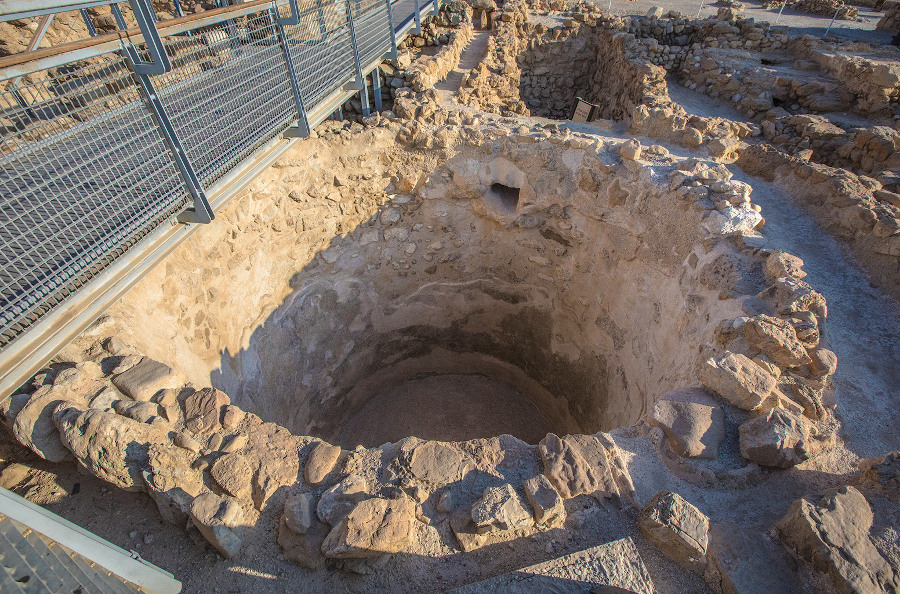
Cisterns and towers have been found in several excavations. This cistern is from the Qumran excavations (2Ch 26:10).
© 2018 by Zondervan
Return to the main text.
26:11 Uzziah had a well-trained army. An account of this event by Tiglath-Pileser III of Assyria states that he was opposed in his advance toward the west (743 bc) by a coalition headed by “Azriau of Yaudi,” perhaps Azariah (Uzziah) of Judah. See photo.
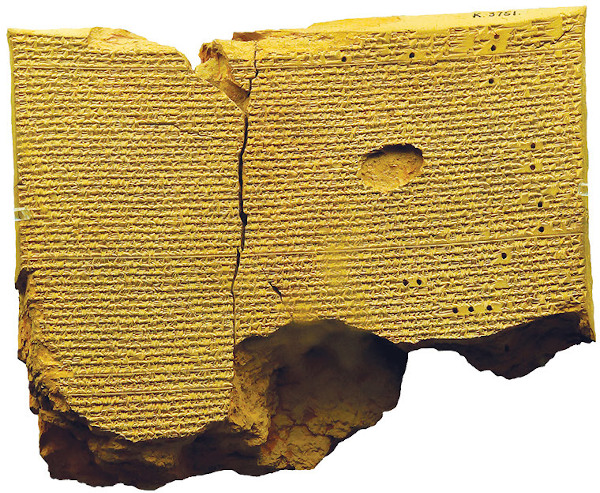
The Annals of Tiglath-Pileser III names “Azriau of Yaudi,” possibly Azariah/Uzziah of Judah (2Ch 26:11).
Todd Bolen/BiblePlaces.com
Return to the main text.
26:15 devices. Perhaps defensive constructions to protect the soldiers.
26:16–20 Uzziah . . . to burn. Uzziah is punished for doing what only a priest was allowed to do. Though Solomon offered sacrifices and burned incense (1Ki 9:25), these were evidently offered by priests, not by Solomon himself.
26:16 after Uzziah became powerful. See note on v. 5.
26:19 leprosy. See NIV text note; see also note on Lev 13:2; for disease as a punishment for sin, see notes on 16:12; 21:12–15.
26:21 Uzziah . . . died. See Isa 6:1 and note. separate house. See NIV text note; the same phrase in the Canaanite texts from Ugarit suggests a kind of quarantine or separation.
26:22 recorded by . . . Isaiah. Not a reference to the canonical book but to some other work no longer in existence.
26:23 buried . . . in a cemetery that belonged to the kings. Cf. 2Ki 15:7. Apparently due to his leprosy, Uzziah was buried in a cemetery belonging to the kings, though not in the tombs of the kings.
27:1–9 See 2Ki 15:32–38 and notes.
27:1 sixteen years. 750–735 bc, including a coregency with Uzziah (750–740); see chart. His reign also overlapped that of his successor, Ahaz, from 735 to 732.
27:2 did not enter the temple. The Chronicler commends Jotham for not making the same error Uzziah did (26:16). corrupt practices. Appears to refer to the flourishing high places (2Ki 15:35).
27:3–6 Unique to the Chronicler and an elaboration of his thesis that fidelity to God’s commands brings blessing: in construction, military victory and prosperity—all “because he walked steadfastly before the LORD” (v. 6). Judah’s relationship with the Ammonites held particular interest for the Chronicler (see notes on 20:1–30; 24:26).
27:7 all his wars. See, e.g., 2Ki 15:37.
28:1–27 See 2Ki 16:1–20 and notes, though only the introduction and conclusion in the two accounts are strictly parallel. The reign of Ahaz is the only one for which the Chronicler does not mention a single redeeming feature. In his account the Chronicler appears to adopt explicit parallels from the speech of Abijah condemning the northern kingdom (ch. 13) in order to show that under Ahaz the southern kingdom had sunk to the same depths of apostasy. Judah’s religious fidelity, of which Abijah had boasted, was completely overthrown under Ahaz.
28:1 sixteen years. 732–715 bc, not including the coregency with Jotham (735–732); see chart.
28:2 made idols. Cf. 13:8. Baals. See notes on Jdg 2:11,13.
28:3 Valley of Ben Hinnom. See 33:6; see also notes on Ne 11:30; Jer 7:31. Josiah put an end to the pagan practices observed there (2Ki 23:10). sacrificed his children. See Lev 20:1–5; Jer 7:31–32.
28:5 Cf. 13:16–17. God delivered him into the hands of. According to the Chronicler’s view on immediate retribution, defeat in war is one of the results of disobedience (see note on 20:30). also given into the hands of the king of Israel. 2Ki 16:5–6 and Isa 7 make it clear that Rezin (king of Aram) and Pekah acted together against Judah. The Chronicler has chosen either to treat them separately or to report on two different episodes of the Aram-Israel coalition.
28:6 Pekah. Reigned over the northern kingdom 752–732 bc (2Ki 15:27–31). had forsaken the LORD. The same charge Abijah made against the northern kingdom (13:11).
28:9–15 The kindness of the northern captors to their captives from Judah, especially as recorded in vv. 14–15, may be the background for Jesus’ parable of the Good Samaritan (Lk 10:25–37). Oded’s attitude to the north is shown by his willingness to call them “fellow Israelites” (v. 11). In this case, too, the record of ch. 13 has been reversed: The northern tribes are more righteous than the south.
28:17–18 Edomites . . . attacked Judah . . . Philistines had raided. Foreign alliances (v. 16) led to further defeats for Ahaz (see note on 16:2–9).
28:19 The LORD had humbled Judah because of Ahaz. The same formula used to describe the defeat of the northern tribes in 13:18, though under Ahaz it is Judah that is subdued.
28:20 Tiglath-Pileser. King of Assyria 745–727 bc (see 1Ch 5:26 and note). trouble instead of help. Appears on the surface to contradict the statement in 2Ki 16:9 that Tiglath-Pileser III responded to Ahaz’s request by attacking and capturing Damascus, exiling its population and killing Rezin. The Chronicler assumes the reader’s familiarity with the other account and knows of the temporary respite for Judah gained by Assyrian intervention against Damascus and the northern kingdom of Israel. But he focuses on the long-range results, in which Judah herself was reduced to vassalage to Assyria.
28:24–25 Additional details on Ahaz’s alterations are found in 2Ki 16:17–18. The Chronicler also adds details in his description of Hezekiah’s reforming activities to correct some of the abuses under Ahaz: Not only had the doors of the temple been shut, but also the lamps were put out and offerings were not made at the sanctuary (29:7); the altar and utensils were desecrated, and the table for the consecrated bread was neglected (29:18–19). It is precisely these accoutrements of proper temple service about which Abijah had boasted when he proclaimed the faithfulness of Judah, in contrast to that of the northern kingdom (13:11). Now these furnishings are lacking under Ahaz and make the southern kingdom just like the north (see note on vv. 1–27).
28:27 not placed in the tombs of the kings. The third king whose wickedness resulted in the loss of this honor at death. The others were Jehoram (21:20) and Joash (24:25). Uzziah’s sin and leprosy brought the same result, though it is not reported in exactly the same terms (26:23). Cf. also Manasseh (33:20).
29:1—32:33 See article.
29:1 twenty-nine years. 715–686 bc (but see note on Isa 36:1), including a 15-year extension of life granted by God (2Ki 20:6) but not mentioned by the Chronicler.
Hezekiah and Covenant Faithfulness
The Chronicler gives more attention to Hezekiah than to any other post-Solomonic king. The focus of these chapters is on Hezekiah’s commitment to religious reform. He devotes himself to the purification of the temple so that temple service can be reestablished (29:35b). He calls for and leads the celebration of the Passover at the right time of year and in the right ways (ch. 30). He calls for a renewed commitment to support the temple and its priestly service (ch. 31).
When compared to Kings, it is clear that the Chronicler gives less attention to Hezekiah’s confrontation with Sennacherib of Assyria (cf. 32:1–23 with 2 Ki 18:13—19:37) in order to focus attention on his reforms. The numerous parallels in these chapters with the account of Solomon’s reign suggest that the Chronicler viewed Hezekiah as a second Solomon in his Passover celebration (ch. 30), his arrangements for worship (29:7,18,35; 31:2–3), his wealth (32:27–29), the honor accorded him by the Gentiles (32:23) and the extent of his dominion (30:25; cf. similarly Pr 25:1 and note). Other than a brief reference to Hezekiah’s pride from which he quickly repents (32:24–26), Hezekiah provides a model of covenant faithfulness in the Davidic dynasty.
Go to the Articles Index.
29:3—30:27 Unique to Chronicles.
29:3 first year. 715 bc, another example of the Chronicler’s practice of introducing chronological materials into his narrative (see note on 12:2). opened the doors of the temple. Necessary after the actions of Ahaz (28:24). repaired them. The repairs to the doors included new gold overlay (2Ki 18:16).
29:5–11 Hezekiah’s speech demonstrates again the Chronicler’s convictions about the coherence of action and effect: The sins of the past bring difficulty and judgment, but renewed fidelity brings relief.
29:7 Hezekiah reinstitutes these temple arrangements—following the pattern of Solomon (2:4; 4:7).
29:8 object of dread and horror and scorn. Echoes the language of the prophets, especially Jeremiah (Jer 19:8; 25:9,18; 29:18; 51:37). Reference is to the Assyrian devastation of the northern kingdom and much of Judah.
29:12 Kohathites . . . Merarites . . . Gershonites. The three clans of Levi (1Ch 6:1).
29:13–14 Asaph . . . Heman . . . Jeduthun. Founders of the three families of Levitical musicians (1Ch 6:31–48; 25:1–31).
29:13 Elizaphan. A leader of the Kohathites (Nu 3:30), whose family had achieved status almost as a subclan (see 1Ch 15:8 and note on 15:4–10).
29:16 Kidron Valley. See note on Isa 22:7 and maps here and here; see also 1Ki 15:13 and note.
29:18 These actions under Hezekiah mirror those of Solomon (2:4).
29:21 sin offering. See Lev 4:1—5:13 and chart.
29:22 splashed their blood. See Lev 17:6; Nu 18:17.
29:23 laid their hands on them. See Lev 4:13–15; 8:14–15; Nu 8:12.
29:25 Gad . . . Nathan. See 1Sa 22:5 and note; 2Sa 7; 12.
29:26 David’s instruments. See 1Ch 23:5.
29:35 burnt offerings in abundance . . . fellowship offerings . . . drink offerings. Reminiscent of the dedication of the temple under Solomon (7:4–6). For the laws regarding the fellowship offerings, see Lev 3; 7:11–21; for the drink offerings, see Nu 15:1–12. service of the temple of the LORD was reestablished. Similar to the formula used in 8:16 with reference to Solomon’s work.
30:1–27 Unique to the Chronicler; cf. the famous Passover celebration under Josiah (35:1–19; 2Ki 23:21–23). Hezekiah allowed two deviations from the law (Ex 12; Dt 16:1–8) in this observance: (1) the date in the second month (v. 2) and (2) exemption from some ritual requirements (vv. 18–19).
30:1 all Israel and Judah. See Introduction to 1 Chronicles: Purposes. With the northern kingdom now ended as the result of the Assyrian invasion and deportation, the Chronicler shows “all Israel” once again united around the Davidic king and the temple (vv. 5,18–19,25).
30:2 second month. After the division of the kingdom, Jeroboam deferred the sacral calendar of the northern kingdom by one month (1Ki 12:32), possibly to further wean the subjects in the north away from devotion to Jerusalem. By delaying the celebration of Passover one month, Hezekiah not only allows time for the priests to consecrate themselves (v. 3) and for the people to gather (vv. 3,13) but also achieves unity between the kingdoms on the date of the Passover for the first time since the schism more than two centuries earlier. Delaying the date reflects Hezekiah’s concern to involve more than just the southern kingdom. For the first time since Solomon the entire nation observes Passover together, reflecting the Chronicler’s view that Hezekiah is a second Solomon. Passover was prescribed for the 14th day of the first month (Ex 12:2, 6; Dt 16:1–8) but could not be celebrated at that time due to the defilement of the temple and the purification rites under way (29:3,17). For celebration of Passover by the restored community shortly after the dedication of the rebuilt temple, see Ezr 6:16–22.
30:5 large numbers. Another comparison with the time of Solomon (see v. 26). At the time of its inception, Passover was primarily a family observance (Ex 12). It later became a national celebration at the temple (v. 8; see Dt 16:1–8).
30:8 Come to his sanctuary. Passover was one of three annual festivals requiring attendance at the temple (see Nu 28:9—29:39).
30:9 shown compassion by their captors. In Solomon’s prayer in 6:39 the Chronicler omitted the phrase found in the parallel account (1Ki 8:50) that their conquerors would “show them mercy.” Here the phrase is found in the speech of Hezekiah, again portraying him as a second Solomon (Lev 26:40–42). will return to this land. Those who repent will have hope of return, even those from the Assyrian captivity. gracious and compassionate. Echoes Ex 34:6, which describes the Lord’s character (see note there).
30:14 Kidron Valley. See 29:16 and note.
30:15 The priests and the Levites . . . consecrated themselves. The reproach previously directed against the priests (v. 3; 29:34) is here broadened to include also the Levites—an exhortation to the priests and Levites of the restored community to be faithful.
30:17 Levites had to kill the Passover lambs. See Ex 12:6; Dt 16:6. According to the law the heads of families were to slay the Passover sacrifice. The Levites perhaps acted for the recent arrivals from the northern kingdom who were not ceremonially clean. Cf. Jn 11:55.
30:18–19 Faith and obedience take precedence over ritual requirements (see note on Isa 1:11–15; cf. Mk 7:1–23; Jn 7:22–23; 9:14–16).
30:20 The response to Hezekiah’s prayer recalls the prayer of Solomon (7:14).
30:23 another seven days. The festival was observed for two weeks, just as the observance of the dedication of Solomon’s temple had been (7:8–9).
30:26 since the days of Solomon. An explicit indication of the Chronicler’s modeling of the reign of Hezekiah after that of Solomon (see note on 29:1—32:33).
30:27 prayer reached heaven, his holy dwelling place. Another echo of Solomon’s dedication prayer (6:21,30,33,39).
31:1–21 Apart from the first verse, which parallels 2Ki 18:4, the material of this chapter is unique to the Chronicler, whose interest in the Levites and the temple predominates. Hezekiah’s efforts to ensure the material support of the Levites (v. 4) probably had relevance to the postexilic audience for whom the Chronicler wrote.
31:1 sacred stones. See note on 1Ki 14:23. Asherah poles. See NIV text note on 14:3 and note on Ex 34:13.
31:2 Echoes 8:14. The Chronicler continues to model Hezekiah as a second Solomon (see notes on 29:7,18).
31:3 king contributed. The king’s giving from his own wealth prompted a generous response from the people, as it had also under David (1Ch 29:3–9).
31:5–6 See Dt 12:5–19; 14:22–27. The grain, new wine and olive oil had to be brought to the temple (Dt 12:17). Those coming from a distance, however, could bring the value of their offerings and purchase them on arrival (Dt 14:24). Only those who actually lived in Judah brought the tithe of their herds and flocks, a difficult procedure for those who lived farther away. For the restored community’s commitment to bring their firstfruits, tithes and offerings, see Ne 10:35–39. For their failure to do so, see Ne 13:10–13; Mal 3:8–10.
31:7 third month. May–June, the time of the Festival of Pentecost and the grain harvest. seventh month. September–October, the time of the Festival of Tabernacles and the fruit and vine harvest (Ex 23:16).
31:16 three years. The age at which a child was weaned. Verses 16–18 stress the inclusion of almost everyone in the community.
31:20–21 Another brief indication of the Chronicler’s emphasis on immediate consequences: Not only does disobedience bring immediate chastening, but obedience and seeking God bring prosperity.
32:1–23 The record of Sennacherib’s invasion is much more detailed in 2 Kings and Isaiah (see note on 29:1—32:33).
32:1 The invasion occurred in 701 bc, Hezekiah’s 14th year (see 2Ki 18:13; Isa 36:1).
32:2–8 Normal preparations for invasion.
32:5 built another wall. See photo.
32:9 Chronicles does not include the information contained in 2Ki 18:14–16, which records Hezekiah’s suit for peace with its accompanying bribe stripped from the temple treasures. These acts were apparently out of accord with the Chronicler’s portrait of Hezekiah.
32:10 Chronicles does not include the information contained in 2Ki 18:20–21 (and Isa 36:5–6), containing a portion of the Assyrian commander’s speech ridiculing Hezekiah and the citizens of Jerusalem for trusting in Egypt and the pharaoh. This, too, may be theologically motivated, in light of the Chronicler’s attitude toward foreign alliances (see note on 16:2–9). The same concern with foreign alliances is also likely the reason for the omission of the information contained in 2Ki 18:23–27 (and Isa 36:8–12), where mention is again made of the hope of Egyptian intervention (see 2Ki 19:9 for the incursion of Tirhakah).
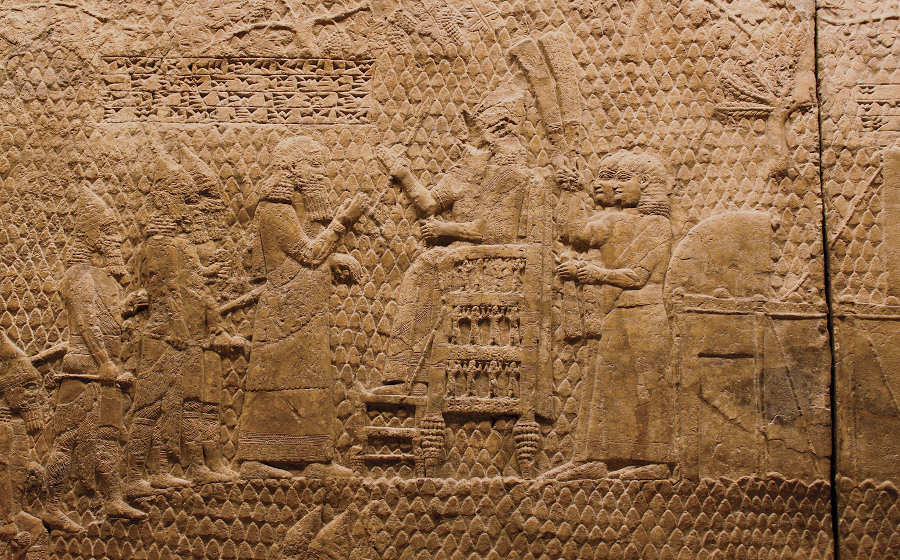
Sennacherib watching over the exiles of Lachish. These scenes were found in Sennacherib’s palace in Nineveh (7th century bc).
© 2013 by Zondervan
Return to the main text.
32:16 spoke further. The Chronicler appears to assume his reader’s familiarity with the longer account of the Assyrian taunts found in Kings and Isaiah.
32:18 called out in Hebrew. Assumes knowledge of the fuller story (2Ki 18:26–28; Isa 36:11–13).
32:20 This brief reference to the prayers of Hezekiah and Isaiah abridges the much longer narrative in 2Ki 19:1–34 (and Isa 37:1–35).
32:21 See 2Ki 19:35–37; Isa 37:36–38. The Chronicler and the parallel accounts summarize and telescope events somewhat: Sennacherib’s invasion of Judah was in 701 bc, while his death at the hand of his sons was in 681. annihilated all the fighting men. Hyperbole. The point is the total devastation of the enemy camp. 2Ki 19:35 says 185,000 were killed.
32:23 highly regarded by all the nations. Another effort to compare Hezekiah with Solomon (9:23–24).
32:24 The Chronicler abridges the narrative in 2Ki 20:1–11 (and Isa 38:1–8), assuming the reader’s familiarity with the role of Isaiah and the miraculous sign of the shadow reversing ten steps.
32:25–30 Not found in the parallel texts.
32:25–26 proud . . . pride. The Chronicler does not specify the nature of Hezekiah’s pride (however, see v. 31; 2Ki 20:12–13; Isa 39:1–2). Even for a second Solomon like Hezekiah, disobedience brings anger from the Lord.
32:27–29 The Chronicler likens Hezekiah to Solomon also by recounting his wealth (9:13–14).
32:31 See v. 25. The Chronicler assumes the reader’s knowledge of the fuller account in 2Ki 20:12–19 (and Isa 39:1–8). The envoys from Babylon were apparently interested in joint efforts against the Assyrians, hoping to open two fronts against them simultaneously.
33:1 fifty-five years. 697–642 bc.
Manasseh and Covenant Unfaithfulness
Manasseh had the longest reign of any of the kings of Judah, a total of 55 years (v. 1). The emphasis in the two accounts differs: While both histories report at length the evil done in Manasseh’s reign, only the Chronicler mentions his journey to Babylon and his repentance and restoration to rule. For the writer of Kings, the picture is only a bad one in which Manasseh could be considered almost single-handedly the cause of the exile (2Ki 21:10–15; 23:26).
Some interpreters regard the record of Manasseh’s repentance in Chronicles as motivated by the author’s emphasis on immediate consequences: Length of reign is viewed as a blessing for obedience, so that the Chronicler deliberately records some good in Manasseh as a ground for his long reign. However, it must be noted that length of reign is not elsewhere used by the Chronicler as an indication of divine blessing. The usual indicators for such blessing in his account are peace and prosperity, building projects, success in warfare and large families. See also 2Ki 21:1–18 and notes.
Go to the Articles Index.
33:3,19 Asherah poles. See note on Ex 34:13.
33:4 My Name will remain in Jerusalem forever. See 1Ki 3:2 and note; 9:3; Ps 132:13–14.
33:6 sacrificed his children . . . Valley of Ben Hinnom. See 28:3 and note.
33:10 See note on vv. 1–20. The Chronicler abridges what the Lord said to Manasseh and the people through the prophets; the fuller record is found in 2Ki 21:10–15.
33:11–17 Unique to the Chronicler, showing his stress on immediate consequences: Manasseh’s evil brings invasion and defeat, while his repentance brings restoration to rule.
33:11 took him to Babylon. Esarhaddon (681–669 bc) lists him among 22 kings required to forward materials for his building projects, and Ashurbanipal (669–627) names him as one of a number of vassals supporting his campaign against Egypt. The fact that an Assyrian king would have him taken to Babylon suggests that this incident may have taken place during the rebellion of Shamash-Shum-Ukin against his brother and overlord Ashurbanipal. This rebellion lasted from 652 to 648, and Manasseh may have joined or at least have been suspected of assisting in the Babylonian defection from Assyria. Manasseh may have been found innocent, or he may have been pardoned on the basis of a renewed pledge of loyalty. Egypt had also bolted from the Assyrian yoke under the new Twenty-Sixth Dynasty, and the return of Manasseh to rule may reflect the Assyrian need of a vassal near the border of Egypt.
33:12 The language is reminiscent of Solomon’s prayer (7:14).
33:14 rebuilt the outer wall. For the Chronicler such building programs are a sign of divine blessing (8:1–6; 11:5–12; 14:6–7; 26:9–10,14–15; 32:1–5, 27–30; 1Ch 11:7–9; 15:1).
33:15–16 Whatever the precise nature of Manasseh’s reforms, Josiah would later still need to remove “the altars Manasseh had built in the two courts of the temple” (2Ki 23:12).
33:20 buried in his palace. Cf. 2Ki 21:18. His burial in the palace garden makes Manasseh the fifth king the Chronicler names who was not buried in the tombs of the kings due to unfaithfulness (see note on 28:27).
33:21–25 See 2Ki 21:19–26. The Chronicler’s account of the reign of Amon (642–640 bc) is quite similar to that in Kings, apart from (1) the additional note that Amon was not repentant like his father, Manasseh, a note based on a passage unique to the Chronicler (vv. 12–13), and (2) the absence of the death formula.
34:1–2 See 2Ki 22:1–2.
34:1 thirty-one years. 640–609 bc.
Josiah as a Model of Covenant Faithfulness
The Chronicler highlights Josiah as a model of covenant faithfulness by narrating Josiah’s leadership in (1) the removal of foreign religions (34:1–13), (2) the finding of the Book of the Law and the covenant renewal that followed (34:14–33) and (3) the celebration of Passover (35:1–19).
This last passage is greatly expanded from 2Ki 23:21–23, fitting the Chronicler’s interest in the temple and its related activities. In fact, Josiah’s celebration of the Passover is set out as an ideal: “none of the kings of Israel had ever celebrated such a Passover as did Josiah” (35:18). Even though his reforms cannot reverse God’s judgment of Judah’s idolatry, Huldah the prophet speaks God’s promise that Josiah will not have to see the coming disaster since he has humbled himself (34:33).
Go to the Articles Index.
34:3–7 The writer of Kings covers this aspect of Josiah’s reform in much greater detail (2Ki 23:4–20). He also places his account of the removal of pagan religions after the discovery of the Book of the Law, while the Chronicler places it before. Verse 3 here says only that Josiah began to seek God at this point, allowing for much more reform to come later.
34:3 Some interpreters have sought to tie the events of Josiah’s 8th (v. 3), 12th (v. 3) and 18th (v. 8) years to stages in the progressive decline and fall of the Assyrian Empire, which had dominated the area for about two centuries. The demise of Assyrian control over Aram and Israel undoubtedly facilitated and encouraged Josiah’s reassertion of Davidic authority over former Assyrian provinces (vv. 6–7). However, the Chronicler highlights the religious motives in Josiah’s reforms. If one does, the reform is reduced to a mere political rebellion. Asherah poles. See note on Ex 34:13.
34:6 Manasseh, Ephraim and Simeon, as far as Naphtali. The Chronicler’s emphasis on “all Israel” (see Introduction to 1 Chronicles: Purposes) is apparent in his recording the involvement of the northern tribes in Josiah’s reform (see also vv. 9,21,33). The Chronicler again shows all Israel united under a Davidic king, just as he did under Hezekiah (see note on 30:1). Simeon. Some Simeonites must have migrated from Judah to the north.
34:7 throughout Israel. Defined by the list of tribes in v. 6.
34:8–21 See 2Ki 22:3–13 and notes.
34:9 Manasseh, Ephraim and the entire remnant of Israel. As part of his emphasis on “all Israel,” the Chronicler notes that worshipers from the north also brought gifts to the temple (not explicitly indicated in 2Ki 22:4).
34:14 Book of the Law of the LORD. See note on 17:9. In Kings the finding of the Book of the Law in the temple in Josiah’s 18th year is the first incident mentioned. The writer appears to have organized his material geographically, i.e., beginning with the temple and spreading through the city, then into the rest of the nation. The Chronicler, on the other hand, has arranged the incidents in order of their occurrence and has characteristically introduced a number of chronological notes into the text: 34:3 (two notes without parallel in Kings); 34:8 (see 2Ki 22:3); 35:19 (see 2Ki 23:23; see also note on 2Ch 12:2). Chronicles makes it clear that the reform began in Josiah’s 12th year (34:3), six years before the discovery of the Book of the Law.
34:22–28 See 2Ki 22:14–20 and notes.
34:22 prophet Huldah. See notes on Ex 15:20; 2Ki 22:14.
34:28 will be buried in peace. See the death and burial account (35:20–25).
34:29–31 See 2Ki 23:1–3 and notes.
34:30 the priests and the Levites. Cf. 2Ki 23:2, which has “the priests and the prophets.” This fits the Chronicler’s emphasis on the priests.
34:33 all the territory belonging to the Israelites . . . all who were present in Israel. See note on v. 6.
35:1–19 The Chronicler gives much more extensive coverage to Josiah’s Passover celebration than is found in the brief allusion in Kings (2Ki 23:21–23).
35:1 first month. The traditional month; contrast the Passover of Hezekiah (see note on 30:2).
35:3 Put the sacred ark in the temple. Implies that it had been removed, perhaps for protection during the evil reigns of Manasseh and Amon, who preceded Josiah.
35:4 David . . . Solomon. The Chronicler specifically parallels David and Solomon in three cases: 7:10 (contrast 1Ki 8:66, where only David is mentioned); 11:17; and here. This tendency reflects his idealization of both (see Introduction to 1 Chronicles: Portrait of David and Solomon).
35:7–9 The emphasis in Chronicles on voluntary and joyful giving (24:8–14; 29:31–36; 31:3–21; 1Ch 29:3–9) presumably had direct relevance to the postexilic readers for whom the Chronicler wrote.
35:18 since the days of the prophet Samuel. Instead of “in the days of the judges” (2Ki 23:22). This is the Chronicler’s way of highlighting the importance of the prophets (see Introduction to 1 Chronicles: Purpose and Themes, 3).
35:19 eighteenth year. The same year as the discovery of the Book of the Law (34:8,14).
35:20–27 See 2Ki 23:28–30. In 609 bc Pharaoh Necho “went up to the Euphrates River to help the king of Assyria” (2Ki 23:29) against the Babylonians.
35:21–22 Unique to the Chronicler, showing his view on retribution: Josiah’s death in battle comes as a result of his disobedience to the word of God as heard even in the mouth of the pagan pharaoh.
35:21 house with which I am at war. A reference to the Babylonians; Nabopolassar was on the throne of Babylon, while his son Nebuchadnezzar was commanding the armies in the field. Nebuchadnezzar would succeed his father after another battle at Carchemish against Egypt in 605 bc. Josiah may have been an ally of Babylon (see 32:31; 33:11 and notes).
35:22 disguised himself. Cf. Ahab and Jehoshaphat (see 18:29 and note). plain of Megiddo. See note on Jdg 5:19.
35:24b–25 Unique to Chronicles.
35:25 Jeremiah composed laments for Josiah. Jeremiah held Josiah in high esteem (Jer 22:15–16). The statement that he composed laments is one of the reasons the book of Lamentations has been traditionally associated with him.
36:2–14 Josiah is the only king of Judah to be succeeded by three of his sons (Jehoahaz, Jehoiakim and Zedekiah). The Chronicler’s account of the reigns of the remaining kings of Judah is quite brief.
36:2 See 2Ki 23:31–35. With the death of Josiah at the hands of Pharaoh Necho, Judah slipped into a period of Egyptian domination (vv. 3–4). three months. In 609 bc. Necho’s assertion of authority over Judah ended the brief 20 years of Judahite independence under Josiah. The Chronicler makes no moral judgment on Jehoahaz’s brief reign, though the author of Kings does (2Ki 23:32).
36:4 Just as Necho took Jehoahaz into captivity and replaced him with Eliakim, whose name he changed to Jehoiakim, so also Nebuchadnezzar would later take Jehoiachin to Babylon, replacing him with Mattaniah, whose name he changed to Zedekiah (2Ki 24:15–17). Each conqueror wanted to place his own man on the throne; the change of name implied authority over him.
36:5–8 See 2Ki 23:36—24:7. Jehoiakim persecuted the prophets and is the object of scathing denunciation by Jeremiah (Jer 25–26; 36). After the Egyptian defeat at Carchemish (Jer 46:2) in 605 bc, Jehoiakim transferred allegiance to Nebuchadnezzar of Babylon. When he later rebelled and again allied himself with Egypt, Nebuchadnezzar sent a punitive army against him. But Jehoiakim died before the army arrived, and Nebuchadnezzar took his son Jehoiachin into captivity.
36:5 eleven years. 609–598 bc.
36:6 Nebuchadnezzar . . . attacked him. See chart.
36:9–10 See 2Ki 24:8–17; see also Jer 22:24–28; 24:1; 29:2; 52:31. Although Jehoiachin was taken into captivity (597 bc) with a large retinue, including the queen mother and high officials, and was succeeded by Zedekiah, the exiles continued to date events in terms of his reign (Jer 52:31; Eze 1:2; cf. Est 2:5–6).
36:9 three months and ten days. 598–597 bc.
36:11–14 See 2Ki 24:18–20; Jer 52:1–3. Verses 13b–14 are unique to the Chronicler (cf. Jer 1:3; 21:1–7; 24:8; 27:1–15; 32:1–5; 34:1–7,21; 37:1—39:7). Zedekiah succumbed to the temptation to look to Egypt for help and rebelled against Nebuchadnezzar. Babylonian reaction was swift. Jerusalem was besieged (Jer 21:3–7) in 588 bc and held out for over two years before being destroyed in the summer of 586.
36:11 eleven years. 597–586 bc.
36:20–21 The conclusions of the two biblical histories clearly reflect their different purposes: (1) The author(s) of Kings had sought to show why the exile occurred and had traced the sad history of Israel’s disobedience to the exile. With the state at an end, the author(s) could still show God’s faithfulness to his promises to David (2Ki 25:27–30) by reporting the favor bestowed on his descendants. (2) The Chronicler, whose vantage point was after the exile, was able to look back on the exile not only as judgment but also as containing hope for the future. For him the purified remnant had returned to a purified land (vv. 22–23), and a new era of hope was beginning. The exile was not judgment alone, but also blessing, for it allowed the land to catch up on its sabbath rests (Lev 26:40–45). And God had remembered his covenant (Lev 26:45) and restored his people to the land (see note on vv. 22–23).
36:22–23 Not found in Kings. It is repeated at the beginning of Ezra (1:1–3), which resumes the history at the point where Chronicles ends—indicating that Chronicles and Ezra may have been written by the same author. See the prophecy of Jeremiah (Jer 25:1–14; cf. Da 9). Cyrus also issued decrees for other captive peoples, allowing them to return to their lands. Under God’s sovereignty, this effort by a Persian king to win the favor of peoples treated harshly by the Babylonians also inaugurated the restoration period. See notes on Ezr 1:1–4.