33:4 Jerusalem’s houses—including those of the king—were torn down so that their stones could be used to repair the city’s battered walls (see Isa 22:10 and note). siege ramps. See 6:6 and note.
33:5 fight with the Babylonians. See 32:5. dead bodies. Of Jerusalem’s defenders.
33:6–16 The glorious restoration of Jerusalem (see Isa 35:1–10 and notes).
33:6 health and healing. See 30:17; contrast 8:22.
33:7 bring . . . back from captivity. See vv. 11,26; see also note on 29:14. Judah and Israel. See note on 3:18.
 33:8 forgive all their sins. The basis of the institution of the new covenant (see 31:34 and note; see also 50:20; Eze 36:25–26).
33:9 tremble at the abundant prosperity. See Hos 3:5 and note.
33:11 joy and gladness . . . bride and bridegroom. The glorious reversal of the judgment proclaimed in 7:34; 16:9; 25:10. those who bring thank offerings. See note on 17:26. restore the fortunes. See note on 29:14.
33:13 hill country . . . towns of Judah. See 17:26 and note; 32:44. flocks . . . pass under the hand . . . counts them. See Eze 20:37 and note.
33:15–16 Repeated from 23:5–6 (see notes there).
33:15 what is just and right. See note on Ps 119:121.
33:16 it will be called. Because of Jerusalem’s intimate relationship to the Messiah, it is given the same name by which he is called in 23:6 (for other examples, see Jdg 6:24; Eze 48:35). But see NIV text note. In any event, both the Messiah and the place of his throne will have the name or character of righteousness.
33:17–26 In the face of the impending judgment in which the nation will be swept away and the promised land reduced to a desolate wasteland, all God’s past covenants with his people appear to be rendered of no effect—his covenants with Israel, with David and with Phinehas (see chart). This series of messages, however, gives reassurance that the ancient covenants are not being repudiated, that they are as secure as God’s covenant concerning the creation order and that in the future restoration they will all yet be fulfilled.
33:17 See 2Sa 7:12–16; 1Ki 2:4; 8:25; 9:5; 2Ch 6:16; 7:18. This passage is fulfilled ultimately in Jesus (see Lk 1:32–33 and notes).
33:18 See Nu 25:13. The priestly covenant with the Levites, like the royal covenant with David, was not a private grant to the priestly family involving only that family and the Lord. It was rather an integral part of the Lord’s dealings with his people, in which Israel was assured of the ministry of a priesthood that was acceptable to the Lord and through whose mediation God’s people could enjoy communion with him. That ministry was and is being fulfilled by Jesus, who administers a higher and better priesthood (Ps 110:4; Heb 5:6–10; 6:19–20; 7:11–25). Levitical priests. See Dt 17:9,18.
33:20 covenant with the day and . . . the night. See v. 25; 31:35–36. Although reference may be to God’s sovereign establishment of the creation order in the beginning, more likely the covenant of Ge 9:8–17 (see Ge 8:22) is in view.
33:21 covenant with the Levites. See Mal 2:4.
33:22 In words that echo the covenant promises to the patriarchs (Abraham, Ge 22:17; Isaac, Ge 26:4; Jacob, Ge 32:12), the Lord assures the flourishing of the two mediatorial (royal and priestly) families and thus the continuation of this ministry in the spiritual commonwealth he has established with his people. This promise of a numerous progeny to both the royal and priestly families is ultimately fulfilled in that great throng who (will) reign with Christ (see Ro 5:17; 8:17; 1Co 6:3; 2Ti 2:12; Rev 3:21; 5:10; 20:5–6; 22:5; see also Mt 19:28; Lk 22:30) and who in Christ have been consecrated to be priests (see 1Pe 2:5, 9; Rev 1:6; 5:10; 20:6; see also Isa 66:21; Ro 6:13; 12:1; 15:16; Eph 5:2; Php 4:18; Heb 13:15–16).
33:24 two kingdoms. Israel and Judah. But since the Hebrew uses a word here that commonly refers to families (see NIV text note), the reference may be to the two mediatorial (royal and priestly) families, or to the families of Jacob and David (v. 26). he chose. See Am 3:2 and note.
33:26 restore their fortunes and have compassion. Echoes Dt 30:3; see note on 29:14.
34:1—35:19 The first major division of the book (chs. 2–35) now comes to a close. Jeremiah’s warnings and exhortations to Judah are concluded with a historical appendix (chs. 34–35), a technique used to conclude the third major division of the book (chs. 39–45) as well (see note on 45:1–5). Ch. 52, written by someone other than Jeremiah (51:64), serves as a fitting historical appendix to the entire book.
34:1–22 The chapter divides naturally into two parts (vv. 1–7 and 8–22), each of which dates to 588 bc (see notes on vv. 7,21–22).
34:1–7 Jeremiah’s warning to King Zedekiah parallels the prophet’s similar admonition in 21:1–10 (see notes there).
 34:1 kingdoms and peoples in the empire he ruled. Nebuchadnezzar’s empire was vast (see Eze 26:7; Da 3:2–4; 4:1; cf. the similar description of the Medes in 51:28). fighting against Jerusalem. Subject nations were expected to supply troops to fight alongside those of their overlord (2Ki 24:2). In a fourteenth-century bc treaty between the Hittite ruler Mursilis II and Duppi-Tessub, king of the Amorites, Mursilis says, “If you do not send your son or brother with your foot soldiers and charioteers to help the Hittite king, you act in disregard of the gods of the oath.” all its surrounding towns. See 19:15 and note.
34:2–3 See 32:3–5 and note; see also 39:4–7; Eze 12:12–13; 17:11–20.
34:3 you will go to Babylon. But only after Zedekiah was punished at Riblah, where his eyes were put out (see 2Ki 25:7 and note).
34:4 not die by the sword. See 32:5; 38:17,20; 52:11; Eze 17:16.
34:5 funeral fire in honor of . . . the kings who ruled before you. Not cremation, but the burning of spices in mourning and as a memorial (see 2Ch 16:14; 21:19; see also note on Am 6:10). Alas, master! Words of mourning at the death of a king (see 22:18; cf. 1Ki 13:30).
34:7 Lachish and Azekah. Solomon’s son Rehoboam had fortified them (2Ch 11:5,9), but Lachish was later besieged (701 bc) during Hezekiah’s reign by the Assyrian king Sennacherib (see 2Ch 32:9; see also photo). A contemporary relief depicting Sennacherib’s conquest states that he “sat on a throne and passed in review the plunder taken from Lachish.” In 1935, 18 ostraca (broken pottery fragments used as writing material) were discovered at Lachish (see chart), nearly all of them in the ruins of the latest occupation level (588 bc) of the Israelite gate-tower. Ostracon 4, written to the commander at Lachish shortly after the events described here, ends as follows: “We are watching for the fire-signals of Lachish . . . for we cannot see Azekah.” See note on 6:1; see also photo.

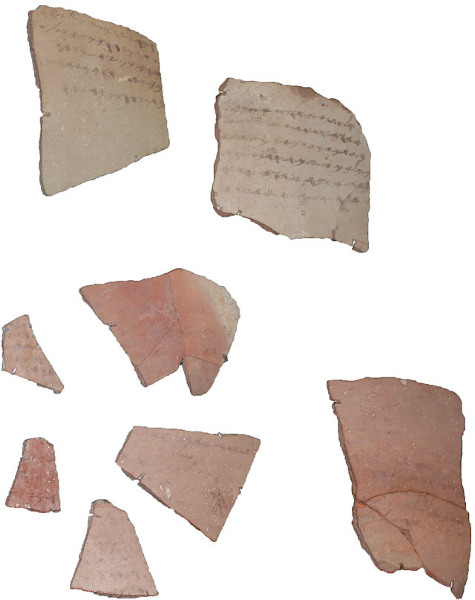
The Lachish Letters (ostraca; see Jer 34:7 and note) were discovered in a guardroom below the gate tower inside the outer wall at Lachish. They are written in ancient Hebrew (597–587 bc) and give valuable insight into the political situation during the last days of the southern kingdom of Judah.
© 2013 by Zondervan
Return to the main text.
34:8–22 Contemporary with the events of 37:4–12 (see note on vv. 21–22).
34:8 proclaim freedom. See Lev 25:10 and note. freedom for the slaves. In accordance with the general provisions of the law of Moses (see Ex 21:2–11 and notes; Lev 25:39–55; Dt 15:12–18).
 34:9 Hebrew. See Ge 14:13 and note. no one . . . hold a fellow Hebrew in bondage. See Lev 25:39,42.
34:10 They . . . set them free. To gain God’s blessing, and/or in the hope that the freed slaves would be more willing to help defend Jerusalem.
34:11 afterward. When the Babylonian siege was temporarily lifted due to Egyptian intervention (vv. 21–22; 37:5,11). took back the slaves they had freed. In violation of Dt 15:12. enslaved them. Cf. 2Ch 28:10.
34:13 land of slavery. See Ex 13:3, 14; 20:2; Dt 5:6; 6:12; 8:14; 13:5; Jos 24:17; Jdg 6:8. The Israelites were to free their slaves because God had earlier freed the Israelites (Dt 15:15).
34:14 Every seventh year . . . let them go free. A loose quotation of Dt 15:12.
34:15–16 you repented . . . you have turned around. The Hebrew for the two phrases is identical, providing an ironic play on words (see note on v. 18).
34:15 house that bears my Name. See 7:10 and note.
34:16 you have . . . profaned my name. By breaking the Lord’s covenant. Zedekiah was a man whose word could not be trusted (Eze 17:15,18). go where they wished. See Dt 21:14.
34:17 sword, plague and famine. See note on 14:12. abhorrent to all the kingdoms of the earth. See 15:4 and note.
34:18 violated . . . walked. The Hebrew root underlying both words is the same, again providing an ironic play on words (see note on vv. 15–16). made . . . cut. The Hebrew for the two words is identical. In ancient times, making a covenant involved a self-maledictory oath (“May thus and so be done to me if I do not keep this covenant”), which was often symbolized by cutting an animal in two and walking between the two halves (see Ge 15:18 and note). between its pieces. See note on Ge 15:17.
34:20 food for the birds . . . wild animals. See 7:33 and note.
34:21–22 Because of the arrival of the Egyptians on the scene, the Babylonians in 588 bc temporarily lifted the siege of Jerusalem (see notes on v. 11; 37:3).
34:21 withdrawn from you. See the hope expressed in 21:2.
34:22 I will bring them back. See 37:8.
35:1–19 The family of the Rekabites, who obeyed their forefather’s command, are an example and rebuke to the people of Judah, who have disobeyed the Lord (v. 16). The mention of “Babylonian and Aramean armies” (v. 11) dates the chapter to no earlier than the eighth year of King Jehoiakim, who began his reign in 609 bc, whose capital city of Jerusalem was besieged in 605 (see Da 1:1 and note) by Nebuchadnezzar and who rebelled against Nebuchadnezzar three or four years later—an unwise act that led to raids on his territory by Babylonians, Arameans and others (2Ki 24:1–2). (The raids are perhaps reflected in 12:7–13.)
35:1 during the reign of Jehoiakim. Chs. 35–36 (see 36:1) are a flashback to the reign of Jehoiakim (609–598 bc; see Introduction: Outline).
35:2 Rekabite family. A nomadic tribal group related to the Kenites (1Ch 2:55), some of whom lived among or near the Israelites (Jdg 1:16; 4:11; 1Sa 27:10) and were on friendly terms with them (1Sa 15:6; 30:26,29). side rooms of the house of the LORD. Used for storage and/or as living quarters (1Ki 6:5; 1Ch 28:12; 2Ch 31:11; Ne 13:4–5).
35:3 Jaazaniah. Means “The LORD hears.” It was a common name in Jeremiah’s time (40:8; Eze 8:11; 11:1) and appears on a stamp seal (discovered at Tell en-Nasbeh north of Jerusalem and dating to c. 600 bc), as well as on one of the Lachish ostraca (see note on 34:7 and photo). Jeremiah. Not the prophet.
35:4 sons. Perhaps here in the sense of “disciples” (see Am 7:14 and note). man of God. A synonym for “prophet” (see 1Ki 12:22; see also note on 1Sa 9:9), emphasizing his relationship to the One who has called him. Maaseiah. Perhaps the man of the same name mentioned in 21:1; 29:25; 37:3. doorkeeper. One of three supervisors (52:24) over those who guarded the entrances to the temple (2Ki 12:9).
35:5 bowls. Large vessels, from which smaller cups would be filled.
35:6 We do not drink wine. A permanent vow taken by the Rekabites; cf. the Nazirites’ temporary vow (Nu 6:2–3, 20; Jdg 13:4–7). So it is ironic that a later Rekabite, Malkijah, was “ruler of the district of Beth Hakkerem” (Ne 3:14), which means “house of the vineyard.” Jehonadab. See 2Ki 10:15,23. Nearly 250 years before the days of Jeremiah, he helped King Jehu destroy Baal worship (at least temporarily) in the northern kingdom.
35:7 must always live in tents. Except during times of national emergency (v. 11). Then you will live a long time in the land. An echo of Ex 20:12, where honoring one’s parents is commanded.
35:8 We have obeyed . . . Jehonadab. Contrast Judah’s disobedience toward God (v. 16).
35:13 learn a lesson. The Hebrew underlying this phrase is translated “respond(ed) to correction” in 2:30; 7:28 (see 5:3; 17:23 and note).
35:14–15 again and again. See note on 7:13.
35:16 these people. See Ex 17:4 and note.
35:19 never fail to have a descendant to serve me. See 33:18. Various traditions in the Jewish Mishnah (see note on Ne 10:34) claim that the Rekabites were later given special duties to perform in connection with the Jerusalem temple built after the return from Babylonian exile.
36:1—38:28 Three chapters united by the common theme of Jeremiah’s suffering and persecution.
36:1–32 An account of King Jehoiakim’s attempt to destroy Jeremiah’s written prophecies.
36:1 fourth year of Jehoiakim. 605 bc—a critical year in Judah’s history (see notes on 25:1; 46:2).
36:2 scroll. See notes on 30:2; Ex 17:14. write on it. To preserve Jeremiah’s messages for future generations. all the words I have spoken to you. This earliest edition of Jeremiah’s prophecies may have included all or most of chs. 1–26; 46–51. began speaking to you in the reign of Josiah. See note on 1:2.
36:3 Perhaps . . . then. If the people repent, the Lord will relent (see 18:7–10 and note; 26:3; Jnh 3:9 and note).
36:4 Baruch. See note on 32:12.
36:5 I am restricted. Perhaps because of his unpopular temple message(s) (7:2–15; 26:2–6), or perhaps because of the events recorded in 19:1—20:6.
36:6 day of fasting. Proclaimed because of a national emergency (cf. Joel 2:15), perhaps in this case the Babylonian attack of 605 bc (see Da 1:1 and note).
36:8 If the book presented Jeremiah’s prophecies in chronological order, ch. 45 would appear after this verse (see Introduction: Outline).
36:9 ninth month of the fifth year. December, 604 bc, during a time of cold weather (v. 22).
36:10 Cf. 2Ki 23:2. room. See note on 35:2. Gemariah son of Shaphan. This official’s name has been found in Jerusalem on a seal impression. Shaphan. Secretary of state under King Josiah (see 2Ki 22:3; see also notes on 26:24; 29:3). entrance of the New Gate. See 26:10 and note.
36:12 Elnathan son of Akbor. See note on 26:22.
36:18 ink. Mentioned only here in the OT (but see also 2Co 3:3; 2Jn 12; 3Jn 13). In ancient times, ink was made from soot or lampblack mixed with gum arabic, oil, or a metallic substance (as in the case of the Lachish ostraca; see note on 34:7 and photo).
36:19 The officials were understandably concerned about the safety of Jeremiah and Baruch (cf. 26:20–23).
36:20 put. For safekeeping.
36:22 ninth month. See note on v. 9. winter apartment. Probably a large room in the king’s palace. firepot. A depression or container in the middle of the floor where coals were kept burning to warm the room.
36:23 Contrast King Josiah’s desire to know the word of God and obey it (2Ki 22:11—23:3; 23:21–24). columns. Or “doors,” so called because of their rectangular shape. cut. Or “tore.” Instead of tearing his clothes in repentance (see note on v. 24), the king tore the prophet’s scroll. threw them into the firepot. Jehoiakim’s callous disregard for the word of God is highlighted by its juxtaposition with the Rekabites’ great regard for the word of their ancestor (ch 25).
36:24 attendants . . . showed no fear. See v. 31. Contrast the response of the officials (vv. 16,25). nor did they tear their clothes. Contrast the response of Jehoiakim’s father, Josiah (see 2Ki 22:11; cf. 1Ki 21:27).
36:26 Jerahmeel, a son of the king. This precise identification has been found on a seal impression discovered in a burnt archive near Jerusalem. son of the king. Since Jehoiakim was only about 30 years old (2Ki 23:36), the phrase probably is not to be understood literally but means “member of the royal court” (as also in 38:6; 1Ki 22:26; Zep 1:8).
36:30 Jehoiakim . . . will have no one to sit on the throne. His son Jehoiachin (2Ki 24:6) ruled only 3 months (2Ki 24:8) and then was captured and carried off to exile in Babylonia (2Ki 24:15), where he eventually died (52:33–34). his body will be thrown out. As punishment for the fact that he “threw” (v. 23) the prophet’s scroll into the fire (see 22:18–19 and notes).
36:31 See 11:11; 19:15; 35:17. attendants. See note on v. 24.
36:32 another scroll. Cf. similarly Ex 34:1.
37:1—38:28 During the last two years of Zedekiah’s reign (588–586 bc) Jeremiah is imprisoned by the authorities (see 20:2 and note).
37:1 See 2Ki 24:15,17–18. Zedekiah. Means “The LORD is my righteousness.” See Introduction: Background. reigned in place of Jehoiachin. In 597 bc. This fulfills the prophecy concerning Jehoiakim in 36:30.
37:3 Zedekiah . . . sent . . . to Jeremiah. See 21:1. Jehukal son of Shelemiah. This precise identification was found on a seal impression dating to the time of Jeremiah. Jehukal later became Jeremiah’s enemy (38:1,4). the priest Zephaniah son of Maaseiah. See 21:1 and note. pray . . . for us. See 21:2 and note; perhaps to ask the Lord to make the temporary withdrawal of the Babylonians in 588 bc (see note on 34:21–22) permanent.
37:5 Pharaoh’s army. The troops of Hophra (44:30). marched out of Egypt. Probably to help Zedekiah at his request; Lachish ostracon 3 (see note on 34:7 and photo) mentions a visit to Egypt made by the commander of Judah’s army. All such ploys by Zedekiah would fail, however (Eze 17:15,17). Babylonians . . . withdrew. To deal with the Egyptian threat (see 34:21 and note).
37:7 Pharaoh’s army . . . will go back . . . to Egypt. Hophra would soon be defeated by Nebuchadnezzar (see note on Eze 30:21).
37:10 wounded. Mortally wounded. Though seriously handicapped, the Babylonians would still destroy Jerusalem.
37:12 territory of Benjamin. Where Jeremiah’s hometown, Anathoth, was located (see note on 1:1). get his share of the property. While there was a brief lull in the Babylonian invasion, Jeremiah wanted to settle matters of estate with the other members of his family.
37:13 Benjamin Gate. See 38:7; see also note on Zec 14:10. You are deserting to the Babylonians. Irijah’s fear was understandable, since Jeremiah recommended surrendering to the Babylonians (21:9; 38:2) and since many Judahites in fact defected (38:19; 39:9; 52:15).
37:15 had him beaten. See 20:2 and note. house of Jonathan. Jeremiah would later look back on this prison as a place of great danger for him (see v. 20; 38:26).
37:17 Zedekiah . . . asked him privately. Not wanting to do so in the presence of his officials, whom he apparently feared (see note on 38:5). you will be delivered into the hands of the king of Babylon. See 32:4; 34:3.
37:19 your prophets. False prophets (see Dt 18:22 and note).
37:20 bring my petition before you. See 36:7.
37:21 courtyard of the guard. A less objectionable prison than the dungeon of v. 16 (see note on 32:2). street of the bakers. Perhaps near the Tower of the Ovens (see note on Ne 3:11).
38:1 Gedaliah son of Pashhur. This precise identification was found on a seal impression dating to the time of Jeremiah (see photo). Pashhur. See note on 20:1. Jehukal son of Shelemiah. See note on 37:3. Pashhur son of Malkijah. See note on 21:1. Jeremiah was telling all the people. Though he was confined in the courtyard of the guard (37:21), he was allowed to have visitors and to speak freely to them (32:8,12).
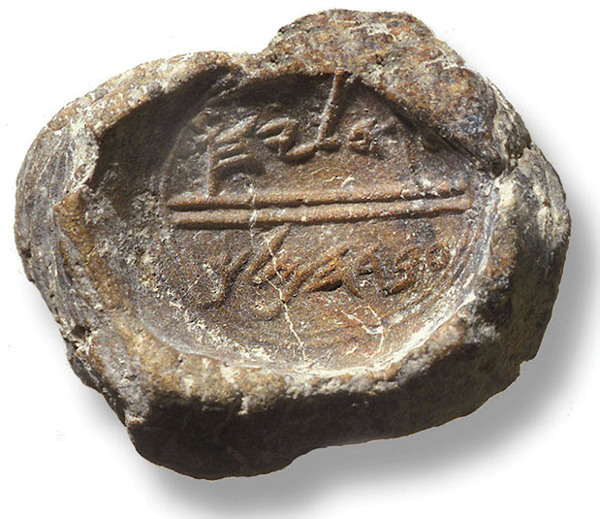
Seal dated to the time of Jeremiah with inscription, “Gedaliah son of Pashhur” (Jer 38:1).
www.BibleLandPictures.com/Alamy Stock Photo
Return to the main text.
38:2 Echoes 21:9 (see note there).
38:3 Echoes 32:28 (see 34:2; 37:8).
38:4 officials. Those named in v. 1. discouraging. See Ezr 4:4; Or “weakening the hands of,” as in a similar situation in Lachish ostracon 6 (see note on 34:7 and photo): “The words of the officials are not good; they serve only to weaken our hands.” Contrast Isa 35:3. seeking the good. The Hebrew underlying this phrase is translated “seek the peace and prosperity” in 29:7 (see note there, see also article).
38:5 The king can do nothing. Not because of inability or lack of authority but through failure of nerve. He feared his own officials (see vv. 25–26; see also 37:17 and note).
38:6 cistern. A pit with a relatively small opening at the top. king’s son. See note on 36:26. cistern . . . had no water in it. Zedekiah’s officials wanted to kill Jeremiah (v. 4), but not by taking his life with their own hands (cf. Ge 37:20–24).
38:7 Ebed-Melek. Means “king’s servant.” king was sitting in the Benjamin Gate. See 37:13; see also note on Zec 14:10. Since a city gateway was often used as a courtroom or town hall (see notes on Ge 19:1; Ru 4:1), Zedekiah may have been settling various legal complaints on this occasion (2Sa 15:2–4) and would therefore have been in a position to help Ebed-Melek.
38:10 thirty men. The large number was probably to keep the officials (v. 4) and their friends from trying to prevent Jeremiah’s rescue.
38:11 room under the treasury. Perhaps a wardrobe storeroom (2Ki 10:22).
38:12 Put these old rags . . . to pad the ropes. Ebed-Melek’s kindnesses to Jeremiah were evidence that he trusted in the Lord, and the Lord rewarded him (39:15–18).
38:13 remained in the courtyard of the guard. See note on 32:2.
38:14–26 Jeremiah’s final interview with King Zedekiah.
38:14 third entrance. Mentioned only here; perhaps the king’s private access to the temple. something . . . anything. Or “a word . . . a word,” probably referring to a “word” from the Lord (37:17).
38:16 As surely as the LORD lives. See note on Ge 42:15. those who want to kill you. Zedekiah’s officials (see v. 4 and note).
38:17–18 See vv. 2–3; 21:9–10; 32:3–4; 34:2–5. surrender. Or “come out” (2Ki 18:31; 24:12). officers of the king of Babylon. Those in charge of the siege of Jerusalem (39:3,13).
38:19 I am afraid. See v. 5 and note. If Zedekiah had trusted in the Lord, he would not have had to fear either officials or deserters (see Pr 29:25 and note). gone over to the Babylonians. See 37:13 and note. mistreat me. Do violence to me (Jdg 19:25; 1Ch 10:4).
38:22 women . . . in the palace . . . brought out to the officials. Women in a conquered king’s harem became the property of the conquerors (cf. 2Sa 16:21–22). misled you and overcame you—those trusted friends of yours. Repeated almost verbatim in Ob 7 (see 20:10 and note). Zedekiah’s so-called friends were his unreliable allies (cf. 37:5 and note), his officials (v. 4) and false prophets (37:19). feet are sunk in the mud. Symbolic of great distress (Ps 69:14).
38:26 See 37:20. Jonathan’s house. See 37:15 and note.
38:27 told them everything the king had ordered him to say. Jeremiah was not obliged to give the officials the other information, which had been shared in confidence.
38:28 remained in the courtyard of the guard. See v. 13; see also note on 32:2.
39:1—45:5 The most detailed account in the OT of the Babylonian conquest of Jerusalem and its aftermath. The section concludes with a brief appendix (ch. 45).
39:1–10 A vivid summary of the siege and fall of Jerusalem and of the exile of its inhabitants (52:4–27).
39:1 ninth year of Zedekiah . . . tenth month. The final Babylonian siege of Jerusalem began on the tenth day of the month (52:4; 2Ki 25:1; Eze 24:1–2), i.e., Jan. 15, 588 bc. Nebuchadnezzar. See photos here and here.
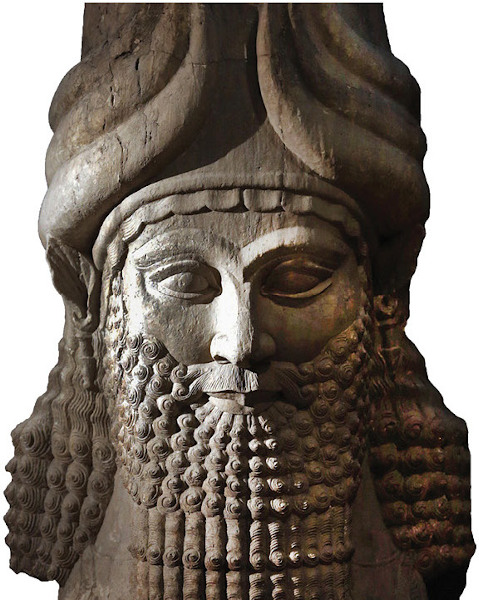
“Nebuchadnezzar king of Babylon marched against Jerusalem” (Jer 39:1). Nebuchadnezzar II reigned from 605–562 bc.
www.BibleLandPictures.com/Alamy Stock Photo
Return to the main text.
39:2 ninth day . . . fourth month . . . eleventh year. July 18, 586 bc (52:5–6; 2Ki 25:2–3). The siege lasted just over two and a half years.
39:3 took seats in the Middle Gate. In fulfillment of 1:15. The Middle Gate may have been located in the wall separating the citadel of Mount Zion from the lower city, therefore serving as a strategic vantage point for the invaders. Nergal-Sharezer. Means “Nergal [a god; see 2Ki 17:30], protect the king.” One of the two men so named here (v. 13) is probably Neriglissar, who later became a successor of Nebuchadnezzar as ruler of Babylonia (560–556 bc). Nebo-Sarsekim a chief officer. In 2007 this man’s name, along with his title, was found on a clay tablet kept in London’s British Museum collection. The name means “Nabu [a god; see note on 2Ki 24:1] has preserved his kingship.” The date on the tablet is Nebuchadnezzar’s tenth year (595 bc, seven years before the siege of Jerusalem began; see v. 1 and note). chief officer. See v. 13; see also note on 2Ki 18:17. high official. See v. 13. The Hebrew for this phrase is cognate to Babylonian rab mu(n)gi, a high military official who sometimes served as an envoy to foreign rulers.
39:4–7 See 52:7–11; see also 2Ki 25:4–7 and notes.
39:4 Arabah. See note on Dt 1:1.
39:8–10 See 52:12–16; see also 2Ki 25:8–12 and notes.
39:12 look after him. See note on 40:4.
39:14 had Jeremiah taken out. Either (1) a summary statement of Jeremiah’s release from prison, the specific details of which are given in 40:1–6; or (2) a brief description of the first of two releases, the second of which (made necessary because Jeremiah had been arrested again by mistake in the confusion surrounding the capture and transporting of thousands of exiles) is detailed in 40:1–6. courtyard of the guard. See note on 32:2. Gedaliah son of Ahikam, the son of Shaphan. See note on 26:24. his home. The governor’s residence. An early sixth-century seal impression found at Lachish reads: “Belonging to Gedaliah [probably the man named in this verse], who is over the house.”
39:16 Go and tell. Though confined in prison, Jeremiah was permitted to have visitors (see note on 38:1). I am about to fulfill my words against this city. See 19:15.
39:17 those you fear. The court officials (38:1), who, in Ebed-Melek’s judgment, had “acted wickedly” (38:9).
39:18 escape with your life. See 21:9 and note; 45:5. you trust in me. Ebed-Melek had expressed his faith in God by securing Jeremiah’s release from the cistern (see 38:7–13; see also note on 38:12).
40:1—44:30 A lively narrative of the aftermath of the fall of Jerusalem. Chronologically, the events narrated in these chapters are the latest in the initial form of the book (although 52:31–34 is later, it is part of the appendix and not of the book proper; see 51:64 and note).
40:1 The word came. A heading introducing the prophecies of Jeremiah after the exile, just as “The word . . . came” (1:2) introduces his prophecies from the time of his call up to the exile (1:3). Nebuzaradan . . . released him. See note on 39:14. Ramah. See note on 31:15. chains. Manacles that were fastened to the wrists (see v. 4; see also Job 36:8; Isa 45:14).
40:2–3 Nebuzaradan doubtless knew the basic content of Jeremiah’s prophetic message against Jerusalem, and he here repeats it to the prophet in summary fashion.
40:4 I will look after you. Nebuzaradan promises to carry out Nebuchadnezzar’s wishes concerning Jeremiah (39:12). the whole country lies before you. Cf. Abram’s offer to Lot in Ge 13:9.
40:5–9 See 2Ki 25:22–24 and notes.
40:5 Gedaliah son of Ahikam. See note on 26:24.
40:8 Jaazaniah. See note on 2Ki 25:23.
40:10 harvest the wine, summer fruit and olive oil. Nebuzaradan (39:9) had arrived in Jerusalem in August of 586 bc (see note on 2Ki 25:8). Grapes, figs and olives were harvested in the Holy Land during August and September.
40:14 Baalis. Three royal inscriptions have been found that may relate to this king: (1) “King Ba’lay,” as his name is written on an early sixth-century bc bottle discovered in Jordan; (2) “Ba’al-Yasha,” an Ammonite king whose name appears on a stamp seal found at Tall al-’Umayri in Jordan in 1984; (3) “Baalis king of [the Ammonites],” as his name reads on an Ammonite stamp seal that came to light in 1998. Ammonites. Ammon was among the nations that earlier had been allies against Babylonia (see 27:3 and note; see also Eze 21:18–32).
40:15 privately. See note on 38:16. remnant. See note on 6:9.
40:16 What you are saying . . . is not true. Gedaliah’s naive faith in Ishmael’s integrity would cost him his life (41:2).
41:1–3 See 2Ki 25:25 and note.
41:1 one of the king’s officers. Ishmael’s loyalty to Zedekiah might explain his assassination of Gedaliah, whom he considered to be a Babylonian puppet ruler. they were eating together. Ancient custom with respect to hospitality probably made Gedaliah assume that his guests would not harm him, much less kill him (see note on Jdg 4:21).
41:5 had shaved off their beards, torn their clothes and cut themselves. Signs of mourning (see 16:6 and note; see also note on Ezr 9:3), probably over the destruction of Jerusalem. came. In the “seventh month” (v. 1) to celebrate the Festival of Tabernacles (see note on Ex 23:16). Shechem, Shiloh and Samaria. Formerly worship centers in the north (see notes on 7:12; Ge 12:6; see also Jos 24:25–26). After the northern kingdom was destroyed in 722–721 bc, many Israelites made periodic pilgrimages to Jerusalem, especially during the reform movements of Hezekiah (2Ch 30:11) and Josiah (2Ch 34:9). grain offerings and incense. Bloodless offerings, since the altar of the Jerusalem temple had been destroyed. house of the LORD. Though the temple itself was in ruins, the site was still considered holy.
41:6 weeping. Pretending to share the sorrow of the mourners from the north.
41:7 the city. Mizpah. cistern. A favorite place to dispose of victims, whether living or dead (see 37:16 and note; 38:6).
41:8 wheat and barley, olive oil and honey. Supplies that Ishmael perhaps would have taken with him when he fled to Ammon (v. 15).
41:9 the cistern . . . was the one King Asa had made. Probably as part of the fortifications Asa had built at Mizpah (1Ki 15:22), since cisterns were essential for storing water during times of siege. Archaeologists have discovered numerous cisterns in the ruins of ancient Mizpah (modern Tell en-Nasbeh, seven and a half miles north of Jerusalem).
41:10 king’s daughters. Women who had been members of King Zedekiah’s court, not necessarily daughters of the king himself (see note on 36:26). Ammonites. See 40:14 and note.
41:12 great pool in Gibeon. Perhaps the same as the one mentioned in 2Sa 2:13 (see note there).
41:15 eight of his men escaped. Ishmael lost only two of his men (v. 2) in the fight with Johanan.
41:17 Geruth Kimham. Perhaps means “lodging place of Kimham,” a friend of David who returned with him to Jerusalem after Absalom’s death (2Sa 19:37–40).
42:1 Jezaniah son of Hoshaiah. Possibly the same as “Jaazaniah the son of the Maakathite” (40:8; see NIV text note there). Apparently Jezaniah was also known as Azariah (see NIV text note; see also 43:2), as was King Uzziah (see NIV text notes on 2Ki 14:21; 2Ch 26:1).
42:2 Jeremiah. Had probably been among the “people of Mizpah who had survived” (41:16). hear our petition. See v. 9; 37:20. remnant. See vv. 15,19; see also note on 6:9.
42:3 The people may be asking the Lord to confirm what they sincerely believe to be their only option: flight to Egypt (v. 17; 41:17).
42:6 we will obey the LORD our God. Though they twice declare here their desire to do God’s will, they soon demonstrate that they have already decided to follow their own inclinations (43:2).
42:7 Ten days later. Jeremiah does not bring God’s word to the people until he is sure of it himself (28:10–17).
42:10 build you up . . . tear you down . . . plant . . . uproot. See 1:10 and note; see also 31:4,28; 33:7.
42:12 he will have compassion on you. For similar examples, see Ge 43:14; 1Ki 8:50.
42:16 the sword you fear will overtake you there. See 43:11 and note.
42:17 sword, famine and plague. See note on 14:12.
42:18 my anger and wrath have been poured out. See 7:20; 44:6. curse . . . reproach. See NIV text note; see also notes on 24:9; 25:18; cf. 29:18. this place. Jerusalem.
43:2 Azariah. See note on 42:1. arrogant men. They demonstrate themselves to be such by their words.
43:3 Baruch. See note on 32:12. Jeremiah’s opponents decide to put the blame on someone they consider less spiritually formidable than the prophet himself.
43:5 remnant of Judah. Jews who had fled from the Babylonians to neighboring countries (40:11–12).
43:6 king’s daughters. See note on 41:10. Jeremiah . . . and Baruch. No doubt they went to Egypt unwillingly, in the light of 32:6–15; 40:1–6; 42:13–22.
43:7 Tahpanhes. See note on 2:16.
43:9 Pharaoh’s palace. Not necessarily his main residence. One of the Elephantine papyri (see chart), e.g., mentions the “king’s house,” apparently a more modest dwelling for the pharaoh’s use when he visited Elephantine in southern Egypt.
43:10 my servant Nebuchadnezzar. See note on 25:9. his throne. Symbolizing his authority.
43:11 See 15:2 and note. He will . . . attack Egypt. A fragmentary text now owned by the British Museum in London states that Nebuchadnezzar carried out a punitive expedition against Egypt in his 37th year (568–567 bc) during the reign of Pharaoh Amasis (see Eze 29:17–20 and notes).
43:12 As a shepherd picks his garment clean . . . so he will pick Egypt clean. Methodically and thoroughly.
43:13 temple of the sun in Egypt. Or “Beth Shemesh in Egypt,” not to be confused with “Beth Shemesh in Judah” (2Ki 14:11). The Egyptian city is probably to be identified with Heliopolis (Greek for “city of the sun”; see NIV text note), called On in Hebrew (see note on Ge 41:45). sacred pillars. Obelisks, for which ancient Heliopolis was famous.
44:1–30 The last of Jeremiah’s recorded prophecies (see note on 40:1—44:30).
44:1 Jews living in . . . Egypt. As a result of previous deportations (see, e.g., 2Ki 23:34) and/or the Jews mentioned in 43:5–7. In either case, some time must have elapsed between chs. 43 and 44 to bring about the gathering mentioned in v. 15. Lower Egypt . . . Upper Egypt. See note on Isa 11:11. Migdol. Probably in northern Egypt (46:14). The name means “watchtower.” Tahpanhes and Memphis. See notes on 2:16; Isa 19:13.
44:3 See note on 1:16; see also 11:17; 19:4; 32:32.
44:4 See 7:25 and note. Do not do this detestable thing. See Jdg 19:24.
44:6 my fierce anger was poured out. See 7:20; 42:18.
44:7 bring . . . disaster on yourselves. See 26:19. men and women, the children and infants. A stock phrase meaning “everyone” (1Sa 15:3; 22:19).
44:8 what your hands have made. Idols (see 1:16 and note; see also note on Ex 34:15). curse and . . . reproach. See 42:18 and note; see also notes on 24:9; 25:18.
44:9 wickedness committed by . . . queens . . . and your wives. The women joined their husbands in worshiping the “Queen of Heaven” (v. 19; see v. 15).
44:10 nor . . . followed my law. See 9:13; 26:4; see also 7:9 and note.
44:11–14 See 42:17–18 and notes.
44:11 am determined. Or “set my face” (see 21:10 and note).
44:15 wives . . . women. See v. 19; see also note on v. 9. Lower and Upper Egypt. See v. 1; see also note on Isa 11:11.
44:17 Queen of Heaven. See note on 7:18. At that time we . . . were well off. Judah had been relatively prosperous during King Manasseh’s lengthy reign.
44:18 ever since we stopped. As a result of King Josiah’s reform movement, which began in 621 bc. we have had nothing. Beginning with Josiah’s death in 609, a series of disasters, including invasion and exile, had struck Judah. The people understandably (though mistakenly) attributed their misfortune to their failure to worship the Queen of Heaven.
44:19 women. Since Ishtar (the “Queen of Heaven”) was a Babylonian goddess of fertility, women played a major role in her worship. did not our husbands know . . . ? According to the law, to have validity a religious vow made by a married woman (v. 25) had to be confirmed by her husband (Nu 30:10–15). we were making cakes impressed with her image. See 7:18.
44:22 curse. See v. 12. desolate waste. See v. 6.
44:23 stipulations. Of the Lord’s covenant with his people (Dt 4:45; 6:17,20).
44:25 Go ahead then. Spoken in irony (see 7:21 and note).
44:26 I swear by my great name. See note on 22:5. As surely as the Sovereign LORD lives. See note on Ge 42:15.
44:27 watching. See note on 1:12; see also 31:28.
44:30 Hophra. Ruled Egypt 589–570 bc (see 37:5 and note). his enemies who want to kill him. Hophra was killed by his Egyptian rivals during a power struggle. I gave Zedekiah . . . into the hands of Nebuchadnezzar. See 39:5–7.
45:1–5 A brief message of encouragement to Baruch, Jeremiah’s faithful secretary (see note on 32:12). Though out of chronological order, the section provides a suitable historical appendix to chs. 39–44, as well as a smooth transition to chs. 46–51 (see notes on v. 1; 46:2).
45:1 wrote on a scroll. See 36:4; see also 36:2 and note. fourth year of Jehoiakim. 605 bc. Ch. 45 fits chronologically between 36:8 and 36:9 (see note on 36:8).
45:3 To some extent Baruch shared Jeremiah’s anguish, the result of Jeremiah’s prophetic call and ministry (see, e.g., 8:18—9:2; 20:7–18). worn out with groaning. See Ps 6:6. find no rest. See La 5:5.
45:4 overthrow . . . built . . . uproot . . . planted. See note on 1:10; see also 2:21; 31:4–5,28,40; 32:41; 33:7. earth. See “all people” in v. 5; see also 25:15,31; 46–51.
45:5 great things . . . Do not seek them. See Ps 131:1. Baruch’s brother Seraiah would occupy an important position under King Zedekiah (32:12; 51:59), but Baruch himself was not to be ambitious or self-seeking. escape with your life. See note on 21:9.
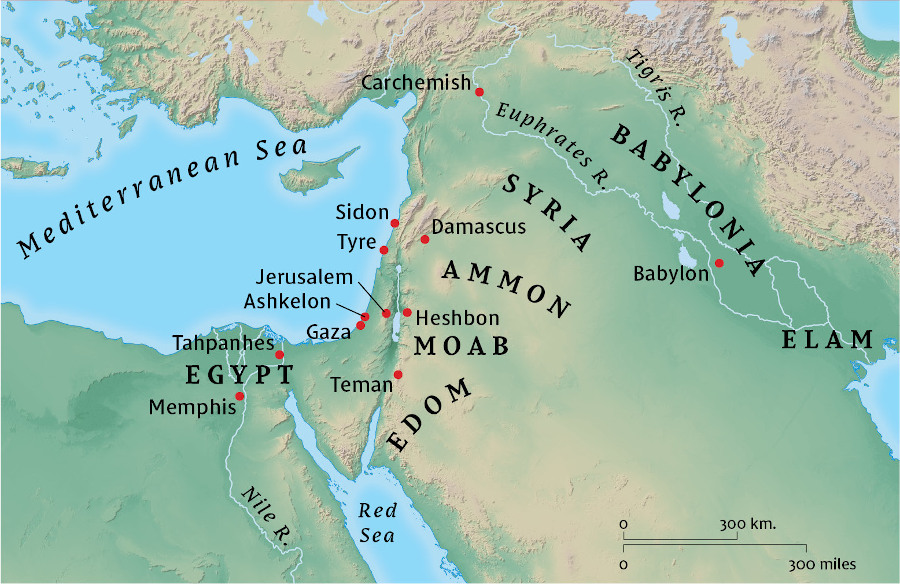
46:1—51:64 See notes on 25:1–38; 25:13; 25:19–26. Chs. 46–51 consist of a series of prophecies against the nations (Isa 13–23; Eze 25–32; Am 1–2; Zep 2:4–15). They begin with Egypt (ch. 46) and end with Babylonia (chs. 50–51), the two powers that vied for control of Judah during Jeremiah’s ministry. The arrangement of the prophecies is in a generally west-to-east direction. See map.
46:1 This is the word of the LORD . . . concerning. See 14:1; 47:1; 49:34; 50:1. nations. To whom Jeremiah was called to prophesy (see 1:5 and note).
46:2 Concerning Egypt. See Isa 19–20; Eze 29–32. Necho. Ruled Egypt 610–595 bc. Carchemish. See 2Ch 35:20; Isa 10:9 and note. The name means “fortress of Chemosh” (chief god of Moab; see 2Ki 23:13), as clarified by the Ebla tablets (see Introduction to Genesis: Background; see also chart). Euphrates River. See note on Ge 15:18. by Nebuchadnezzar. Egypt’s defeat by Babylon at Carchemish was one of the most decisive battles in the ancient world, ending Egypt’s agelong claims and pretensions to power in Syro-Palestine. fourth year of Jehoiakim. 605 bc, the first year of Nebuchadnezzar’s reign (25:1).
46:3 Prepare. Spoken to the Egyptians in sarcasm (see, e.g., Na 2:1; 3:14 and notes).
46:4 horses. Egypt was a prime source for the finest horses (1Ki 10:28). put on your armor. See 51:3.
46:5 terror on every side. The phrase is used in 6:25 (see note there) with reference to the Babylonian army (see 6:22 and note).
46:7–8 rivers of surging waters. In the northern Egyptian delta, where the Nile branches out into numerous streams.
46:8 rise and cover the earth. The same metaphor is used of Assyria in Isa 8:7–8 (see note there). cities. The Hebrew for this word is in the singular but is used as a generic plural (“city” is generic also in 8:16).
46:9 Charge. See note on v. 3; see also 8:6; Na 3:3. Drive furiously, you charioteers! See Na 2:4. Put. See note on Ge 10:6. Lydia. See note on Isa 66:19. Men from Cush, Put and Lydia were mercenaries in the Egyptian army.
46:10 day of vengeance. See Isa 34:8 and note. The Lord will avenge Egypt’s cruelties toward Judah (see, e.g., 2Ki 23:29,33–35). sword will devour. See v. 14. quenched its thirst with blood . . . offer sacrifice. Slaughter in battle is often compared with sacrifices (see Isa 34:5–7 and notes; Zep 1:7–8).
46:11 Gilead . . . balm. See 8:22 and note. Virgin Daughter Egypt. A personification of Egypt (see note on 2Ki 19:21). medicines in vain . . . no healing for you. The statement is ironic in the light of Egypt’s reputation for expertise in the healing arts.
46:12 stumble . . . fall. See vv. 6,16.
46:13 Nebuchadnezzar . . . to attack Egypt. In 568–567 bc (see note on 43:11), long after the battle of Carchemish (see note on v. 2).
46:14 Migdol. See note on 44:1. Memphis and Tahpanhes. See 44:1; see also notes on 2:16; Isa 19:13. Take your positions. See v. 4. sword devours. See v. 10. See also photo below.
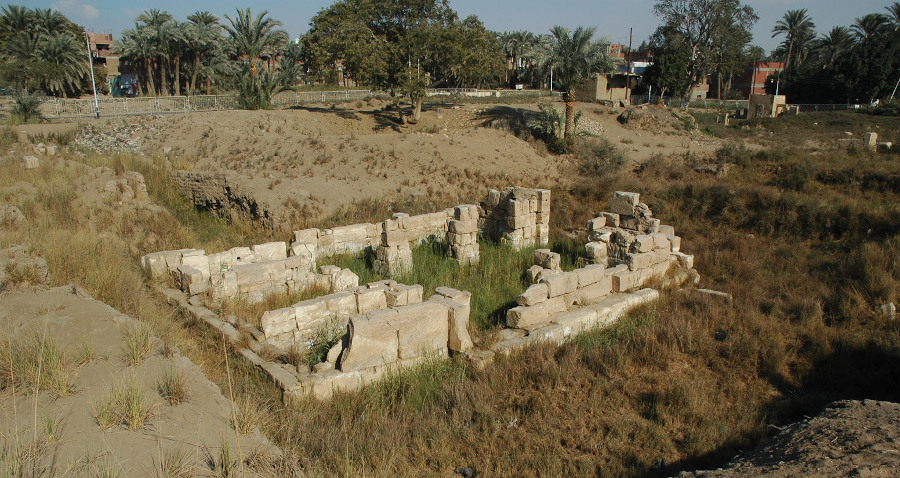
Excavations at Memphis. Jeremiah warns of Nebuchadnezzar’s impending attack on Egypt (Jer 46:14).
Todd Bolen/BiblePlaces.com
Return to the main text.
46:15 be laid low. The Hebrew for this phrase is translated “Apis has fled” in the Septuagint (the pre-Christian Greek translation of the OT). Apis was a bull-god worshiped in Egypt, especially at Memphis (v. 14). An alternative translation of v. 15 would then read as follows: “Why did Apis flee? Why did your bull [many manuscripts have the singular form] not stand? Because the LORD pushed him down.”
46:16 They will stumble repeatedly. See vv. 6,12; or, “He will make many stumble.” They will say, ‘. . . let us go.’ The mercenaries in the pharaoh’s army (see v. 9 and note) will decide to return to their homelands. sword of the oppressor. See 25:38; 50:16.
46:17 only a loud noise. In Isa 30:7, Egypt is called “the Do-Nothing.” missed his opportunity. After the battle of Carchemish (v. 2), Nebuchadnezzar returned to Babylonia on learning of his father’s death. Egypt failed to press its advantage at that time.
46:18 As surely as I live. See notes on Ge 22:16; 42:15. King. God is called “King” also in 8:19; 10:7,10; 48:15; 51:57. one. Nebuchadnezzar. Tabor . . . Carmel. Two prominent mountains in Israel (see notes on Jdg 4:6; SS 7:5; Isa 33:9).
46:19 Pack your belongings for exile. Echoed in Eze 12:3. Egypt. Or, more formally, “Daughter (of) Egypt” (see v. 11 and note). laid waste. Judah is so described in 2:15; 9:12.
46:20 heifer. Perhaps an ironic reference to Egyptian bull-worship (see note on v. 15). gadfly. Nebuchadnezzar. Insects are often used to symbolize an attacking enemy (see note on Ex 23:28).
46:21 mercenaries. See note on v. 9. calves. See note on v. 20. day of disaster. See 18:17. time for them to be punished. See 11:23; 23:12; 50:27.
46:22 serpent. Often used by Egyptian pharaohs as a symbol of their sovereignty (see note on Ex 4:3). the enemy . . . like men who cut down trees. See 21:14; see also Isa 10:18–19,33–34 and notes.
46:23 more numerous than locusts. Here an invading army is compared to locusts. In Joel 2:11,25 locusts are compared to an invading army (see also 51:14).
46:24 Daughter Egypt. See v. 11 and note.
46:25 Amon. The chief god of Egypt during much of its history. Wicked King Manasseh may have named his son after the Egyptian deity (2Ki 21:18; 2Ch 33:22). Thebes. The capital of Upper (southern) Egypt (Eze 30:14–16).
46:26 Egypt will be inhabited as in times past. Cf. 48:47; 49:6,39. Egypt would be restored in the Messianic age (see Isa 19:23–25 and notes).
46:27–28 Repeated almost verbatim from 30:10–11 (see notes there).
47:1 concerning the Philistines. See Isa 14:28–32; Eze 25:15–17; Am 1:6–8; Zep 2:4–7. Pharaoh. It is uncertain whether Necho II (see 46:2; see also note on 2Ki 23:29) or Hophra (see notes on 37:5; 44:30) is intended. Gaza. See v. 5; 25:20; see also note on Jdg 1:18.
47:2 waters are rising. See notes on 46:7–8. the north. Babylonia, as in 1:13–14; 46:20. the land . . . live in them. The Hebrew for this phrase is repeated verbatim from 8:16. land. Phoenicia and Philistia. towns. See note on 46:8; includes Tyre and Sidon (see v. 4) as well as Gaza, Ashkelon (v. 5) and other Philistine cities.
47:3 steeds. See note on 46:15. hands will hang limp. Paralyzed by terror (see 6:24; Isa 13:7 and notes).
47:4 Tyre and Sidon. See notes on v. 2; 25:22; 27:3. remnant. See v. 5; see also 2Ki 19:30–31; Isa 1:9; 10:20–22 and notes. Caphtor. Crete (see NIV text note; the Kerethites of Zep 2:5 and elsewhere were probably Cretans), one of many islands in the Mediterranean believed to be the original homeland of the Philistines (see Ge 10:14 and note; see also Dt 2:23).
47:5 Gaza. See v. 1; 25:20; see also note on Jdg 1:18. shave her head in mourning. See note on 16:6; see also 48:37 and notes on Isa 3:17; 7:20. Ashkelon. See v. 7; 25:20; see also note on Jdg 1:18. be silenced. A sign of mourning (La 2:10). plain. Roughly equivalent to the modern Gaza Strip, it lay west of the foothills that separated Philistia from Judah. cut yourselves. See note on 16:6; see also 48:37.
47:6 sword. See 12:12 and note.
47:7 attack Ashkelon. The immediate fulfillment took place under Nebuchadnezzar in 604 bc. coast. See Eze 25:16; the Philistine plain (see note on v. 5).
48:1 Concerning Moab. See Isa 15–16; Eze 25:8–11; Am 2:1–3; Zep 2:8–11. Josephus (Antiquities, 10.9.7) implies that Jeremiah’s prophecy concerning the future destruction of Moab was fulfilled in the “twenty-third year of Nebuchadnezzar’s reign” (582 bc). Nebo. See v. 22; a town originally allotted to the tribe of Reuben (see Nu 32:3,37–38; see also Isa 15:2 and note). Kiriathaim. See v. 23. An ancient town (Ge 14:5), it too was allotted to Reuben (see Jos 13:19 and note). Nebo, Kiriathaim and several other towns referred to in this chapter are mentioned also in an important Moabite inscription written by Mesha, king of Moab (2Ki 3:4), and discovered in 1868 (see chart).
48:2 Heshbon. See vv. 34,45; 49:3; Nu 21:25. Originally allotted to Reuben (Nu 32:37; Jos 13:17), it was later reassigned to Gad as a Levitical town (Jos 21:39). Madmen. Perhaps a longer spelling of “Dimon” (Isa 15:9—but see note there). sword will pursue you. See 9:16; 42:16.
48:4 broken. Like a clay jar (19:11).
48:6 Flee! Run for your lives. See 51:6. like a bush. See note on 17:6.
48:7 Chemosh. See vv. 13,46; the national god of Moab (1Ki 11:7, 33; 2Ki 23:13). The Hebrew text here implies the alternate spelling Chemish, as in “Carchemish” (see note on 46:2). will go into exile . . . and officials. A stock phrase (49:3; Am 1:15). Images of pagan deities were often carried about from place to place (43:12; Am 5:26).
48:8 destroyer. See v. 32; probably Nebuchadnezzar. valley . . . plateau. Much of western Moab overlooks the Jordan River.
48:9 See 17:6. Put salt on Moab. To make its farmland unproductive and barren (see note on Jdg 9:45).
48:10 lax. Or “lazy” (as in Pr 10:4; 12:24). Those whom the Lord designates to destroy Moab are urged on in their appointed task.
48:11 A copy of the Hebrew text of this verse has been found inscribed on a large clay seal, dating to the early Christian era and apparently used for stamping the bitumen with which the mouths of wine jars were sealed (see photo). from youth. From its early history. like wine. An apt figure, since Moab was noted for its vineyards (vv. 32–33; Isa 16:8–10). left on its dregs. In order to improve with age (Isa 25:6). she has not gone into exile. Unlike Israel.
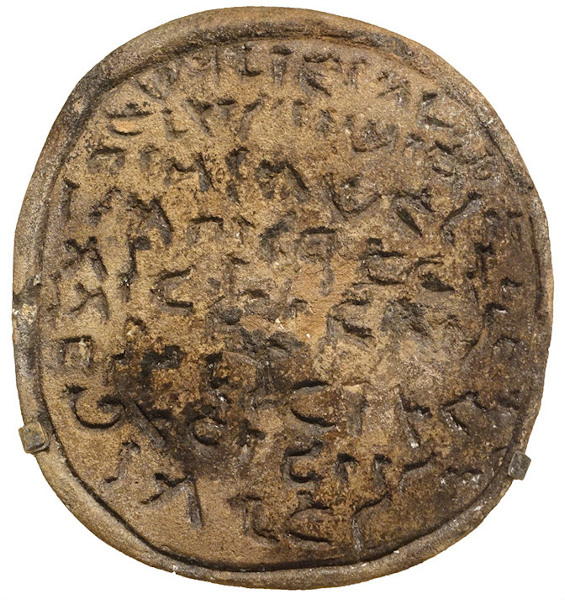
Seal with Hebrew inscription of Jer 48:11, dated early Christian era.
The Oriental Institute, Chicago, Public Domain
Return to the main text.
48:12 days are coming. Moab will be destroyed (see note on v. 1). pour from pitchers. Ordinarily in order to leave the unwanted sediment in the bottom, but these people will be the agents of divine judgment and will “smash” Moab (see v. 4 and note).
48:13 Israel. The northern kingdom, destroyed and exiled in 722–721 bc. Bethel. Either (1) the well-known town where one of Jeroboam’s golden calves was placed (1Ki 12:28–30) or, (2) in parallelism with Chemosh, the West Semitic deity known from contemporary Babylonian inscriptions, as well as from the Elephantine papyri a century later (see chart).
48:14 How can you say . . . ? See 2:23; 8:8.
48:15 go down in the slaughter. See 50:27; for war depicted as the slaughter of sacrificial animals, see Isa 34:6 and note. King. See note on 46:18. The true King is the Lord, not Chemosh.
48:17 who live around her . . . who know her fame. Nations near and far, respectively. mighty. At one time Moab had been powerful and feared (27:3; 2Ki 1:1; 3:5; 24:2). scepter . . . staff. Symbols of authority and dominion (see Ge 49:10; Nu 24:17 and note; Ps 2:9; Eze 19:11, 14; 21:10,13 and notes).
48:18 Come down . . . sit. See Isa 47:1 and note. Daughter Dibon. A personification of the important (apparently at one time royal) Moabite city of Dibon (see note on 2Ki 19:21), where the famous Mesha Stele (Moabite Stone) of King Mesha was discovered (see chart; see also Introduction to 1 Kings: Theme: Kingship and Covenant). Dibon. See v. 22; Nu 21:30; see also note on Isa 15:2.
48:19 Aroer. See NIV text note on v. 6; see also Nu 32:34; Dt 2:36.
48:20 Arnon. Moab’s most important river.
48:21 plateau. See note on v. 8. Holon. Not the same as the town mentioned in Jos 15:51; 21:15. Jahzah. See 1Ch 6:78; elsewhere called Jahaz (see v. 34; see also Isa 15:4 and note).
48:22 Dibon. See v. 18. Nebo. See note on v. 1. Beth Diblathaim. Perhaps the same as, or near, Almon Diblathaim (Nu 33:46).
48:23 Kiriathaim. See note on v. 1. Beth Gamul. Modern Khirbet Jumeil, five miles east of Aroer. Beth Meon. The same as Baal Meon (Nu 32:38) and Beth Baal Meon (Jos 13:17).
48:24 Kerioth. See note on Am 2:2. Bozrah. Not the same as Bozrah in Edom (49:13,22), but another name for Bezer in Moab (see note on Dt 4:43).
48:26 The Lord speaks to the Babylonian invaders. Make her drunk. By drinking down the cup of God’s wrath (13:13; 25:15–17,28). wallow in her vomit. See 25:27; Isa 19:14. let her be an object of ridicule. As Moab had once ridiculed others (v. 27; Zep 2:8,10).
48:27 shake your head in scorn. See 18:16 and note; see also Ps 64:8.
48:28 like a dove . . . mouth of a cave. See Ps 55:6–8; SS 2:14.
48:29–30 An expanded version of the description of Moab found in Isa 16:6.
48:29 Moab’s pride. It had long since become proverbial (Isa 25:10–11; Zep 2:8–10). The piling up of synonyms highlights the extent of Moab’s sin.
48:31–33 See Isa 16:7–10.
48:31–32 I. The prophet (as in Isa 16:9; cf. Isa 15:5).
48:31 moan. Like a mourning dove (Isa 38:14; 59:11). Kir Hareseth. See Isa 16:7,11; see also note on Isa 15:1.
48:32 as Jazer. Or “more than Jazer” (so also in Isa 16:9). Jazer . . . Sibmah . . . sea. See note on Isa 16:8. vines. See note on v. 11. destroyer. See v. 8; probably Nebuchadnezzar.
48:33 orchards. See note on 2:7. treads. See note on Isa 16:10. not shouts of joy. Instead, shouts of judgment (25:30; 51:14).
48:34 See Isa 15:4–6 and notes.
48:36 See Isa 16:11. pipe. Played by mourners at funerals (see Mt 9:23–24 and note on 9:23).
48:37 Signs of mourning (see Isa 15:2–3 and notes). is slashed. See note on 16:6.
48:38 broken . . . like a jar that no one wants. See v. 4 and note on v. 12; cf. the description of King Jehoiachin in 22:28 (see note there).
48:39 object of ridicule. See v. 26 and note.
48:40–41 Echoed in 49:22 with respect to Edom.
48:40 eagle. Nebuchadnezzar (as in Eze 17:3); see Dt 28:49 and note.
48:41 woman in labor. See note on 4:31.
48:43 Terror and pit and snare. The Hebrew original illustrates Jeremiah’s fondness for the well-turned phrase (see Introduction: Literary Features)—though here he may be quoting Isaiah (see Isa 24:17–18 and note on 24:17).
48:44 Whoever flees . . . will fall . . . whoever climbs . . . will be caught. Divine judgment, once determined, is unavoidable (Am 5:19).
48:45–46 Echoed from Nu 21:28–29; 24:17. Balaam’s messages against Moab are about to be fulfilled.
48:45 Heshbon. See note on v. 2. Apparently at this time it was controlled by the Ammonites (49:3). Sihon. Refers to the associates of Sihon, king of the Amorites, whose chief city was Heshbon (Nu 21:27) during the time of the exodus. boasters. See note on v. 29.
48:46 Chemosh. See note on v. 7.
48:47 See 46:26. restore the fortunes. See note on 29:14. in days to come. During the Messianic era.
49:1 Concerning the Ammonites. See Eze 25:1–7; Am 1:13–15; Zep 2:8–11. Ammon was east of the Jordan and north of Moab (see note on Ge 19:36–38). Has Israel no . . . heir? Rhetorical questions to underscore how the Ammonites have humiliated Israel. Molek. The chief god of the Ammonites (1Ki 11:5, 7,33), also known as Milkom (see note on 1Ki 11:5). Both titles are related to the West Semitic word for “king” (see NIV text note here). taken possession of Gad. Probably refers to the aftermath of Tiglath-Pileser III’s conquest of Transjordan in 734–732 bc. The Ammonites later apparently recovered from their defeat and overran some of the territory owned by the Israelite tribe of Gad. his. Molek’s.
49:2 battle cry. See Am 1:14. Rabbah of the Ammonites. See note on Dt 3:11. mound of ruins. See 30:18 and note.
49:3 Heshbon. See note on 48:45; see also Jdg 11:26–27. Ai. Not the Ai of Jos 8. Molek. See note on v. 1. will go into exile . . . and officials. See note on 48:7.
49:4 Unfaithful Daughter. A personification of Ammon (see note on 2Ki 19:21); the same language is used of the people of Judah in 31:22. you trust in your riches. Spoken to Moab in 48:7. Who will attack me? According to Josephus (Antiquities, 10.9.7) Nebuchadnezzar destroyed Ammon in the 23rd year of his reign (582 bc).
49:6 I will restore. God’s mercy extends to all the world’s nations, including Israel’s enemies (48:47; 49:6,39).
49:7–22 Shares many memorable phrases and concepts with the book of Obadiah (see Introduction to Obadiah: Unity and Theme).
49:7 Concerning Edom. See Isa 21:11–12; Eze 25:12–14; Am 1:11–12; Ob 1–16. wisdom. For which Edom was justly famed (see notes on Job 1:1; 2:11). Teman. An important Edomite town located south of the Dead Sea (see note on Job 2:11). In v. 20 it is used in parallelism with Edom itself.
49:8 Turn and flee. See v. 24; 46:21. Dedan. See 25:23; see also notes on Isa 21:13; Eze 25:13. Esau. The patriarch Jacob’s brother, and another name for Edom (Ge 25:29–30; 36:1), just as Israel was another name for Jacob (Ge 32:28). The fact that Esau was Jacob’s brother made Edom’s enmity toward Israel all the more reprehensible (see Am 1:11; Ob 10 and notes).
49:9–10 Paralleled in Ob 5–6 (see notes there).
49:9 grape pickers. See note on v. 13. leave a few grapes. For the poor to glean (see note on Ru 2:2).
49:10 strip . . . bare. See note on 13:22. destroyed. See 31:15; Isa 19:7.
49:11 When the men of Edom go off to war and die, the Lord will protect their widows and orphans.
49:12 Echoed from 25:28–29. those who do not deserve . . . must drink it. Though they are God’s chosen ones, the people of Judah will be punished because of their sin (see 25:28; Am 3:2 and notes).
49:13 swear by myself. See notes on Ge 22:16; Isa 45:23; see also 22:5; 51:14. Bozrah. Not the Bozrah of 48:24 (see note there); the Edomite Bozrah was probably the capital of Edom in the days of Jeremiah (see v. 22; Ge 36:33; see also notes on Isa 34:6; Am 1:12). The Hebrew root underlying Bozrah is the same as that for “grape pickers” in v. 9. ruin . . . reproach. See 25:18. towns. Surrounding villages. in ruins forever. See 25:9; Ps 74:3; Isa 58:12 and note.
49:14–16 Paralleled in Ob 1–4.
49:16 pride. Edom’s besetting sin (see v. 4; Ob 11–13; cf. 48:29–30). heights of the hill. Edom was noted for its mountain strongholds (cf. notes on Isa 16:1; Ob 3).
49:18 Repeated almost verbatim in 50:40, and echoed in part in v. 33. Sodom and Gomorrah were overthrown. See Ge 19:24–25. Later calamities were often compared with the one that befell Sodom and Gomorrah (see note on Am 4:11). their neighboring towns. Primarily Admah and Zeboyim (see Ge 14:2, 8; Dt 29:23; Hos 11:8 and note).
49:19–21 Repeated almost verbatim in the message against Babylon (50:44–46).
49:19 Jordan’s thickets. See 12:5 and note. shepherd. Ruler (see note on 2:8).
49:20 Teman. See note on v. 7. flock. The people of Edom.
49:22 Echoed from 48:40–41. eagle. Represents Nebuchadnezzar in 48:40 (see note there), and probably here also. A more complete subjugation of the Edomites, however, was accomplished by Nabatean Arabs (perhaps the “desert jackals” of Mal 1:3) beginning c. 550 bc. Bozrah. See note on v. 13. woman in labor. See note on 4:31.
49:23 Concerning Damascus. See Isa 17; Am 1:3–5 (see also note on Isa 17:1). Hamath. An important city in the kingdom of Aram (see Isa 10:9; Zec 9:2 and notes). Arpad. See note on Isa 10:9. bad news. The threat of Babylonian invasion. troubled like the restless sea. See Isa 57:20.
49:24 anguish. See note on 4:19.
49:26 Repeated almost verbatim in 50:30.
49:27 A conventional word of judgment (see note on Am 1:4).
49:28 Concerning Kedar. See Isa 21:13–17; see also 2:10 and note. kingdoms of Hazor. See vv. 30,33; not the Hazor north of the Sea of Galilee (Jos 11:1). These kingdoms may have included Dedan, Tema, Buz and other Arab regions (see 25:23–24 and notes), since the Hebrew root of the proper name Hazor often serves as a common noun meaning “settlement” (see especially Isa 42:11; see also Ge 25:16). Nebuchadnezzar . . . attacked. In 599–598 bc. people of the East. See Jdg 6:3 and note; Job 1:3; Eze 25:4.
49:29 Terror on every side. See note on 6:25.
49:30 Stay in deep caves. See v. 8.
49:31 at ease. Completely secure (Job 21:23). in confidence. In safety, unsuspecting (see Jdg 18:7 and note; Eze 38:11). has neither gates nor bars. Lives in unwalled villages (see Dt 3:5; cf. 1Sa 23:7).
49:32 scatter to the winds. See Eze 5:12; 12:4. who are in distant places. See note on 9:26. disaster . . . from every side. Contrast the description of Solomon’s realm in 1Ki 5:4.
49:33 haunt of jackals. See note on 9:11. no people . . . dwell in it. Echoes v. 18.
49:34 This is the word of the LORD . . . concerning. See note on 46:1. Elam. See note on Isa 11:11.
49:35 bow. The Elamites were skilled archers (Isa 22:6).
49:36 Contrast Isa 11:12. to the four winds. In every direction (Eze 37:9; Da 7:2; 8:8).
49:37 I will pursue . . . made an end of them. Echoes 9:16.
49:38 set my throne in. See 1:15 and note.
50:1—51:64 See Isa 13:1—14:23; 21:1–9. Jeremiah’s prophecy concerning Babylonia is by far the longest of his messages against foreign nations (chs. 46–51) and expands on his earlier and briefer statements (25:12–14,26). Its date, in whole or in part, is 593 bc (see 51:59 and note). The two chapters divide into three main sections (50:2–28; 50:29—51:26; 51:27–58), each of which begins with a summons concerning war against Babylonia, Judah’s mortal enemy (50:2–3; 50:29–32; 51:27–32).
50:1 word. Or “message” (as in 46:13), comprising chs. 50–51. through. See 37:2. The message would eventually be sent by the prophet to Babylon itself (51:59–61).
50:2 Announce and proclaim. See 4:5; 46:14. lift up a banner. See note on Isa 5:26. The Hebrew for this phrase is translated “raise the signal” in 4:6. Babylon will be captured. Fulfilled in 539 bc. Bel. See 51:44; Isa 46:1 and note. put to shame . . . filled with terror. The repetition of each of these phrases emphasizes that the chief god of Babylon and his images and idols are alike doomed. Her . . . her. Babylon’s. idols. See note on Lev 26:30. Derogatory references concerning idols and idolatry are common in the OT (see, e.g., Isa 44:9–20).
50:3 nation from the north. In Jeremiah, the foe from the north is almost always Babylonia (see, e.g., 1:14–15). Here, however, the reference is probably to Persia. Babylon’s nemesis is expanded to “an alliance of great nations” in v. 9, specified by name in 51:27–28. people and animals will flee. Babylon will suffer the same fate as Jerusalem (33:12).
50:4 Israel and . . . Judah together. See note on 3:18. tears. Of repentance (3:21–22; 31:9).
50:5 everlasting covenant. See 32:40 and note; see also 31:31–34; 33:20–21.
50:6 lost sheep. See Jesus’ parable in Lk 15:3–7. shepherds. Rulers (see note on 2:8). mountain and hill. Places where pagan gods were worshiped (see note on 2:20). their own resting place. The Lord (v. 7).
50:7 hope of their ancestors. A phrase found only here (see 14:8,22; cf. Ac 28:20).
50:8 like the goats that lead the flock. Judah would be among the first of the captive peoples to be released from exile in Babylon.
50:9 alliance of great nations. See Isa 13:4. They are named in 51:27–28 (see note on v. 3).
50:11 you. Babylonia. my inheritance. God’s land and people (see 2:7; 12:7 and notes). frolic like a heifer. See Mal 4:2. stallions. See note on 8:16.
50:12 mother. Either (1) the city or, more likely, (2) the land (Isa 50:1; Hos 2:5). least. Or “last.” As Amalek, “first among the nations” (Nu 24:20) to attack Israel, was destroyed, so Babylonia, the last to attack Israel (up to Jeremiah’s time), would be destroyed.
50:13 not be inhabited. See Isa 13:20 and note. All who pass . . . because of all her wounds. Said of Jerusalem in 19:8 and of Edom in 49:17.
50:14 you who draw the bow. Including the Medes (Isa 13:17–18).
50:15 Shout. Give the battle cry (Jos 6:16). vengeance of the LORD. See v. 28; 51:11. Though originating in his sovereign holiness, it was often carried out by his people (Nu 31:3). do to her . . . to others. See v. 29; Pr 26:27 and note; cf. Gal 6:7–8.
50:16 sword of the oppressor. See 46:16. let everyone . . . to their own land. The Hebrew for this passage has a parallel in Isa 13:14. The captive peoples are warned to flee Babylon in order to avoid being cut down by the invaders.
50:17 scattered flock. See Joel 3:2. lions. Symbolic of Assyria and Babylonia (see 4:7; Isa 15:9 and notes). The first . . . was the king of Assyria. The Assyrians destroyed Israel (the northern kingdom) in 722–721 bc. the last . . . was Nebuchadnezzar. The Babylonians destroyed Judah (the southern kingdom) in 586 bc.
50:18 I punished the king of Assyria. Nineveh, the proud Assyrian capital, fell in 612 bc, and Assyria herself was conquered by a coalition of Medes and Babylonians in 609.
50:19 Carmel. See Isa 33:9 and note. Bashan. See note on Isa 2:13. hills of Ephraim. The lush mountains of central Israel (Eze 34:13–14). Gilead. See note on Ge 31:21; see also Nu 32:1; Mic 7:14.
50:20 See 33:8 and note; see also 36:3; Mic 7:18–19.
50:21 Merathaim. Means “double rebellion [against the Lord],” perhaps referring to vv. 24,29 (see Jdg 3:8; Isa 40:2 and notes). It is probably a pun on the Babylonian word marratu, which sometimes referred to a region in southern Babylonia that was characterized by briny waters. Pekod. See Eze 23:23; means “punishment [from the Lord],” a pun on Puqudu, the Babylonian name for an Aramean tribe living on the eastern bank of the lower Tigris River. completely destroy. See NIV text note; v. 26; 25:9; 51:3; see also note on Dt 2:34.
50:22 great destruction. See 4:6; 6:1; cf. 48:3; 51:54.
50:23 hammer of the whole earth. See note on Isa 10:5. How desolate . . . among the nations! The Hebrew for this sentence is repeated verbatim in 51:41.
50:24 caught before you knew it. The Persian attack in 539 bc would catch the city of Babylon completely by surprise (51:8; Isa 47:11).
50:25 weapons of his wrath. The nations (51:27–28) that the Lord would use to conquer Babylonia (see Isa 13:5 and note). the . . . LORD . . . has work to do. See 48:10.
50:26 heaps of grain. The Hebrew for this expression is used in Ne 4:2 to describe heaps of rubble that had been burned. Completely destroy her. By burning (see note on v. 21; see also Jos 11:11–13).
50:27 young bulls. The people of Babylonia, including especially their fighting men (see Isa 34:6–7 and notes). go down to the slaughter. See note on 48:15. time for them to be punished. See 11:23; 23:12; 46:21.
50:28 fugitives and refugees. Jewish exiles who had fled the destruction overtaking Babylonia. vengeance, vengeance for his temple. See v. 15 and note; 46:10; 51:6. The conquest of Babylonia was the Lord’s response to Babylonia’s burning of the Jerusalem temple.
50:29 Repay her for her deeds. Echoed from 25:14 (51:24). do to her as she has done. See v. 15 and note. Holy One of Israel. A title of God found frequently in Isaiah (see note on Isa 1:4), it occurs in Jeremiah only here and in 51:5.
50:31–32 A distant echo of 21:13–14, spoken there to Jerusalem but here to Babylon.
50:33 their captors. See Isa 14:2. refusing to let them go. Reminiscent of the pharaoh’s repeated refusals before the exodus (see, e.g., Ex 7:14; 8:2,32; 9:2,7).
50:34 Redeemer. See 31:11 and note. defend their cause. See 51:36. bring rest. See 31:2 and note; see also Isa 14:3,7 and notes on Dt 3:20; Jos 1:13.
50:36 false prophets . . . will become fools. See Isa 44:25; see also Nu 12:11 and NIV text note on Pr 1:7.
50:37 against her horses and chariots. See Isa 43:17; see also Ps 20:7. foreigners. See 25:20,24; Ne 13:3. will become weaklings. See 51:30 and note; Na 3:13.
50:38 idols. See 51:52; see also note on Isa 21:9. go mad. See 25:16 and note.
50:39 See Isa 13:20–22 and notes.
50:40 Echoes 49:18 (see note there).
50:41–43 Echoes 6:22–24 (see notes there). The earlier message, referring to Jerusalem, is here applied to Babylon.
50:42 Daughter Babylon. A personification of the city of Babylon (see note on 2Ki 19:21).
50:43 woman in labor. See note on 4:31.
50:44–46 Echoes 49:19–21 (see notes there). The message against Edom is here applied to Babylon.
51:1 stir up the spirit. See 1Ch 5:26; Hag 1:14. The Hebrew underlying this phrase is translated “aroused . . . the hostility of” in 2Ch 21:16. destroyer. See note on 4:7; here including the “kings of the Medes” (v. 11). Leb Kamai. Means “the heart of my attackers” (cf. Rev 17:5, where Babylon is called “the mother of prostitutes and of the abominations of the earth”). See NIV text note; see also note on 25:26.
51:2 foreigners . . . to winnow her. The Hebrew for this phrase is an excellent example of alliteration and assonance (see Introduction: Literary Features).
51:3 completely destroy. See NIV text note; 25:9; 50:21,26; see also note on Dt 2:34.
51:4 fall . . . in her streets. See 49:26; 50:30.
51:5 forsaken. Or “widowed”; contrast Isa 54:4,6–7 and notes. Holy One of Israel. See note on 50:29.
51:6 Flee . . . ! Run for your lives! See v. 45; 48:6. This was spoken to the people of Judah (as in 50:8). the LORD’s vengeance. See note on 50:15. repay her what she deserves. See Isa 59:18; 66:6.
51:7 See 25:15–16 and notes. Babylon was . . . gold. See note on Da 2:32–43.
51:8 Babylon will . . . fall. See Isa 21:9 and note. balm. See note on 8:22.
51:9 The speakers are the nations conquered by Babylonia. each go to our own land. See 50:16 and note. her judgment. Her sin, deserving of judgment. reaches to the skies . . . high as the heavens. Poetic exaggeration (Dt 1:28; Ps 57:10; 108:4).
51:10 Judah speaks (50:28). The LORD has vindicated us. See Ps 37:6.
51:11 stirred up. Or, more formally, “stirred up the spirit of” (see note on v. 1). Medes. See v. 28; Isa 13:17 and note; 21:2; Da 5:28, 31; 6:8,12,15; 8:20. vengeance, vengeance for his temple. See note on 50:28.
51:12 prepare an ambush. To keep defenders from retreating to the safety of their fortifications (Jos 8:14–22; Jdg 20:29–39).
51:13 many waters. The “rivers of Babylon” (Ps 137:1), including the mighty Euphrates, along with a magnificent system of irrigation canals, were proverbial.
51:14 sworn by himself. See note on Ge 22:16. as with . . . locusts. See 46:23. shout in triumph. See note on 48:33.
51:15–19 Echoes 10:12–16 (see notes there).
51:20–23 Illustrates Jeremiah’s fondness for the effective use of repetition (see 4:23–26; see also Introduction: Literary Features).
51:20 You are my war club. Cf. Pr 25:18; either (1) Cyrus of Persia, soon to conquer Babylon, or, more likely, (2) Babylonia, destroyer of nations (see 50:23; see also note on Isa 10:5). shatter. See vv. 21–23. The Hebrew root for this verb is the same as that for “war club.” See also Ex 15:6.
51:24 your. Judah’s. repay . . . for all the wrong they have done. See v. 6; 50:15,29 and notes.
51:25 destroying mountain. Symbolizes a powerful kingdom (Da 2:35,44–45), here Babylonia. burned-out mountain. After being judged by the Lord, Babylonia will be like an extinct volcano.
51:26 desolate forever. See 25:12; 50:12–13; see also note on Isa 13:20.
51:27 See 50:29. Lift up a banner . . . ! Blow the trumpet . . . ! See 4:5–6; 6:1 and notes. Prepare . . . for battle. Or “Consecrate” (see note on 6:4). these kingdoms. Allies of the Medes (see v. 11 and note). Ararat. See note on Ge 8:4. Minni. A region mentioned in Assyrian inscriptions, it was located somewhere in Armenia. Ashkenaz. See note on Ge 10:3. commander. The Hebrew for this word appears again in the OT only in Na 3:17 (“officials”). like . . . locusts. See note on 46:23.
51:28 Medes. See note on v. 11. all the countries they rule. See note on 34:1; see also 1Ki 9:19.
51:29 land trembles and writhes. At the fearful prospect of war.
51:30 exhausted . . . weaklings. In the Hebrew there is a play on these two words. become weaklings. See 50:37; Na 3:13. The Hebrew idiom is “become women” and was used to contrast the power of trained warriors at the height of their strength with the lesser physical strength of women.
51:31 One courier follows another. They run to the palace from all parts of the city.
51:32 river crossings. Fords and ferries (and perhaps bridges). marshes set on fire. To destroy the reeds and prevent fugitives from hiding among them.
51:33 Daughter Babylon. A personification of the city of Babylon (see note on 2Ki 19:21). threshing floor. The destruction of a city or nation is often depicted as a harvest (see Isa 27:12; Joel 3:13 and notes; Mic 4:12–13; cf. Rev 14:14–20 and note on 14:15).
51:34 serpent. The Hebrew for this word is translated “monster” in Isa 51:9, where it symbolizes Egypt (see Ge 1:21 and note). delicacies. See Ge 49:20.
51:36 avenge you. See vv. 6,11; see also note on 50:15. sea . . . springs. See note on v. 13. Babylonia is called the “Desert by the Sea” in Isa 21:1 (see note there).
51:37 See 9:11; 18:16 and notes.
51:38 roar like young lions. See 2:15 and note.
51:39 aroused. Or “heated”; for a similar image, see Hos 7:4–7. drunk. See v. 57; see also notes on 25:15–16,26.
51:40 lambs . . . rams and goats. Symbolic of the people (Isa 34:6; Eze 39:18) of Babylon. slaughter. See Isa 53:7 and note.
51:41 Sheshak. See NIV text note; see also note on 25:26.
51:42 sea . . . its roaring waves. See Isa 17:12 and note; here and in v. 55, Babylon’s enemies (see 46:7 and note).
51:43 See 48:9; 49:18,33; 50:12–13.
51:44 Bel. See 50:2; Isa 46:1 and note. what he has swallowed. Captive peoples (including Judah) and plundered goods (including vessels from the temple in Jerusalem; see Da 5:2–3). wall of Babylon. A wall of double construction, the outer wall (12 feet thick) being separated from the inner wall (21 feet thick) by a dry moat 23 feet wide (see map and accompanying text).
51:45 Run for your lives! See note on v. 6. fierce anger. See 4:8,26; Isa 13:13; Na 1:6.
51:46 Do not . . . be afraid when rumors are heard. While giving his Olivet discourse, Jesus may have had this passage in mind (Mt 24:6; Mk 13:7; Lk 21:9).
51:47 punish the idols of Babylon. See v. 52; see also note on 50:2.
51:48 heaven and earth . . . will shout for joy. See Isa 44:23; Rev 18:20; 19:1–3. out of the north. See note on 50:3.
51:50 leave. See note on v. 6.
51:51 foreigners have entered the holy places. Refers to Nebuchadnezzar’s defiling the Jerusalem temple in 586 bc. The same sacrilege would occur under Antiochus Epiphanes in 168 bc and under the Romans in ad 70.
51:53 ascends to the heavens. See Ge 11:4 and note; Isa 14:13–15. destroyers. See vv. 48,56.
51:54 See 50:46. great destruction. See note on 4:6.
51:55 Waves. See note on v. 42. like great waters. See note on Ps 32:6.
51:56 God of retribution. See note on v. 24.
51:57 officials and wise men. See 50:35. drunk. See v. 39; see also notes on 25:15–16,26. King. See note on 46:18. The true King is the Lord, not Bel/Marduk (see 50:2 and note).
51:58 thick wall. See note on v. 44. high gates. The famous Ishtar Gate was almost 40 feet high (see photo). the peoples . . . fuel for the flames. Very similar to Hab 2:13.
51:59–64 A prose conclusion to the book in general and to the message against Babylon in particular.
51:59 Seraiah son of Neriah. An ancient seal has been found that bears the inscription “Belonging to Seraiah son of Neriah,” and it no doubt refers to the man mentioned here. He was a brother of Jeremiah’s secretary, Baruch (32:12). he. Seraiah. Zedekiah . . . fourth year. 593 bc. Zedekiah may have been summoned to Babylon by Nebuchadnezzar to be interrogated by him (see note on 27:3).
51:60 scroll. See note on Ex 17:14. all that had been recorded concerning Babylon. Probably the message of 50:2—51:58 (see note on 50:1).
51:62 you have said. See v. 26.
51:64 The words of Jeremiah end here. A note by the final compiler of the book of Jeremiah.
52:1–27,31–34 Paralleled almost verbatim in 2Ki 24:18—25:21,27–30 (see notes there). (52:4–27 is summarized in 39:1–10; see notes there.) The writer(s) of Kings and the writer of the appendix to Jeremiah (perhaps Baruch) had access either to the same sources or to one another. In a few passages, Jeremiah is fuller than Kings (compare especially vv. 10–11 with 2Ki 25:7; v. 15 with 2Ki 25:11; vv. 19–23 with 2Ki 25:15–17; v. 31 with 2Ki 25:27; v. 34 with 2Ki 25:30).
52:1 Jeremiah. Not the prophet. Libnah. See note on 2Ki 8:22.
52:12 tenth day. The parallel in 2Ki 25:8 reads “seventh day”; one of the numbers is likely a copyist’s error, but we cannot tell which (see vv. 22,25,31 and notes).
52:18–19 See notes on 1Ki 7:40, 45,50.
52:20 twelve bronze bulls. See note on 2Ch 4:4.
52:21–23 See notes on 1Ki 7:15–23.
52:22 five. The parallel in 2Ki 25:17 reads “three” (see NIV text note there), probably a copyist’s error (see also note on 2Ki 25:17).
52:25 seven. The parallel in 2Ki 25:19 reads “five”; see note on v. 12.
52:28 seventh year. Of Nebuchadnezzar’s reign (vv. 29–30), which was 597 bc. 3,023. Probably includes only adult males, since the corresponding figure(s) in 2Ki 24:14,16 are significantly higher.
52:29 eighteenth year. 586 bc. In v. 12 the same year is called the “nineteenth year”; the difference is most likely due to alternate ways of computing regnal years (for a similar case, see note on Da 1:1).
52:30 twenty-third year. 581 bc. taken into exile by Nebuzaradan. Either (1) to quell further rebellion (v. 3) or (2) in belated reprisal for Gedaliah’s assassination (41:1–3).
52:31–34 Paralleled almost verbatim in 2Ki 25:27–30 (see notes there). Jeremiah and Kings thus conclude with the same happy ending.
52:31 twenty-fifth. The parallel in 2Ki 25:27 reads “twenty-seventh”; see note on v. 12.
52:34 till the day of his death. See v. 11. Since the phrase does not appear in the parallel verses in 2 Kings in either case, its intention is probably to highlight the contrast between Zedekiah, who remained in prison till the day he died (v. 11), and Jehoiachin, who was released from prison and was treated well by the Babylonian kings till the day he died (see notes on 2Ki 25:27–28).