16:19–20 The prophet interjects a few brief words of hope.
 16:19 strength . . . fortress . . . refuge in time of distress. Such descriptions of God’s dependability and protecting power are common in the Psalms (see, e.g., Ps 18:1–2; 28:7–8; 59:9,16–17). to you the nations will come. See 4:2 and note; see also Isa 2:2–4; 42:4; 45:14; 49:6; Zec 8:20–23; 14:16. worthless idols. See note on 2:5. did them no good. Were unprofitable to them (see note on 2:8).
16:21—17:4 The Lord responds to Jeremiah and continues his solemn warnings that began in v. 1.
16:21 teach . . . teach . . . know. The same Hebrew root underlies each of these words. God would “cause them to know,” and then they would surely “know.” them . . . they. Probably includes Judah as well as the nations (Eze 36:23; 37:14). know that my name is the LORD. “Name” often means “person” or “being” in the OT (see note on Ps 5:11). Ezekiel’s equivalent of Jeremiah’s phrase is “know that I am the LORD,” found in his prophecy about 70 times (see Introduction to Ezekiel: Themes; see also notes on Eze 5:13; 6:7).
17:1 engraved with an iron tool. The method used to inscribe the most permanent of records (Job 19:24). flint. An extremely hard stone from which tools and weapons were made (see notes on Ex 4:25; Jos 5:2; see also Eze 3:9; Zec 7:12). tablets of their hearts. For the same imagery, see Pr 3:3; 7:3. horns of their altars. The people of Judah have backslid so badly that their sins are engraved not only on their hearts but also on their altars—to be remembered by God rather than to be atoned for (Lev 16:18).
17:2 altars and Asherah poles. See notes on Ex 34:13; Dt 7:5. spreading trees . . . high hills. See notes on 2:20; Dt 16:21–22.
17:3–4 Repeated in large part from 15:13–14 (see notes there).
17:3 My mountain. Mount Zion, the location of the temple in Jerusalem (Ps 24:3; Isa 2:3; Zec 8:3). high places. Locales of idolatrous worship (see note on 1Ki 3:2).
17:4 inheritance. The land of Canaan (see 16:18; see also note on 2:7).
17:5 Cursed. See note on 11:3. flesh. The opposite of “spirit” (see Isa 31:3; cf. Job 10:4).
17:6 bush. The Hebrew for this word suggests destitution (see Ps 102:17, “destitute”). prosperity. The Hebrew for this word is translated “bounty” in Dt 28:12, where it refers to rain. salt land. An evidence of God’s curse also in Dt 29:23.
17:7 trusts . . . confidence. The same Hebrew root underlies both words.
17:8 planted. Or “transplanted.” stream. An image for the source of a righteous person’s strength (cf. Ps 1:3; Isa 44:4). drought. See note on 14:1. bear fruit. The Lord’s answer to Jeremiah’s complaint in 12:1–2 (see notes there).
17:9 The prophet makes an observation, then asks a rhetorical question. heart. Wickedness must not be allowed to take root in one’s heart (see Ps 4:7 and note; Pr 4:23). deceitful. The Hebrew root for this word is the basis of the name Jacob (see NIV text note on Ge 27:36).
17:10 The Lord responds to Jeremiah’s question. search . . . examine. See 11:20; 12:3.
17:11 The prophet uses a proverb to make his point (as in v. 9). fools. Morally and spiritually bankrupt (see note on Pr 1:7).
17:12–18 The fourth of Jeremiah’s “confessions” (see Introduction: Author and Date).
17:12 glorious throne. See note on 14:21; see also Isa 6:1. The Lord is often represented as sitting on a throne between the cherubim on the ark of the covenant in the tabernacle and temple (see 1Sa 4:4 and note; Ps 80:1; 99:1). exalted. Mount Zion is the “high mountain of Israel” (Eze 20:40). from the beginning. From time immemorial, Zion had been chosen by God as the place of his sanctuary (Ex 15:17).
 17:13 hope of Israel. See note on 14:8. dust. Sometimes referring to the netherworld (see note on Job 7:21), as also in Canaanite and Mesopotamian literature. “Written in the dust” would then mean “destined for death,” the opposite of “written in the book” of life (Da 12:1; see Ex 32:32; see also Ps 69:28; Lk 10:20; Rev 3:5 and notes). forsaken . . . spring of living water. Contrast 15:18; see notes on 2:13,32.
17:14 Heal me. See 15:18; Ps 6:2. you are the one I praise. See Ps 22:3 and note.
17:15 See 20:8. Jeremiah’s enemies accuse him of being a false prophet (Dt 18:21–22). The accusation must have been voiced before the first invasion of Judah by the Babylonians in 605 bc, after the battle of Carchemish (see 46:2; see also Introduction: Background).
17:16 shepherd. Symbolic of leadership and therefore of Jeremiah’s role as a prophet (see notes on 2:8; Ps 23:1; Jn 10:1–30).
17:17 my refuge. See 16:19 and note. day of disaster. See v. 18; 15:11.
17:18 my persecutors. See 15:15. double. See 16:18; Isa 40:2 and note.
17:19–27 An extended commentary on the Sabbath-day commandment (the covenant sign of God’s relationship with Israel; see Ex 31:13–17; Eze 20:12), probably the version recorded in Dt 5:12–15 (see note on v. 22 below).
17:19 People. The Hebrew for this word is translated “common people” in 26:23; 2Ki 23:6 and “lay people” in 2Ch 35:5,7. The latter meaning seems intended here, and therefore the “Gate of the People” is likely the east gate of the temple, where the people assembled in large numbers and which the kings would be expected to use frequently.
17:20 kings of Judah. The current king and all subsequent ruling members of David’s dynasty (see, e.g., v. 25; 1:18; 2:26; 13:13; 19:3).
17:21 Be careful. See Jos 23:11. The Hebrew underlying this phrase is translated “watch yourselves . . . carefully” in Dt 4:15, and a similar expression is translated “be on your guard” in Mal 2:15, stressing the urgency and solemnity of the Lord’s command.
17:22 Do not. See note on 16:2. The Hebrew for this negative expression is stronger than that in v. 21. not . . . do any work . . . keep the Sabbath day holy. Specific references to the Sabbath-day commandment of Ex 20:8, 10; Dt 5:12,14. as I commanded. The Hebrew underlying this phrase is unique to the Ten Commandments as recorded in Deuteronomy (see Dt 5:12, 15–16; see note on vv. 19–27 above).
17:23 did not listen . . . were stiff-necked. Repeated from 7:26 (see note there; see also 11:10). not . . . respond to discipline. See 2:30; 5:3.
17:25 Repeated in part in 22:4. King David’s dynasty will last forever (23:5–6; 30:9; 33:15; 2Sa 7:12–17), and Jerusalem will be inhabited for all time (31:38–40; Zec 2:2–12; 8:3; 14:11), if the people of Judah obey the Lord (v. 27)—and they will ultimately, according to 31:33–34.
17:26 territory of Benjamin. Jeremiah’s hometown was located there (1:1). western foothills . . . hill country. See note on Dt 1:7. Negev. See note on Ge 12:9. bringing thank offerings. See 33:11.
17:27 Disobedience will bring disaster and will negate—at least temporarily—the promises of vv. 24–26. gates of Jerusalem. The symbols of Sabbath violation would be the first structures destroyed. kindle . . . fire . . . consume her fortresses. Common prophetic language for divine judgment against rebellious cities (49:27; 50:32; Am 1:4, 7,10,12,14; 2:2,5; cf. Jer 21:14).
18:1—20:18 Three chapters focusing on lessons the Lord taught Jeremiah at the potter’s workshop, probably before 605 bc (see note on 17:15).
18:1–17 As the potter controls what he does with the clay, so the Lord is sovereign over the people of Judah.
18:2 Go down. The potter’s workshop was probably located on the slopes of the Valley of Ben Hinnom, near the Potsherd Gate (see 19:2 and note).
18:3 wheel. A potter’s wheel consisted of two stones (or wheels) attached to a single upright shaft, one end of which was sunk permanently in the ground. The potter would spin the lower wheel with his foot and would work the clay on the upper wheel; the process is described in the Apocryphal book of Ecclesiasticus (38:29–30). See photo.
18:4 marred. The Hebrew for this word is translated “ruined” in 13:7 with respect to the linen belt that Jeremiah had hidden (see note there). as seemed best to him. The flaw was in the clay itself, not in the potter’s skill.
18:6 Like clay . . . so are you. Biblical imagery often pictures humankind as made of clay by a potter (see Job 4:19 and note; Ro 9:20–21). potter. The Hebrew for this word is translated “Maker” in 10:16 with reference to God.
18:7–10 If . . . if . . . if . . . if. God’s promises and threats are conditioned on human actions. God, who himself does not change (Nu 23:19; Mal 3:6; Jas 1:17), nevertheless does change his preannounced response to people, depending on what they do (see note on 4:28; see also Joel 2:13; Jnh 3:8—4:2 and note on 3:9; 4:11). Of course, he knows what they will do.
18:7 uprooted, torn down and destroyed. See 1:10 and note.
18:8 See 26:3. evil . . . disaster. The Hebrew is the same for both words (also in v. 11).
18:9 built up and planted. See 1:10 and note.
18:11 devising a plan. See Est 8:3; 9:25; Eze 38:10. turn from. The Hebrew underlying this phrase is translated “repents of” in v. 8.
18:12 It’s no use. See 2:25; see also note on Isa 57:10. follow the stubbornness of our evil hearts. See note on 3:17.
18:13 horrible thing. See 5:30; 23:14; Hos 6:10. Virgin Israel. See note on 2Ki 19:21.
18:14–15 Although nature is reliable (v. 14), Judah is fickle and unfaithful (v. 15).
18:14 Lebanon. One of the highest of the northern mountains (22:6), reaching an altitude of over 10,000 feet.
18:15 my people have forgotten me. Repeated from 2:32 (see note there). burn incense. See note on 1:16. worthless idols. Cf. Ps 31:6; Jer 2:8, 11. which made them stumble. See 2Ch 28:23. ancient paths. See note on 6:16. roads not built up. See note on Isa 35:8.
18:16 object of horror . . . appalled. The same Hebrew root underlies both words. lasting scorn. See 19:8; 25:9,18; 29:18; 51:37. The phrase implies hissing or whistling to express shock, ridicule and contempt. all . . . appalled. See 19:8; 1Ki 9:8. shake their heads. See 48:27; Job 16:4 and note; see also Ps 44:14; 109:25.
18:17 wind from the east. See 4:11; Ps 48:7 and notes. show them my back and not my face. As the people themselves had done to God (2:27). His face symbolizes his gracious blessing and favor (see Nu 6:24–26 and note on 6:25).
18:18–23 The fifth of Jeremiah’s “confessions” (see Introduction: Author and Date).
18:18 They. Jeremiah’s enemies (see note on 17:15). plans against Jeremiah. See v. 12; 11:18–23; 12:6; 15:10–11,15–21. teaching of the law. Delegated to the priests (see note on Hos 4:4–9). priest . . . wise . . . prophets. Despite Jeremiah’s prophecies to the contrary (see 6:13–15; cf. 23:9–40; Eze 7:26 and note), the people thought that the various sources for receiving guidance from the Lord would continue as usual. attack him with our tongues. See note on 9:3.
18:20 good . . . repaid with evil. See Ps 35:12. dug a pit. Symbolic of his enemies’ plots against him (see v. 22; Ps 57:6 and note; Pr 22:14; 23:27). stood before you. See note on 15:1. spoke in their behalf. See 14:7–9,21.
18:21 hand them over to the power of the sword. Cf. Ps 63:10; Eze 35:5. be put to death. Probably referring to plague, as in 15:2 (see note there).
18:22–23 See Ps 141:8–10.
18:22 hidden snares. See Ps 140:5; 142:3.
18:23 you, LORD, know. See 12:3; 15:15. Do not forgive their crimes . . . Let them be overthrown before you. A prayer not for human vengeance but for divine vindication (see note on 10:25). blot out their sins. See Ps 51:1–2 and notes.
19:1–15 A jar deliberately broken by Jeremiah (vv. 1–10) symbolizes the forthcoming destruction of Judah and Jerusalem (vv. 11–15). In ch. 18 the potter’s clay was still moist and pliable, making it possible to reshape and rework it (see 18:1–11). In ch. 19, however, the clay jar is hard and, if unsuitable for the owner’s use, can only be destroyed (v. 11).
19:1 jar. The Hebrew for this word implies a vessel with a narrow neck, perhaps the water decanter frequently found in excavations and ranging from 5 to 12 inches high. elders. See note on Ex 3:16. of the people. See 1Ki 8:1–3. of the priests. See 2Ki 19:2, “leading priests.” Elders in Israel were of two kinds, one performing primarily civil functions and the other primarily religious functions.

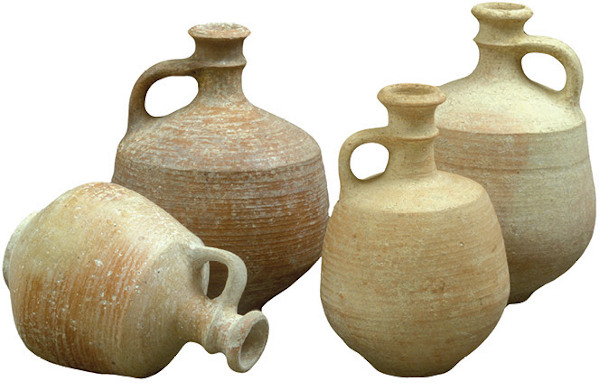
Water decanters from Judea, c. 6th century bc—around the time of Jeremiah’s ministry (see Jer 19:1 and note).
Z. Radovan/www.BibleLandPictures.com
Return to the main text.
19:2 Valley of Ben Hinnom. See note on 7:31. Potsherd Gate. The Jerusalem Targum (an ancient Aramaic paraphrase) identifies the Potsherd Gate (so called because it overlooked the main dump for broken pottery) with the Dung Gate of Ne 2:13 (see note there); 3:13–14; 12:31.
19:3 kings. See note on 17:20. disaster . . . make the ears . . . tingle. Echoed from 2Ki 21:12 (1Sa 3:11). The phrase refers to the shock of hearing an announcement of threatened punishment.
19:4 they. All who tried to combine the worship of idols with the worship of the one true God. this . . . place. Jerusalem. burned incense. See note on 1:16. filled this place with the blood of the innocent. The blood of godly people (2:34; 7:6; 22:3,17; 26:15), specifically as shed by wicked King Manasseh (see 15:4 and note; see also 2Ki 21:16).
19:5–6 Repeated in large part from 7:31–32 (see notes there).
19:7 ruin. Or “pour out”; see NIV text note (see also note on v. 1). As Jeremiah was saying this, he may have been pouring water from the jar to the ground as a symbolic gesture (cf. 2Sa 14:14). See photo. fall by the sword before their enemies. The Babylonians are the instruments of the divine threat (see 20:6). carcasses as food . . . wild animals. See 7:33 and note.
19:8 Echoes the language of 18:16 (see note there; see also Eze 27:35; Zep 2:15). devastate . . . appalled. The same Hebrew root underlies both words—the devastation of the city will have a similar effect on those who see its ruins. scorn . . . scoff. The same Hebrew root underlies both words.
19:9 One of the covenant curses (see Lev 26:29; Dt 28:53–57). eat the flesh of their sons and daughters . . . eat one another’s flesh. When Jerusalem’s food supply ran out during the Babylonian siege in 586 bc, cannibalism resulted (La 2:20; 4:10; Eze 5:10). Such shocking activity was not unprecedented in Israel (2Ki 6:28–29), and it would occur again in ad 70 during the Roman siege of Jerusalem (see Zec 11:9 and note): “A woman . . . who . . . had fled to Jerusalem . . . killed her son, roasted him, and ate one half, concealing and saving the rest” (Josephus, Wars, 6.3.4).
19:11 smash this nation . . . as this potter’s jar is smashed. Egyptians of the Twelfth Dynasty (c. 1983–1795 bc) inscribed the names of their enemies on pottery bowls and then smashed them, hoping to break the power of their enemies by so doing. cannot be repaired. See note on vv. 1–15.
19:13 will be defiled like . . . Topheth. King Josiah had earlier “desecrated Topheth” (2Ki 23:10). burned incense. See note on 1:16. on the roofs. See 32:29; see also note on Isa 15:3. The kings of Judah had built pagan altars on the roof of the palace in Jerusalem (2Ki 23:12). The Ugaritic Keret epic of the fourteenth century bc (see chart) describes a similar practice: “Go to the top of a tower, bestride the top of the wall . . . Honor Baal with your sacrifice . . . Then descend . . . from the housetops.” starry hosts. Worship of the sun, moon and stars was common in Judah throughout much of the later history of the monarchy (see, e.g., 2Ki 17:16; 21:3,5; 23:4–5; Zep 1:5). drink offerings to other gods. See note on 7:18.
19:14 all the people. A much larger audience than the elders of v. 1.
19:15 the villages around it. The towns of Judah that were dependent on Jerusalem (1:15; 9:11). were stiff-necked and would not listen. Like unruly oxen that resist the yoke; repeated from 7:26 (see note there; see also 11:10).
20:1–6 Pashhur’s response to Jeremiah’s symbolic act (vv. 1–2), and Jeremiah’s rejoinder (vv. 3–6).
20:1 Pashhur. One or more different men with the same name appear in 21:1; 38:1. The name Pashhur occurs on an ostracon (see note on 34:7) found at Arad and dating to the time of Jeremiah. Immer. Perhaps a descendant of the head of the sixteenth division of priests in the Jerusalem temple (1Ch 24:14). official in charge. The priest in charge of punishing troublemakers, real or imagined, in the temple courts (v. 2; 29:26). The position was second only to that of the chief priest himself (compare 29:25–26 with 52:24).
 20:2 The first of many recorded acts of physical violence against Jeremiah. the prophet. The first time Jeremiah is so called in the book (see Introduction: Theological Themes and Message), here to stress the enormity of Pashhur’s actions. beaten. Probably in accordance with the Mosaic law of Dt 25:2–3 (see note on Dt 25:3). stocks. A device used to restrict and humiliate prisoners. Upper Gate of Benjamin. Probably the same as the “north gate of the inner court” (Eze 8:3; see 2Ki 15:35; see also Eze 9:2). at the LORD’s temple. This qualifying phrase distinguishes the temple’s Gate of Benjamin from the “Benjamin Gate” in the city wall (37:13; 38:7). Both gates were in the northern part of the city, facing the territory of Benjamin.
20:3 Terror on Every Side. See note on 6:25.
20:4 Pashhur’s new name symbolizes terror to all Judah, whose people will be exiled to Babylonia or put to death. friends. Associates and allies in the sense of covenant partners (v. 6). king of Babylon. Nebuchadnezzar, who acceded to the Babylonian throne in 605 bc (see notes on 17:15; 18:1—20:18).
20:5 Fulfilled in 597 bc (2Ki 24:13) and in 586 (52:17–23; 2Ki 25:13–17).
20:6 you, Pashhur, . . . will go into exile. Probably in 597 bc, because shortly after that year (29:2) two other men in succession had replaced Pashhur as chief officer in the temple (29:25–26). you have prophesied lies. The priest Pashhur had pretended to be a prophet.
20:7–18 The sixth, last and longest of Jeremiah’s “confessions” (see Introduction: Author and Date; see also note on 11:18–23). In some respects, it is the most daring and bitter of them all.
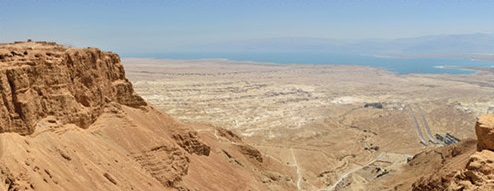
The precise meaning of the Hebrew verb translated as “deceived” (patah) in Jer 20:7 is difficult to determine, resulting in a variety of English translations. The verb is translated in other contexts as “seduce” (Ex 22:16), “coax” (Jdg 14:15), “lure” (Jdg 16:5), “entice” (1Ki 22:20–22; Eze 14:9), or “allure” (Hos 2:14). The NIV text note suggests the more palatable alternative “persuade.”
Jeremiah’s complaint here seems to express either his frustration that God had not (yet) done what he had promised—the “violence and destruction” Jeremiah prophesied had not yet occurred—or his mistaken belief that God had apparently called him to an impossible and dangerous task that he has not been adequately equipped to carry out. In either case, it is clear that Jeremiah is expressing in bitter honesty his lament over the internal and external misery into which his divine prophetic calling has inexorably led him.
Go to the Articles Index.
20:8 Jeremiah attributes his suffering to the Lord’s demands on his life. violence and destruction. The prophet’s message echoes the Lord’s word (6:7). reproach. See Ps 44:13; 79:4.
20:9 A classic description of prophetic reluctance overcome by divine compulsion (1:6–8; Am 3:8; Ac 4:20; 1Co 9:16). his word is . . . like a fire. See 5:14; 23:29. The figure is unique to the prophet Jeremiah (see also La 1:13; cf. Lk 24:32).
20:10 The Hebrew of the first two lines is identical with that of the first two lines of Ps 31:13. Terror on every side! See note on 6:25. The phrase is here used to mock Jeremiah in the light of his doleful message. friends. Cf. Ps 41:9 and note. waiting for me to slip. See Ps 35:15; 38:16. deceived. See v. 7 and note. we will prevail over him. Or so they think (v. 11). take our revenge on him. His enemies will not give up, no matter what it takes (see 11:19; 12:6; 26:11; cf. Ps 56:5–6; 71:10).
20:11 the LORD is with me. See 1:8 and note. This assertion marks a dramatic (though temporary—see vv. 14–18) change in Jeremiah’s perspective from his own situation and sense of inadequacy to the Lord’s powerful presence with him. mighty. The Hebrew for this word is translated “cruel” in 15:21, where it describes Jeremiah’s enemies. Here it has a different nuance and is applied to God. warrior. See notes on Ex 14:14; 15:3.
20:12 vengeance. See 11:20 and notes on Dt 32:35; Ps 5:10.
20:13 Sing . . . Give praise. See 31:7; see also introduction to Ps 9. rescues . . . from the hands of the wicked. See 15:21; 21:12. needy. See 22:16. By Jeremiah’s time, “poor/needy” had become virtually synonymous with “righteous” (see Am 2:6; see also notes on Ps 9:18; 34:6).
20:14–18 See Job 3:3–19. From the heights of exultation (v. 13) Jeremiah now sinks to the depths of despair. The irreversibility of his divine call (v. 9), the betrayal of his friends (v. 10), the relentless pursuit of his enemies (vv. 7,11), the negative and condemnatory nature of his message (v. 8)—all have combined to bring to his lips a startling expression of despondency and hopelessness. The passage serves also as a transition to the next major section of the book. Judah and Jerusalem, Jeremiah will soon say, are now irrevocably doomed (21:1–10).
20:14 Cursed be the day I was born! See note on Job 3:3. The prophet questions the very basis of his divine commission (1:5; 15:10).
20:15 News of the birth of a son, normally a blessing in ancient times (see, e.g., Ge 29:31–35), Jeremiah sees as a curse in his own case. Cursed be the man. A rhetorical curse, not directed against the man personally.
20:16 towns the LORD overthrew. Sodom and Gomorrah (Ge 19:24–25,29). By Jeremiah’s time their wickedness had long been proverbial (see 23:14; Dt 29:23; see also note on Isa 1:9–10). battle cry. See 4:19. at noon. See note on 6:4.
20:17 enlarged. In his anguish, Jeremiah wishes that his mother’s womb, which gave him birth, had been instead his eternal tomb.
21:1—24:10 The prophet denounces Judah’s rulers (21:1—23:7), false prophets (23:8–40) and sinful people (ch. 24). Although for the most part chs. 1–20 relate events in chronological order, chs. 21–52 are arranged on the basis of subject matter rather than chronology (24:1; 25:1; 26:1; 27:1; 29:2; 32:1; 35:1; 36:1; 37:1; 45:1; 49:34; 51:59; 52:4).
21:1—23:7 The rulers of Judah, who bear the primary responsibility for the nation’s economic, social and spiritual ills, are the first to be denounced by Jeremiah.
21:1 The word came. The phrase does not appear again until 25:1, suggesting that chs. 21–24 constitute an integral section in the book. Zedekiah. Means, ironically, “The LORD is my righteousness”—hardly befitting this weak ruler who seems more inclined to trust his own political instincts than in the Lord or his prophet (see Introduction: Background). Pashhur son of Malkijah. Not the same as the Pashhur of 20:1–6 (38:1). the priest Zephaniah son of Maaseiah. Not the same as the prophet Zephaniah (see 29:25,29; 37:3; 52:24; see also Zep 1:1).
21:2 Inquire . . . of the LORD. A request for knowledge or information (Ge 25:22; 2Ki 22:13), not necessarily for help. Nebuchadnezzar. See NIV text note; see also chart and note on 2Ki 24:1. is attacking. About 588, because the brash Zedekiah had rebelled against Babylon (52:3). us. Jerusalem. perform wonders . . . as in times past. For example, in the days of Hezekiah (Isa 37:36). he will withdraw. See Isa 37:37.
21:4 turn against you the weapons. Your defense of Jerusalem will fail. Babylonians. See NIV text note; see also note on Job 1:17. gather them inside this city. Either (1) the weapons, meaning that Judah’s troops would be totally unable to defend the approaches to the city, or (2) the Babylonians, meaning that Jerusalem’s defeat is imminent and inevitable.
21:5 I myself will fight against you. The Lord, usually his people’s defender, will now destroy them and seal their doom. with an outstretched hand and a mighty arm. See 27:5; 32:17. A similar phrase is used to describe God’s powerful redemption of Israel at the exodus (32:21; Dt 4:34; 5:15; 7:19; 26:8), but here God turns his wrath against his own people. in furious anger and in great wrath. Probably quoted from Dt 29:28.
21:7 I will give Zedekiah . . . his officials and the people . . . into the hands of Nebuchadnezzar. Fulfilled in 52:8–11,24–27 (Eze 12:13–14). plague, sword and famine. See v. 9. For this triad, see note on 14:12. no mercy or pity or compassion. For this triad, see 13:14; see also Eze 5:11. The three triads here heighten the literary effect of the passage.
21:8–10 See 27:12–13. Similar advice is offered in 38:2–3,17–18 (Dt 30:15–20).
21:8 See, I am setting before you. See Dt 11:26. The people are offered a choice, but few of them will make the right decision. the way of life and the way of death. See Dt 30:15,19; see also Pr 6:23.
21:9 Repeated almost verbatim in 38:2. Jeremiah’s counsel of surrender branded him as a traitor in the eyes of many (37:13), but he was in fact a true patriot who wanted to stay in Judah even after Jerusalem was destroyed (37:14; 40:6; 42:7–22). whoever . . . surrenders to the Babylonians . . . will live. Fulfilled in 39:9; 52:15. they will escape with their lives. Or “their lives will be their (only) plunder.” The victorious in battle can expect to share plunder; the defeated are fortunate indeed if their lives are spared.
21:10 determined. Or “set my face” (see 44:11; Isa 50:7 and note). harm and not good. See Am 9:4; contrast 24:6. It will be given . . . destroy it with fire. See 34:2.
21:12 Administer justice. See 5:28; 22:16; 1Ki 3:28; La 3:59. The king was obliged and expected to do so, as was the future Messiah (23:5; 33:15). every morning. When the mind is clear and the day is cool (see Ps 101:8 and note). rescue . . . robbed. Repeated in 22:3. or my wrath . . . no one to quench it. Repeated verbatim from 4:4 (Am 5:6). wrath will . . . burn. See 15:14; 17:4,27.
21:13 valley. Jerusalem, surrounded on three sides by valleys (see note on Isa 22:7), is called the “Valley of Vision” in Isa 22:1,5. rocky plateau. Mount Zion. you who say. The pronouns are plural in the second half of the verse (referring to Jerusalem’s inhabitants), singular in the first half (referring to Jerusalem personified). Who can come against us? The people think that no one can successfully lay siege to them (see notes on 7:4; 8:19).
21:14 as your deeds deserve. See note on 17:10. kindle a fire . . . consume. See note on 17:27. forests. The Hebrew for this word is singular and perhaps refers figuratively to Jerusalem’s royal palace, called the “Palace of the Forest of Lebanon” (1Ki 7:2; 10:17,21; see Isa 22:8) because of the cedar (22:7,14,15,23) used in its construction. The palace (22:1) is compared to the “summit of Lebanon” in 22:6 (see 22:23 and NIV text note).
22:1 Go down. The palace was at a lower elevation than the temple (26:10; 36:10–12). king of Judah. Probably Zedekiah (see 21:3,7; compare v. 3 with 21:12), whose predecessors are mentioned in sequence later in the chapter (Josiah, vv. 10a,15b–16; Jehoahaz/Shallum, vv. 10b–12; Jehoiakim, vv. 13–15a,17–19; Jehoiachin/Koniah, vv. 24–30).
22:2 David’s throne. Though all the kings of the Davidic dynasty failed to a greater or lesser degree, the victorious Messiah would someday appear as the culmination of David’s royal line (see 23:5 and NIV text note; 33:15; Eze 34:23–24; Mt 1:1). who come through these gates. See 17:25 and note.
22:3 Contrast Isa 11:3–5 with Eze 22:6–7. God’s criteria for kingship were first given in Dt 17:14–20. the foreigner, the fatherless or the widow. Care for the marginalized is a major theme throughout both the law and the prophets (see note on Ex 22:21–27).
22:4 Repeated in part from 17:25.
22:5 See 17:27 and note. swear by myself. See notes on Ge 22:16; Isa 45:23; see also 49:13; 51:14; cf. 44:26. become a ruin. Fulfilled in 52:13 (27:17).
22:6 Gilead . . . Lebanon. Renowned for their forests. Lebanon in particular supplied cedar for the royal palace (see note on 21:14; see also 1Ki 5:6, 8–10; 7:2–3; 10:27).
22:7 send. Or “consecrate” (see note on 6:4). destroyers. The Babylonians (see note on 4:7; see also 12:12). each man with his weapons. See Eze 9:2. cut up your . . . cedar. Cf. Isa 10:33–34; cf. especially the vivid description of the Babylonian troops smashing the carved paneling of the Jerusalem temple with their axes and hatchets (Ps 74:3–6).
22:8–9 Echoed in 1Ki 9:8–9; see Dt 29:24–26.
22:9 forsaken the covenant . . . and served other gods. A gross violation of the first and second stipulations of the Sinaitic covenant (see Ex 20:3–5 and notes).
22:10 weep for the dead king. Josiah, who was mourned long after his death (2Ch 35:24–25). him who is exiled. Jehoahaz/Shallum. In 609 bc the Egyptian pharaoh Necho “carried him off to Egypt, and there he died” (2Ki 23:34).
22:11 Shallum. See 1Ch 3:15. Shallum was his personal name, Jehoahaz his throne name (the latter means “The LORD seizes”).
22:12 the place where they have led him captive. Egypt (see note on v. 10).
22:13–19 A scathing denunciation of King Jehoiakim, who is described in the third person (vv. 13–14), then rhetorically addressed in the second person (vv. 15,17) and identified by name (v. 18), meaning “The LORD raises up.” Good King Josiah is referred to in vv. 15b–16 by way of contrast.
22:13 Woe to him who builds. See Hab 2:9,12. by unrighteousness . . . by injustice. Contrast v. 3; 21:12. upper rooms. See note on Jdg 3:20. making his own people work for nothing. Contrary to the law (Lev 25:39; Dt 24:14–15). Jehoiakim’s refusal to pay them may have been due partly to inability, since Judah was under heavy tribute to Egypt during the early part of his reign (2Ki 23:35).
22:14 panels. Haggai similarly deplores the use of paneling as an extravagant and unneeded luxury in certain situations (Hag 1:4).
22:15 your father. Josiah. have food and drink. Enjoy life (Ecc 2:24–25; 3:12–13). did what was right and just. Like his ancestor David (2Sa 8:15); contrast v. 13 (see note there; see also note on Ps 119:121).
22:16 James defines a proper relationship to God in similar terms (Jas 1:27); contrast 5:28 (see note there). poor and needy. See note on 20:13. to know me. To love God fully, which results in living a pious life and serving those in need (Dt 10:12–13; Hos 6:6; Mic 6:8).
22:17 your. Jehoiakim’s (v. 18). dishonest gain. See 6:13; 8:10. shedding innocent blood. See note on 19:4; for an illustration of Jehoiakim’s cruelty in this regard, see 26:20–23. oppression. See v. 3; 6:6; 21:12.
22:18 Contrast 2Ch 35:24–25. They will not mourn for him: ‘Alas, my brother!’ Contrast 1Ki 13:30.
22:19 burial of a donkey. Tantamount to no burial at all (36:30); fulfilled in 2Ki 24:6, where no burial is described and where it says that Jehoiakim “rested with his ancestors,” a euphemism for dying (see notes on Ge 25:8; 1Ki 1:21). dragged away. See 15:3.
22:20–23 The Lord speaks to Jerusalem, which is personified as a woman (v. 23).
22:20 Lebanon . . . Bashan . . . Abarim. Mountainous regions (v. 6; Nu 27:12; 33:47–48; Dt 32:49; Jdg 3:3; Ps 68:15), the first two in the north and the third in the south, suitable heights from which the whole land of Israel could be rhetorically addressed. allies. Or “lovers” (see 4:30 and note), here referring to nations joined together by treaty. Judah’s onetime allies included Egypt, Assyria (2:36), Edom, Moab, Ammon and Phoenicia (27:3), all of whom had been—or soon would be—conquered by Babylonia (27:6–7; 28:14). crushed. See 14:17.
22:21 not listen . . . not obeyed me. See 7:22–26; 11:7–8. your youth. The days of Israel’s early history in Egypt (see 2:2 and note; Hos 2:15).
22:22 wind will drive . . . away. See 13:24; Job 27:21; Isa 27:8. shepherds. See 2:8 and note; 10:21; 23:1–4. The initial fulfillment of this verse took place in 597 bc (2Ki 24:12–16).
22:23 Lebanon . . . cedar. See NIV text note; see also 21:14 and note; Eze 17:3–4,12. pain like that of a woman in labor. See 4:19,31 and notes.
22:24–30 A prophecy against King Jehoiachin (fulfilled in 24:1; 29:2), who was also known as Koniah (see NIV text note on v. 24), a shortened form of Jeconiah (see NIV text note on 24:1); see Introduction: Background. All three forms of the name mean “The LORD establishes.”
22:24 As surely as I live. See note on Ge 42:15. even if you . . . were a signet ring. The curse on Jehoiachin is apparently reversed in Hag 2:23 (on the signet ring, see note there; see also photo).
22:25 deliver you into the hands of . . . those you fear. Contrast 39:17.
22:26 Fulfilled in 597 bc (29:2; 2Ki 24:15). hurl . . . into another country. Send into exile in Babylonia (7:15; 16:13; Dt 29:28). you and the mother who gave you birth. Jehoiachin and Nehushta (see note on 13:18).
22:28 Two rhetorical questions, answered in v. 30. broken pot . . . hurled out. Jehoiachin and his descendants, like Judah itself (19:10–11), are under God’s judgment. he and his children. Though Jehoiachin was only 18 years old at the time of his exile (2Ki 24:8), he already had more than one wife (2Ki 24:15) and therefore probably one or more children.
22:29 land, land, land. The repetition implies the strongest possible emphasis and intensity (see 7:4 and note; 23:30–32; Isa 6:3 and note; Eze 21:27).
22:30 as if childless. Not in the sense of Jehoiachin’s having no children at all (he had at least seven; see 1Ch 3:17–18), but of having none to sit on the throne of David in Judah. Jehoiachin’s grandson Zerubbabel (1Ch 3:17–19; Mt 1:12) became governor of Judah (Hag 1:1), but not king. Zedekiah was a son of Josiah (37:1), not of Jehoiachin, and he and his sons died before the latter (52:10–11). Jehoiachin therefore was Judah’s last surviving Davidic king—until the coming of the Messianic king.
23:1–8 A summary statement (probably dating to Zedekiah’s reign; see note on v. 6) that includes God’s intention to judge the wicked rulers and leaders of Judah (vv. 1–2), to ultimately bring his people back from exile (vv. 3–4,7–8) and to raise up an ideal Davidic King (vv. 5–6).
23:1 See 10:21 and note. shepherds. A royal motif (see note on Ps 23:1 and article). sheep. The people of Judah (see v. 2).
23:2 not bestowed care. What Judah’s rulers had failed to do is summarized in Eze 34:4. bestowed care . . . bestow punishment. The same Hebrew root underlies both phrases (see v. 4 and note). It means to visit or attend to something for either a positive or negative purpose.
23:3 remnant. See note on 6:9. I have driven. Although earlier it was Judah’s leaders who had been accused of driving the Lord’s flock into exile by means of their sinful actions, here the ultimate agent of judgment is the Lord. be fruitful and increase. See note on Ge 1:28.
23:4 be afraid . . . terrified. The absence of a concerned shepherd invites attacks by wild animals (Eze 34:8). be missing. See Nu 31:49. The Hebrew root underlying this phrase is the same as that for “bestowed care” and “bestow punishment” in v. 2 (see note there).
23:5–6 One of the most important Messianic passages in Jeremiah, echoed in 33:15–16.
23:5 I will raise up. See 2Sa 7:12; see also 30:9; Eze 34:23–24; 37:24. The Hebrew for this phrase is translated “I will place” in v. 4. for David. See NIV text note; see also Mt 1:1 and NIV text note. The Messiah, unlike any previous descendant of David, would be the ideal King. He would sum up in himself all the finest qualities of the best rulers, and infinitely more. Branch. A Messianic title (see notes on Isa 4:2; 11:1; Zec 3:8; 6:12). The Targum (ancient Aramaic paraphrase) reads “Messiah” here. reign wisely. See note on Isa 52:13. do what is just and right. See 22:3,15 and note on 22:15; said also of King David (2Sa 8:15).
23:6 Judah . . . and Israel. God’s reunited people will be restored (see 31:31 and note; Eze 37:15–22). be saved . . . live in safety. The deliverance will be both spiritual and physical (Dt 33:28–29). he. The Messianic king. The LORD Our Righteous Savior. Although Zedekiah did not live up to the meaning of his name, “The LORD is my righteousness,” the Messiah would bestow on his people the abundant blessings (Eze 34:25–31) that come from the hands of a King who does “what is just and right” (v. 5).
23:7–8 Repeated almost verbatim from 16:14–15 (see notes there).
23:9–40 False prophets denounced (2:8; 4:9; 5:30–31; 6:13–15; 8:10–12; 14:13–15; 18:18–23; 26:8,11,16; 27–28; Isa 28:7–13; Eze 13; Mic 3:5–12).
23:9 Concerning. Introduces headings also in 46:2; 48:1; 49:1,7,23,28. his holy words. Contrast the unholy words of the false prophets (vv. 16–18).
23:10 See Isa 24:4–6. adulterers. See 5:7–8; 9:2 and notes. curse. Brought on by violating the Lord’s covenant (see 11:3 and note; 11:8). parched . . . withered. See 12:4 and note. To worship other gods is to deny to the land the fertility that only the Lord can bring (Hos 2:5–8, 21–22; Am 4:4–9). pastures in the wilderness. See note on 9:10. evil course. Evil because it is their own way and not God’s (8:6).
23:11 even in my temple . . . wickedness. For examples, see 32:34; 2Ki 16:10–14; 21:5; Eze 8:5, 10,14,16.
23:12 their path will become slippery . . . banished to darkness. See Ps 35:5–6; see also Ps 73:18.
23:13 prophesied by Baal. See 2:8 and note; see also 1Ki 18:19–40.
23:14 They . . . live a lie. See 14:13 and note; cf. 1Jn 1:6. strengthen the hands of. The Hebrew underlying this phrase is translated “encouraged” in Eze 13:22. not one of them turns from their wickedness. See Eze 13:22. like Sodom . . . like Gomorrah. See note on 20:16.
23:15 I will make . . . poisoned water. Repeated almost verbatim from 9:15 (see note there). ungodliness. See v. 11.
23:16 prophets. False prophets (see note on vv. 9–40). visions. “Revelations” or “prophecies” (see 1Sa 3:1; Pr 29:18; Isa 1:1; Ob 1 and notes). from their own minds. See v. 26; 14:14. False prophets are like preachers of a “different gospel” (Gal 1:6–9).
23:17 You will have peace. The essential message of the false prophets (see 6:14 and note; 8:11; 14:13 and note; cf. 28:8–9). stubbornness of their hearts. See note on 3:17.
23:18 council of the LORD. God’s heavenly confidants (see v. 22; Job 15:7–10 and note; see also 1Ki 22:19–22; Job 1:6; 2:1; 29:4 and note; Ps 89:7). In Am 3:7 the Hebrew for “council” is translated “plan,” the purposes that God has promised to reveal to his chosen servants (v. 20).
23:19–20 Repeated almost verbatim in 30:23–24.
23:19 storm . . . whirlwind. A vivid image of God’s wrath.
23:20 you will understand it clearly. Unlike the false prophets, who continued to mislead their hearers even in Babylonia after the exile of 597 bc (29:20–23).
23:21 I did not send. See v. 32; 29:9; contrast 1:7; Isa 6:8; Eze 3:5. did not speak to them. See 29:23.
23:22 my council. See note on v. 18.
23:23 God nearby . . . God far away. God is both immanent and transcendent; he lives “in a high and holy place, but also with the one who is . . . lowly in spirit” (Isa 57:15).
23:24 hide . . . so that I cannot see them. See Job 26:6; Ps 139:7–12; Am 9:2–4. I fill heaven and earth. See Isa 66:1.
23:25 lies. See 5:12. in my name. See Dt 18:20,22. dream. One of the modes of divine revelation to a true prophet (see 27:9; Dt 13:1–3; 1Sa 28:6; Zec 10:2; cf. Nu 12:6; Joel 2:28).
23:26 hearts . . . minds. The Hebrew is the same for both words (see note on Ps 4:7). their own minds. See note on v. 16.
23:27 my name. To forget the Lord’s name is tantamount to forgetting him (see note on Ps 5:11). forgot . . . through Baal worship. When Judah’s ancestors forgot God, they began to serve Baal (Jdg 3:7; 1Sa 12:9–10). forgot. See Ps 9:17 and note.
23:28–29 The true word of God is symbolized in three figures of speech (grain, fire, hammer).
23:28 straw . . . grain. Of the two, only grain can feed and nourish (see note on 15:16).
23:29 like fire. See note on 20:9. The fire of the divine word ultimately tests “the quality of each person’s work” (1Co 3:13; see note there). like fire . . . like a hammer. Reinforces the destructive aspect of God’s word, directed against the false prophets. Fire and shattered rocks are again found as symbols of God’s wrath in Na 1:6.
23:30–32 I am against. The threefold statement is for emphasis (see note on 22:29).
23:31 prophets who . . . declare. False prophets are claiming that their own prophecies are the messages of God. The Hebrew for this verb is used only here with someone other than God as the subject. The phrase “declares the LORD” or its equivalent occurs hundreds of times in the OT, more frequently in Jeremiah (over 175 times) than in any other book.
23:32 did not send. See v. 21 and note.
23:36 The three divine titles at the end of the verse enhance the solemnity of what is being said. living God. See 10:10; Dt 5:26.
23:39 forget. The Hebrew for this word is a pun on the Hebrew for the word “message” in vv. 33–34,36,38—by which Jeremiah highlights his word of judgment. the city. Jerusalem.
24:1–10 See Am 8:1–3. Having denounced Judah’s leaders (21:1—23:8) and false prophets (23:9–40), Jeremiah now describes the division of Judah’s people into good and bad (24:1–3) and summarizes the Lord’s determination to restore the good (vv. 4–7) but destroy the bad (vv. 8–10).
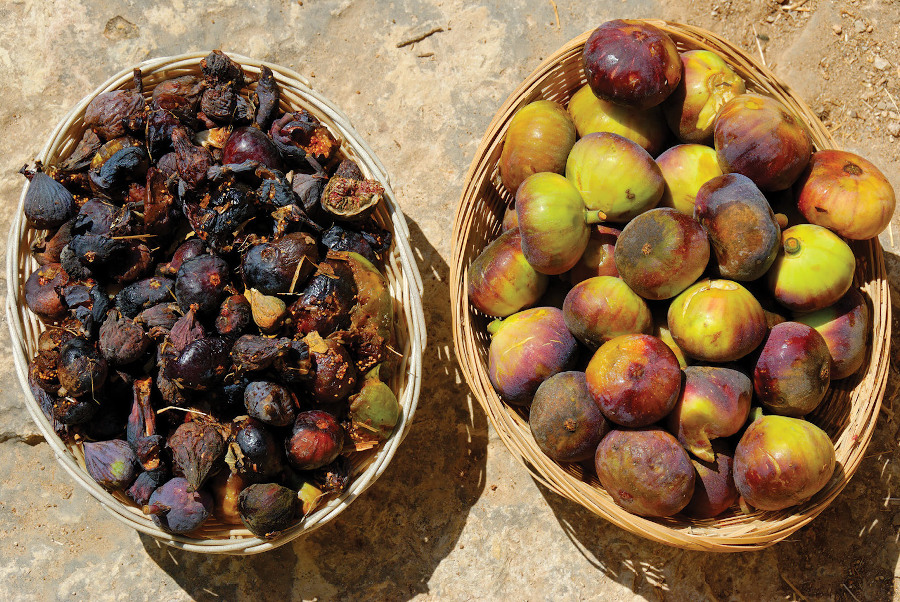
24:1 Jehoiachin . . . and the officials . . . were carried into exile. In 597 bc. skilled workers and the artisans. See 29:2; 2Ki 24:14,16. Only the poorest and weakest people were left behind in Judah (see 2Ki 24:14; for the later period [586], cf. Jer 39:10). the LORD showed me. A common way of introducing prophetic visions (Am 7:1, 4,7). figs. See note on 8:13. placed. The Hebrew root underlying this word is translated “meet” in Ex 29:42–43. As the Lord desired to “meet” with the Israelites at the entrance to the tabernacle, so the figs (symbolizing the people of Judah) would be “met” by him in front of the Jerusalem temple.
Return to the main text.
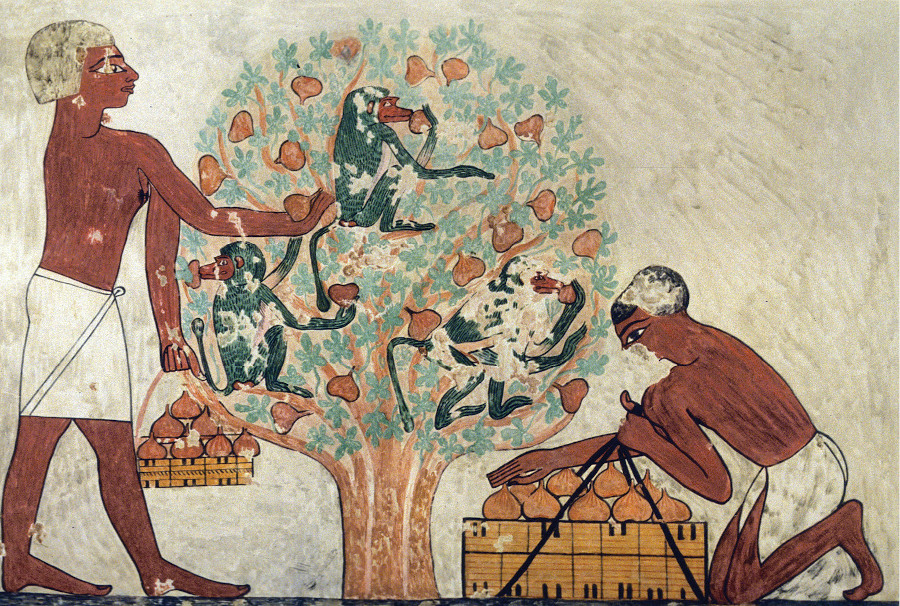
A wall painting from Beni Hasan (1920–1900 bc) showing men gathering figs (Jer 24:1–3).
Z. Radovan/www.BibleLandPictures.com
Return to the main text.
24:2 very good figs . . . that ripen early. The first figs in June are especially juicy and delicious (Isa 28:4; Hos 9:10; Mic 7:1; Na 3:12). See photo.
24:3 What do you see . . . ? See note on 1:11.
24:5–6 Just as good figs should be protected and preserved by their owner, so also the exiles of 597 bc, who were the best of Judah’s leaders and craftsmen (2Ki 24:14–16), would be watched over and cared for by the Lord (29:4–14). See photo.
24:6 My eyes will watch over them for their good. Contrast the word of judgment in Am 9:4. bring them back. In 538/537 bc. build them up . . . tear them down . . . plant . . . uproot. See 1:10 and note.
24:7 a heart to know me. For a more comprehensive prediction including the same promise, see 31:31–34. my people . . . their God. The classic statement of covenant relationship (see 31:33; 32:38; see also notes on 7:23; Ge 17:7; Zec 8:8). with all their heart. See 29:13.
24:8 live in Egypt. Perhaps those deported with Jehoahaz in 609 bc (see 22:10b–12 and notes; 2Ki 23:31–34) and/or those who fled to Egypt after the Babylonians defeated the Egyptians in the battle of Carchemish in 605 (46:2).
24:9 abhorrent . . . to all the kingdoms. See 34:17. reproach . . . object of ridicule. See Dt 28:37. byword. See notes on 1Ki 9:7; Job 17:6.
24:10 sword, famine and plague. See note on 14:12. destroyed from the land. In 586 bc (52:4–27).
25:1—29:32 The dominant theme in chs. 25–29 is the forthcoming destruction of Jerusalem and exile to Babylonia in 586 bc (hinted at briefly in 24:10).
25:1–38 Divine judgment will descend not only on Judah but on “all the surrounding nations” (v. 9) as well (see notes on 46:1—51:64; Isa 13:1—23:18; Am 1:3—2:16; 5:18; Mic 1:2; Zep 2:4—3:8).
25:1 fourth year of Jehoiakim . . . first year of Nebuchadnezzar. The synchronism yields the date 605 bc (see note on Da 1:1).
25:3 twenty-three years. Nineteen under Josiah and four under Jehoiakim (v. 1). thirteenth year of Josiah. 626 bc (or possibly as early as 627); see 1:2. again and again. See v. 4; see also note on 7:13. you have not listened. Jeremiah, now halfway through his prophetic ministry, had been warned at the time of his call that the people of Judah would oppose him (1:17–19).
25:4 Echoed from 7:25–26; see also 35:15. his servants the prophets. See note on 7:25.
25:5 stay in the land the LORD gave . . . your ancestors for ever and ever. Echoed from 7:7; see Ge 17:8 and note.
25:6 arouse my anger. See 7:18; Dt 31:29. what your hands have made. Idols (see note on 1:16).
25:7 brought harm to yourselves. See 7:6.
25:9 peoples of the north. Babylonia and its allies (see 1:15 and note). my servant Nebuchadnezzar. See 27:6; 43:10. “Servant” is used here not in the sense of “worshiper” but of “vassal” or “agent of judgment,” just as the pagan ruler Cyrus is called the Lord’s “shepherd” in Isa 44:28 and his “anointed” in Isa 45:1. this land. Judah. surrounding nations. Named in vv. 19–26. completely destroy. See NIV text note; 50:21,26; 51:3; see also note on Dt 2:34. object of horror and scorn. See note on 18:16. everlasting ruin. See 49:13; Ps 74:3; Isa 58:12 and note.
25:11–12 seventy years. This round number (as in Ps 90:10; Isa 23:15) represents the period from 605 (see notes on v. 1; Da 1:1) to 538/537 bc, which marked the beginning of Judah’s return from exile (see 2Ch 36:20–23; see also notes on Da 9:1–2), or, more precisely, to 535 bc, when the Jews who first returned from exile were settled in Israel. The 70 years of Zec 1:12 are not necessarily the same as those here and in 29:10. They probably represent the period from 586 (when Solomon’s temple was destroyed) to 516 (when Zerubbabel’s temple was completed). See note on Zec 7:5. See article. For the reason for 70 years of exile, see note on 2Ch 36:20–21. Ezra and Daniel also refer to Jeremiah’s prophecy of the 70 years (Ezr 1:1; Da 9:2).
25:11 This . . . country . . . and these nations. Judah and the nations named in vv. 19–26.
How Does One Calculate the “70 Years”?
There are several ways to arrive at a total of 70 years (or approximately 70 years): (1) 605 (Nebuchadnezzar’s first deportation of Jews to Babylon)–539 bc (Cyrus’s decree); (2) 605–536 bc (the laying of the foundation of the second temple); (3) 586 (the fall of Jerusalem)–516 bc (the completion of the second temple). Other calculations have also been proposed. Alternatively, the number 70 may simply be a way of referring to a full lifespan (cf. Ps 90:10), here indicating a long period of servitude to Babylon. Cf. the judgment against Tyre in Isa 23:15,17.
Go to the Articles Index.
25:12 punish the king . . . and his nation. See 50:18. The city of Babylon was captured by the Medes and Persians in 539 bc (near the end of Jeremiah’s 70 years; see note on vv. 11–12). for their guilt. See 50:11,31–32; 51:6,49,53,56; Isa 13:19. make it desolate forever. See 50:12–13; 51:26; see also note on Isa 13:20.
25:13 book. After this word, the Septuagint (the pre-Christian Greek translation of the OT) inserts the material found in chs. 46–51, though rearranged.
25:14 many nations. Media, Persia and their allies. great kings. Cyrus and his associates. repay them according to their deeds. See 50:29; 51:24; Pr 26:27 and note.
25:15 cup filled with the wine of my wrath. Symbolic of divine judgment, especially against wicked nations (see Isa 51:17 and note; see also Jer 51:7; Rev 18:6). This cup, filled with the wine of God’s wrath against “all the kingdoms on the face of the earth” (v. 26), is the cup that Jesus prays the Father would, if he is willing, take from him (Mk 10:38, 14:36; Jn 18:11). It is the cup he drinks on behalf of every believer. nations to whom I send you. See 1:5 and note.
25:16 stagger and go mad. See 13:12–14 and notes; Rev 14:8. because of the sword. As the sting of wine causes people to stagger, so the stroke of the sword causes them to fall, never to rise again (v. 27).
25:17 A symbolic description of Jeremiah’s announcement of divine judgment against the nations.
25:18 Jerusalem and . . . Judah. God’s own people are to be judged first (see v. 29; see also Eze 9:6; 1Pe 4:17). its kings. See note on 17:20. ruin . . . horror . . . scorn . . . curse. See vv. 9,11; 18:16; 19:8.
25:19–26 The roster of nations begins with Egypt and ends with Babylonia, as in chs. 46–51; but Damascus (49:23–27) is omitted, and a few other regions are added.
25:20 foreign people. See v. 24; Ne 13:3. Uz. See note on Job 1:1. Philistines. See ch. 47; see also note on Ge 10:14. Ashkelon, Gaza, Ekron. See note on Jdg 1:18; see also map. people left at Ashdod. According to the Greek historian Herodotus (2.157), the Egyptian pharaoh Psammetichus I (664–610 bc) destroyed Ashdod after a long siege. By Nehemiah’s time it was inhabited again (see note on Ne 4:7). The fifth main Philistine city, Gath (Jos 13:3), though important earlier (see, e.g., 1Sa 21:10–12), was destroyed and apparently not rebuilt (in later centuries it is not mentioned with the other four cities; see Am 1:6–8; Zep 2:4; Zec 9:5–6).
25:21 Edom. See 49:7–22; see also note on Ge 36:1. Moab and Ammon. See 48:1—49:6; see also note on Ge 19:36–38.
25:22 Tyre and Sidon. See 47:4; see also notes on Isa 23:1–2, 4,12. coastlands across the sea. Mediterranean islands and maritime regions, some of them Phoenician colonies (see Eze 27:15; Da 11:18 and notes).
25:23 Dedan. See 49:8; see also notes on Isa 21:13; Eze 25:13. Tema. See note on Isa 21:14. Buz. A desert region in the east. who are in distant places. See note on 9:26.
25:24 Arabia. See 49:28–33. foreign people. See v. 20; Ne 13:3.
25:25 Zimri. Not to be confused with the Israelite king of that name, Zimri is perhaps the same as Zimran, whom Keturah bore to Abraham (Ge 25:1–2). The region known as Zimri would then have been named after him. Elam. See 49:34–39; see also note on Ge 10:22. Media. Later to join the Persians in conquering Babylon (see 51:11,28; see also note on Isa 13:17).
25:26 Sheshak. See NIV text note. The cryptogram is formed by substituting the first consonant of the Hebrew alphabet for the last, the second for the next-to-last, etc. Its purpose is not fully understood, though in some cases the cryptogram itself bears a suitable meaning (see NIV text note on 51:1). will drink it too. The Lord’s agents of judgment are not themselves exempt from his judgment (51:48–49).
25:27 fall . . . because of the sword. See note on v. 16.
25:29 beginning. See note on v. 18. city that bears my Name. Jerusalem (see note on 7:10). sword. See note on 12:12.
25:30 The LORD will roar . . . thunder. An echo of Joel 3:16; Am 1:2 (see note there; see also Hos 11:10; Am 3:8). his land. Judah. shout like those who tread the grapes. See Isa 9:3; 16:9–10; 63:3 and note; see also Isa 16:10 and note.
25:31 tumult. The sounds of war (Am 2:2). bring charges . . . bring judgment. See note on 2:9; see also 2:35; 12:1.
25:32 mighty storm . . . from the ends of the earth. The wrath of God (23:19), mediated through the coming Babylonian invasion (see note on Isa 41:25).
25:33 not be mourned . . . like dung lying on the ground. Repeated from 8:2 (see note there); 16:4.
25:34–36 shepherds . . . leaders of the flock. See 2:8 and note; 10:21; 22:22; Eze 34:2 and note.
25:34 roll in the dust. Or “roll in ashes” (as in 6:26). your time . . . has come. See La 4:18. fall like the best of the rams. See NIV text note. For the reading given there, cf. the description of Jehoiachin in 22:28.
25:36 their pasture. The land of Judah.
26:1–24 A summary (vv. 2–6)—and its results (vv. 7–24)—of one of Jeremiah’s temple messages in ch. 7 (see note on 7:1—10:25).
26:1 Early in the reign. See 27:1. The Babylonian equivalent of the Hebrew for this phrase implies that the first year of King Jehoiakim (609–608 bc) is probably meant.
26:2 courtyard of the LORD’s house. Perhaps near the New Gate (see v. 10; see also note on 7:2). who come to worship. See 7:2 and note. do not omit a word. See Dt 4:2 and note.
26:3 See 7:3,5–7. relent. See vv. 13,19; see also notes on 4:28; 18:7–10.
26:4 If you do not listen. See v. 5; 7:13. my law. See 7:6,9 and notes.
26:5 See 7:13,25–26. my servants the prophets. See note on 7:25. again and again. See note on 7:13.
26:6 make this house like Shiloh. See v. 9; see also note on 7:12. this city. Jerusalem. curse. See NIV text note and 24:9; 25:18; see also note on Zec 8:13.
26:8 You must die! A similar phrase describes the ultimate penalty for gross violations of the law of Moses (see, e.g., Ex 21:15–17; Lev 24:16–17, 21; Dt 18:20; cf. 1Ki 21:13).
26:9 crowded around. With hostile intent (Nu 16:3).
26:10 officials of Judah. Those responsible for making legal decisions concerning disputes taking place in the temple precincts. The priests and (false) prophets, who had a vested interest in Jerusalem and its temple, felt that Jeremiah should be sentenced to death because he was predicting the destruction of both the city and the Lord’s house (vv. 8–9,11). After hearing Jeremiah’s defense (vv. 12–15), the officials decided in his favor (v. 16). The people, fickle and easily swayed, first opposed Jeremiah (vv. 8–9), then supported him (v. 16). The warning of v. 15 apparently helped turn the tide. New Gate. See 36:10; possibly the same as the “Upper Gate of Benjamin” (see 20:2 and note).
26:11 Jeremiah’s enemies judge him before he has a chance to defend himself (cf. Dt 19:6; Jos 20:1–9 and note).
26:12 The LORD sent me. Contrast 23:21.
26:13 reform your ways and your actions. Repeated from 7:3 (see also 18:11; 35:15). relent. See vv. 3,19; see also notes on 4:28; 18:7–10.
26:15 innocent blood. See 7:6 and note; see also Mt 27:24–25; Ac 5:28.
26:16 Contrast v. 11; see note on v. 10.
26:17 elders. See 19:1 and note.
26:18–19 The elders cite the precedent of Micah, who lived a century earlier and who (together with Isaiah) convinced King Hezekiah to pray for forgiveness on behalf of his people. The Lord answered the prayers of the king and the prophets, and in 701 bc Jerusalem and the temple were spared (Isa 37:33–37).
26:18 Micah of Moresheth. See Introduction to Micah: Author. Zion will be plowed . . . overgrown with thickets. Quoted verbatim from Mic 3:12 (see note there)—the only place in the OT where one prophet quotes another and identifies his source.
26:19 relent. See vv. 3,13; see also notes on 4:28; 18:7–10.
26:20–23 A parenthesis, cited as an example of the contrast between how a good king, Hezekiah, treated the Lord’s prophets and how a wicked king, Jehoiakim, was known to have treated them.
26:20 Uriah. Not mentioned elsewhere in the OT, though this name does appear repeatedly on ostraca (such as those at Lachish—see note on 34:7 and photo; see also chart) and seals from this period.
26:21 officers. Perhaps the royal bodyguard. Uriah . . . fled . . . to Egypt. A fatal mistake, for now he could be accused of treason and sedition.
26:22 Elnathan son of Akbor. One of King Jehoiakim’s highest officials (36:12), he was impressed on another occasion by Jeremiah’s prophecies to urge the king not to burn Jeremiah’s scroll (36:25) and warn the prophet to hide (36:19). An Elnathan (perhaps the same man) was Jehoiakim’s father-in-law (2Ki 24:6,8). An Akbor (perhaps the father of this Elnathan) was one of King Josiah’s officials (see 2Ki 22:12,14; see also note on v. 24).
26:23 brought Uriah out of Egypt. Mutual rights of extradition were a part of the treaty imposed on Judah by Egypt when Jehoiakim became the vassal of the Egyptian pharaoh Necho II (2Ki 23:34–35). Jehoiakim . . . had him struck down. Apart from divine intervention, Jeremiah probably would have fallen victim to the same fate (36:26). burial place of the common people. See note on 17:19. Commoners were buried in the Kidron Valley east of Jerusalem (2Ki 23:6).
26:24 Ahikam son of Shaphan. One of King Josiah’s officials (2Ki 22:12,14), along with an Akbor who may have been the father of the Elnathan in v. 22 (see note there). Ahikam was also the father of Gedaliah, who would become governor of Judah after Jerusalem was destroyed in 586 bc (40:5) and who also befriended Jeremiah (39:14). supported Jeremiah. Ahikam’s high position in Jehoiakim’s court was doubtless instrumental in saving the prophet’s life.
27:1—29:32 Further attempts by Jeremiah to counteract the teachings of false prophets, who were claiming that Babylon’s doom was near and that rebellion against Nebuchadnezzar was therefore warranted and desirable.
27:1–22 Jeremiah tells the nations (vv. 3–11), King Zedekiah (vv. 12–15) and the priests and people of Judah (vv. 16–22) to submit to the Babylonian yoke.
27:1 Early in the reign. See note on 26:1. In this case, however, the phrase has been extended in meaning to include Zedekiah’s fourth year (593 bc; see 28:1).
27:2 yoke. Of the kind worn by oxen (see note on Eze 34:27), it was a symbol of political submission (vv. 8,11–12; Lev 26:13). That Jeremiah actually wore such a yoke for a time is clear from 28:10,12. See photo.
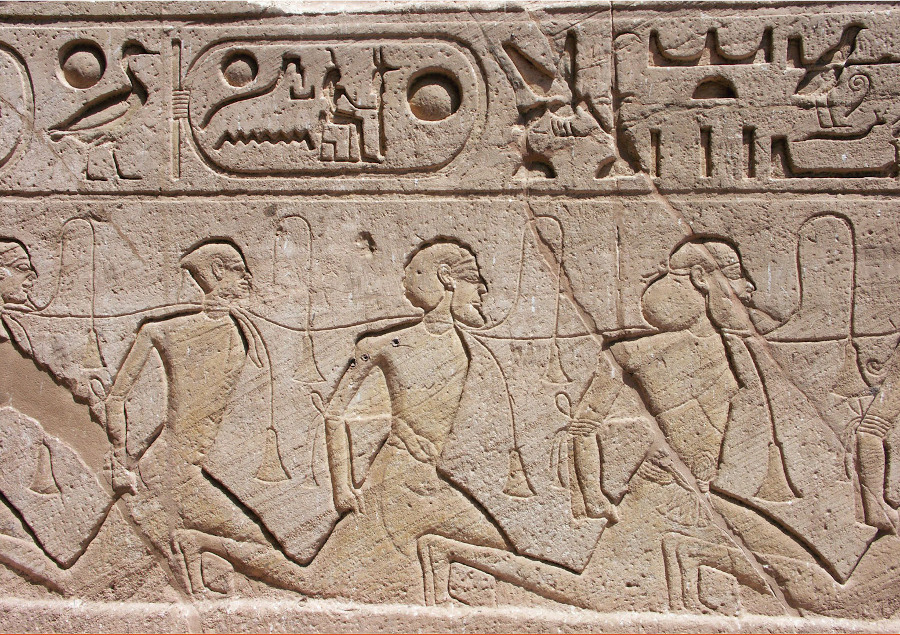
Relief at Abu Simbel depicting prisoners yoked together; binding in this way imposed control and punishment (see Jer 27:2 and note).
Vladimir Korostyshevskiy/123RF.com
Return to the main text.
27:3 send word. In his role as a “prophet to the nations” (1:5). Edom, Moab, Ammon. Lands east and south of Judah (see 25:21 and note). Tyre and Sidon. Prominent cities in Phoenicia, north of Judah (see 25:22 and note). envoys . . . have come . . . to Zedekiah. Perhaps to discuss rebellion against Babylonia. They may have counted on support from Egypt, where Psammetichus II had become pharaoh in 595 bc. Zedekiah went to Babylon in 593 (51:59), perhaps to be interrogated by Nebuchadnezzar. In any case, Zedekiah rebelled against him (52:3).
27:5 great power and outstretched arm. See note on 21:5.
27:6 my servant Nebuchadnezzar. See note on 25:9. make . . . wild animals subject to him. Nothing would be beyond the reach of Nebuchadnezzar’s dominion (28:14; Da 2:38).
27:7 him . . . his son . . . his grandson. Three generations of rulers, not necessarily in direct father-son relationships (see note on Da 5:1; see also NIV text notes on Ge 10:2,8). time for his land comes. Babylonia will be judged (see note on 25:26). many nations and great kings. See note on 25:14.
27:8 yoke. See note on v. 2 (see also photo). sword, famine and plague. See note on 14:12. until I destroy. See 9:16; 24:10.
27:9 See 29:8. your prophets. False prophets. diviners . . . mediums . . . sorcerers. Forbidden in Israel (see Lev 19:26; Dt 18:10–11 and note on 18:9). interpreters of dreams. Including prophets and diviners (23:25–28; 29:8).
27:10 prophesy lies. See note on 5:31; cf. 2Ti 4:3–4.
27:12 your neck . . . serve . . . live. The Hebrew for all these words is plural, since Jeremiah is speaking to the people of Judah as well as to Zedekiah (v. 13). yoke. See note on v. 2.
27:13 See v. 8. sword, famine and plague. See note on 14:12.
27:15 See 14:14; 23:21 and note.
27:16 prophets who say, ‘Very soon now . . . ’ As the prophet Hananiah was saying (28:1–3). articles from the LORD’s house. Some were carried off to Babylonia by Nebuchadnezzar in 605 bc (Da 1:1–2), others in 597 (2Ki 24:13). Still others would be carried off in 586 (vv. 21–22; 52:17–23).
27:18 If they are prophets . . . let them plead. If they are true prophets and in communion with the Lord, let them intercede for Judah, because the Lord has announced his intention to judge the nation.
27:19 the pillars, the bronze Sea, the movable stands. See 52:17; see also 1Ki 7:15–37 and notes.
27:22 They will be taken to Babylon. In 586 bc (52:17–23). I will bring them back. In 538/537 and shortly afterward (Ezr 1:7–11).
28:1–17 The true prophet Jeremiah confronts the false prophet Hananiah.
28:1 fourth year . . . of Zedekiah. 593 bc. early in the reign. See notes on 26:1; 27:1. prophet. The word is used for all prophets, whether true (vv. 5,10–12,15) or false (vv. 1,5,10,12,15,17). Hananiah. Means “The LORD is gracious,” an appropriate name for a prophet who believed strongly (though mistakenly) that the Lord would soon bring back the exiles of Judah and the temple articles (vv. 3–4,11). Gibeon. See 41:12,16; see also note on Jos 9:3.
28:2 This is what the LORD . . . says. See v. 11. Though a false prophet, Hananiah claims to have the same authority as Jeremiah (see vv. 13–14,16; see also 23:31). yoke. See note on 27:2 and photo.
28:3 Hananiah’s prediction directly contradicts the words of Jeremiah (see 27:16–22 and notes). two years. See v. 11. Contrast Jeremiah’s 70 years (25:11–12; 29:10).
28:4 bring back. Contradicting Jeremiah’s prophecy (22:24–27), which was fulfilled (52:34). Jehoiachin . . . went to Babylon. In 597 bc.
28:6 See 1Ki 1:36. Amen. See 11:5 and note. May the LORD fulfill. One of the signs of true prophecy (see v. 9; see also Dt 18:21–22 and note). For another sign (or test), see Dt 13:1–5 and note.
28:7 Nevertheless. Though in sympathy with what Hananiah is predicting, Jeremiah reminds him that their true predecessors were basically prophets of doom (v. 8).
28:8 war, disaster and plague. An appropriate modification of Jeremiah’s usual triad (see note on 14:12).
28:9 peace. Ordinarily the message of false prophets (see 6:14 and note).
28:10 broke it. Perhaps symbolically to break the power of Jeremiah’s earlier prophecies (25:11–12; 27:7), which contradicted his own.
28:11 two years. See note on v. 3.
28:13 yoke of iron. The wooden yoke of submission (see note on 27:2 and photo) would be exchanged for the iron yoke of servitude (v. 14; 38:17–23).
28:14 all these nations . . . will serve him. See 27:7. control over the wild animals. See 27:6 and note.
28:15 The LORD has not sent you. A mark of the false prophet (see 23:21 and note).
28:16 remove. The Hebrew root underlying this word is the same as that underlying “sent” in v. 15. The Lord had not “sent” Hananiah to prophesy; therefore he would soon be “sent away” to his death. preached rebellion. Such activity on the part of false prophets was punishable by death (see Dt 13:5; see also Dt 18:20; cf. Eze 11:13; Ac 5:1–11).
28:17 In the seventh month . . . Hananiah . . . died. He who had falsely prophesied restoration “within two years” (vv. 3,11) himself died within two months (v. 1).
29:1–32 Jeremiah’s letter to the exiles of 597 bc (vv. 4–23) is followed by God’s message of judgment against the false prophet Shemaiah (vv. 24–32).
29:2 queen mother. Nehushta (see note on 13:18). skilled workers and the artisans. See 24:1 and note.
29:3 Shaphan. Perhaps the father also of Ahikam (see 26:24 and note) and/or Gemariah (36:10), both of whom were sympathetic to Jeremiah and his mission. Gemariah. A common name in Jeremiah’s time (see, e.g., 36:10), found on one of the Lachish ostraca (see note on 34:7 and photo; see also chart), as well as in at least two of the Elephantine papyri (see note on 32:11; see also chart) a century later. Hilkiah. Perhaps the Hilkiah who was high priest under Josiah (see 2Ki 22:12, where Hilkiah and one or more Shaphans are mentioned together). Zedekiah . . . sent to King Nebuchadnezzar. Possibly at or about the same time (593 bc) that Zedekiah himself went to Babylon for a brief period (51:59). The purpose of the journey(s) is unknown.
29:4 I. The Lord (v. 7). Since it is God who has exiled his people, they are to submit to their captors and not rebel against them.
29:5 Build . . . plant. Reminiscent of Jeremiah’s call (1:10), but here used in a literal sense. settle down. Ezekiel, e.g., lived in his own house in Babylonia (see Eze 8:1 and note).
29:6 find wives. But among the exiles themselves, not among the women of Babylonia (cf. Dt 7:3–4; Ezr 9:1–2).
29:7 An unprecedented and unique concept in the ancient world: working toward and praying for the prosperity of one’s captors. peace and prosperity . . . prospers . . . prosper. The Hebrew word is shalom, used three times here (see article). city. Every place in which the exiles settle down. Pray . . . for it. See Ezr 6:10 and note; Mt 5:44; in the Apocrypha, cf. 1 Maccabees 7:33.
29:8 prophets and diviners . . . dreams. See 27:9 and note. among you. The exiles in Babylonia had their share of false prophets (vv. 21,31), who had doubtless accompanied them when they were deported in 597 bc.
29:9 See v. 31; see also notes on 23:16,21.
29:10 seventy years. See note on 25:11–12. bring you back. See note on 27:22.
29:11 I know. See v. 23. Appearances to the contrary notwithstanding, the Lord has not forgotten his people. prosper. See note on v. 7. and not . . . harm. God is the ultimate source of both prosperity and disaster (Isa 45:7).
29:12–13 Echoed from Dt 4:29–30. The Lord’s gracious gift of prosperity is contingent on his people’s willingness to repent.
29:14 A summary of Dt 30:3–5. bring you back from captivity. See NIV text note; see also 30:3,18; 31:23; 32:44; 33:7,11,26; 48:47; 49:6,39 and note on Ps 126:4.
29:15 prophets . . . in Babylon. See note on v. 8.
29:16 the king . . . on David’s throne. Zedekiah. sits . . . remain. The Hebrew for both words is identical. King and people alike are guilty.
29:17 sword, famine and plague. See v. 18; see also note on 14:12. like figs . . . so bad they cannot be eaten. See 24:8.
29:19 again and again. See note on 7:13. my servants the prophets. See note on 7:25. you exiles have not listened. See Eze 2:5, 7; 3:7,11.
29:21 Ahab . . . and Zedekiah. Not the well-known kings (of Israel and Judah respectively); rather, they were false prophets (see note on v. 8).
29:22 fire. Used in Babylonia as a method of execution (Da 3:6, 20,24; this is also evident in the Code of Hammurapi, sections 25; 110; 157).
29:23 done outrageous things in Israel. See Ge 34:7 and note. committed adultery . . . and . . . uttered lies. See note on 23:10. I know. See v. 11.
29:24 Shemaiah. A false prophet (v. 31). Nehelamite. The Hebrew root underlying this word is the same as that for “dreams” in v. 8 (see 27:9 and note). Jeremiah is perhaps suggesting that Shemaiah is not a true prophet but a mere dreamer.
29:25 Zephaniah. Not the prophet of that name (see note on 21:1).
29:26 Jehoiada. Not the same as the priest during the days of King Joash (2Ki 12:7). in charge of the house of the LORD. See note on 20:1. maniac. Prophetic behavior sometimes appeared deranged to the casual observer (2Ki 9:11). stocks. See 20:2 and note.
29:27 Anathoth. See note on 1:1.
29:28 See v. 5 and note. a long time. Here 70 years (see 25:11–12 and note; see also 2Sa 3:1).
29:29 Zephaniah . . . however. He was apparently sympathetic toward Jeremiah (21:1–2; 37:3).
29:31–32 The Lord’s threat against Shemaiah is similar to that against Hananiah (28:15–16).
29:31 persuaded you to trust in lies. See 28:15.
29:32 preached rebellion against. See 28:16 and note.
30:1—33:26 Often called Jeremiah’s “book of consolation,” the section depicts the ultimate restoration of both Israel (the northern kingdom) and Judah (the southern kingdom) and is the longest sustained passage in Jeremiah concerned with the future hope of the people of God (for other and briefer passages on restoration, see 3:14–18; 16:14–15; 23:3–8; 24:4–7). The information in 32:1 may be used to date the entire section to 587 bc, the year before Jerusalem was destroyed by Nebuchadnezzar and its people exiled to Babylon.
30:1—31:40 Written almost entirely in poetry, these two chapters are filled with optimism as the prophet looks forward to the time when God would redeem his people.
30:1 The heading for chs. 30–31 (and perhaps chs. 32–33 as well).
30:2 Write. In order to preserve for future generations the predictions of restoration. book. In scroll form (see, e.g., 36:2,4; 45:1; see also Ex 17:14 and note). all the words I have spoken to you. Concerning the future redemption of God’s people. The phrase is less comprehensive here than in 36:2.
30:3 bring . . . back from captivity. See note on 29:14. Israel and Judah. The northern and southern kingdoms, the first of which was exiled in 722–721 bc and the second of which would be entering the final stage of its exile in about a year (see note on 30:1—33:26).
30:5 Cries of fear . . . terror. The sounds of battle and destruction.
30:6 woman in labor. A symbol of anguish and distress (see notes on 4:19,31).
30:7 A description of the day of the Lord (see notes on Isa 2:11, 17,20; Am 5:18; 8:9). Jeremiah’s immediate reference is to the foreseeable future (vv. 8,18), but a more remote time in the Messianic age is also in view. awful. Or “great” (as in Joel 2:11; Zep 1:14; cf. Joel 1:15). No other will be like it. See Da 12:1; Joel 2:2; Mt 24:21. time of trouble. The Hebrew for this phrase is translated “time of distress” in Da 12:1 (see Mt 24:21 and note; Rev 16:18). Jacob. Israel (see v. 10).
30:8 In that day. See note on Isa 2:11, 17,20. yoke. See note on 27:2 and photo. tear off their bonds. The Hebrew underlying this phrase is translated “break their chains” in Ps 2:3, where the nations plot to free themselves from the Lord and his anointed ruler. Here the Lord promises to free his people from enslavement to the nations. foreigners. Including, but not limited to, the Babylonians.
30:9 David their king. The Messiah (see note on 23:5). The Targum (ancient Aramaic paraphrase) here reads “Messiah, the son of David, their king.” raise up. See 23:5 and note.
30:10–11 Repeated almost verbatim in 46:27–28.
30:10 Jacob my servant. See Isa 41:8–9 and note; 44:1–2,21; 45:4; 48:20. no one will make him afraid. Contrast v. 5; see Lev 26:6; Job 11:19; Isa 17:2; Eze 34:28; 39:26; Mic 4:4 and note; Zep 3:13.
30:11 I am with you and will save you. Words spoken originally to Jeremiah alone (1:8,19; 15:20) are now spoken to all God’s people. scatter. See 9:16 and note; 23:1–2. not completely destroy. See 4:27 and note. not . . . go . . . unpunished. See 25:29; 49:12.
30:12–13 See 8:22; Hos 5:13; 6:1; 7:1; 11:3.
30:12 Your. Judah’s. wound is incurable. See 15:18 and note. injury beyond healing. See 14:17.
30:13 plead your cause. Against your enemies. no remedy for your sore. See Hos 5:13.
30:14 allies. See note on 22:20. Egypt, e.g., often supported Judah against the Babylonians (37:5–7). because your guilt . . . so many. See 5:6; 13:22. The Hebrew for this clause is repeated verbatim in v. 15.
30:16 all who devour you. See 3:24; 5:17; 8:16; 10:25. will be devoured. See note on 25:26; see also 51:48–49. will be plundered. See Isa 17:14.
30:17 restore you to health. Contrast 8:22; see 33:6; Isa 58:8. Zion. See note on 2Sa 5:7.
30:18 restore the fortunes. See note on 29:14. the city . . . the palace. Perhaps referring to Judah’s cities and palaces in general (Am 9:14). It is possible, however, that only Jerusalem and its palace are intended (31:38). ruins. The Hebrew for this word is tel(l); in modern Hebrew it has come to refer to a mound of ruins resulting from the accumulation of the debris of many years or centuries of occupation and on which successive series of towns were often built (see, e.g., Jos 11:13 and note).
30:19 songs of thanksgiving. See 33:11. rejoicing. See 31:4 and note; contrast 15:17. add . . . not be decreased. See 29:6; Eze 36:37–38. honor . . . not be disdained. See Isa 9:1.
30:20 days of old. Probably the early days of the united kingdom, especially the reign of David. community. In 1Ki 12:20 the Hebrew for this word is translated “assembly,” the political and religious governing body of the people. will be established before me. See Ps 102:28 and note.
30:21 leader . . . ruler. Although the Targum renders “Messiah” here, the terms probably refer in the first place to the rulers of Judah immediately after the exile. But Jesus Christ ultimately fulfills the promise. one of their own . . . from among them. Not foreigners (cf. Dt 18:15,18). bring him near . . . come close. See Nu 16:5; contrast Ex 24:2. Unauthorized approaches into God’s presence were punishable by death (Ex 19:21; Nu 8:19).
30:22 See 31:1; see also note on 7:23.
30:23–24 Repeated almost verbatim from 23:19–20 (see notes there).
31:1–40 Continuing the theme of restoration begun in 30:1, Jeremiah records the words of the Lord to (1) all the people of God, v. 1 (prose); (2) the restored northern kingdom of Israel, vv. 2–22 (poetry); (3) the restored southern kingdom of Judah, vv. 23–26 (prose); and (4) Israel and Judah together, vv. 27–40 (prose prologue, vv. 27–30; poetic body, vv. 31–37; prose epilogue, vv. 38–40—each section beginning with the words “The days are coming”; see note on v. 31).
31:1 See 30:22; see also note on 7:23. God of . . . my people. See note on Zec 8:8. all the families of Israel. All 12 tribes.
31:2 people who survive the sword. The righteous remnant (see v. 7; see also note on 6:9), who will return from captivity. wilderness. The Arabian Desert, the antitype of the Sinai Desert through which Israel’s ancestors marched after the exodus. Return from exile is often pictured as or compared to release from Egyptian slavery at the time of the exodus (see 16:14–15; Isa 35:1–11 and notes; 40:3–4; 42:14–16; 43:18–21; 48:20–21; 51:9–11; cf. Hos 2:14–15). rest. See 6:16; contrast Dt 28:65. See notes on Dt 3:20; Jos 1:13. Israel. The northern kingdom (vv. 4,7,9–10,21). Other names for it are Samaria (v. 5), Ephraim (vv. 6,9,18,20), Jacob (vv. 7,11) and Rachel (v. 15).
31:3 everlasting love. Cf. Jn 13:1. drawn . . . with unfailing kindness. See note on Ps 6:4 and article.
31:4 build. See 1:10 and note. Virgin Israel. See note on 2Ki 19:21. timbrels. Used on joyful occasions (Ps 68:25), especially following a military victory (see Ex 15:20 and note; Jdg 11:34)—in contrast to Judah’s experience during the exile (Ps 137:1–3). dance. See v. 13; often a religious activity in ancient times (2Sa 6:14; Ps 149:3; 150:4).
31:5 plant. See 1:10 and note. Samaria. Conquered in 722–721 bc (2Ki 17:24), it would someday be resettled by God’s people. plant them and enjoy their fruit. See Dt 28:30; Isa 62:8–9; 65:21–22. Since the law stipulated that the fruit of a tree could not be eaten until the fifth year after planting it (Lev 19:23–25), a return to normalcy is envisioned here.
31:6 watchmen cry out. Watchmen will no longer need to man their posts to warn of advancing enemies. Instead of calling out warning, they will be calling for worship. Ephraim . . . to Zion. In the days of Jeroboam I the people of the northern kingdom had been required to worship at northern shrines (1Ki 12:26–30). In the future, however, they would worship the Lord only in Jerusalem (cf. Jn 4:20). go up. In ancient Israel one always “went up” to Jerusalem (see, e.g., Ezr 1:3; 7:7; Isa 2:3; Jn 2:13), not only because its elevation was above the surrounding countryside but also because it was the royal city and the main center of the nation’s religious life.
31:7 foremost of the nations. See Dt 26:19; Am 6:1. Israel was the greatest nation, not because of intrinsic merit but because of divine grace and appointment (Dt 7:6–8; 2Sa 7:23–24). save. The Hebrew for this word is the basis of “Hosanna,” the cry of the people of Jerusalem on Palm Sunday (see Mt 21:9 and NIV text note; see also Ps 20:9; 28:9; 86:2; and especially 118:25). remnant. See note on 6:9.
31:8 land of the north. See 3:18; 4:6 and notes; 6:22; 16:15. ends of the earth. See 6:22; 25:32. blind . . . lame. See Isa 35:5–6 and notes; 42:16. women in labor. See note on 4:31.
31:9 with weeping. Contrast Ps 126:5–6; Isa 55:12. lead them. See Isa 40:11; 48:21; contrast Isa 20:4. beside streams of water. See Ps 23:2 and note; Isa 49:10; cf. Isa 41:18. level path. See Isa 40:3–4 and notes; 43:16,19. I am Israel’s father. See 3:4 and note; see also Dt 32:6; Isa 63:16; 64:8. firstborn son. Cf. v. 20; see Ex 4:22 and note; Hos 11:1–4.
31:10 distant coastlands. Remote areas to the west of Israel (see 2:10; 25:22 and note; 47:4; Ps 72:10; Isa 41:1, 5; 42:10,12; 49:1). scattered Israel . . . watch over his flock like a shepherd. See 23:1–3 and notes.
31:11 redeem. See note on Ru 2:20. As the Lord had redeemed his people from Egyptian slavery (see Ex 6:6 and note; 15:13; Dt 7:8; 9:26), so now he would redeem their descendants from Babylonian exile (see Isa 41:14; 43:1 and notes; 52:9). from . . . those stronger than they. See Ps 35:10.
31:12 heights of Zion. See note on 17:12. bounty of the LORD. Primarily material blessings (v. 14; Hos 3:5). grain . . . new wine . . . olive oil. See note on Dt 7:13; see also Hos 2:8. like a well-watered garden. See Isa 58:11 and note. sorrow no more. See Isa 25:8.
31:14 abundance. Either (1) a synonym for God’s bounty (Ps 36:8; 63:5; Isa 55:2) or (2) a reference to the special portions of the sacrificial animal reserved for the priests (see Lev 7:31–36).
31:15 Originally a reference to the mothers in Judah lamenting their sons being exiled in Babylonia, it would be further fulfilled in in Mt 2:18, where Herod’s orders to kill all the male infants “in Bethlehem and its vicinity” (Mt 2:16) made Judea’s mothers again grieve the loss of their children. Ramah. Located about five miles north of Jerusalem, it was one of the towns through which Jerusalem’s people passed on their way to exile in Babylonia (40:1; cf. Isa 10:29; Hos 5:8). Rachel. Jacob’s favorite wife (Ge 29:30) and the grandmother of Ephraim and Manasseh (Ge 30:22–24; 48:1–2), the two most powerful tribes in the northern kingdom. The name is used here to personify that kingdom (see note on v. 2).
31:16 for your work will be rewarded. Echoed in 2Ch 15:7. Here the work is the bearing and raising of children.
31:17 hope for your descendants. See 29:11. children will return. Cf. Hos 11:10–11.
31:18–19 Restore . . . return . . . strayed. The same Hebrew root underlies all three words (see 8:4–5 and notes).
31:18 like an unruly calf. See Hos 4:16 and note.
31:19 beat my breast. A gesture of mourning and grief (see Eze 21:12; Lk 23:48 and note). Similar expressions are found in other ancient literature, such as the Babylonian Descent of Ishtar, verse 21; Homer, Iliad, 15.397–398; 16.125; Odyssey, 13.198–199. ashamed and humiliated. See Isa 45:16. youth. Early history (2:2; 3:24–25; 22:21; 32:30; Isa 54:4; Eze 16:22).
31:20 child in whom I delight. Cf. Isa 5:7. Though . . . I have great compassion for him. See Hos 11:1–4,8–9. my heart yearns. See Isa 16:11.
31:21 The departing exiles are advised to set up markers along their path to exile so that in due time they will be able to find their way back to Judah (see notes on 30:1—33:26; 32:1). road signs . . . guideposts. Stone cairns or other markers to guide their journey back. Virgin Israel. See v. 4 and note.
31:22 unfaithful Daughter. A personification of the people of Judah (see note on 2Ki 19:21), who are apostate (3:14,22). create a new thing. See Isa 42:9 and note. return to. Judah would someday return to the Lord without reservation as a wife would her husband (see v. 32 and note). The meaning of the NIV text note (“protect”) may be that, instead of God protecting Israel, Israel will at last protect God’s interests (cf. Zec 3:7 and note).
31:23 bring . . . back from captivity. See note on 29:14. The LORD bless you. See Ps 128:5; 134:3. prosperous city. Jerusalem (cf. Isa 1:21,26). sacred mountain. The temple hill (Ps 2:6; 48:1–2; Isa 2:2–3; 11:9; 27:13; 66:20).
31:26 I awoke. Jeremiah had evidently received the previous divine revelation (beginning in 30:3) in a dream (for similar examples, see Da 10:9; Zec 4:1). sleep . . . pleasant. See Pr 3:24 and note.
31:27 plant . . . offspring. See Eze 36:8–11. The same Hebrew root underlies both words. Israel and Judah. North and south would again be united (see 3:18 and note.)
31:28 watched . . . watch. See note on 1:12. uproot . . . tear down . . . overthrow, destroy . . . build . . . plant. See note on 1:10.
31:29 The parents . . . set on edge. Repeated in Eze 18:2. This was apparently a popular proverb that originated in a misunderstanding of such passages as Ex 20:5 and Nu 14:18, which teach that sins can have a negative effect on descendants. In the time of Jeremiah and Ezekiel, many people felt that God’s hand of judgment against them was due not to their own sins but to the sins of their ancestors.
31:30 everyone will die for their own sin. See Dt 24:16; Eze 18:3, 20; 33:7–18. Although group or collective responsibility is an important concept, Jeremiah and Ezekiel emphasize individual responsibility as both preparation and explanation for the imminent destruction of Jerusalem, which the people might have been tempted to blame on the sins of their ancestors.
31:31–34 The high point of Jeremiah’s prophecies, this passage is the longest sequence of OT verses to be quoted in its entirety in the NT (see note on Heb 8:8–12; see also Heb 10:16–17). Verse 31 contains the only OT use of the phrase “new covenant,” which (together with its NT echoes) has come down to us (via Latin) as “new testament,” the name that would later be applied to the distinctively Christian part of the biblical canon.
31:31 The days are coming. See vv. 27,38; a phrase that often refers to the Messianic era. make. Or “cut” (see notes on 34:18; Ge 15:18). new covenant. See note on vv. 31–34. As the old covenant was put into effect with the shedding of the blood of animals (Ex 24:4–8), so the new would be put into effect with the shedding of the blood of Christ (see Mt 26:28 and NIV text note; Mk 14:24; Lk 22:20 and notes; 1Co 11:25; 2Co 3:6; Heb 9:15; 12:24). people of Israel . . . people of Judah. The reunited people of God (see 3:18 and note).
The old, or Sinaitic, covenant was doomed to failure because of congenital human inability to fulfill its requirements. But with incalculable mercy and love God resolved this fundamental relational problem by becoming a human being himself, through Jesus Christ, to do for human beings what they could not do for themselves: perfectly fulfill the relational demands of God’s covenant by his perfect obedience and pay the steep price for everyone else’s disobedience. All who put their faith in this God-man have these immeasurable benefits applied to them. The consequent divine-human relationship is now secure because, in essence, God is on both sides of the relationship—the divine originator of the covenant and the one who fulfills it.
The prophet Jeremiah provides the essential details of the new covenant. He says it will not be like the old covenant (31:32) in that the law would now be put in the minds and written on the hearts of God’s people (31:33). Consequently, there will be an intimate, personal knowledge of God shared by every segment of society (31:34). This new relationship with God is made possible because of his forgiveness of sins (31:34). The New Testament makes clear that all of these details of the new covenant find their fulfillment in Jesus Christ (cf. Lk 22:20). He makes possible a relationship with God in which believers have the law in their minds and on their hearts by means of the indwelling Holy Spirit (cf. Ro 8:1–11; Heb 9:15–28), who facilitates intimate fellowship with and personal knowledge of God (cf. Jn 14:23; 1Jn 1:1–4). These blessings are made possible because of the self-sacrifice of Christ for the forgiveness of sins (cf. Heb 10:11–18).
Go to the Articles Index.
31:32 not . . . like. The new covenant (see article) will be of a different kind than the Sinai covenant. One of the crucial differences is that it won’t be able to be broken because Jesus himself will fulfill its terms (cf. Lk 22:20). covenant I made with their ancestors. See 7:23; 11:1–8; Ex 19:5; 20:22—23:19 and notes. In the NT, the covenant at Sinai became known as the “old covenant” (2Co 3:14) or “first covenant” (Heb 8:7; 9:15,18). took them by the hand. See Hos 11:3–4. they broke my covenant. See 11:10. The people, not God, were responsible for violating his covenant (see note on Isa 24:5). I was a husband. See 3:14 and note.
31:33 people of Israel. Here includes both Israel and Judah (see v. 31 and note on 3:18). put my law in their minds. Internally (Dt 6:6; 11:18; 30:14; Eze 11:19; 18:31; 36:26–27), in contrast to setting it before them externally (9:13; Dt 4:8; 11:32). write it on their hearts. So that it effectively governs their lives, in contrast to the ineffectiveness of merely presenting it in writing, though inscribed on durable stone (Ex 24:4; 31:18; 32:15–16; 34:28–29; Dt 4:13; 5:22; 9:9,11; 10:4). their God . . . my people. See note on 7:23. The “new” covenant fulfills the “old” and achieves its purpose (see article; cf. Mt 5:17 and note).
31:34 No longer . . . teach their neighbor. When the Lord has done his new work, there will no longer be among his people those who are ignorant of him and his will for human lives. True knowledge of the Lord will be shared by all—young and old, the peasant and the powerful (see 5:4–5 and notes; see also 32:38–40; Isa 54:13 and note; Eze 11:19–20; 36:25–27; Eph 3:12; Heb 4:16; 10:19–22). Know. In the experiential, not the academic, sense (see Ex 6:3 and note). they will all know me. See Ro 11:26 and note. I will forgive . . . their sins. The glorious benefit of the new covenant (see Ro 11:25–29; Heb 10:16–18 and notes).
31:35 appoints the sun . . . moon . . . stars. See Ge 1:16–18 and notes. who stirs up . . . is his name. The same line is found in Isa 51:15 (Ps 46:3; Isa 17:12).
31:36 See 33:20–21,25–26. Just as God’s creation order is established and secure, so also Israel will always have descendants.
31:37 Only if . . . will I reject all. Israel will continue to exist as a remnant (see 32:40; cf. Lev 26:44; Ro 11:5 and notes), even though a terrible judgment is about to sweep the kingdom of Judah away.
31:38–40 See Zec 14:10–11 and notes.
31:38 this city. Jerusalem. Tower of Hananel . . . Corner Gate. The eastern and western ends of the northern wall (see note on Zec 14:10).
31:39 measuring line. Mentioned in connection with restored Jerusalem also in Eze 40:3; Zec 1:16; 2:1. Gareb . . . Goah. Probably south of Jerusalem.
31:40 valley. Probably the Hinnom Valley (see 2:23 and note). Horse Gate. See note on Ne 3:28. holy to the LORD. See Zec 14:20 and note. uprooted . . . demolished. See note on 1:10. Jerusalem, the city of God, will endure. For the ultimate fulfillment, cf. Gal 4:26 and note; Rev 21:1–5.
32:1–44 Though with some reluctance (v. 25), Jeremiah obeys the Lord’s command to buy a field in Anathoth from his cousin (vv. 8–9) even as the Babylonians are laying siege to Jerusalem (vv. 2,24).
32:1 tenth year of Zedekiah . . . eighteenth year of Nebuchadnezzar. 587 bc, the year before Jerusalem was destroyed by the Babylonians (52:12–13). The siege began in 588 (see 39:1–2 and notes).
32:2 confined in the courtyard of the guard. See Ne 3:25 and note. Jeremiah was imprisoned by King Zedekiah (37:21) and remained in the courtyard of the guard until Jerusalem fell (38:13,28; 39:14).
32:3–5 See 21:3–7; 34:2–5; 37:17. The fulfillment is recorded in 52:7–14.
32:5 until I deal with him. After his capture by the Babylonians, Zedekiah was taken to Babylon, where he eventually died (52:11). you will not succeed. See note on 29:4.
32:7 Anathoth. Jeremiah’s hometown (see note on 1:1). as nearest relative . . . duty to buy it. In accordance with the ancient law of redemption (see Lev 25:23–25 and notes on 25:24–25; see also notes on Ru 2:20; 4:3).
32:8 came to me in the courtyard. Though imprisoned, Jeremiah was allowed to have visitors. in the territory of Benjamin. Some time earlier Jeremiah had been on his way home “to get his share of the property” in Benjamin (37:12), but he was arrested, falsely accused of treason and thrown into prison (37:13–16).
32:9 so I bought. In obedience to the Lord’s command (v. 7). weighed out. Coinage had not yet been invented. seventeen shekels of silver. See NIV text note. The size of the field is unknown, but the price was probably not exorbitant (contrast Ge 23:15; see note there).
32:10 sealed. Not to attest his signature (as, e.g., in Est 3:12; see note on Ge 38:18) but to guarantee the contents of the deed and keep it from being tampered with (Isa 8:16; 29:11; Da 12:4,9; Rev 15:1–5).
32:11 unsealed copy. For ready reference, the authenticity of which would then be guaranteed by the sealed copy if the unsealed deed should be lost, damaged or changed (deliberately or otherwise). Examples of tied and sealed papyrus documents of the fifth and subsequent centuries bc have been found at Elephantine in southern Egypt, in the desert of Judah west of the Dead Sea, and elsewhere (see chart).
32:12 Baruch. Means “blessed (by the LORD).” He was Jeremiah’s faithful secretary and friend (see Introduction: Author and Date).
32:14 put them in a clay jar so they will last a long time. Documents found in clay jars at Elephantine (see note on v. 11) and Qumran (west of the Dead Sea) were preserved almost intact for more than 2,000 years (see article).
32:15 Jeremiah’s deed of purchase would enable him (or his heirs) to reclaim the field as soon as normal economic activity resumed after the exile.
32:17 See 27:5. great power and outstretched arm. See v. 21; see also note on 21:5. Nothing is too hard for you. See note on Ge 18:14. The Lord’s reply to Jeremiah echoes these words (v. 27).
32:18 show love to thousands but . . . punishment for the parents’ sins. See Ex 20:5–6; 34:7; see also note on Ex 20:6. bring . . . into the laps. A symbol of retribution (see Ps 79:12; Isa 65:6–7; cf. Lk 6:38 and note). Great and mighty God. See Dt 10:17. whose name is the LORD Almighty. See 31:35; Isa 54:5; Am 4:13; see also note on 1Sa 1:3.
32:19 great are your purposes and . . . deeds. See Ps 66:5; Isa 9:6; 28:29. you reward each person . . . as their deeds deserve. Repeated verbatim from 17:10 (see note there; see also Ro 2:6 and note; 1Co 3:8; Eph 6:8).
32:20 signs and wonders. See v. 21; Ex 7:3; see also notes on Ex 3:12; 4:8.
32:21 Echoes Dt 26:8 (see also Dt 4:34). mighty hand . . . outstretched arm. See v. 17 and note on 21:5. great terror. See Ex 15:14–16.
32:22 land flowing with milk and honey. See 11:5; see also note on Ex 3:8.
32:24 siege ramps. See 6:6; 33:4; see also note on Isa 37:33. sword, famine and plague. See note on 14:12.
32:25 Jeremiah expresses his doubts concerning what must seem to him to be an unwise investment. Nevertheless, he remains the obedient servant (vv. 8–9).
32:27 the LORD, the God of all mankind. Echoes Nu 16:22; 27:16, emphasizing God’s universal dominion. Is anything too hard for me? Responds to the description in Jeremiah’s prayer (see v. 17 and note on Ge 18:14), stressing God’s omnipotence. God is worthy of obedience because he is always faithful in fulfilling his promises.
32:29 burn it down. See 21:10; 34:2; 37:8. aroused my anger. See 7:18; Dt 31:29. burning incense . . . to Baal. See 1:16 and note. on the roofs. See note on 19:13. drink offerings to other gods. See 7:18 and note; 19:13.
32:30 Echoes Dt 31:29. youth. See note on 31:19. what their hands have made. A reference to idols.
32:31 remove it from my sight. See 52:3; 2Ki 24:3.
32:32 kings . . . officials . . . priests . . . prophets. See 1:18 and note.
32:33 again and again. See note on 7:13. not . . . respond to discipline. See 2:30; 5:3; 7:28; 17:23.
32:34–35 Repeated from 7:30–31 (see notes there).
32:34 house that bears my Name. See 7:10 and note.
32:35 Molek. The god of the Ammonites (see 49:1,3; see also note on Lev 18:21). nor did it enter my mind. See 7:31 and note.
32:36 You. The people of Judah as a whole. sword, famine and plague. See note on 14:12. but. Judgment on the wicked will be followed by restoration for the righteous.
32:37 See Dt 30:1–5. furious anger and great wrath. See note on 21:5. bring them back . . . let them live. See Eze 36:11, 33; Hos 11:11. The Hebrew underlying the first phrase sounds like that underlying the second.
32:38 See 31:33; see also note on 7:23.
32:39 singleness of heart. See 24:7; 31:32 and note; Eze 11:19. their children after them. See Dt 4:9–10.
32:40 everlasting covenant. See 31:37; 33:17–26; Isa 55:3 and notes; Eze 16:60; 37:26. inspire them to fear me. See Dt 6:24; see also note on Ge 20:11. never turn away from me. See 26:3; Isa 53:6.
32:41 rejoice in doing them good. See Dt 30:9; Isa 62:5; 65:19.
32:43–44 fields will be bought. The field purchased by Jeremiah (v. 9) is symbolic of the many fields that will be purchased in Judah after the Babylonian exile, when economic conditions return to normal (see note on v. 15).
32:43 you. See note on v. 36. desolate waste, without people or animals. See 4:23–26 and notes.
32:44 territory of Benjamin. See 1:1. Here Benjamin is mentioned first because it was the region in which Jeremiah’s hometown was located (see vv. 7–8 and notes). hill country . . . western foothills. See note on Dt 1:7. Negev. See note on Ge 12:9. restore their fortunes. See NIV text note; see also note on 29:14.
33:1–26 Concluding Jeremiah’s “book of consolation” (see note on 30:1—33:26), the section is divided into two roughly equal parts: (1) vv. 1–13, which continue and build on ch. 32, and (2) vv. 14–26, which summarize a wider range of earlier passages in Jeremiah and elsewhere. This section is not found in the Septuagint (the pre-Christian Greek translation of the OT).
33:1 still confined. In 587 bc (see note on 32:1). courtyard of the guard. See 32:2 and note. a second time. Ch. 32 comprises the first time.
33:2 See 10:12; 32:17; 51:15; see also 31:35 and note.
33:3 Call . . . and I will answer. The prayers of God’s people invite—and assure—God’s response (see Ps 3:4; 4:3; 18:6; 27:7; 28:1–2; 30:8; 55:17; 118:5 and note; Mt 7:7; contrast 11:14). great and unsearchable. The Hebrew for this phrase usually refers to the formidable cities of Canaan and is translated “large, with walls up to the sky” (Dt 1:28; see Nu 13:28; Dt 9:1; Jos 14:12). unsearchable things you do not know. The Hebrew (with the change of one letter) for this phrase echoes Isa 48:6: “hidden things unknown to you.” As the rest of ch. 33 demonstrates, the Lord will first judge his people (vv. 4–5) and then restore them in ways that will be nothing short of incredible (vv. 6–26).