Study Notes
1:1 eighth month of the second year. October-November, 520 bc. Haggai also began his prophetic ministry in Darius’s second year (see Introduction: Dates), on the first day of the sixth month, i.e., on Aug. 29, 520 (Hag 1:1). word of the LORD. A technical phrase for the prophetic word of revelation (see v. 7; 9:1; 12:1; see also 4:8; Hos 1:1 and notes). prophet. One called by God to speak his word on his behalf (see note on Ex 7:1–2). Iddo. See v. 7; Ezr 5:1; 6:14; Ne 12:4,16; see also Introduction: Author and Unity.
1:2 very angry with your ancestors. The Lord was angry because of the covenant-breaking sins of the Jews’ preexilic ancestors, resulting in the destruction of Jerusalem and the temple in 586 bc, followed by exile to Babylonia (2Ch 36:15–21).
 1:3 the LORD Almighty. See note on 1Sa 1:3. Return to me . . . and I will return to you. Cf. 7:13; 8:3; Mal 3:7. If the people of Zechariah’s day would change their course and go in the opposite direction from that of their ancestors (v. 4), the Lord would return to them with blessing instead of with a curse (see v. 16; see also Jer 18:7–10 and note).
1:4 earlier prophets. Such as Isaiah (see Isa 45:22 and note), Jeremiah (see Jer 18:11 and note) and Ezekiel (see Eze 33:11 and note). See also 7:7,12; Jer 25:4–5; 35:15.
1:5 do they live forever? No, but God’s words through them live on to be fulfilled (v. 6).
1:6 did not my words . . . overtake your ancestors? Cf. Isa 40:6–8; 55:10–11. For the imagery of “overtake,” see Dt 28:2, 15,45. my servants the prophets. See 2Ki 9:7; 17:13,23; 21:10; 24:2; Ezr 9:11; Jer 7:25 and note; 25:4; Eze 38:17; Da 9:6, 10; Am 3:7. they repented. A reference to what must have happened to some of the preexilic ancestors and/or their offspring during the exile and immediately afterward (cf. Ezr 9:1—10:17; Da 9:3–19).
1:7—6:8 See Introduction: Literary Forms and Themes.
1:7–17 The first vision. Although God’s covenant people are troubled while the oppressing nations are more at ease, God is jealous (see note on Ex 20:5) for his people and will restore them and their towns and the temple. The imagery of the first vision is reflected in that of the eighth and final vision (6:1–8).
1:7 twenty-fourth day of . . . Shebat. Feb. 15, 519 bc, about three months after the date of v. 1.
1:8 During the night. Zechariah had all eight visions (1:7—6:8) in one night. vision. Not a dream (see 4:1; see also Pr 29:18; Isa 1:1; Ob 1 and notes). The visions were given to Zechariah while he was awake. man mounted on. Later identified as the angel of the Lord (v. 11). He must not be confused with the interpreting angel, who is mentioned in vv. 9,13–14,19; 2:3; 4:1, 4–5; 5:5,10; 6:4–5.
1:11 angel of the LORD. See 3:1; see also note on Ge 16:7. at rest. Cf. 6:8. While the Persian Empire as a whole was secure and at ease by this time (v. 15; cf. Introduction: Background and note on Ezr 4:24), the Jews in Judah were oppressed and still under foreign domination (v. 12).
1:12 mercy. Tender compassion (also in v. 16). seventy years. See 7:5; Ezr 1:1; Jer 25:11–12 and notes.
1:13 comforting words. Those of vv. 14–17.
1:14 jealous. See 8:2. Through the use of such language the Lord’s love for Judah is shown (see note on Ex 20:5; cf. Jas 4:4). The key idea is that of God avenging Judah for the violations against them (v. 15; see Dt 32:35, 41; Jer 50:15; 51:6,11).
1:15 nations that feel secure. A security that will be completely undone (see Isa 32:9–13; Hag 2:6–7 and notes). went too far with the punishment. God was angry with Israel and used the Assyrians (see Isa 10:5 and note) and Babylonians (see Isa 47:6; Jer 25:9 and notes) to punish his people, but these enemies went too far by trying to destroy Israel as a people (cf. 2Ki 10:11 and note).
1:16 I will return. See note on v. 3. mercy. See v. 12 and note. my house will be rebuilt. See Ezr 6:14–16; Hag 1:8; see also Introduction to Haggai: Background. measuring line. A symbol of restoration (see Jer 31:38–40 and note on 31:39).
1:17 comfort. See v. 13 and note. choose Jerusalem. See 2:12; 3:2.
1:18–21 The second vision. The nations that devastated Israel (v. 19) will in turn be destroyed by other nations.
1:18 four horns. Could be understood figuratively or literally. If the number is to be taken literally, the reference is probably to Assyria, Egypt, Babylonia and Persia. horns. Probably metallic, either bronze or iron; symbolic of strength in general (Ps 18:2) or of the strength of a country, i.e., its king (Ps 89:17; Da 7:7–8; 8:20–21; Rev 17:12) or, as here (v. 21), the power of a nation in general.
1:20 four craftsmen. Could be understood figuratively or literally. If the number is to be understood literally, perhaps the reference is to Egypt, Babylonia, Persia and Greece. What is clear is that all Israel’s enemies will ultimately be defeated (v. 21). craftsmen. Probably metalsmiths (1Ki 22:11).
1:21 terrify them. Contrast vv. 11 (“at rest and in peace”) and 15 (“feel secure”; see note there).
2:1–13 The third vision. There will be full restoration and blessing for the covenant people, temple and city.
2:1 measuring line. See note on 1:16.
2:4 young man. Evidently Zechariah. without walls. The city’s population will overflow to the point that it will be as though it had no walls (see 10:8,10; see also note on Isa 49:19–20).
2:5 wall of fire. Here symbolic of divine protection (see 9:8; see also Ex 13:21; Isa 4:5–6 and notes). glory. See Ex 40:34; Eze 1:28; 43:2; Hag 2:9 and notes.
2:6 land of the north. Babylonia (v. 7) invaded Judah from the north (see Isa 41:25 and note; Jer 1:14; 4:6; 6:1,22; 10:22). to the four winds. In all directions. The exiles would return from north, south, east and west (Isa 43:5–6; 49:12).
2:7 Zion. Jerusalem’s exiles in Babylon. Escape . . . Babylon. Cf. Rev 18:2–4. Daughter Babylon. A personification of Babylon (see note on 2Ki 19:21).
2:8 me. See also v. 9; probably the angel of the Lord (see 1:8 and note). apple of his eye. See note on Dt 32:10.
2:10 See 9:9 and note. Daughter Zion. A personification of Jerusalem (see v. 7 and note). I will live among you. See v. 11; 8:3; Lev 26:11–12; Eze 37:27; Jn 1:14; 2Co 6:16; Rev 21:3.
2:11 Many nations. In fulfillment of the promise to Abraham (Ge 12:3; cf. Mic 4:2; Zec 8:20–23; 14:16; Ge 18:18; 22:18; Isa 2:2–4 and note; 19:24–25). that day. The day of the Lord (see 3:10; see also 12:3; Isa 2:11, 17,20; Joel 1:15; Am 5:18 and notes).
2:12 holy land. See Ps 78:54. The land was rendered holy chiefly because it was the site of the earthly throne and sanctuary of the holy King, who dwelt there among his covenant people (see note on Ex 3:5). choose Jerusalem. See 1:17; 3:2.
2:13 Be still before the LORD. See Hab 2:20 and note. roused himself. To judge and to redeem (cf. v. 9).
3:1–10 The fourth vision. Israel will be cleansed and restored as a priestly nation (see Ex 19:6 and note).
 3:1 Joshua. See note on Hag 1:1. Here he represents the sinful nation of Israel (vv. 8–9). The name Joshua was common in ancient times. The Greek equivalent is spelled “Jesus” in English, and both forms of the name mean “The LORD saves” (see NIV text note on Mt 1:21). standing before. Ministering before—as priest (Dt 10:8; 2Ch 29:11; Eze 44:15). angel of the LORD. See 1:11; see also note on Ge 16:7. Satan. See NIV text note; Job 1:6–12 and note on 1:6; 2:1–7; Rev 12:10 and note. right side. See Ps 109:6. accuse. The Hebrew for this word has the same root as the Hebrew for “Satan.” Cf. 1Jn 2:1–2 and notes.
3:2 rebuke . . . rebuke. Repeated for emphasis (see 4:7; see also note on Isa 40:1). chosen Jerusalem. See 1:17; 2:12. burning stick snatched from the fire. The Jews were retrieved from the fire of Babylonian exile to carry out God’s future purpose for them (see Am 4:11 and note; see also Zec 13:8–9; Dt 4:20 and note; 7:7–8; Jer 30:7; Rev 12:13–16; cf. 1Co 3:15; Jude 23 and notes).
3:4 those who were standing before him. Probably angels (see also v. 7). Take off his filthy clothes. Thus temporarily depriving him of his priestly office. The act is here symbolic also of the removal of sin (see note on v. 9; cf. Isa 64:6).
3:5 Put a clean turban on his head. Thus reinstating him into his high-priestly function so that Israel once again has a divinely authorized priestly mediator. On the front of the turban were the words “HOLY TO THE LORD” (Ex 28:36–37; 39:30–31; see Zec 14:20 and note).
3:7 If Joshua and his priestly associates are faithful, they will be co-workers with the angels in carrying out God’s purposes for Zion and Israel (cf. Jer 31:22 and note). these standing here. See note on v. 4.
3:8 associates. Fellow priests. my servant. See notes on Ex 14:31; Ps 18 title; Isa 41:8–9; 42:1–4; 42:1; Ro 1:1. Branch. A Messianic title (see 6:12; Isa 4:2 and notes; 11:1; Jer 23:5 and note; 33:15).
3:9 stone. Probably another figure of the Messiah (see Ps 118:22; Isa 8:14; 28:16 and notes; Da 2:35,45). seven eyes. Perhaps symbolic of infinite intelligence (omniscience). See note on 4:10. I will remove the sin of this land. The symbolic act of v. 4 is now explained. “Land” stands for the people of Israel. For the cleansing spoken of here, see also 12:10—13:1; cf. Ro 11:26–27 and notes. in a single day. Ultimately Good Friday, though some believe that the reference also includes Christ’s second coming. Cf. Isa 66:8.
3:10 that day. See 2:11 and note. sit under your vine and fig tree. A proverbial picture of peace, security and contentment (see Mic 4:4 and note; cf. 2Ki 18:31).
4:1–14 The fifth vision. The Jews are encouraged to rebuild the temple by being reminded of their divine resources. The light from the lampstand in the tabernacle/temple represents the reflection of God’s glory in the consecration and holy service of God’s people (see note on Ex 25:37)—made possible only by the power of God’s Spirit (see v. 6; symbolized by the oil, v. 12). This enabling power will equip and sustain Governor Zerubbabel in the rebuilding of the temple (vv. 6–10). And in the performance of their offices, Zerubbabel and Joshua (as representatives of the royal and priestly mediatorial offices) will be channels for the Spirit’s enablement to God’s people (vv. 11–14).
4:1 woke me up. On the same night (see note on 1:8).
4:2 What do you see? See 5:2; see also Jer 1:11 and note. The vision here was probably of seven lamps arranged around a large bowl that served as a bountiful reservoir of oil. The “seven channels to the lamps” conveyed the oil from the bowl to the lamps. But the text is also open to a different interpretation, namely, that the “channels” are “lips” or “spouts” that held the wicks of these oil lamps and that each of these lamps had seven of them (thus a total of 49 flames; see note on Ex 25:37). See photo. In any event, the bowl represents an abundant supply of oil, symbolizing the fullness of God’s power through his Spirit (v. 6), and the “seven . . . seven” represents the abundant light shining from the lamps (seven being the number of fullness). Cf. Rev 1:4 and note.

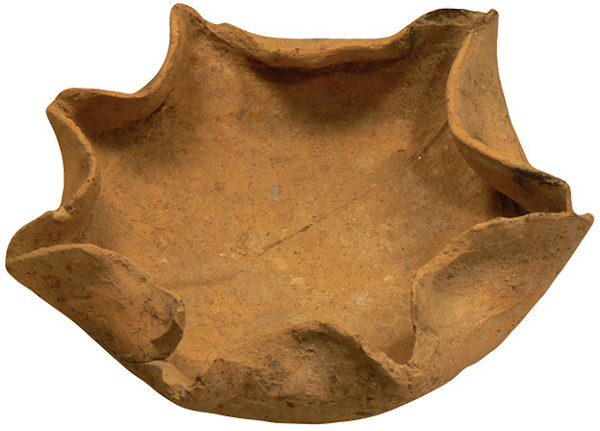
Seven-spouted bowl lamp from Dothan (see Zec 4:2 and note).
Kim Walton, courtesy of the Joseph P. Free Collection and Wheaton College
Return to the main text.
4:3 two olive trees. Cf. Rev 11:4 and note. The two olive trees stand for the priestly and royal offices and symbolize a continuing supply of oil. The two olive branches (v. 12) stand for Joshua the priest (ch. 3) and Zerubbabel from the royal house of David (ch. 4; cf. v. 14). These two leaders were to do God’s work (e.g., on the temple and in the lives of the people) in the power of his Spirit (v. 6). The Qumran community that produced the Dead Sea Scrolls (see article) looked forward to the coming of two Messiahs (the “Messiah of Aaron” and the “Messiah of Israel” [i.e., of the house of David]). But the embodiment of the priestly and royal lines and their functions in one individual points ultimately to the Messianic King-Priest and his offices and functions (see 6:13 and note).
4:4 these. The two olive trees of v. 3, as v. 11 makes clear. The answer to the question is postponed until v. 14.
4:6 Not by might nor by power. Zerubbabel does not possess the royal might and power that David and Solomon had enjoyed, and in any event such worldly power is inadequate for the purpose of rebuilding the Lord’s temple. by my Spirit. Interprets the symbolism of the oil (v. 12). The angel encouraged Zerubbabel to complete the rebuilding of the temple (vv. 7–10) and assured him of the Spirit’s enablement (see Hag 2:5 and note).
4:7 mountain . . . level ground. Faith in the power of God’s Spirit (v. 6) can overcome mountainous obstacles. The figurative mountain probably included opposition (Ezr 4:1–5,24) and the people’s unwillingness to persevere (cf. Hag 1:14; 2:1–5). Cf. the same or similar imagery in Isa 40:4; 41:15; 49:11; Mt 17:20; 21:21; 1Co 13:2; 2Co 10:4. capstone. The final stone to be put in place (see Ps 118:22 and note), marking the completion of the restoration temple by Zerubbabel (v. 9). God bless it! God bless it! Repeated for emphasis (see 3:2; see also note on Isa 40:1). The phrase probably means something like “May all divine favor rest on it.”
4:8 Introduces a prophetic message (see 6:9; 7:4,8; 8:1,18; see also note on Hos 1:1).
4:9 laid the foundation. In 536 bc (Ezr 3:8–11; 5:16). complete it. In 516 (see Ezr 6:15 and note).
4:10 day of small things. Some thought the work on the temple was insignificant (see Ezr 3:12; Hag 2:3 and note), but God was in the rebuilding program and, by his Spirit (v. 6), would enable Zerubbabel to finish it. seven eyes. See note on 3:9. God oversees the whole earth and is therefore in control of the situation in Judah (cf. 2Ch 16:9). chosen capstone. See NIV text note (“plumb line”), but the main NIV text is preferable contextually (v. 7).
4:14 The meaning of the vision is now explained. two . . . anointed. Zerubbabel, from the royal line of David, and Joshua, the priest. The oil (v. 12) used in anointing symbolizes the Holy Spirit (v. 6). The combination of ruler and priest points ultimately to the Messianic King-Priest (cf. 6:13; Ps 110; Heb 7). Lord of all the earth. See 6:5; the master of the circumstances in which Zerubbabel and the people found themselves.
5:1–4 The sixth vision. Lawbreakers are condemned by the law they have broken; sinners will be purged from the land.
5:1 flying. Unrolled and waving like a banner, for all to read. scroll. See note on Ex 17:14.
5:2 He. The interpreting angel (v. 5; 4:11). What do you see? See 4:2 and note. twenty . . . ten. Unusually large (especially in its width), for all to see (see NIV text note). Such a bold, clear message of judgment against sin should spur the people on to repentance and righteousness.
5:3 curse. See Dt 27:26 and note. on one side . . . on the other. Like the two tablets of the law (see Ex 32:15 and note), the scroll is inscribed on both sides (see Eze 2:10 and note). thief. One who breaks the eighth commandment (Ex 20:15). everyone who swears falsely. See 8:17. Such a person violates the third commandment (compare v. 4 with Ex 20:7). Although theft and perjury may have been the most common forms of lawbreaking at the time, they are probably intended as representative sins. The people of Judah had been guilty of infractions against the whole law (see Jas 2:10 and note).
5:4 The LORD Almighty. See note on 1Sa 1:3. it will enter . . . and destroy. “It” refers to the curse (v. 3). God’s word, whether promise (ch. 4) or judgment (as here), always accomplishes its purpose (cf. Ps 147:15; Isa 55:10–11; see Heb 4:12–13 and notes).
5:5–11 The seventh vision. Not only must flagrant, persistent sinners be removed from the land (vv. 1–4), but the whole sinful system will be removed—apparently to a more fitting place (Babylonia; see v. 11).
5:6 basket. Hebrew “ephah.” A normal ephah-sized container would not be large enough to hold a person. This one was undoubtedly enlarged (like the flying scroll of vv. 1–2) for the purpose of the vision. iniquity. See v. 8 (“wickedness”).
5:8 wickedness. A general word denoting moral, religious and civil evil—frequently used as an antonym of righteousness (e.g., Pr 13:6; Eze 33:12). The whole evil system was to be destroyed (cf. 2Th 2:6–8).
5:9 two women. Divinely chosen agents, in contrast to the woman representing wickedness (v. 7). wind. Also an instrument of God (see Ps 104:3–4 and note). The removal of wickedness would be the work of God alone.
5:11 Babylonia. See Ge 10:10 and NIV text note; 11:2 and NIV text note; Rev 17–18. Babylonia, a land of idolatry, was an appropriate locale for wickedness—but not Israel, where God chose to dwell with his people. Only after being purged of its evil would the promised land truly be the “holy land” (2:12; cf. 2Co 7:1).
6:1–8 The eighth and last vision. It corresponds to the first (1:7–17), though there are differences in details, such as in the order and colors of the horses. As in the first vision, the Lord is depicted as the one who controls the events of history (see Introduction: Literary Forms and Themes). He will conquer the nations that oppress Israel.
6:1 four chariots. Angelic spirits as agents of divine judgment (v. 5). two mountains. Possibly Mount Zion and the Mount of Olives, with the Kidron Valley between them (cf. Joel 3:2 and note), or perhaps reference is to the creation of two mountains through the splitting of the Mount of Olives in 14:4. bronze. Perhaps symbolic of judgment (cf. Nu 21:9).
6:2–3 red . . . black . . . white . . . dappled. The horses may signify various divine judgments on the earth (see note on v. 8; see also Rev 6:1–8 and note on 6:2).
6:4 these. The chariots, with the horses harnessed to them.
6:5 four spirits. See note on v. 1. Lord of the whole world. See note on 4:14.
6:8 north country. Primarily Babylonia, but also the direction from which most of Israel’s foes invaded them (see note on 2:6). my Spirit. If the alternative translation in the NIV text note (“spirit”) is taken, the meaning is that the angelic beings dispatched to the north have triumphed and thus have pacified or appeased God’s spirit (i.e., his anger; cf. Ecc 10:4, where the same Hebrew word is translated “anger”). See 1:15, where God’s displeasure was aroused against oppressive nations.
6:9–15 The two central visions (the fourth and fifth) were concerned with the high priest and the governor (in the Davidic line); see Introduction: Literary Forms and Themes. Zechariah now relates the message of those two visions to the Messianic King-Priest.
6:10 silver and gold. Gifts for the temple (cf. Ezr 6:5; Hag 2:8).
6:11 crown. The Hebrew for this word is not the same as that used for the high priest’s turban but refers to an ornate crown (cf. Rev 19:12). The royal crowning of the high priest foreshadows the goal and consummation of prophecy—the crowning and reign of the Messianic King-Priest (see vv. 12–13; cf. Ps 110:4; Heb 7:1–3).
6:12 Here is the man. Cf. Pilate’s introduction of Jesus in Jn 19:5. Branch. See note on 3:8. According to the Aramaic Targum (a paraphrase), the Jerusalem Talmud (a collection of religious instruction) and the Midrash (practical exposition), Jews early on regarded this verse as Messianic. branch out. The NIV here reflects the wordplay in the Hebrew text. temple. Cf. Isa 2:2–3; Eze 40–43; Hag 2:6–9.
 6:13 clothed with. See note on Ps 109:29. his throne. See 2Sa 7:11, 16; Isa 9:7; Lk 1:32 and notes. priest on his throne. The coming Davidic King will also be a priest. two. Probably the royal and priestly offices. Such a combination was not normally possible in Israel. For this reason, the sect of Qumran (see article) expected two Messianic figures—a high-priestly Messiah and a Davidic one (see note on 4:3). But the two offices and functions would in fact be united in the one person of Jesus the Messiah (cf. Ps 110; Heb 7).
6:14 Hen. Means “gracious one” (see NIV text note), perhaps another name for Josiah—to honor him for his hospitality (v. 10).
6:15 Those who are far away will . . . help. Cf. Isa 60:4–7.
7:1—8:23 See Introduction: Literary Forms and Themes.
7:1 fourth year . . . fourth day . . . ninth month. Dec. 7, 518 bc—not quite two years after the eight night visions (see note on 1:7).
7:3 prophets. Including Zechariah. I. The people of Bethel collectively. fast in the fifth month. See note on 8:19. so many years. “The past seventy years” (v. 5).
7:4–7 A rebuke for selfish and insincere fasting on the part of the people and the priests.
7:5 fasted . . . fifth and seventh. See note on 8:19. seventy years. See 1:12 and note. Since these fasts commemorated events related to the destruction of Jerusalem and the temple (see note on 8:19), the 70 years here are to be reckoned from 586 bc. Strictly speaking, 68 years had transpired; 70 is thus a round number, though the completion of the temple in 516 would mark 70 years (see note on Jer 25:11–12; see also article).
7:6 for yourselves. Cf. Isa 1:11–17; 58:1–7,13–14.
7:7,12 earlier prophets. See note on 1:4.
7:7 Negev. See note on Ge 12:9. western foothills. Sloping toward the Mediterranean Sea.
7:9–10 Four tests of faithful covenant living, consisting of a series of social, moral and ethical commands.
7:9 justice. The proper ordering of all society (see 8:16–17 and note on 8:16; Isa 42:1, 4; Mic 6:8 and notes). mercy. Or “faithful love” (see Ps 6:4 and article; Hos 10:12; 12:6 and notes). compassion. See note on 1:12.
7:10 oppress. Oppression is denounced frequently in the OT (see, e.g., Am 2:6–8 and notes; 4:1; 5:11–12,21–24; 8:4–6). widow . . . fatherless . . . foreigner . . . poor. For the biblical concern for such people, see, e.g., Ex 22:21–27 and note; Dt 10:18; Isa 1:17 and note; Jer 5:28; Jas 1:27; 1Jn 3:16–18. In the ancient Near East, the ideal king was expected to protect the oppressed and needy members of society. plot evil against each other. See 8:17; cf. Mic 2:1–2 and note on 2:1.
7:11 they. The preexilic ancestors, as the reference to the “earlier prophets” in v. 12 shows. stubbornly they turned their backs. See Dt 9:6, 13,27. covered their ears. See Ps 58:4; Isa 6:10 and notes; cf. Isa 33:15.
7:12 hard as flint. See Eze 3:8–9. words . . . sent by his Spirit. The words of the prophets were inspired by God’s Spirit (see Ne 9:30; Mic 3:8; 2Pe 1:21 and note). very angry. See 1:2,15.
7:14 scattered them. One of the curses for covenant disobedience (see Dt 28:36–37,64–68 and note on 28:64). whirlwind. See Pr 1:27 and note; Isa 40:24; Hos 4:19. land . . . desolate. See Dt 28:41–42,45–52. This is how. By their sins. pleasant land. See Ps 106:24 and note.
8:1–23 Ten promises of blessing, each beginning with “This is what the LORD (Almighty) says” (vv. 2,3,4,6,7, 9,14,19,20,23).
8:2 jealous. See 1:14 and note.
8:3 I will return. See 1:3 and note; 1:16. dwell. See note on 2:10. the Faithful City. See Isa 1:26 and note. the Holy Mountain. Cf. 14:20–21.
8:4–5 See Isa 11:6–9 and note; 65:20–25.
8:6,11–12 remnant. See notes on Isa 1:9; 10:20–22.
8:6 will it seem marvelous to me? See Jer 32:27 and note.
8:7 save my people. Deliver them from exile, bondage and dispersion (cf. Isa 11:11–12; 43:5–7; Jer 30:7–11; 31:7–8). from the countries of the east and the west. That is, wherever the people are (cf. Ps 50:1; 113:3; Mal 1:11).
8:8 they will be my people, and I will be . . . their God. Covenant terminology, pertaining to intimate fellowship in the covenant relationship between God and his people (see 13:9; Ge 17:7 and note; Ex 6:7; 29:45–46; Lev 11:45; 22:33; 25:38; 26:12,45; Nu 15:41; Dt 29:13; Jer 7:23 and note; 24:7 and note; Eze 34:30–31; 36:28; 37:27; Hos 1:9–10; 11:8–11; 2Co 6:16; Heb 8:10; Rev 21:3). faithful and righteous. Judah’s restoration to covenant favor and blessing rests on the faithfulness (dependability) and righteousness of God.
8:9 hands be strong. See v. 13. The Hebrew for this expression is translated “be encouraged” in Jdg 7:11. prophets. Including Haggai (1:1) and Zechariah (1:1; see Ezr 5:1–2).
8:10 Before that time. Before the temple foundation was laid (v. 9). no wages. See Hag 1:6–11; 2:15–19. their enemies. For example, the Samaritans (Ezr 4:1–5).
8:11 But now. The reasons for discouragement have passed; God will now provide the grounds for encouragement.
8:12 Contrast with Hag 1:10–11. In Hag 2:19 God had predicted just such a reversal as is depicted here. Fertility and bounty are part of the covenant blessings for obedience promised in Lev 26:3–10; Dt 28:11–12; cf. Eze 34:25–27; Hos 2:21–23.
8:13 Judah and Israel. The whole nation will experience this deliverance and blessing (cf. Jer 31:1–31; Eze 37:15–28). curse among the nations. Part of the covenant curses for disobedience threatened in Dt 28:15–68 (Dt 28:37; Jer 24:9; 25:18). blessing. See vv. 20–23; cf. Ge 12:2. hands be strong. See note on v. 9.
8:14–17 Verses 14–15 specify God’s part in the people’s restoration to favor and blessing; vv. 16–17 delineate their part.
8:14 your ancestors angered me. See note on 1:2.
8:16–17 See 7:9–10. Such moral and ethical behavior sums up the character of those who are in covenant relationship with the Lord.
8:16 Speak the truth to each other. See Eph 4:25 and note. render true and sound judgment. Because God requires justice (see 7:9; Dt 24:17–18; Ps 33:5; 89:14; 99:4; Am 2:7; 5:24 and notes; see also Introduction to Amos: Theological Theme and Message) and hates injustice (see v. 17; 5:3; 2Ch 19:7; Ne 5:6; Pr 6:16–19; Hab 1:4 and notes). courts. Or “gates” (see Ge 19:1 and note; 2Sa 18:24).
8:17 swear falsely. Perjure oneself (see note on 5:3). I hate all this. Pr 6:16–19 lists seven things the Lord hates, three of which relate directly to vv. 16–17 here: “a lying tongue,” “a heart that devises wicked schemes” and “a false witness who pours out lies.”
8:19 See 7:2–6. fourth. The fast that lamented the breaching of the walls of Jerusalem by Nebuchadnezzar (2Ki 25:3–4; Jer 39:2). fifth. Commemorated the burning of the temple and the other important buildings (2Ki 25:8–10). seventh. Marked the anniversary of Gedaliah’s assassination (2Ki 25:22–25; Jer 41:1–3). tenth. Mourned the beginning of Nebuchadnezzar’s siege of Jerusalem (2Ki 25:1; Jer 39:1; Eze 24:1–2). happy festivals. Cf. Isa 65:18–19; Jer 31:10–14.
8:20–23 For similar predictions about Gentiles seeking the Lord, see 2:11; 14:16 and notes; Isa 2:1–5; 19:23–25; Mic 4:1–5.
8:22 powerful. Or “numerous” (as in Ex 1:9; see also NIV text note on Isa 53:12); anticipates a fulfillment of the promise of Gentile blessing in the Abrahamic covenant (Ge 12:3; Gal 3:8,26–29; see also Isa 55:5; 56:6–7; Mk 11:17 and note).
8:23 ten. One way of indicating a large or complete number in Hebrew (see Ge 31:7 and note; Lev 26:26; Nu 14:22 and note; 1Sa 1:8; Ne 4:12). Jew. A shortened form of “Judahite” (an inhabitant of the kingdom of Judah, where a remnant of Israelites was still living). Strictly speaking, the term “Jew” is properly applied only to the OT people of God and their descendants from the time of the Babylonian exile on. we have heard that God is with you. True godliness attracts others to the Lord (see Ge 21:22; 26:28; 30:27; see also notes on Ge 39:2–6; 1Co 14:24).
9:1–8 Probably a prophetic description of the Lord’s march south to Jerusalem, destroying—as Divine Warrior—the traditional enemies of Israel. As history shows, the agent of his judgment in this case was Alexander the Great (333–332 bc; see article).
9:1 A prophecy: The word of the LORD. The Hebrew for this phrase occurs only two other times in the OT (12:1; Mal 1:1), making it likely that Zec 9–14 and Malachi were written during the same general period. prophecy. See note on Hab 1:1. word of the LORD. See 1:1; 12:1; Hos 1:1 and note. Hadrak. Hatarikka, north of Hamath on the Orontes River (v. 2). Damascus. The leading city-state of the Arameans (see notes on Dt 26:5; Isa 17:1). eyes . . . on the LORD. The thought may be that the eyes of people, especially all the tribes of Israel, are turned toward the Lord (for deliverance). But see NIV text note.
9:2 on Hamath too. Judgment will rest on Hamath, just as on Hadrak and Damascus. Hamath is modern Hama (see Isa 10:9 and note). it. Damascus. Tyre and Sidon. Phoenician (modern Lebanese) coastal cities (see notes on Isa 23:1; 23:2,4,12). Their judgment (vv. 3–4) is also foretold in Isa 23; Eze 26:3–14; 28:5, 20–24; Am 1:9–10.
9:3 stronghold. The Hebrew term is a wordplay for “Tyre” (meaning “rock”). The stronghold was Tyre’s island fortress (Isa 23:4; Eze 26:5). It fell (v. 4) to Alexander in July, 332 bc, after a siege of seven months (see note on Eze 26:1—28:19). silver like dust . . . gold like the dirt. Cf. 1Ki 10:21,27. Tyre was a center of trade and commerce, and its wealth was proverbial (Isa 23:2–3, 8,18; Eze 26:12; 27:3–27,33; 28:4–5,7,12–14,16–18).
9:4 her power on the sea. Tyre’s exploitation of commercial sea lanes in the Mediterranean was the source of much of Tyre’s wealth.
9:5–7 The Philistine cities were greatly alarmed at Alexander’s steady advance.
9:5 Ashkelon . . . Gaza . . . Ekron. Three of the five major Philistine cities (see map). her hope will wither. As the northernmost city of Philistia, Ekron would be the first to suffer. Ekron’s hope that Tyre would stem the tide would meet with disappointment.
9:6 mongrel people. A pejorative term for people of mixed nationality (cf. Ne 13:23–34). Ashdod. The fourth remaining city in the Philistine group (see notes on v. 5; Am 1:8). I. God. Philistines. See note on Ge 10:14. At one time their control of Canaan was so extensive that the land was eventually named after them (“Palestine”).
9:7 blood. Of idolatrous sacrifices. forbidden food. Ceremonially unclean food. Jebusites. These ancient inhabitants of Jerusalem (see notes on Ge 10:16; 2Sa 5:6) were absorbed into Judah (e.g., Araunah in 2Sa 24:16–24). So would it be with a remnant of the Philistines.
9:8 encamp at my temple to guard it against marauding forces. See 2:5. Alexander spared the temple and the city of Jerusalem (see Josephus, Antiquities, 11.8.4–5). oppressor. The Hebrew for this word is translated “slave driver” in Ex 3:7; 5:6,10 and elsewhere; thus it echoes the Egyptian bondage motif. keeping watch. See Ex 3:7; Ps 32:8; 121.
9:9 Quoted in the NT as Messianic and as referring ultimately to Jesus’ entry into Jerusalem as King (Mt 21:5; Jn 12:15). Verses 9–10 are also regarded as Messianic by Jewish exegetical traditions. Daughter Zion . . . Daughter Jerusalem. A personification of Jerusalem (see note on 2Ki 19:21). your king. The Davidic Messianic King. righteous. Conforming to the divine standard of morality and ethics, particularly as revealed in the Mosaic legislation; a characteristic of the ideal king (see 2Sa 23:3–4 and note on 23:3; Ps 4:1 and note; 72:1–3; Isa 9:7 and note; 53:11; Jer 23:6 and note). lowly. Or “humble” (cf. Isa 53:2–3, 7; Mt 11:29). riding on a donkey. A suitable choice, since the donkey was a lowly animal of peace (contrast the warhorse of v. 10), as well as a princely mount (Jdg 10:4; 12:14; 2Sa 16:2) before the horse came into common use (see photo). The royal mount used by David and his sons was the mule (see 2Sa 13:29 and note).
9:10 take away the chariots . . . warhorses . . . battle bow. A similar era of disarmament is foreseen in Isa 2:4; 9:5–7; 11:1–10; Mic 5:10–11. Ephraim. See note on v. 13. peace to the nations. In sharp contrast to Alexander’s empire, which was founded on bloodshed, the Messianic King will establish a universal and eternal kingdom of peace as the ultimate fulfillment of the Abrahamic covenant (cf. 14:16; see Ge 12:2–3 and note, but cf. Rev 19:11 and note). from sea to sea. Variously explained as “from the Nile to the Euphrates,” “from the Mediterranean to the Red Sea” or “from the Mediterranean to the Dead Sea.” Determining which it refers to is not crucial because the phrase is used to indicate totality or universality, as is true also of “from the River to the ends of the earth.” The point is that the Davidic Messiah’s rule will be universal (see Ps 22:27–28 and notes; 72:8–11 and note on 72:8; Isa 11:9; 45:22; 52:10; 66:18).
9:11 blood of my covenant with you. Probably the Sinaitic covenant (Ex 24:3–8). prisoners. Perhaps those still in Babylonia, the land of exile. waterless pit. Cf. Ge 37:24; Jer 38:6.
9:12 fortress. Either (1) Jerusalem (Zion) and environs or (2) God himself (cf. 2:5). hope. In the future delivering King (vv. 9–10). twice as much. Full or complete restoration (Isa 61:7).
9:13 See note on 10:4. The Lord compares himself to a warrior who uses Judah as his bow and Ephraim (the northern kingdom) as his arrow. your sons, Zion. The Maccabees (see note on Da 11:34; see also article). your sons, Greece. The Seleucids of Syria (after the breakup of Alexander’s empire).
9:14 See Hab 3:3–15 and note on 3:3. trumpet. Probably a reference to thunder (see Ex 19:16–19 and note on 19:16). south. In the region of Mount Sinai, where the Sinaitic covenant was given (see v. 11 and note) and where the Lord’s dwelling was (see Jdg 5:4–5; Ps 68:8; Hab 3:3 and note).
9:15 The Apocryphal book 1 Maccabees (3:16–24; 4:6–16; 7:40–50) records a partial fulfillment of this verse. slingstones. Hurled at defenders on the city wall and onto the inhabitants inside (see photo). bowl used for sprinkling. See Ex 27:1–3 and note on 27:3; Lev 4:6–7.
9:16 that day. See note on 2:11.
10:1 it is the LORD who . . . gives showers . . . plants. The Lord, not the Canaanite god Baal, is the one who controls the weather and the rain, giving life and fertility to the land (see Jer 14:22; Hos 2:8 and note; 6:3; Joel 2:21–27; Am 5:8; Mt 5:45). Therefore God’s people are to pray to and trust in him.
10:2 idols. Household gods (see Ge 31:19 and note). They were used for divination during the period of the judges (see Jdg 17:5 and note; 18:14–20). diviners. Included among false prophets, they were the occult counterpart to true prophets. See Jer 27:9–10 and note on 27:9. Resorting to such sources for information and guidance is expressly forbidden in Dt 18:9–14 because God provided true prophets (and ultimately the Messianic Prophet) for that purpose (see Dt 13:1–5 and notes; 18:15–22 and note on 18:15; Isa 8:19–20 and notes; Jn 4:25; 6:14 and note; Ac 3:22–26 and note; see also note on Ge 30:27). they give comfort in vain. For example, when they wrongly promise rain, fruitful seasons, fertility, prosperity, peace and blessing. people wander like sheep. See Isa 53:6 and note. lack of a shepherd. Spiritual leadership is missing (cf. Mk 6:34). “Shepherd” is primarily a royal motif, whether referring to human kings (see Isa 44:28; Jer 2:8 and notes), to God as King (see Ps 23:1 and note) or to the Messianic, Davidic King (Eze 34:23–24; Jn 10:11–16; Heb 13:20; 1Pe 5:4; Rev 7:17).
10:3 I will punish the leaders. Cf. Eze 34:1–10. like a proud horse. Triumphant.
10:4 Probably Messianic (indicated by the Aramaic Targum). From Judah. See Ge 49:10; Jer 30:21 and note; Mic 5:2. cornerstone. See 3:9; Eph 2:20 and notes. tent peg. The ruler as the support of the state (see note on Isa 22:23; see also Isa 22:24). battle bow. Part of the Divine Warrior terminology (cf. 9:13; Ps 7:12; 45:5; La 2:4; 3:12; Hab 3:9).
10:5 they. Judah (v. 4), i.e., its people. the LORD is with them. See Jos 1:5; Jer 1:8 and note. put the enemy horsemen to shame. Partly fulfilled in the Maccabean victories (during the period between the OT and the NT; see article).
10:6 Judah . . . Joseph. The people of the southern and northern kingdoms will be reunited (see note on 8:13).
10:7 Ephraimites. See note on 9:13. glad as with wine. See Ps 104:15.
10:8 signal. Or “whistle,” a continuation of the shepherd metaphor (vv. 2–3; see Jdg 5:16). redeem. The Hebrew for this word is often used of ransoming from slavery or captivity (Isa 35:10; Mic 6:4; cf. 1Pe 1:18–19). as numerous as before. See Ex 1:6–20 and note on 1:7.
10:9 they will remember me. According to the meaning of Zechariah’s name, “the LORD remembers” (his covenant people and promises). Now they will remember him.
10:10 Egypt . . . Assyria. See v. 11; Hos 7:16 and note. Probably representing all the countries where the Israelites are dispersed, these two evoke memories of slavery and exile. gather them. See Isa 11:11–16; Eze 39:27–29. Gilead. See Ge 31:21 and note; SS 6:5; Jer 50:19; Mic 7:14 and note. Lebanon. See 2Ki 19:23; see also Isa 33:9; 35:2; Jer 22:6 and notes. not be room enough. See v. 8; 2:4 and note; see also note on Isa 49:19–20.
10:11 pass through the sea of trouble. As at the Red Sea (see Ex 14:22 and note).
11:1–3 Some interpret this brief poem as a taunt song related to the lament that will be sung over the destruction of the nations’ power and arrogance (ch. 10), represented by the cedar, the pine and the oak (vv. 1–2). Their kings are represented by the shepherds and the lions (v. 3). Understood in this way, vv. 1–3 would provide the conclusion to the preceding section. Other interpreters, however, without denying the presence of figurative language, regard the piece as describing the devastation of Syro-Palestine due to the rejection of the Messianic Good Shepherd (vv. 4–14). Verses 1–3 would then furnish the introduction to the next section. The geography of the text—Lebanon, Bashan and Jordan—would seem to favor this interpretation. Part of the fulfillment would be the destruction and further subjugation of the area by the Romans, including the fall of Jerusalem in ad 70 and of Masada in 73. Understood in this way, the passage is in sharp contrast with ch. 10 and its prediction of Israel’s full deliverance and restoration to the covenant land. Now the scene is one of desolation for the land (vv. 1–3), followed by the threat of judgment and disaster for both land and people (vv. 4–6).
11:1 Lebanon. See 10:10 and note.
11:2 Bashan. See note on Isa 2:13. The Israelites took this region from the Amorite king Og at the time of the conquest of Canaan (Nu 21:33–35). It was allotted to the half-tribe of Manasseh (Jos 13:29–30; 17:5). dense forest. Of Lebanon.
11:3 If the language is figurative, the shepherds and lions represent the rulers or leaders of the Jews (see v. 5; 10:3; cf. Jer 25:34–36). lush thicket of the Jordan. Where the lions had their lairs.
11:4–14 The reason for the judgment on Israel in vv. 1–3 is now given, namely, the people’s rejection of the Messianic Shepherd-King. Just as the Servant in the “servant songs” (see note on Isa 42:1–4) is rejected, so here the Good Shepherd (a royal figure) is rejected. The same Messianic King is in view in both instances.
11:4 says. To Zechariah. flock. Israel.
11:5 buyers. The sheep (the Jews) are bought as slaves by outsiders. Part of the fulfillment came in ad 70 and the following years. Those who sell them. “Their own shepherds (rulers or leaders).”
11:6 land. Israel. king. Perhaps the Roman emperor (cf. Jn 19:15). They. Includes the Romans prophetically.
11:7 I. Zechariah, as a type (foreshadowing) of the Messianic Shepherd-King. called one Favor. To ensure divine favor on the flock. Union. See Eze 37:15–28 and note on 37:16. Such unity would be the result of the gracious leadership of the Good Shepherd. (For the significance of the subsequent breaking of the two staffs, see vv. 10,14 and notes.)
11:8 got rid of the three shepherds. Although the three cannot be specifically identified, the Good Shepherd will dispose of all such unfit leaders. I grew weary of them. Cf. Isa 1:13–14.
11:9 Let the dying die. The Good Shepherd terminates his providential care of the sheep. eat one another’s flesh. According to Josephus, this actually happened during the Roman siege of Jerusalem in ad 70 (see Jer 19:9 and note).
11:10 covenant. Apparently a covenant of security and restraint, by which the Shepherd had been keeping the nations from attacking his people (cf. Eze 34:25; Hos 2:18). Now, however, the nations will be permitted to overrun them.
11:11 the oppressed of the flock. Probably the faithful few, who recognize the authoritative word of the Lord (see also v. 7).
11:12 give me my pay. Refers to the severance of the relationship. keep it. A more emphatic way of ending the relationship. thirty pieces of silver. The price of a slave among the Israelites in ancient times (see notes on Ex 21:32; Mt 26:15).
11:13 handsome price. Irony and sarcasm. threw them to the potter at the house of the LORD. For the NT use of vv. 12–13, see Mt 26:14–15; 27:3–10 and note on 27:9.
11:14 broke my second staff called Union. Signifying the dissolution of the covenant nation, particularly of the unity between the south and the north. The breaking up of the nation into parties hostile to each other was characteristic of later Jewish history; it greatly hindered the popular cause in the war against Rome (cf. Jn 11:48).
11:15 again. See v. 7. foolish shepherd. With the Shepherd of the Lord’s choice removed from the scene, a foolish and worthless (v. 17) shepherd replaces him. A selfish, greedy, corrupt leader will arise and afflict the flock (the people of Israel).
11:16 seek the young. Cf. Ge 33:13; Isa 40:11. tearing off their hooves. Apparently in a greedy search for the last edible piece.
11:17 worthless shepherd. See note on v. 15. This counterfeit shepherd may have found a partial historical fulfillment in such leaders as Simeon bar Kosiba or Kokhba (who led the Jewish revolt against the Romans in ad 132–135 and who was hailed as the Messiah by Rabbi Akiba). But it would seem that the final stage of the progressive fulfillment of this prophecy awaits the rise of the final antichrist (cf. Eze 34:2–4; Da 11:36–39; Jn 5:43; 2Th 2:3–10; Rev 13:1–8). deserts the flock. Contrast the Good Shepherd of Jn 10:11–16. May his arm be completely withered. May his power be paralyzed. his right eye totally blinded. This leader will be powerless to fight.
12:1—14:21 This second prophetic message in the second major division of the book revolves around two scenes: the final siege of Jerusalem and the Messiah’s return to defeat Israel’s enemies and establish his kingdom.
12:1 A prophecy: The word of the LORD. See note on 9:1. Israel. The whole nation, not just the northern kingdom. Judah and Jerusalem, however, are the main focus of attention (v. 2). The LORD, who stretches . . . lays . . . forms. This description of the Lord’s creative power shows that he is able to perform what he predicts; it also strengthens the royal and sovereign authority of the message.
12:2 cup that sends all . . . reeling. See notes on Ps 16:5; Isa 51:17; Jer 25:15; Ob 16; Hab 2:16.
12:3 that day. See note on 2:11. The phrase is used often in chs. 12–14 (12:4,6,8–9,11; 13:1–2,4; 14:4,6, 8–9,13,20–21). all the nations . . . gathered against her. See 14:2,12; Joel 3:9–16; cf. Rev 16:16–21.
12:4 panic . . . madness . . . blind. Listed in Dt 28:28 among Israel’s curses for disobeying the stipulations of the covenant. Now these curses are turned against Israel’s enemies. watchful eye. See 9:8; Ps 32:8; 33:18; 121.
12:5 the LORD Almighty. See note on 1Sa 1:3.
12:6 Like a fire destroying wood and sheaves of grain, Judah’s discerning leaders (v. 5) will consume their enemies (cf. Jdg 15:3–5; Mic 5:5–6; see note on Isa 1:31).
12:8 like David. Like a great warrior. like God. Cf. Ex 4:16; 7:1. like the angel of the LORD. See Ge 48:16 and note; Ex 14:19; 23:20; 32:34; 33:2; Hos 12:3–4; see also Ge 16:7 and note.
12:10 a spirit. See NIV text note; Isa 32:15; Eze 36:26–27 and notes; see also Isa 44:3; 59:20–21; Eze 39:29; Joel 2:28–29 and note on 2:28. look on. See NIV text note. The emphasis seems to be on looking to the Messiah in faith (cf. Nu 21:9; Isa 45:22; Jn 3:14–15). me . . . him . . . him. Same person. pierced. See Ps 22:16 and note; Jn 19:37. mourns for an only child. See Jer 6:26 and note. grieves for a firstborn son. Cf. Ex 11:5; Jer 6:26 and notes.
12:11 Hadad Rimmon. The name of either (1) a place near Megiddo, where the people mourned the death of King Josiah (2Ch 35:20–27; see v. 22 there for the plain of Megiddo and vv. 24–25 for the mourning); or (2) a Semitic storm god (see 2Ki 5:18 and note), whose name means “Hadad the thunderer” in Babylonian (as in the Gilgamesh Epic, 11:98; see chart; see also Eze 8:14 for an example of the practice of weeping for a Babylonian deity).
12:12 Nathan. David’s son (2Sa 5:14; Lk 3:31).
12:13 Shimei. Son of Gershon, the son of Levi (Nu 3:17–18,21). The repentance and mourning are led, then, by the civil (royal) and religious leaders.
13:1 cleanse them from sin. See 3:4–9 and note on 3:9; one of the provisions of the new covenant (Jer 31:34; Eze 36:25).
13:2 names of the idols. The influence and fame, and even the very existence, of the idols. prophets. False prophecy was still a problem in the postexilic period (Ne 6:12–14) and would again be a problem in the future (Mt 24:4–5, 11,23–24; 2Th 2:2–4).
13:3 lies. False prophecies. parents will stab the one who prophesies. See Dt 13:3,6–10. The Hebrew for “stab” is the same as the verb for “pierced” in 12:10, perhaps indicating that the feelings and actions exhibited in piercing the Messiah will now be directed toward the false prophets.
13:4–6 Because of the stern measures just mentioned, a false prophet will be reluctant to identify himself as such and will be evasive in his responses to interrogation. To help conceal his true identity, he will not wear a “prophet’s garment of hair” (v. 4), such as Elijah wore (see 2Ki 1:8 and note). Instead, to avoid the death penalty (v. 3), he will deny being a prophet and will claim to have been a farmer since his youth (v. 5). And if a suspicious person notices marks on his body and inquires about them (v. 6), he will claim to have received them in a scuffle with friends (or perhaps as discipline from his parents during childhood). Apparently the accuser suspects that the false prophet’s wounds were self-inflicted to arouse his prophetic ecstasy in idolatrous rites (as in 1Ki 18:28; see Jer 16:6 and note; 48:37).
13:5 the land . . . my youth. If the alternative translation in the NIV text note is taken, the meaning is that someone sold him as a slave while he was still young.
13:6 Some take this verse as Messianic, but the interpretation given above seems preferable in this context (e.g., v. 5).
13:7 my shepherd. The royal (Messianic) Good Shepherd (cf. the true Shepherd of 11:4–14; contrast the foolish and worthless shepherd of 11:15–17). Strike the shepherd. In 11:17 it was the worthless shepherd who was to be struck; now it is the Good Shepherd (cf. also 12:10). sheep will be scattered. In partial fulfillment of the curses for covenant disobedience (see Dt 28:64 and note; 29:24–25). These two clauses are quoted by Jesus not long before his arrest (Mt 26:31; Mk 14:27) and applied to the scattering of the apostles (Mt 26:56; Mk 14:49–50), who in turn are probably typological of the dispersion of the Jews in ad 70 and subsequent years.
13:8–9 These verses depict a refining process for Israel (see note on Isa 48:10).
13:8 one-third. A remnant, thus revealing God’s mercy in the midst of judgment.
13:9 I will refine them. See Ps 12:6 and note. my people . . . our God. See note on 8:8. They will be restored to proper covenant relationship with the Lord (see also Eze 20:30–44).
14:1 A day of the LORD. Cf. Isa 2:12; Eze 30:3; Joel 1:15 and note. your . . . your. Jerusalem (v. 2) is the object of the plunder.
14:2 all the nations . . . fight against it. See v. 12; see also note on 12:3.
14:3 the LORD will . . . fight against those nations. See Rev 16:16–21; 19:19–21. day of battle. Any occasion when the Lord supernaturally intervenes to deliver his people, such as at the Red Sea (see Ex 14:14 and note).
14:4 Mount of Olives. Called by this name elsewhere in the OT only in 2Sa 15:30. It faced the temple mount and, being about 2,700 feet high, rose about 200 feet above it. Cf. Eze 11:23. This prophecy is probably referred to in Ac 1:11–12.
14:5 Azel. The name of a place east of Jerusalem, marking the eastern end of the newly formed valley. earthquake in the days of Uzziah. Amos dates his prophecy by referring to it (see Am 1:1 and note). holy ones. May include both believers and angels. They will accompany our Lord when he comes (cf. Mt 25:31; 1Th 3:13; Jude 14; Rev 19:14).
14:7 unique day. Due to the topographical, cosmic and cataclysmic changes. See also Isa 60:19–20 and notes.
14:8 living water will flow. Perhaps both literal and figurative (see Isa 8:6; Joel 3:18 and note; Jn 7:38; cf. Eze 47:1–12; Rev 22:1–5).
14:9 The LORD will be king over the whole earth. A pervasive theological theme in Scripture (see Introduction to Psalms: Theology). one LORD. See Dt 6:4; Isa 43:11 and notes.
14:10 Geba. About six miles north-northeast of Jerusalem at the northern boundary of Judah (see 2Ki 23:8 and note). Rimmon. Also called En Rimmon (see Ne 11:29 and note), it was about 35 miles south-southwest of Jerusalem, where the hill country of Judah slopes away into the Negev. Arabah. See note on Dt 1:1. All the land around Jerusalem is to be leveled. Jerusalem will be raised up. See Isa 2:2–4 and note. The elevation may be both physical and in prominence. Benjamin Gate . . . First Gate . . . Tower of Hananel. All were probably at the northeastern part of the city wall (cf. Jer 31:38; 37:12–13; 38:7). Corner Gate. At the northwest corner (cf. Jer 31:38). royal winepresses. Just south of the city. Thus the whole city is included.
14:11 inhabited. See 2:4 and note. never again . . . destroyed. As at the time of the exile to Babylonia (see Isa 43:28 and note) and in ad 70. Jerusalem will be secure. See Jer 31:40; Am 9:11–15.
14:12 plague. See Isa 37:36 and note. nations that fought against Jerusalem. See v. 2; see also note on 12:3.
14:13 great panic . . . attack one another. See Jdg 7:22 and note.
14:14 gold and silver and clothing. The plunder of battle, thus reversing the situation in v. 1.
14:15 A similar plague will strike the beasts of burden, preventing the people from using them to escape.
14:16 See Isa 2:2–4 and note; 19:23–35; Mic 4:1–5. Festival of Tabernacles. See notes on Ex 23:16; Ps 81:3. Of the three great pilgrimage festivals (see Ex 23:14–17), perhaps Tabernacles was selected as the one for representatives of the various Gentile nations because it was the last and greatest festival of the Hebrew calendar, gathering up into itself the year’s worship (see note on Eze 45:25). It was to be a time of grateful rejoicing (see Lev 23:40; Dt 16:13–15; Ne 8:17 and note). Beginning with the period of Ezra and Nehemiah, the reading and teaching of “the Book of the Law of God” became an integral part of the festivities (Ne 8:18; cf. Isa 2:3). The festival seems to speak of the final, joyful regathering and restoration of Israel, as well as of the ingathering of the nations. See chart.
14:17 no rain. One of the curses for covenant disobedience (Dt 28:22–24; cf. Zec 9:11—10:1).
14:18 Egyptian people . . . will have no rain. See NIV text note. With either reading, the withholding of rain may still be included, for drought (v. 17) in the upper reaches of the Nile would cause the annual flooding of the Nile to fail.
14:20 HOLY TO THE LORD. Engraved on the gold plate worn on the high priest’s turban (Ex 28:36–38) as a reminder of his consecration to the Lord’s service (see note on 3:5). God’s original purpose for Israel (see Ex 19:6 and note) will be realized.
14:21 Every pot in Jerusalem . . . holy. See Joel 3:17 and note. Even common things become holy when they are used for God’s service. cook. Portions from the sacrifices. Canaanite. Represents anyone who is morally or spiritually unclean—anyone who is not included among the chosen people of God (cf. Isa 35:8; Eze 43:7; 44:9; Rev 21:27). But see NIV text note, which leads some to connect this prophecy with Jesus’ clearing of the temple (Mk 11:15–17).